Visual learning reinforcement Adding Up to 5 Worksheets for Ages 3-5
5 filtered results
-
From - To
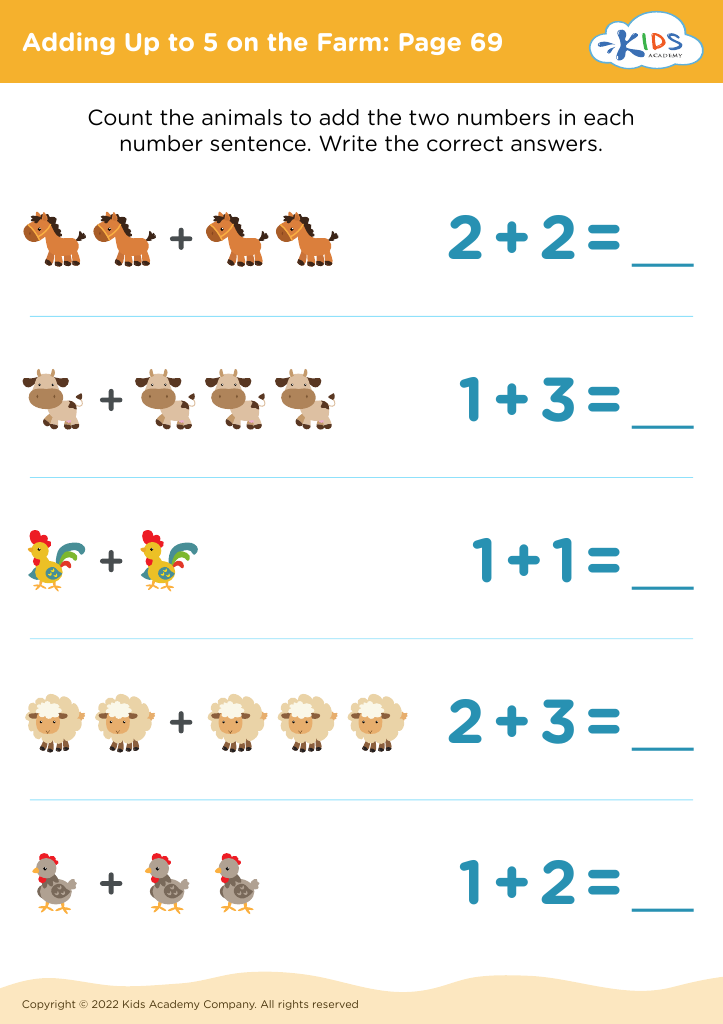
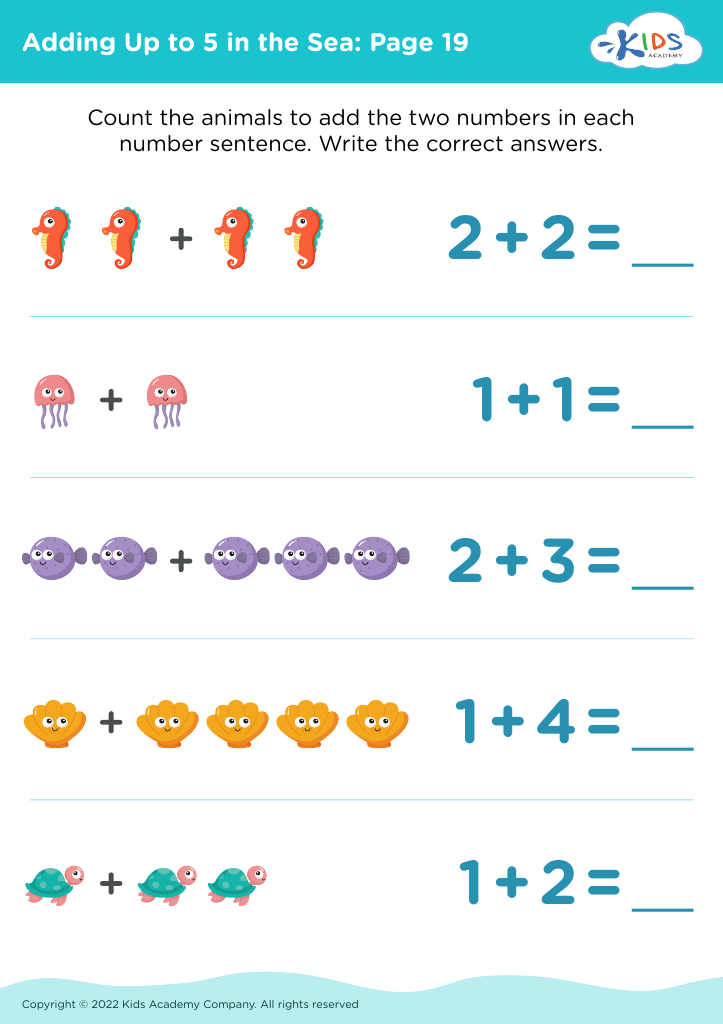
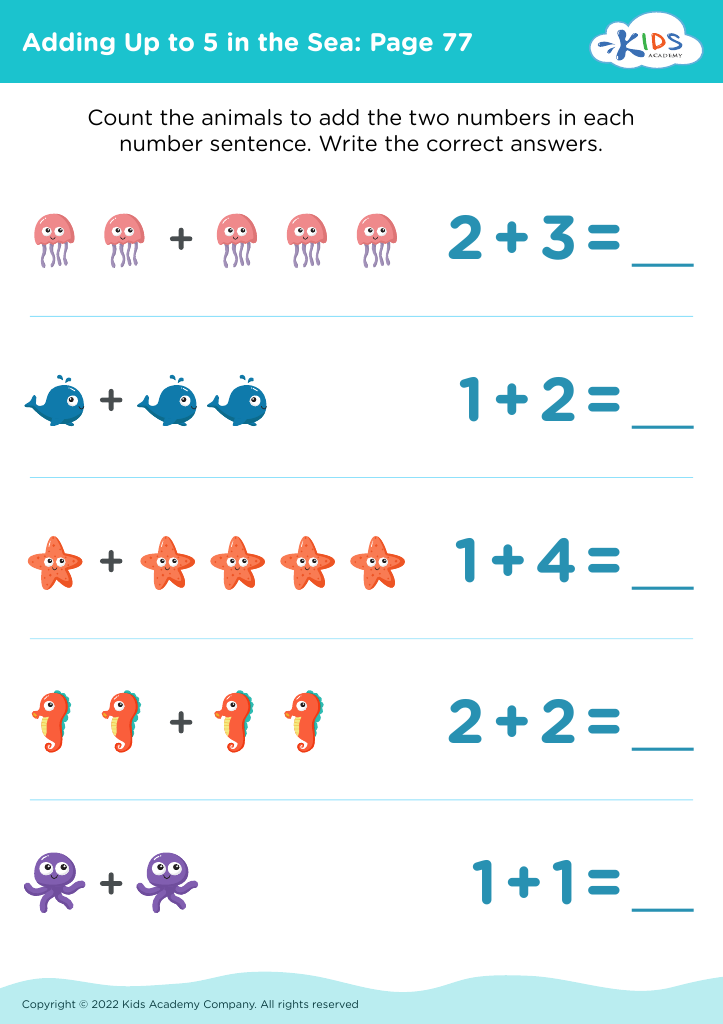
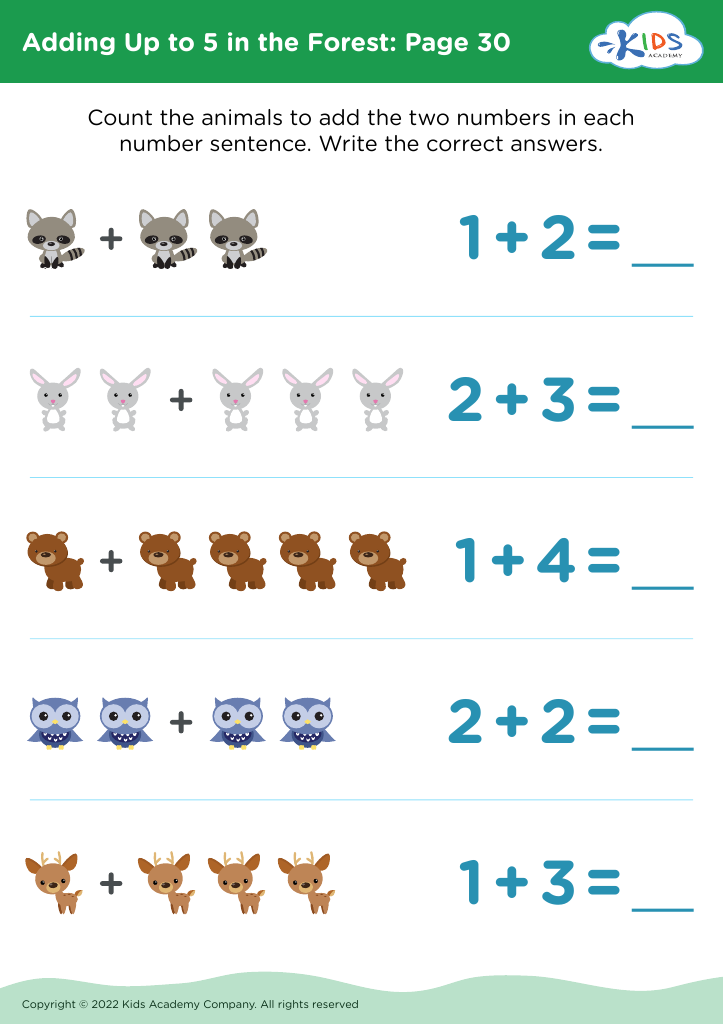
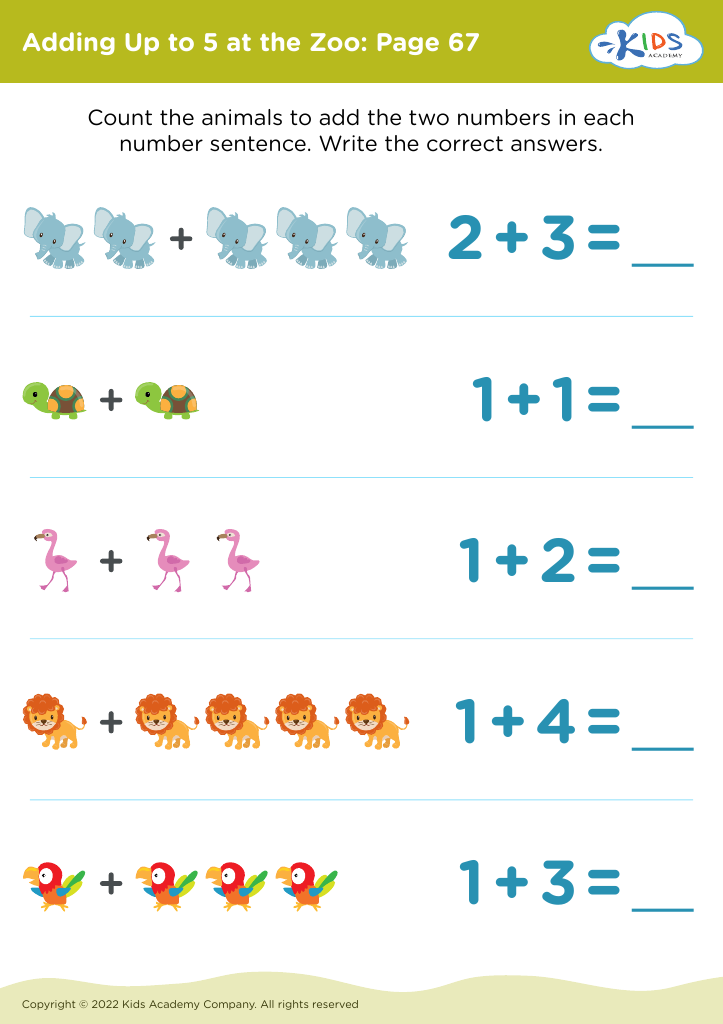
Help your little ones master basic math concepts with our "Visual Learning Reinforcement: Adding Up to 5 Worksheets" designed specifically for ages 3-5. These engaging worksheets utilize colorful visuals and hands-on activities to make learning addition fun and interactive. Children will strengthen their counting skills and number recognition while developing a solid foundation in mathematics. Each worksheet encourages visual reinforcement, allowing kids to grasp the concept of adding up to 5 through lively illustrations and simplified exercises. Perfect for homeschooling or classroom activities, these resources foster a love for math in early learners while building confidence and critical thinking skills.



%20(1).jpg)




Visual learning reinforcement is crucial for young children, particularly in the context of adding up to 5 for ages 3-5. At this developmental stage, kids are naturally curious and learn best through engaging, visual methods. Using visual aids like pictures, manipulatives (like counting blocks), and charts helps children concretely understand abstract concepts such as numbers and addition.
This approach caters to various learning styles—especially for visual learners, who absorb information better when they see it represented visually. It also helps to capture children's attention, making learning fun and interactive. For instance, if children can visually see five apples brought together, they can grasp the concept of adding 2 apples to 3 apples to make a total of 5, fostering a deep-rooted understanding.
Additionally, visual learning reinforcement builds confidence in math skills at an early age, laying a strong foundation for future learning. When parents and teachers prioritize these techniques, they promote not just math skills but also critical thinking and problem-solving skills. Ultimately, these methods support holistic development, paving the way for positive educational experiences and encouraging a lifelong love for learning in children.








