Basic Addition Addition and Subtraction Word Problems Worksheets for Ages 3-5
5 filtered results
-
From - To
Introduce your child to the world of math with our Basic Addition and Subtraction Word Problems Worksheets for Ages 3-5. Perfectly designed for young learners, our printable worksheets transform learning into a fun and engaging activity. Each worksheet includes simple word problems that help children develop their counting, addition, and subtraction skills in a playful way. Ideal for use at home or in the classroom, these exercises boost problem-solving abilities and build a strong mathematical foundation early on. Turn everyday learning into an exciting adventure with Kids Academy's expertly crafted worksheets! Explore and download free resources today.
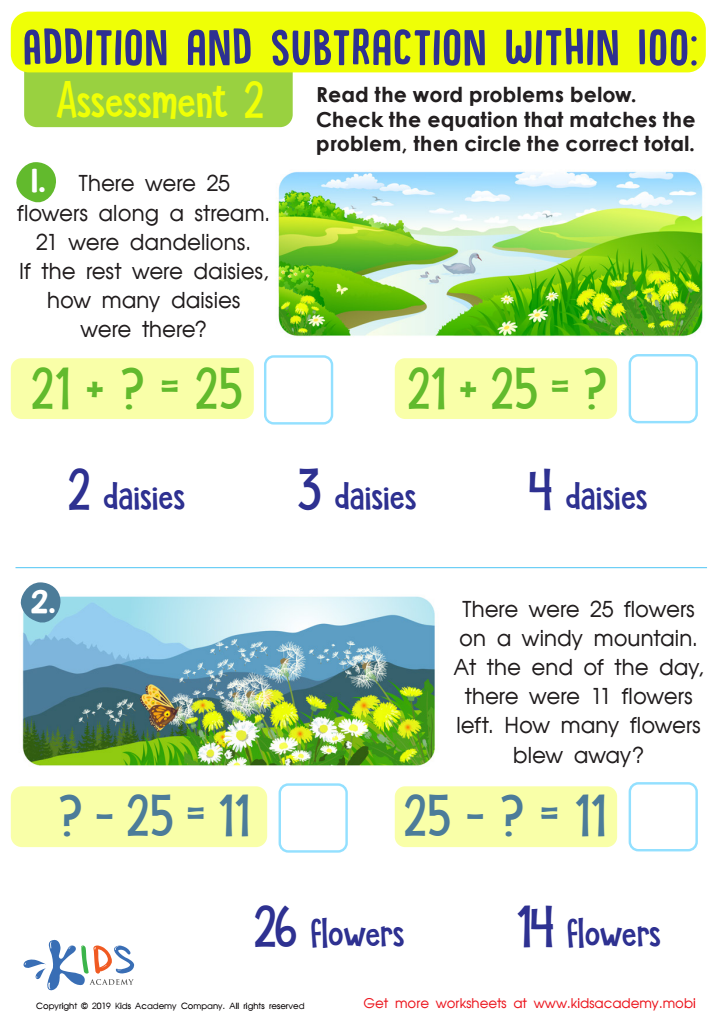
Assessment 2 Math Worksheet
 Assign to My Students
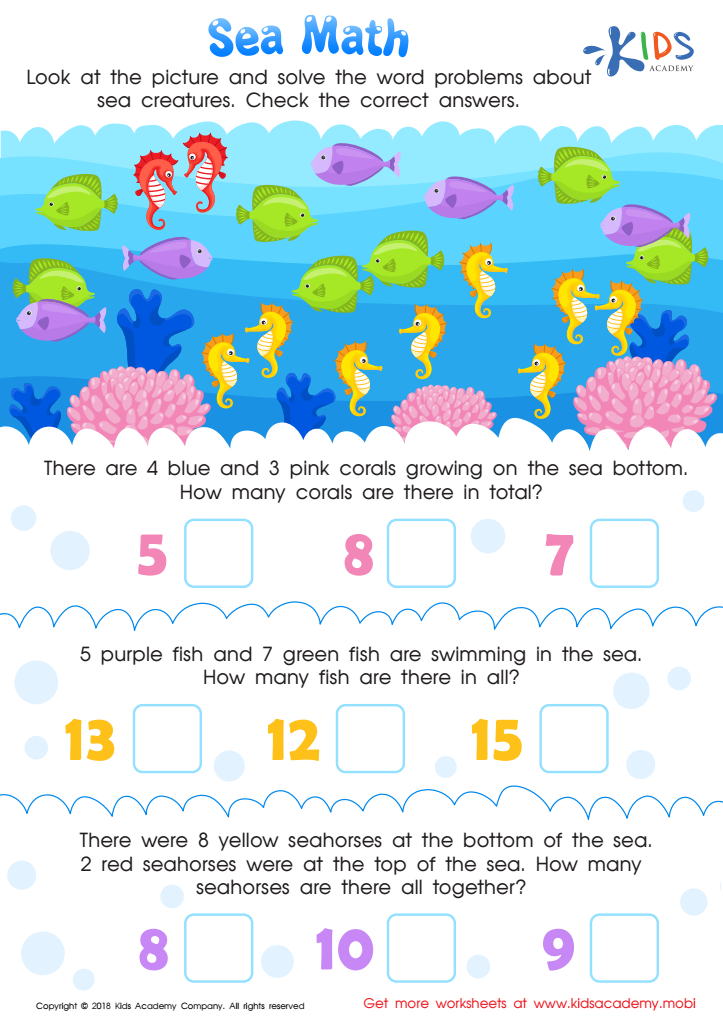
Sea Math Worksheet
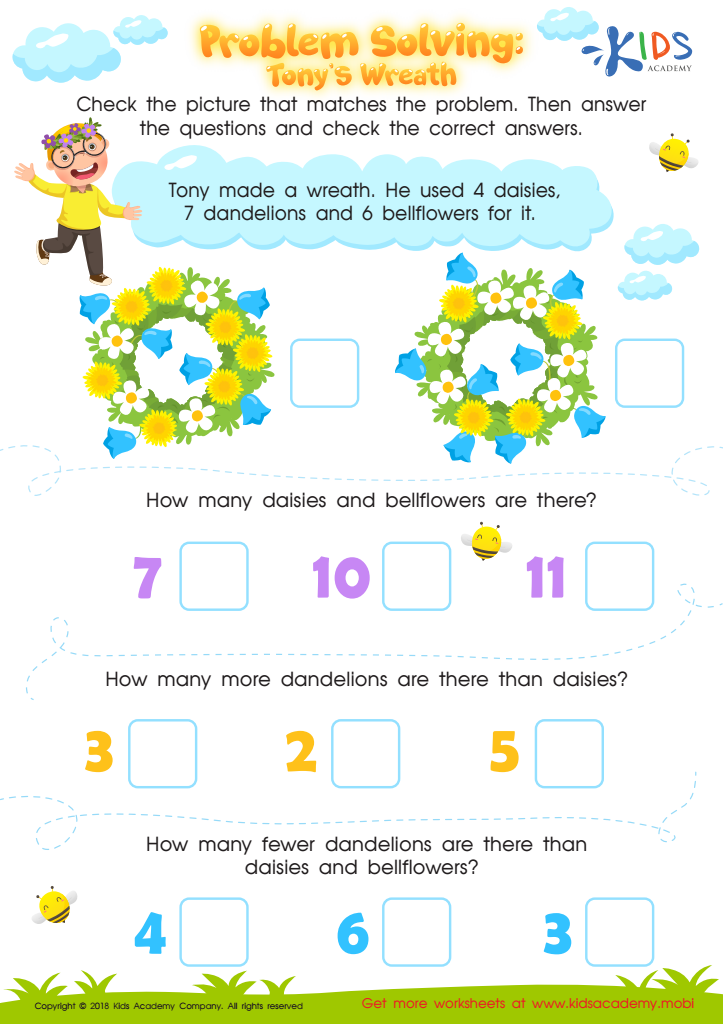
Problem Solving: Tony's Wreath Worksheet
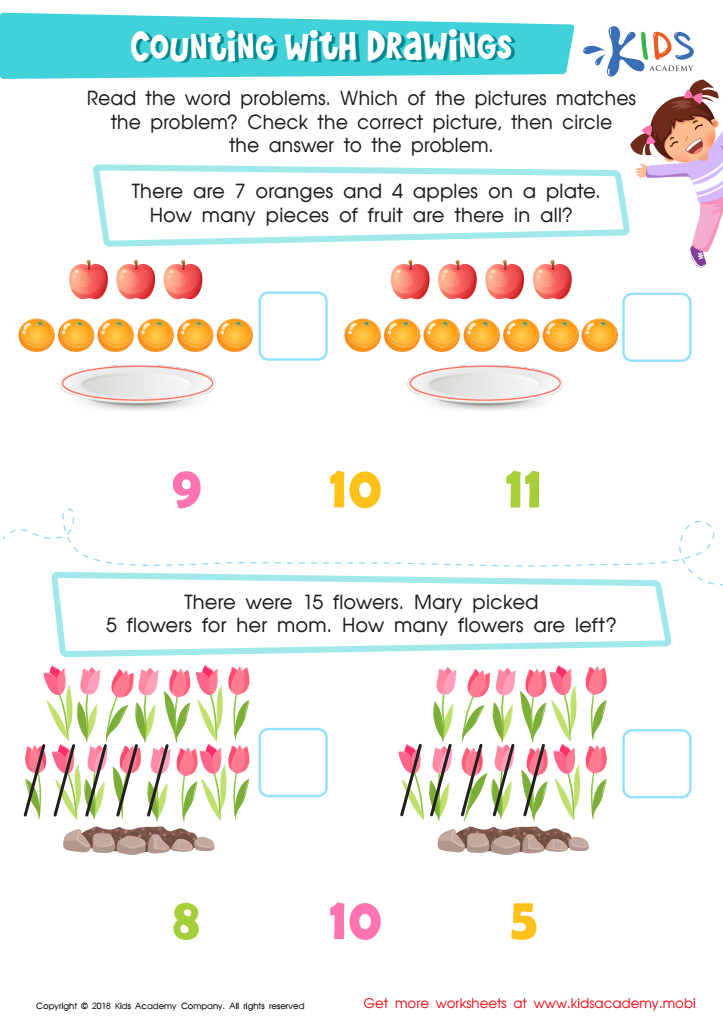
Counting with Drawings:Fruits & Flowers Worksheet
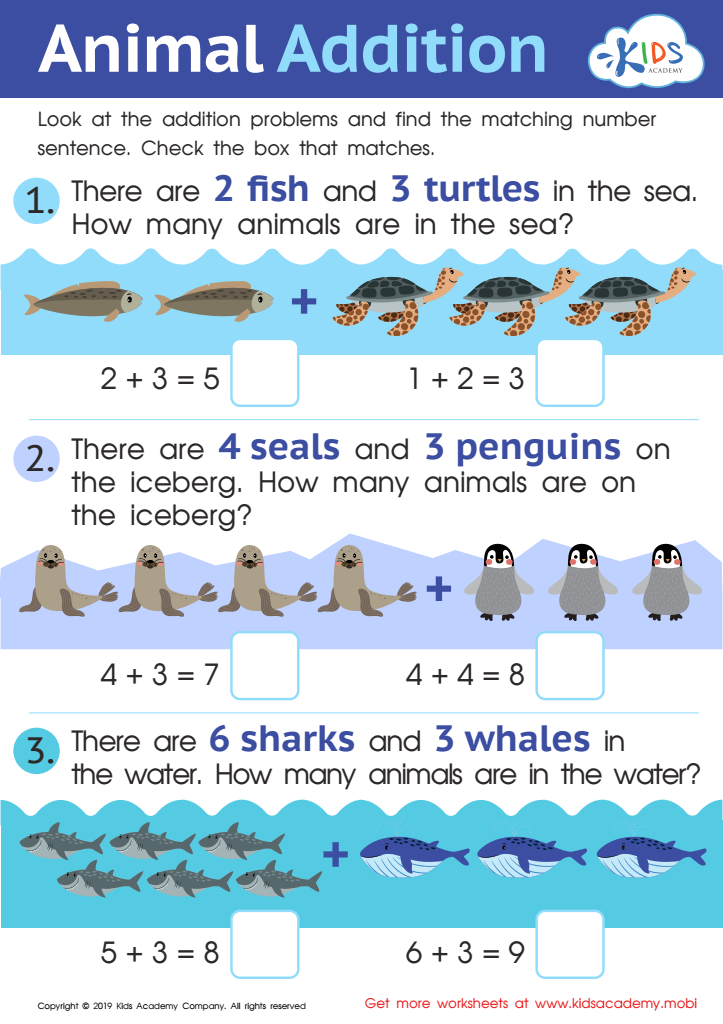
Animal Addition Worksheet








Parents and teachers should care about introducing basic addition and subtraction word problems to children aged 3-5 because it sets the groundwork for essential mathematical skills and critical thinking. At this early stage, children’s brains are highly adaptable, making it an ideal period to foster numeracy. Early math skills are not just about numbers; they form the basis of problem-solving abilities, logical reasoning, and analytical thinking, which are valuable throughout life.
Introducing word problems in particular helps children make connections between mathematical concepts and real-life situations. This contextual learning aids comprehension and retention because it makes math relevant and engaging for young minds. By embedding math in stories or everyday scenarios—such as sharing toys or counting fruits—children are more motivated and less intimidated by numbers.
Furthermore, developing these skills early can lead to greater confidence in handling more complex mathematical concepts in later years. It can reduce math anxiety and build a positive relationship with learning. When parents and teachers emphasize the importance of these foundational concepts and practice them regularly, it promotes a strong educational partnership that supports children in their overall cognitive development, including language and social skills. Hence, integrating basic word problems into early education is crucial for laying a solid foundation for future academic success.