
Multiplication practice Addition & Subtraction Worksheets for Ages 3-5
5 filtered results
Difficulty Level
Grade
Age
-
From - To
Subject
Activity
Standards
Welcome to our collection of engaging multiplication practice worksheets tailored for children aged 3 to 5! Designed to reinforce fundamental math skills, these worksheets incorporate fun activities that ease young learners into the concepts of addition, subtraction, and early multiplication. With colorful illustrations and interactive exercises, kids will enjoy practicing their arithmetic while developing critical thinking and problem-solving abilities. Our resources are perfect for both classroom settings and home learning, ensuring your child builds a strong foundation in math. Explore our worksheets today and watch your little mathematician gain confidence and enthusiasm for numbers!
Favorites
With answer key
Interactive
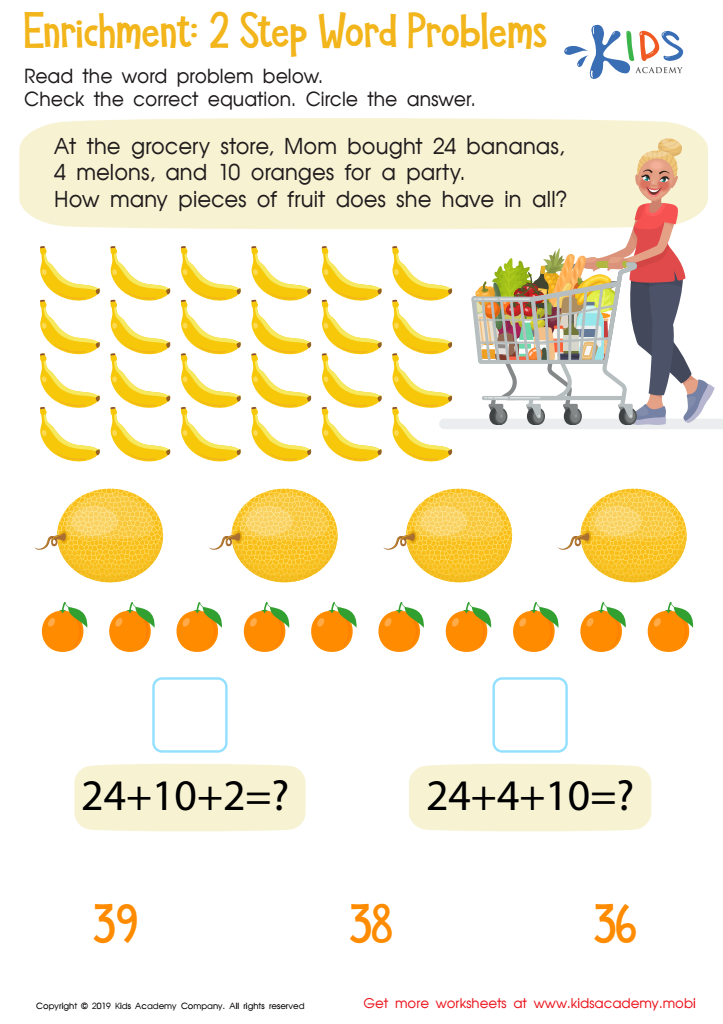
Enrichment -2 Step Word Problems Worksheet
Help your students learn math easier and faster with this colorful worksheet. Read the word problem and then guide them in checking the correct equation and finding the answer. Your students will benefit from the extra help, as they work through new concepts each day.
 Assign to My Students
Enrichment -2 Step Word Problems Worksheet
Worksheet
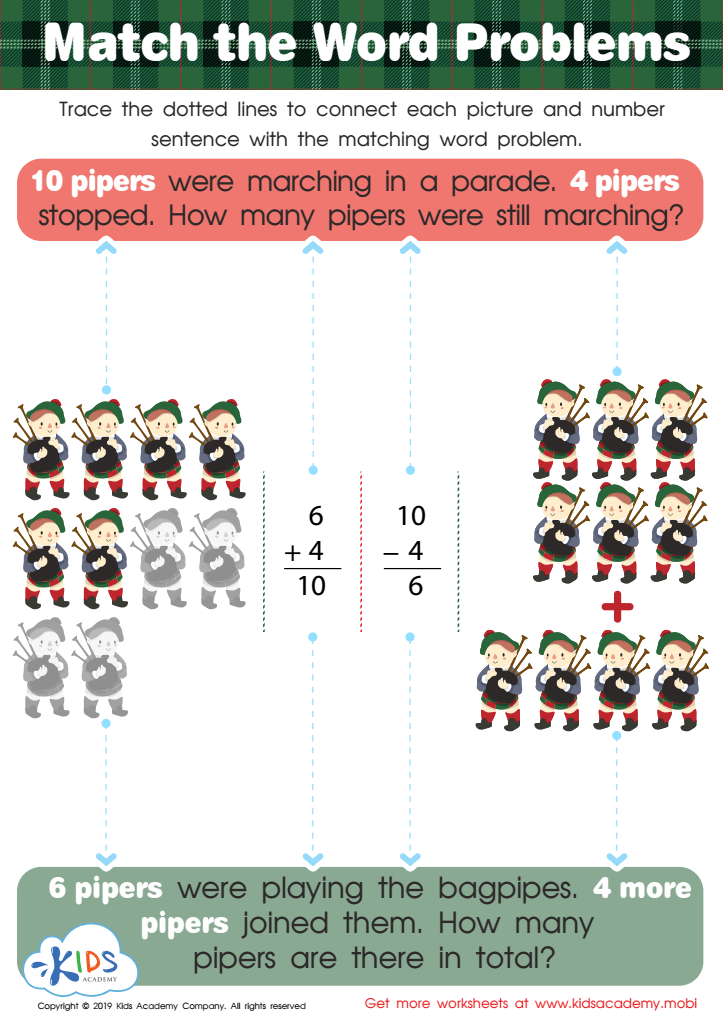
Match the Word Problems Worksheet
Read this word problem to your kids: Help them understand how it can be translated into a number problem. Trace the dotted lines to see how each picture and number sentence match the problem. With this worksheet, you can show your kids how easy it is to transform a word problem into a number problem.
Match the Word Problems Worksheet
Worksheet
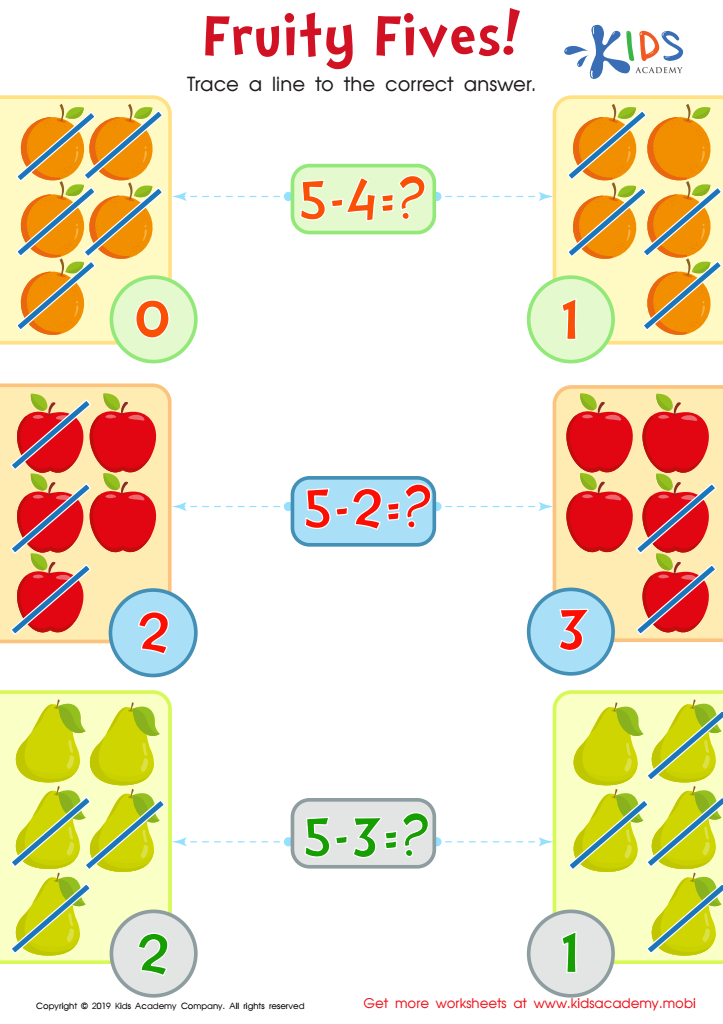
Fruity Fives! Worksheet
This tracing sheet has three equations for your kids to solve. Make learning fun with colorful objects and text! They may need help, so be prepared to assist them. Help them solve the equations and trace a line to the correct answer.
Fruity Fives! Worksheet
Worksheet
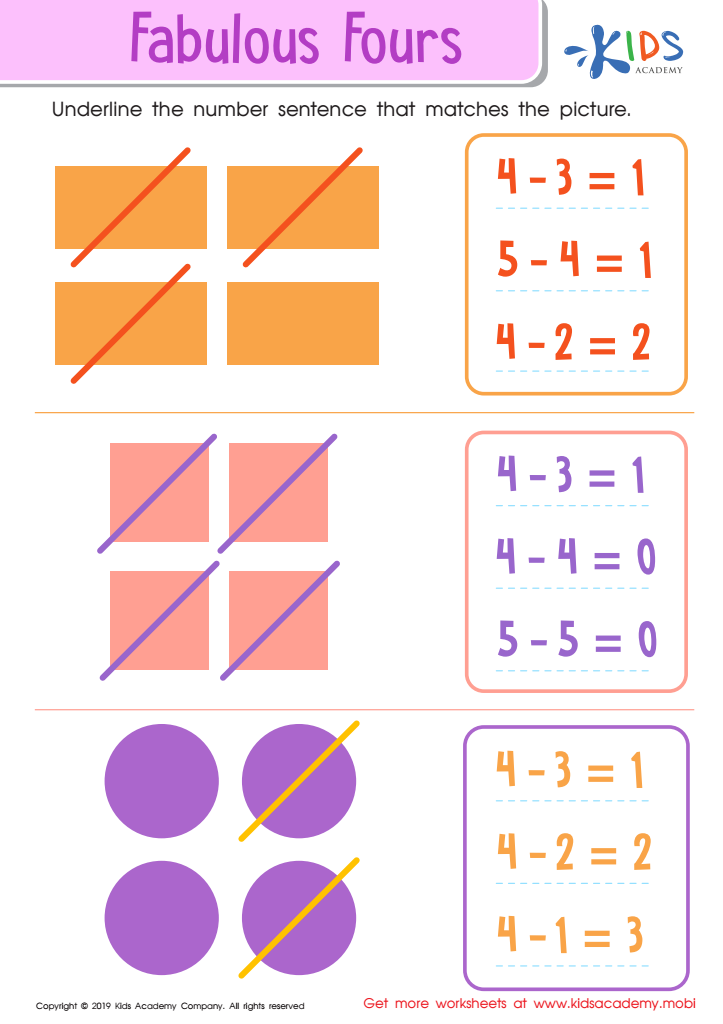
Fabulous Fours Worksheet
Mastering basic math like addition and subtraction is essential for your kids. Use fun exercises and tests to evaluate their understanding of equations. Challenge them with this worksheet - have them count the objects in each picture, then trace a line to the pictures which show the equation 3-2.
Fabulous Fours Worksheet
Worksheet
Twos at the Zoo Worksheet
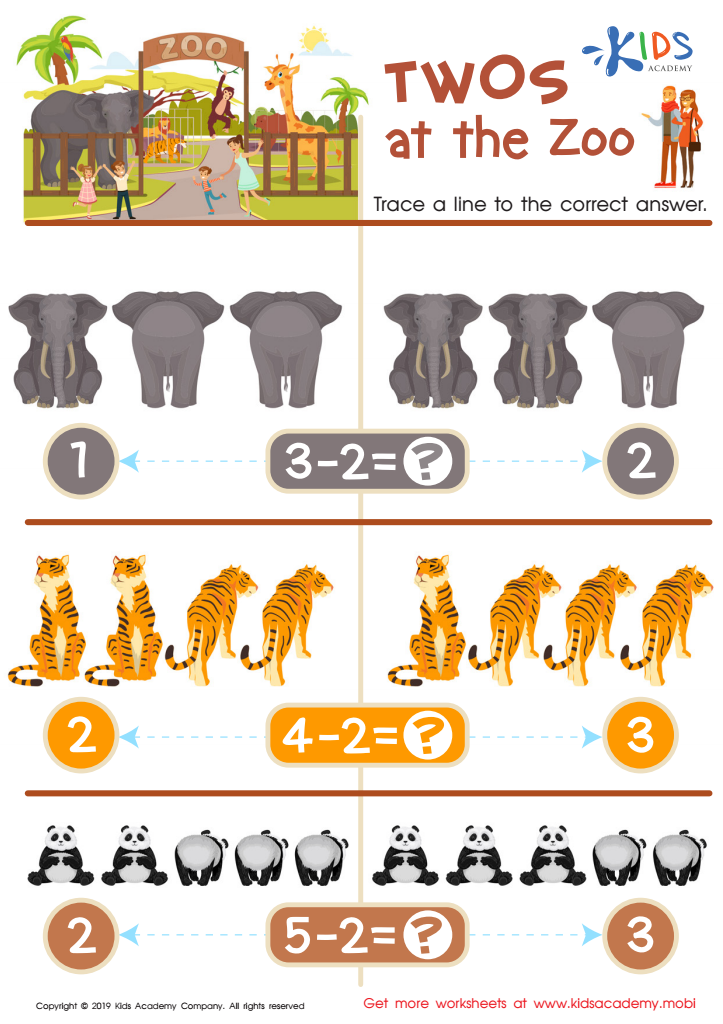
At the zoo, your kids can have fun with animals. Ask them to name their favorite ones and identify them in the printout. Count animals in each group together, then help your kids solve the equations and trace a line to the answer. It's an enjoyable way to combine learning and exploration!
Twos at the Zoo Worksheet
Worksheet
Join Kids Academy for Free
Who is primarily going to use this learning content?








Parents and teachers should prioritize multiplication practice alongside addition and subtraction for children ages 3-5, as early math skills lay the foundation for later academic success. At this young age, children's brains are highly malleable, making them more receptive to learning and understanding mathematical concepts. Introducing multiplication concepts in a playful manner can help young learners recognize patterns and relationships in numbers, enhancing their overall number sense.
Practicing addition and subtraction helps children develop basic arithmetic skills, fostering confidence and encouraging critical thinking. By integrating multiplication early on, educators can demonstrate how these operations relate to one another, reinforcing the idea that math is interconnected. For instance, grouping objects can visually illustrate how addition and multiplication work together.
Moreover, engaging students with fun, hands-on activities promotes enthusiasm and enjoyment in math, reducing anxiety around the subject. When parents and teachers make math a part of everyday life through games and practical applications, children are more likely to develop a positive attitude toward learning.
Ultimately, nurturing these skills at an early age equips children with essential tools to tackle more complex mathematical concepts in the future, preparing them for lifelong success in school and beyond.








