Basic counting skills Addition Worksheets for Ages 3-5
3 filtered results
-
From - To
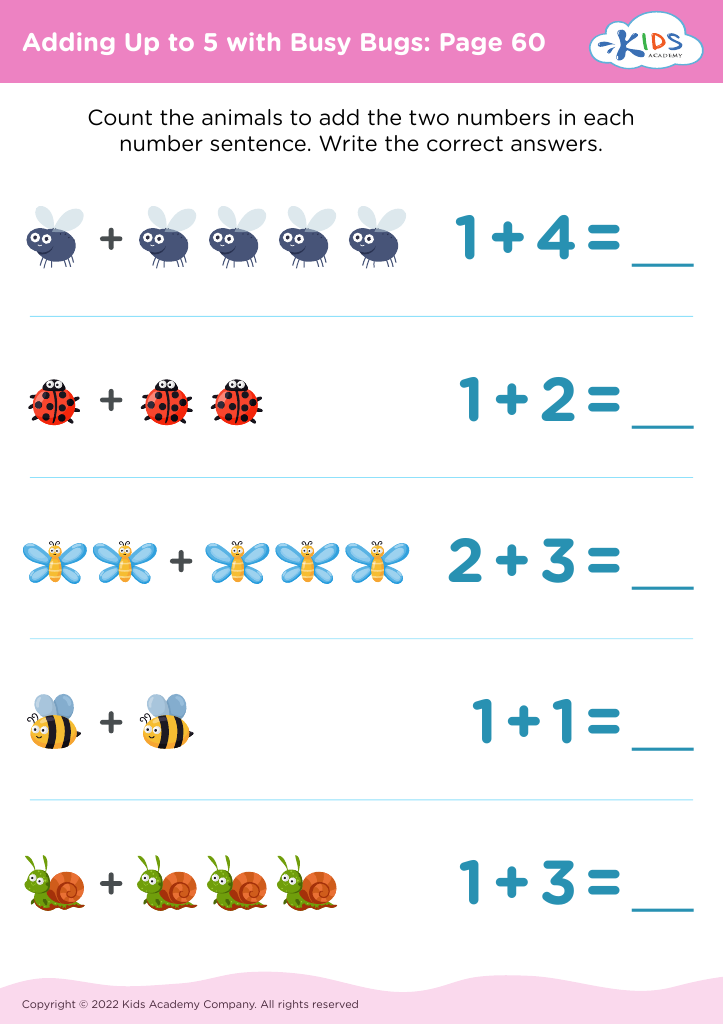
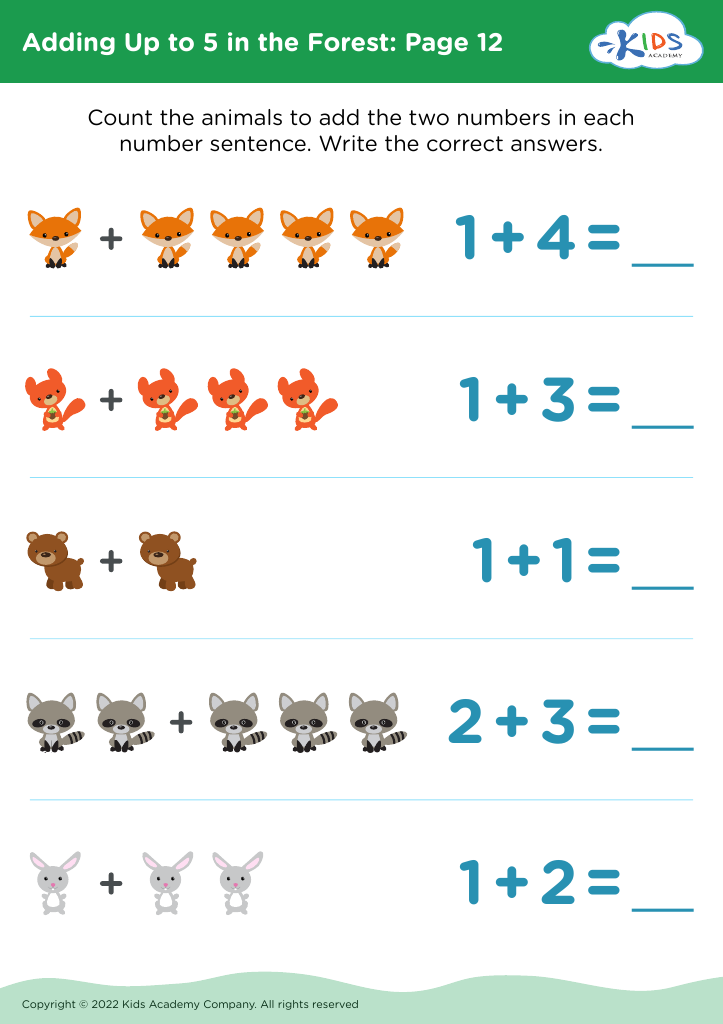
Introduce your child to the exciting world of numbers with our "Basic Counting Skills Addition Worksheets for Ages 3-5." Tailored specifically for preschoolers and kindergarteners, these printable activities make learning fun and engaging. Kids will develop strong foundational math skills, including number recognition, counting, and simple addition. Each worksheet features vibrant illustrations and interactive exercises designed to capture young learners' attention and promote hands-on learning. Perfect for home schooling or extra practice, these addition worksheets help set the stage for a lifetime of math success. Boost your child's confidence and watch them delight in their mathematical achievements!
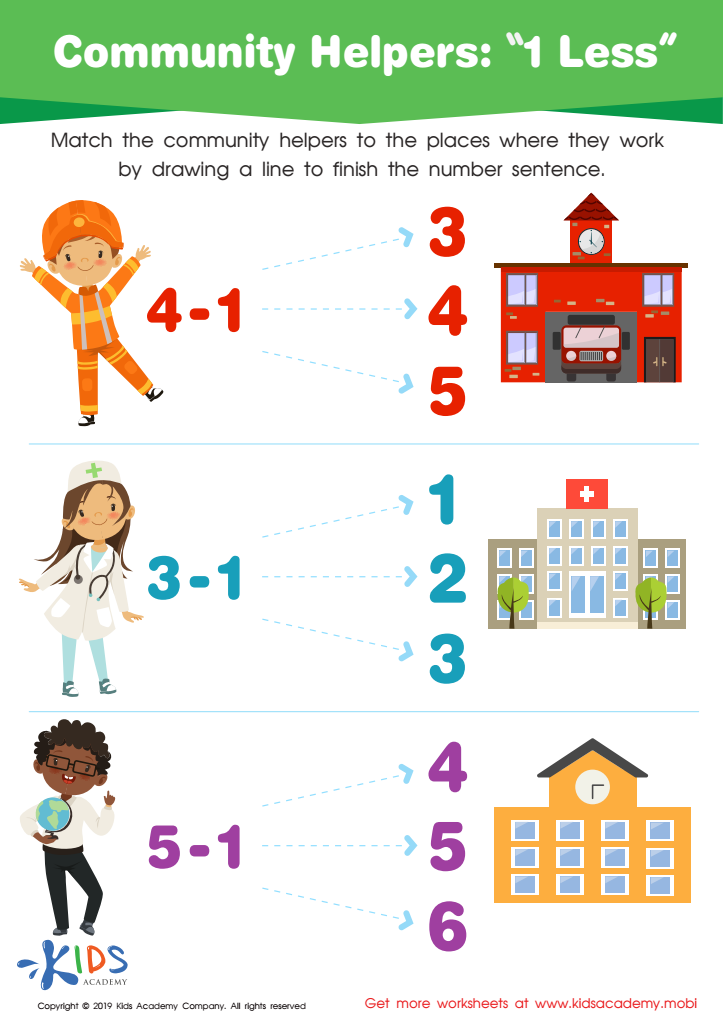
Community Helpers: 1 less Worksheet
 Assign to My Students


.jpg)





Basic counting skills and early addition for children aged 3-5 are foundational elements of their overall mathematical understanding and cognitive development. At this crucial stage, children's brains are rapidly developing, and their ability to grasp basic numerical concepts sets the groundwork for more complex mathematical learning in the future.
First, early counting and addition help build a child's number sense, enabling them to understand the quantities that numbers represent. This proficiency is essential for navigating everyday tasks, such as distributing toys, sharing snacks, or understanding time.
Moreover, grasping basic mathematical concepts at an early age fosters problem-solving skills and logical thinking. When children learn to count and perform simple additions, they engage in patterns and sequence recognition, which boosts their analytical abilities.
In addition, early math skills are strongly correlated with later academic achievement. A solid mathematical foundation in the early years prepares children for success in school subjects beyond math, including science and even literacy.
Finally, fostering a positive attitude towards math from a young age can have a lasting impact on a child's confidence and interest in the subject. Parents and teachers who prioritize and nurture these basic skills can demystify math, making it a fun and enjoyable learning experience that encourages lifelong curiosity and academic persistence.








