
Following instructions Addition Worksheets for Ages 3-5
5 filtered results
Difficulty Level
Grade
Age
-
From - To
Subject
Activity
Standards
Discover the ideal resource for enhancing your child's early math skills with our "Following Instructions Addition Worksheets for Ages 3-5." These engaging worksheets are designed to help young learners not only grasp the concept of addition but also practice the crucial skill of following instructions. Each worksheet features fun, age-appropriate activities that promote focus, comprehension, and number recognition. Perfect for preschoolers and kindergarteners, these printables make learning enjoyable and effective. Invest in your child's educational journey with these thoughtfully crafted worksheets, ensuring a strong foundation in math from an early age. Start boosting your child's abilities today!
Favorites
With answer key
Interactive
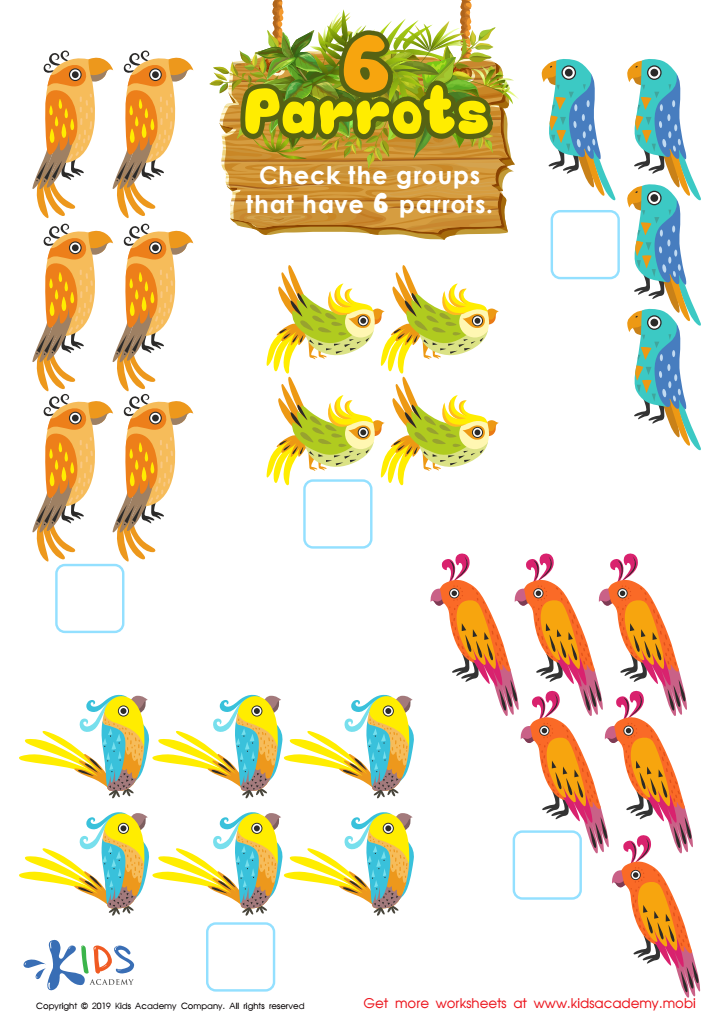
6 Parrots Worksheet
Love parrots? Here's a free worksheet to help your children practice counting to six with colorful parrot representations! Kids will adore counting the parrots and checking off groups of six - and it won't even feel like math! Just a fun way to make some new and exciting friends.
 Assign to My Students
6 Parrots Worksheet
Worksheet
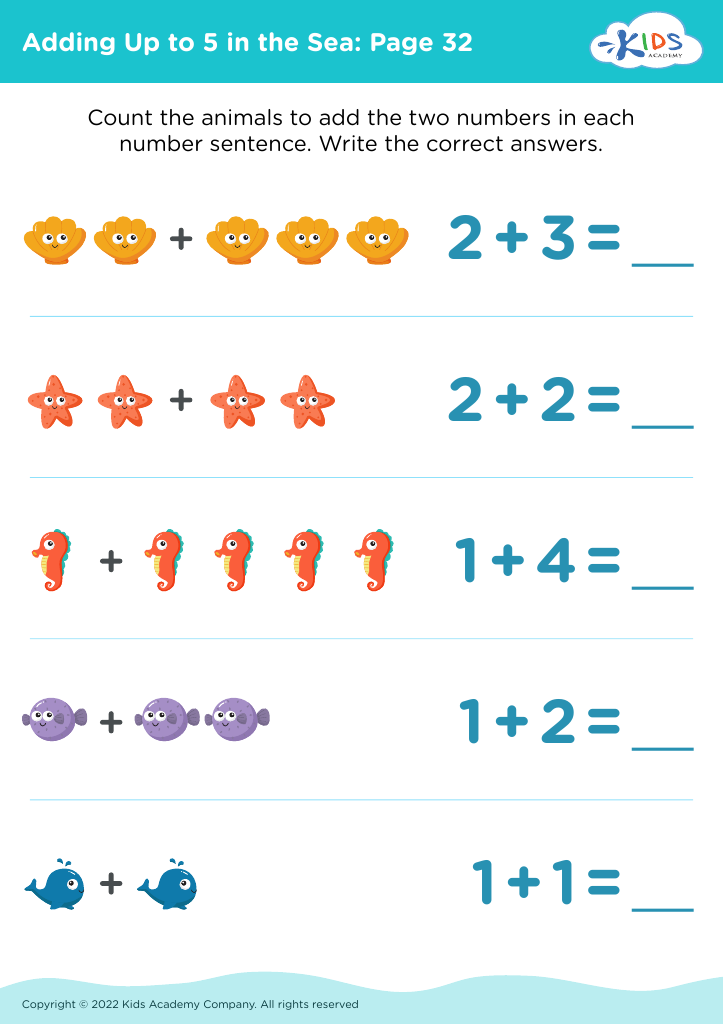
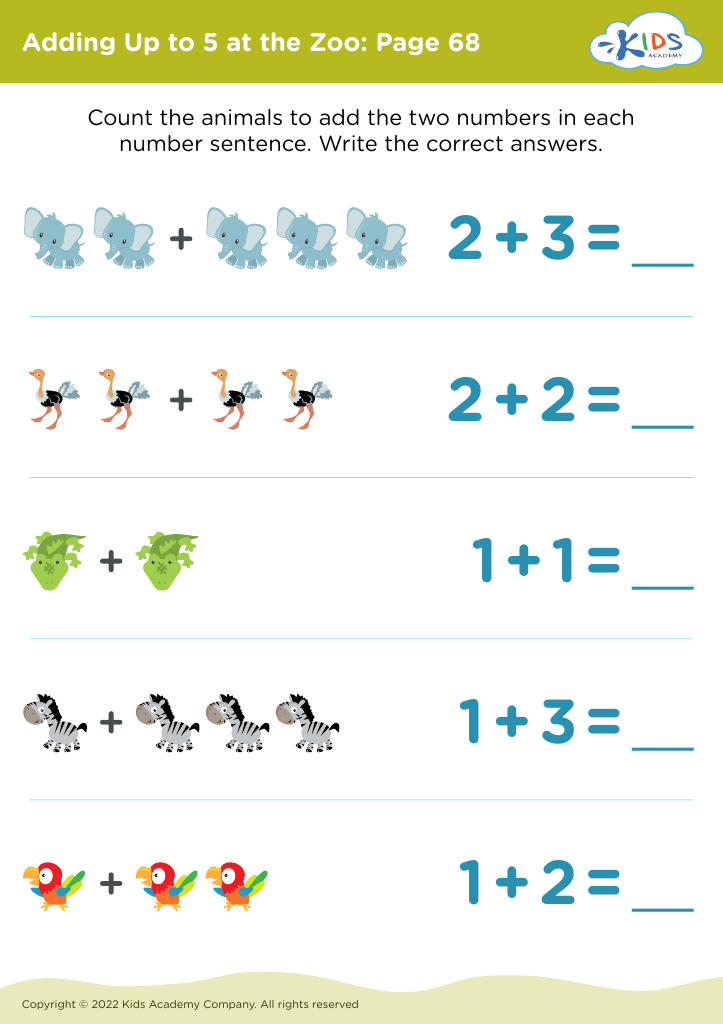
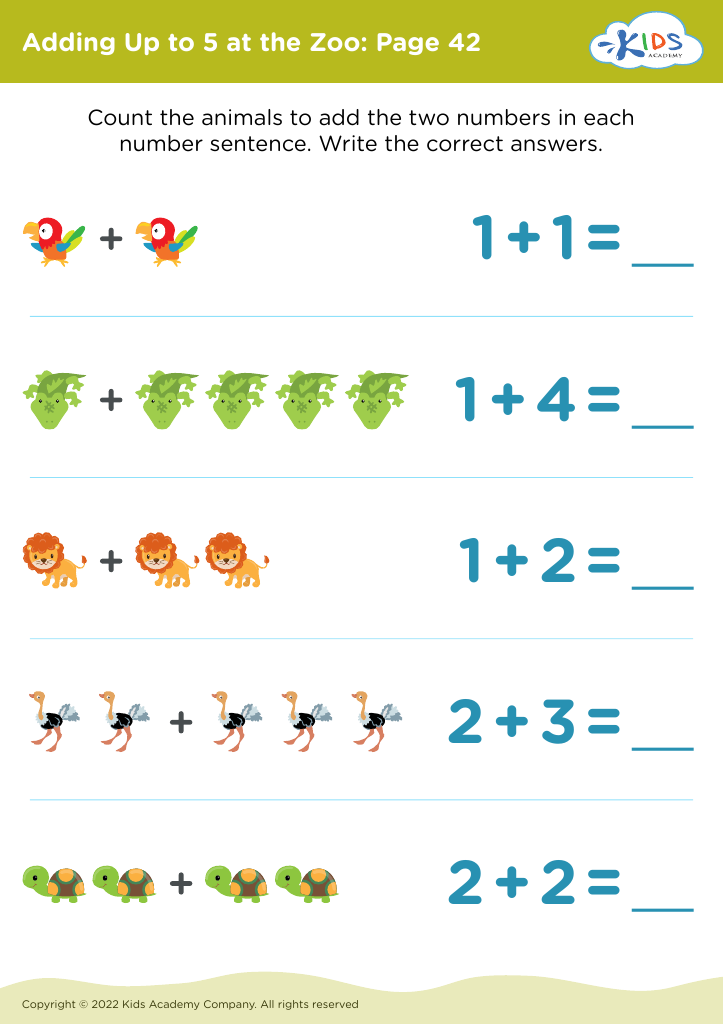
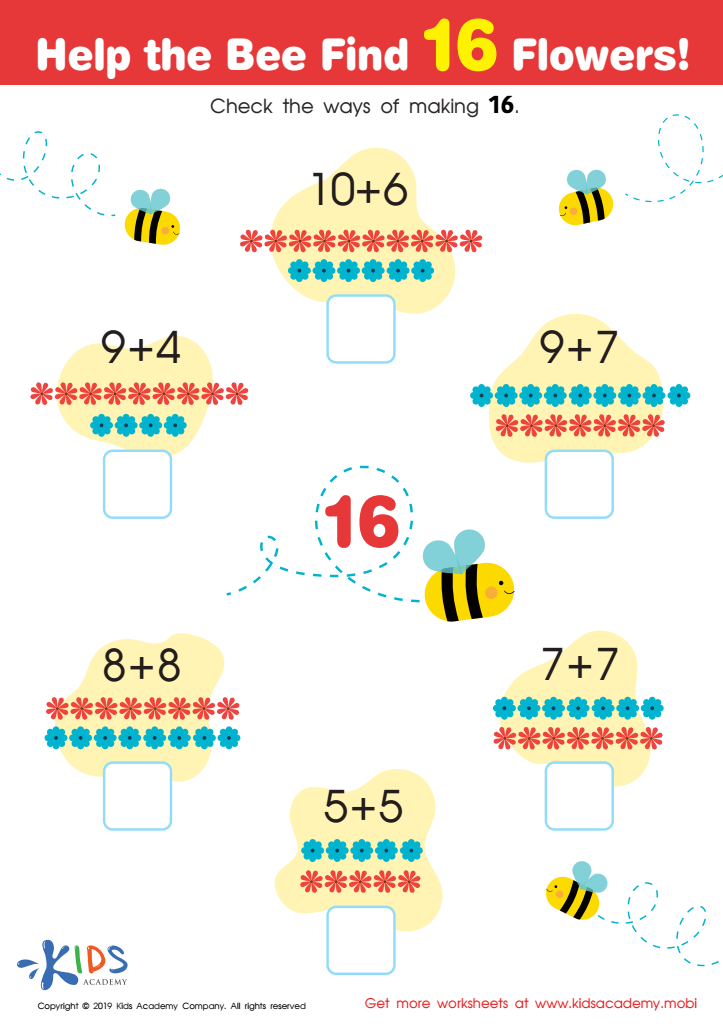
Help the Bee Find 16 Flowers Worksheet
Ask your students to count as high as they can. Show them that different numbers can equal the same figure with examples like 2+2=4 and 3+1=4. Ask for more examples, then help the bees find 16 flowers by checking the ways of making 16.
Help the Bee Find 16 Flowers Worksheet
Worksheet
Join Kids Academy for Free
Who is primarily going to use this learning content?








Parents and teachers should prioritize teaching addition through following instructions to young children aged 3-5 because it lays a crucial foundation for their overall cognitive and academic development. At this formative age, children's brains are highly receptive to new information, and grasping basic mathematical concepts through structured activities fosters a strong understanding that will benefit them in later educational endeavors.
Following instructions to practice addition reinforces key skills such as listening, comprehension, and focus. These skills are not only essential for mathematics but also for all areas of learning and daily activities. Structured addition exercises enhance their number sense and counting abilities which are vital in everyday life, such as recognizing quantities and understanding the concept of more or less.
Moreover, mastering addition provides children with early confidence in their mathematical abilities, promoting a positive attitude towards the subject as they progress in school. It also encourages logical thinking and problem-solving skills. In a collaborative environment, such as a classroom or family setting, following instructions can help improve social skills by promoting teamwork and communication, fostering a supportive learning community.
Overall, emphasizing following instructions in early addition sets the stage for strong educational pillars, ensuring a smoother transition into more complex mathematical concepts in future years.








