Math problem-solving Addition Worksheets for Ages 3-5
4 filtered results
-
From - To
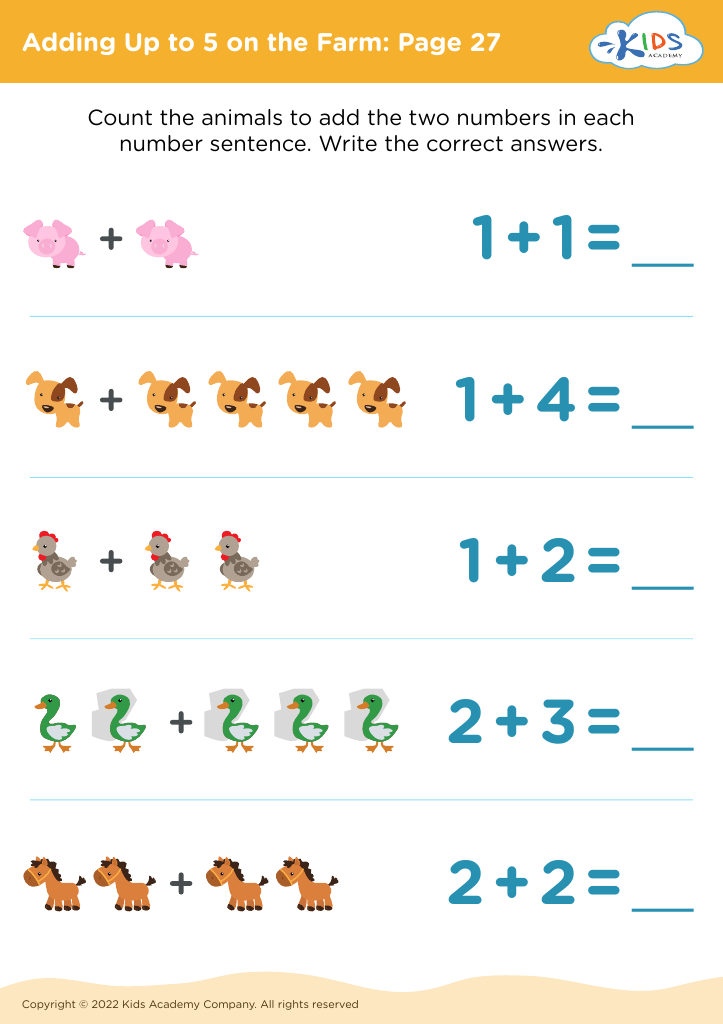
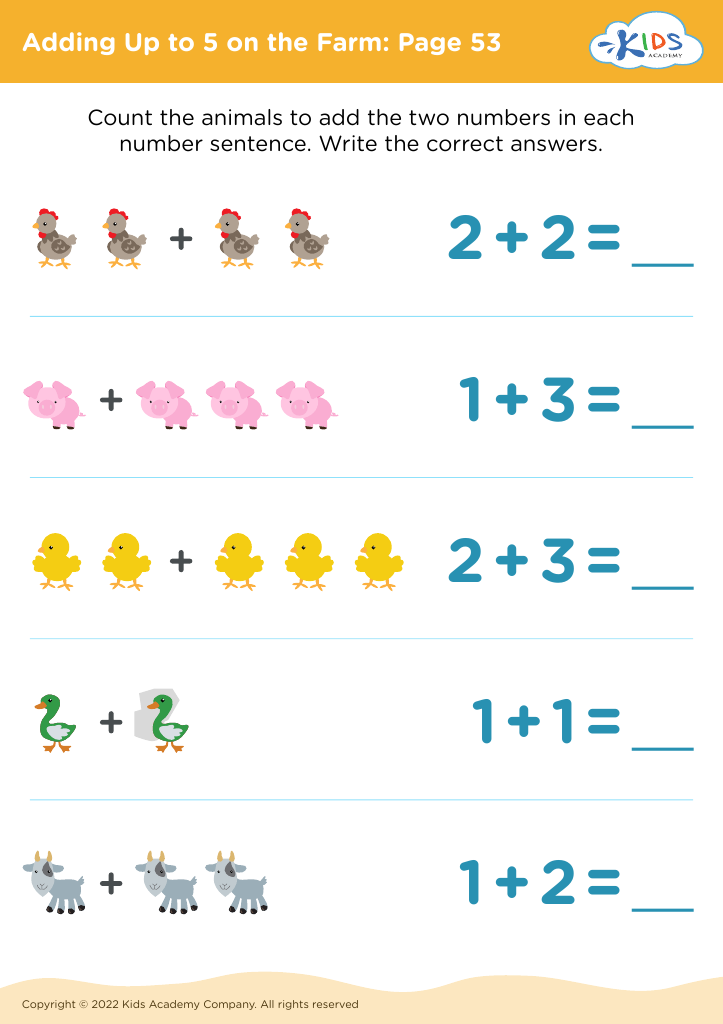
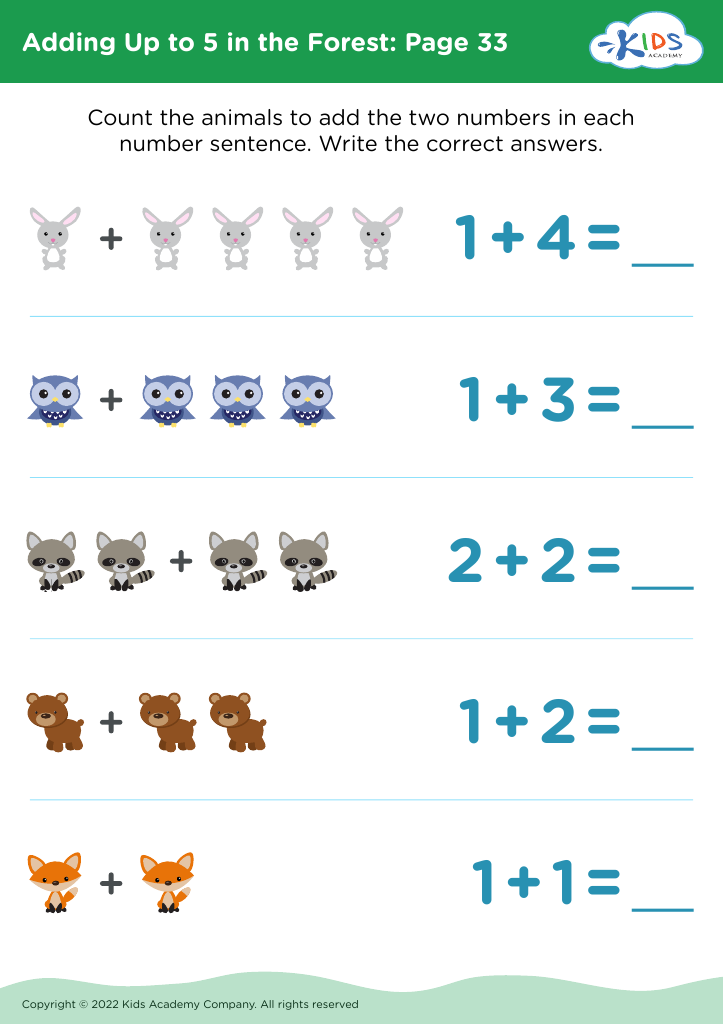
Explore our engaging Math Problem-Solving Addition Worksheets designed specifically for children ages 3-5! These worksheets provide a fun and interactive way for young learners to grasp the essentials of addition. With colorful illustrations and age-appropriate problems, children can enhance their critical thinking skills while developing a foundation in mathematics. Each worksheet encourages problem-solving strategies, allowing kids to work through challenges independently. Perfect for parents and educators, our resources aim to boost confidence in budding mathematicians. Download our user-friendly worksheets today and watch your little ones excel in their early math journey! Perfect for home, classroom, or enrichment activities!
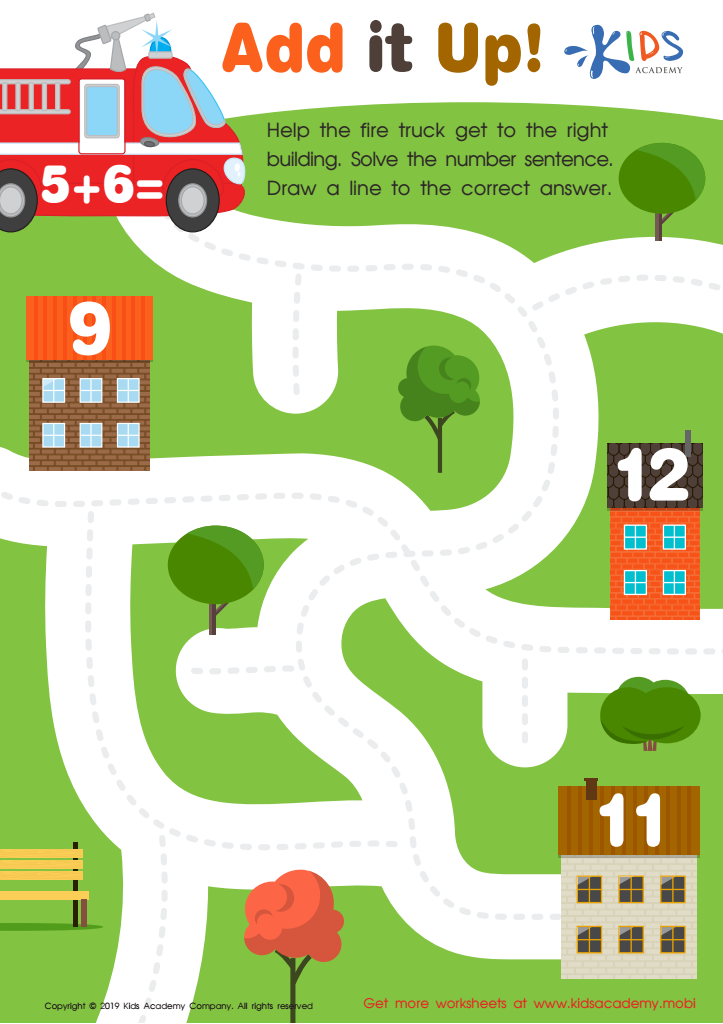
Add it Up Worksheet
 Assign to My Students








Math problem-solving through addition is a foundational skill that significantly impacts the cognitive and academic development of children aged 3-5. Early exposure to math nurtures critical thinking and problem-solving skills, as young children learn to recognize patterns, sequences, and relationships between numbers. Engaging in addition helps develop not only numerical understanding but also enhances fine motor skills through manipulative use, such as counting blocks or fingers.
Furthermore, math sets the stage for future learning. The early acquisition of addition skills forms the basis for more complex mathematical concepts that children will encounter later in their education. This early introduction can also foster a positive attitude toward math, demystifying the subject for children and encouraging a lifelong love for learning.
Parents and teachers play a crucial role in creating a rich, math-friendly environment. By integrating playful activities like games, songs, and drawing, they can make learning about addition enjoyable. When caregivers show interest and support, children are more likely to engage actively, boosting their confidence as learners. Supporting young children's math development lays the groundwork for their success in school and beyond, ensuring they grow up with the tools they need for academic achievement and daily life.








