Understanding number relationships Addition Worksheets for Ages 3-5
3 filtered results
-
From - To
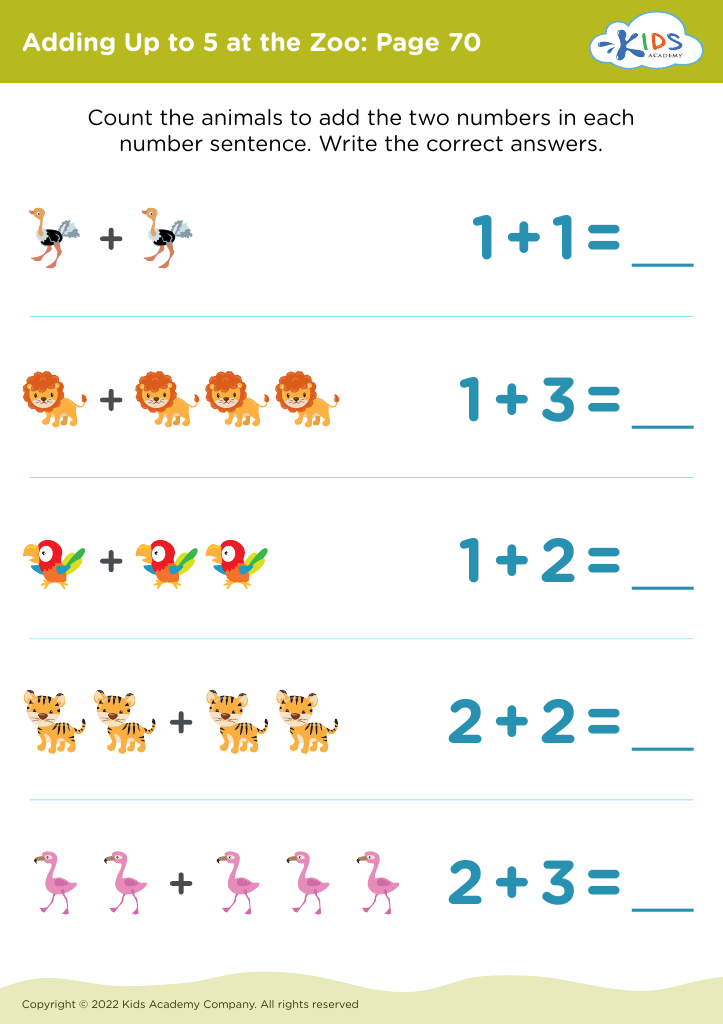
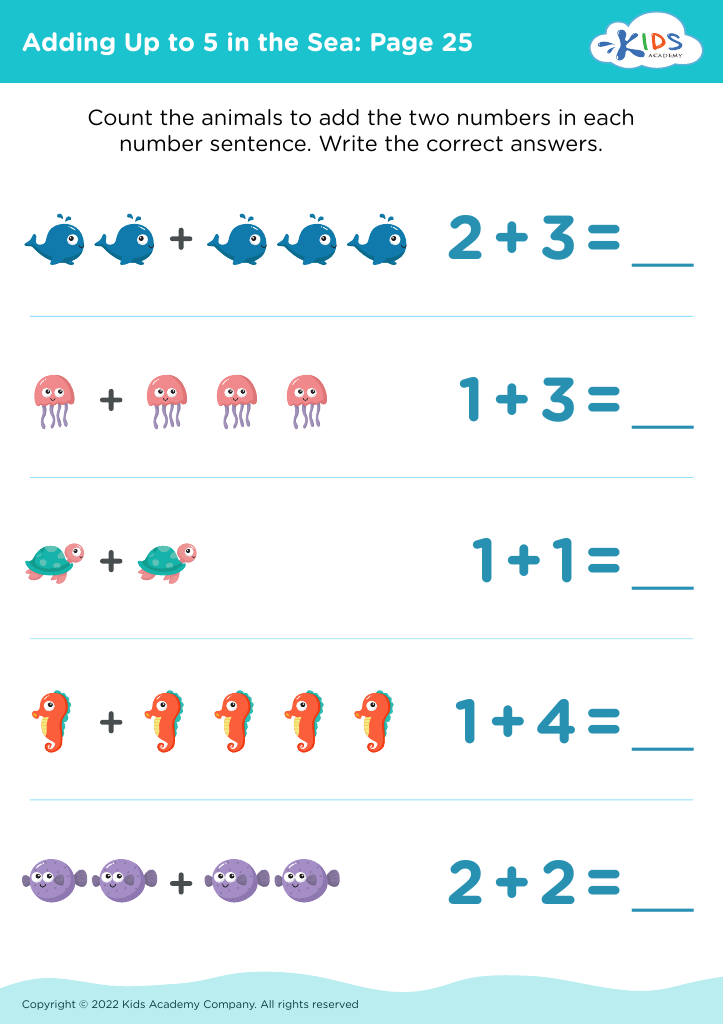
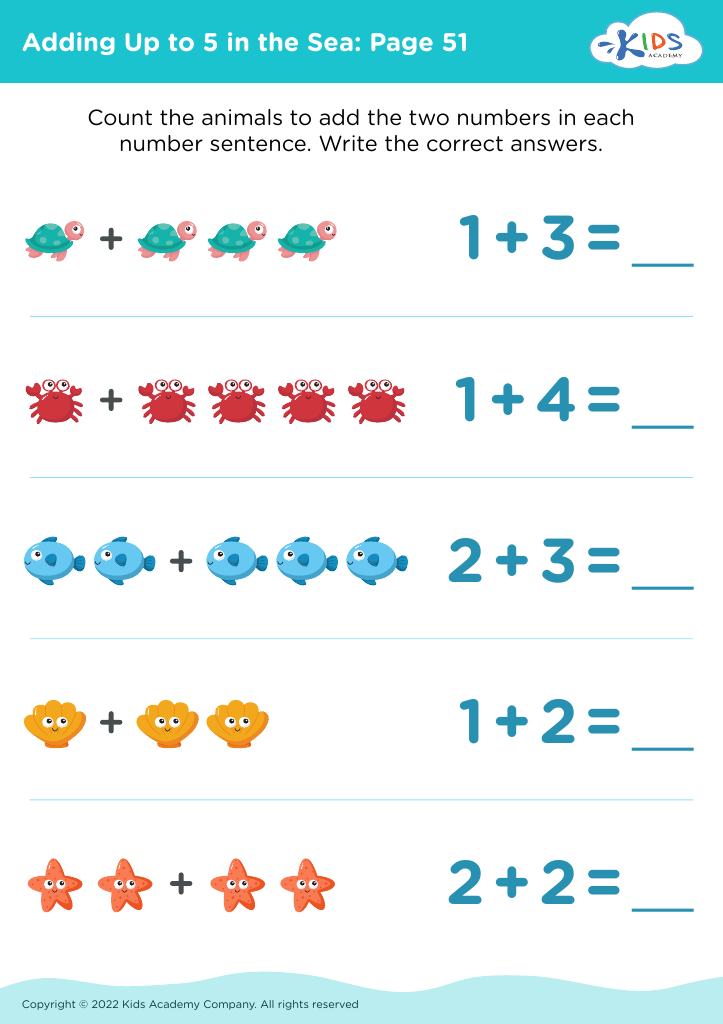
"Understanding Number Relationships Addition Worksheets for Ages 3-5" offer fun, educational activities that help your child build foundational math skills. These engaging worksheets teach youngsters the basics of addition using colorful illustrations and simple exercises that promove critical thinking and number recognition. Tailored for early learners, they foster a love for math while improving cognitive skills and problem-solving abilities. Boost your child’s confidence in mathematics with this delightful collection designed to make learning enjoyable and effective, laying the groundwork for future numerical success. Ideal for hands-on practice at home or in the classroom.



.jpg)




Understanding number relationships and basic addition at ages 3-5 forms the foundation for a child's future math skills and overall cognitive development. During these formative years, young children are like sponges, absorbing information rapidly and developing critical neural pathways. Introducing them to concepts like counting, quantity comparison, and simple addition helps kickstart their numeracy skills early.
Firstly, grasping number relationships helps children make sense of the world around them, as they learn to categorize and quantify objects. This ability is fundamental not just in mathematics but in everyday situations, such as understanding time, money, or distances.
Secondly, learning addition early on fosters problem-solving and reasoning skills. When children understand that two groups of objects can be combined to make a new total, they start to develop logical thinking processes. This nurtures their ability to approach and solve increasingly complex problems as they grow.
Lastly, early exposure to these concepts builds confidence. A strong grasp of foundational math skills creates a positive feedback loop; children who feel competent in math are more likely to enjoy learning and tackle more challenging subjects with enthusiasm and resilience.
In essence, by focusing on number relationships and addition from an early age, parents and teachers provide children with crucial tools to succeed academically and in everyday life.








