Visualization skills Addition Worksheets for Ages 3-5
3 filtered results
-
From - To
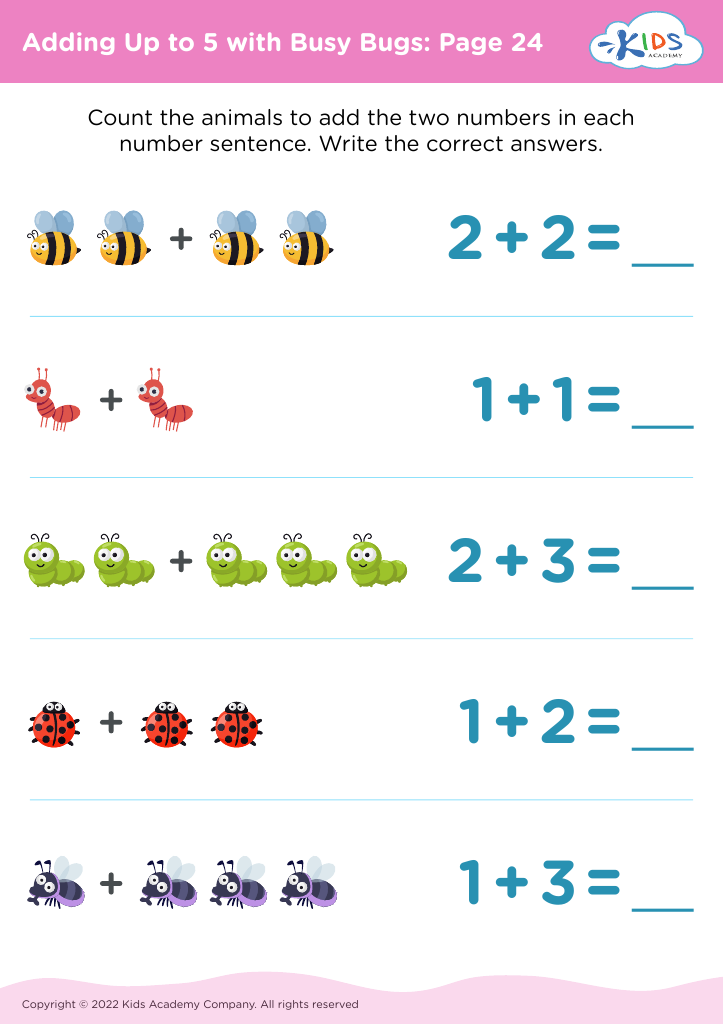
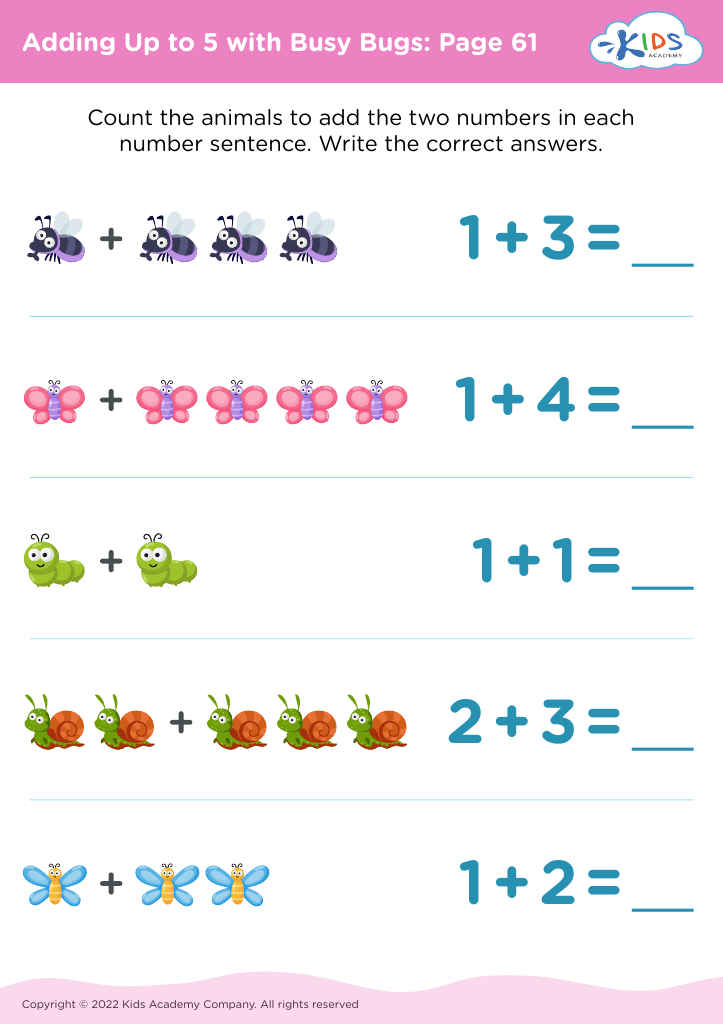
Enhance your child's learning journey with our "Visualization Skills Addition Worksheets" designed specifically for ages 3-5. These engaging worksheets help young learners develop essential visualization skills while mastering basic addition concepts. Through vibrant visuals and interactive activities, children will improve their ability to identify numerical relationships and understand addition in a fun and friendly way. Our carefully crafted worksheets encourage critical thinking and spatial awareness, fostering a strong mathematical foundation. Parents and educators can easily incorporate these tools into daily learning routines, ensuring kids are not only prepared for school but also excited about math! Explore our collection today!
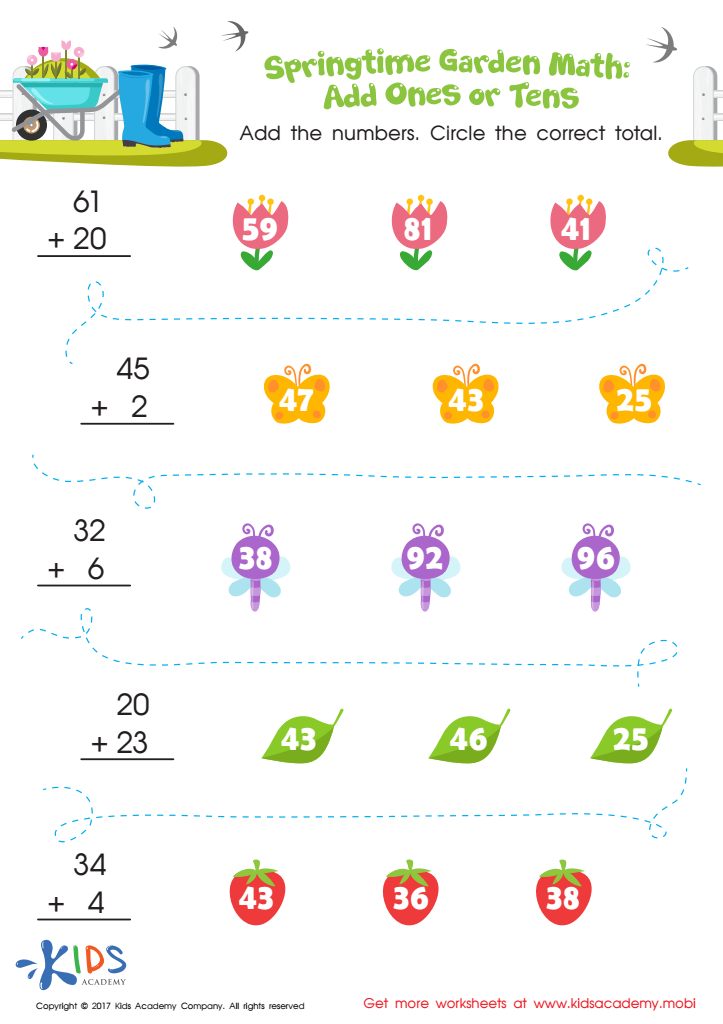
Springtime Garden Math Worksheet
 Assign to My Students








Visualization skills are crucial for young children, particularly between the ages of 3 to 5, as they lay the foundation for future learning, including mathematical concepts like addition. Developing these skills can significantly enhance a child's ability to understand and manipulate numbers. Visualization helps children create mental images of quantities, making it easier for them to grasp abstract concepts, recognize patterns, and solve problems.
When parents and teachers emphasize visualization skills, they foster a child's ability to mentally visualize the addition of numbers rather than relying solely on physical objects or fingers. This independence boosts confidence and encourages a more profound understanding of mathematical relationships. For instance, if a child can visualize three apples and two more, they can more easily understand that the total is five without needing to count each fruit physically.
Furthermore, strong visualization skills support early literacy and overall cognitive development. Activities that engage children's imagination, such as storytelling or drawing, can also enhance these abilities, creating a holistic learning environment. By nurturing visualization skills, parents and teachers are not just teaching addition; they're equipping children with critical cognitive tools essential for future academic success, ultimately fostering a lifelong love of learning.








