Addition skills Money Worksheets for Ages 3-5
3 filtered results
-
From - To
Boost your child's early math abilities with our engaging "Addition Skills Money Worksheets for Ages 3-5." Designed to make learning fun, these printable worksheets help young learners master basic addition using familiar coins and bills. Perfect for preschoolers and kindergarteners, each worksheet introduces simple money concepts while strengthening essential math skills. With colorful illustrations and age-appropriate challenges, kids will develop confidence in adding small sums and understanding the value of money. Ideal for classroom use or home practice, these worksheets provide a strong foundation for future arithmetic success. Download now to inspire a lifelong love of learning and numeracy!
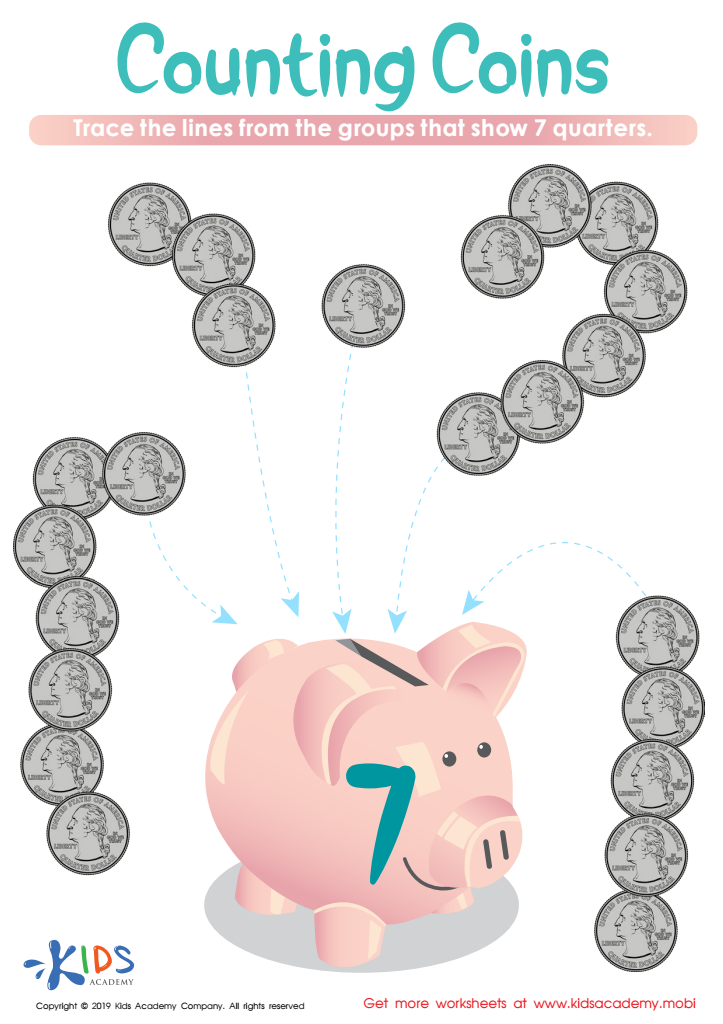
Counting Coins Worksheet
 Assign to My Students
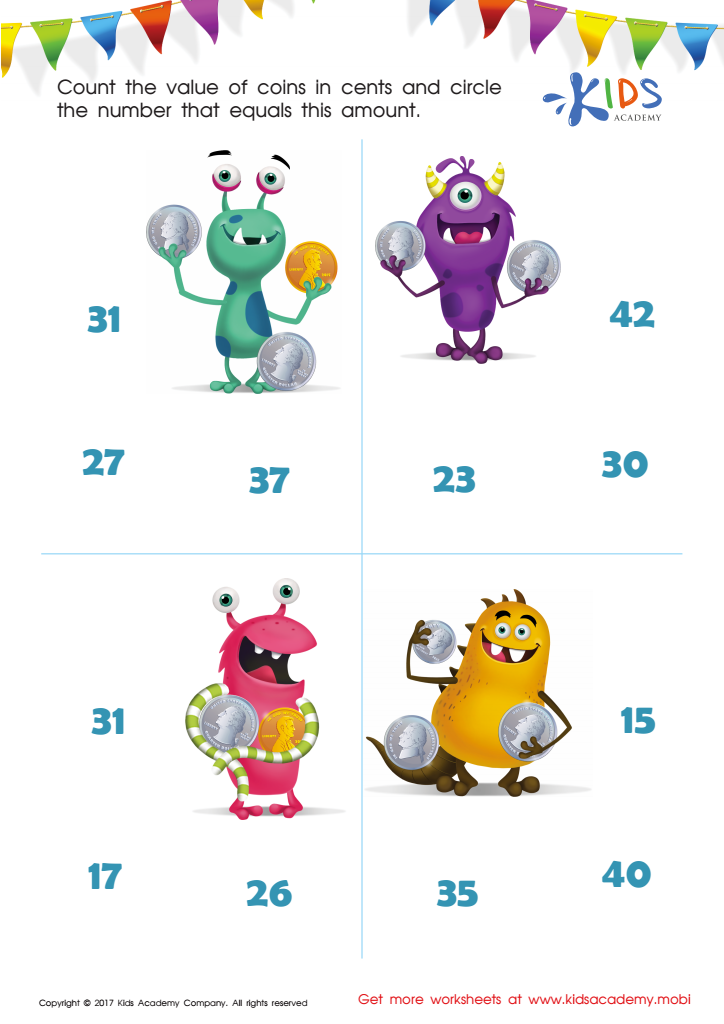
How Many Coins Money Worksheet
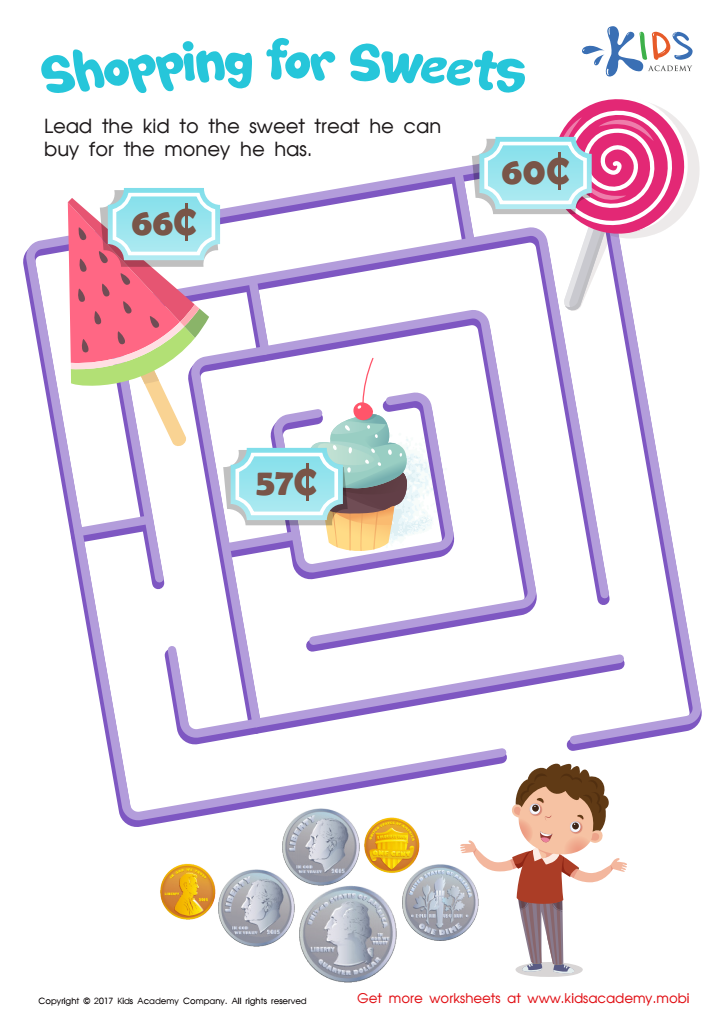
Shopping for Sweets Worksheet








Parents and teachers play a crucial role in developing early numeracy skills in children aged 3-5, and one fundamental concept to focus on is addition, particularly as it applies to understanding money. Learning addition skills with money not only enhances mathematical proficiency but also builds essential life skills.
First, addition lays the foundation for a host of future mathematical concepts. For young children, understanding the basics of combining numbers when dealing with money helps them grasp the idea that numbers represent real-world values. This foundational knowledge supports more complex math learning in later years, impacting academic success.
Moreover, engaging with addition using money provides practical, hands-on learning experiences. Children are naturally curious about everyday activities, like shopping, which frequently involve money. Encounters with coins and currency can make abstract mathematical concepts tangible and relatable. For example, recognizing that a nickel (5 cents) and three pennies (3 cents) together make eight cents offers an insightful and memorable learning moment.
Ensuring children build these skills early on also promotes financial literacy. Appreciating money’s value can nurture budgeting instincts and conscientious spending habits. These competencies are indispensable for their future independence and financial stability.
In essence, when parents and teachers invest time in teaching addition through money, they are not only reinforcing critical numeracy skills but also empowering children with practical knowledge crucial for real-life decision-making.








