Developing problem-solving skills Math Worksheets for Ages 3-5
3 filtered results
-
From - To
Enhance your child's logic and reasoning abilities with our engaging problem-solving skills math worksheets designed specifically for ages 3-5. These worksheets foster early mathematical thinking by providing fun and interactive activities that challenge young minds. Through engaging puzzles, riddles, and essential problem-solving exercises, children will learn to identify patterns, understand relationships, and tackle challenges creatively. Our resources promote cognitive development while also encouraging critical thinking and decision-making skills. With colorful illustrations and age-appropriate tasks, these worksheets are perfect for both classroom use and at-home learning, laying a strong foundation for your child's future math success. Get started on a journey of discovery today!
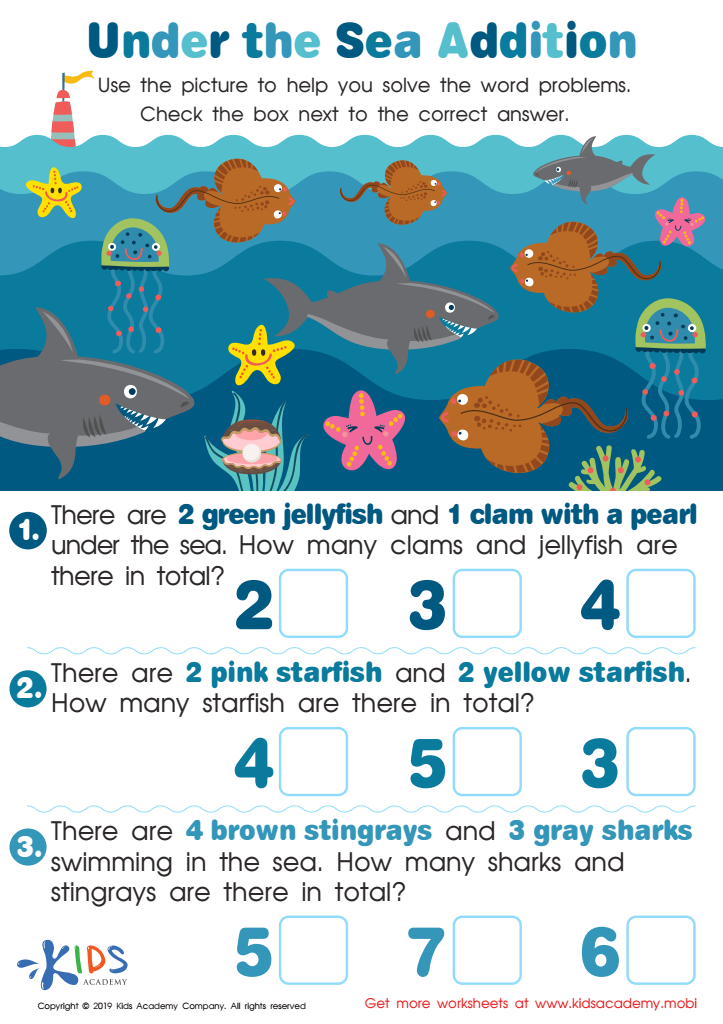
Under the Sea Addition Worksheet
 Assign to My Students
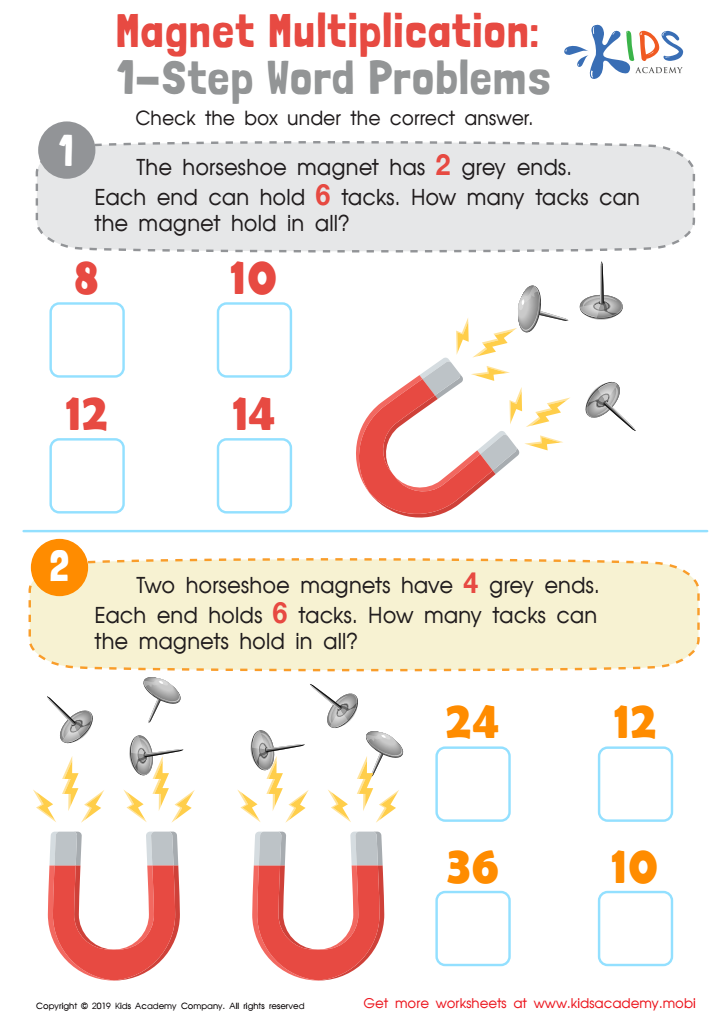
Magnet Multiplication: 1-Step Word Problems Worksheet
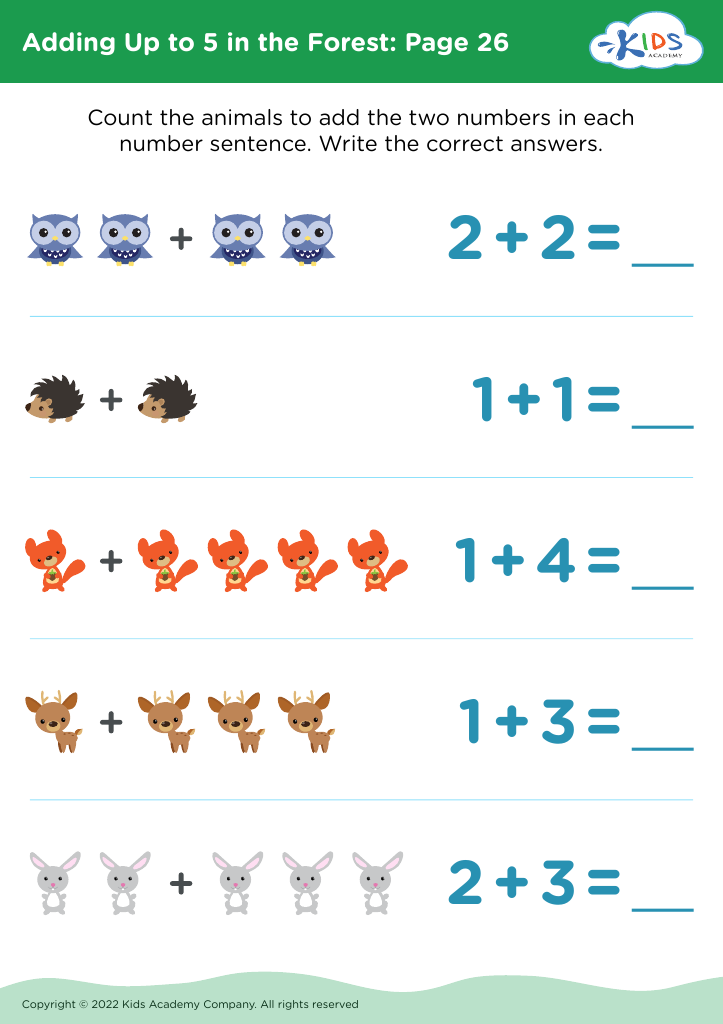








Developing problem-solving skills in young children, especially those aged 3-5, is crucial for their overall cognitive and social development. At this age, children are naturally curious and explore the world around them, making it an ideal time to foster these skills through math-related activities. When parents and teachers encourage problem-solving, they help children learn to think critically, analyze situations, and identify solutions.
Math concepts such as counting, sorting, and pattern recognition create a foundation for logical thinking. Engaging children in activities like puzzles, building blocks, or simple games introduces them to mathematical reasoning in a fun and interactive way. This encourages a growth mindset, where children learn that perseverance and creativity can lead to success.
Moreover, problem-solving develops important life skills, such as decision-making and resilience. As children navigate challenges and obstacles, they gain confidence in their abilities, fostering independence and self-esteem.
In a rapidly changing world, equipping young learners with these skills ensures they are not only prepared for academic challenges but also able to thrive socially and emotionally. Teachers and parents play an essential role in this development, making it a priority in early childhood education.








