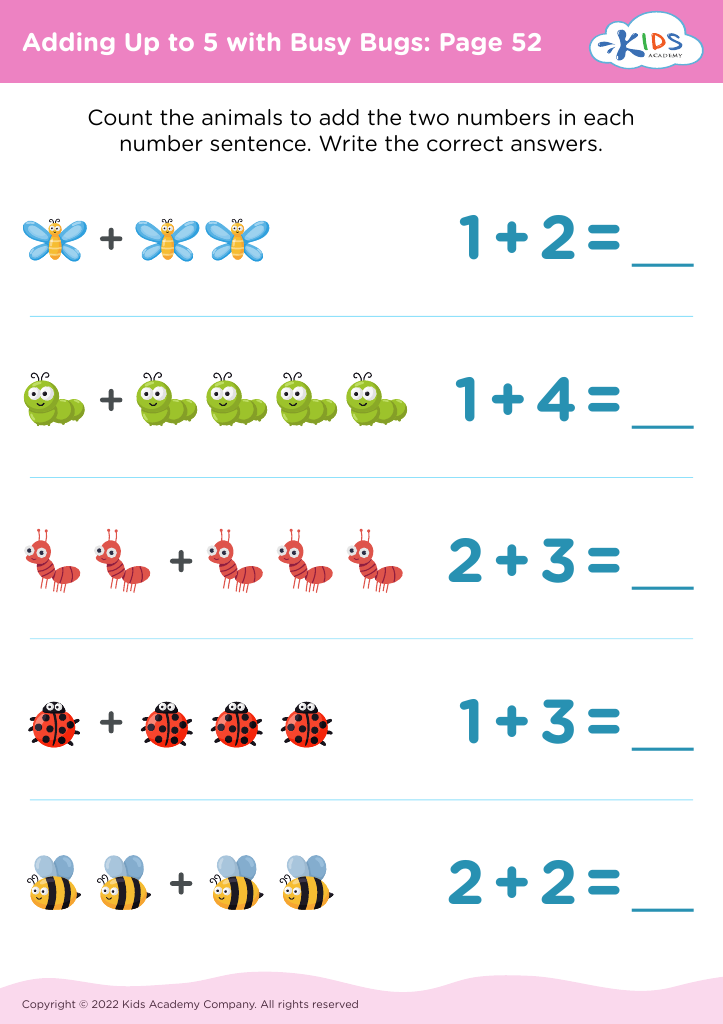








Problem-solving skills in math for children ages 3-5 are foundational for their overall cognitive development and future academic success. At this age, children are naturally curious and eager to explore concepts like numbers and patterns. Engaging them in early math problem-solving helps to cultivate critical thinking skills and promotes logical reasoning, enabling them to approach challenges creatively.
When parents and teachers prioritize these skills, they support children in developing resilience and perseverance, as they learn to navigate obstacles and find multiple solutions to problems. Early exposure to mathematical concepts, like counting, sorting, and simple addition or subtraction, enriches their vocabulary and boosts their confidence in tackling diverse challenges later in life.
Moreover, fostering problem-solving skills at this developmental stage helps connect math to everyday activities, making it a fun and relevant part of their world. Striking a healthy balance between play and learning ensures that children develop a positive attitude toward math, alleviating future anxiety around the subject. Ultimately, investing in early math problem-solving training equips children with essential life skills, laying a strong groundwork for their ongoing educational journey and personal growth.








