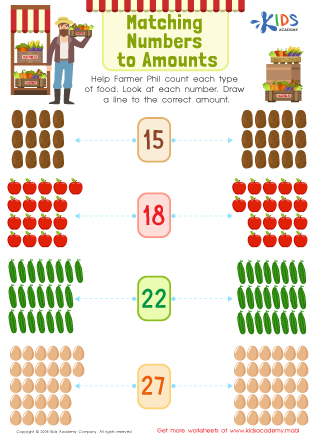
Counting skills Numbers 11–20 Worksheets for Ages 3-5
5 filtered results
Difficulty Level
Grade
Age
-
From - To
Subject
Activity
Standards
Enhance your child's counting skills with our engaging Counting Skills Worksheets for Numbers 11-20, designed for ages 3-5. These worksheets offer a fun and interactive way for young learners to grasp the concepts of counting and number recognition. Incorporating colorful illustrations and varied activities, each worksheet encourages hands-on learning through tracing, coloring, and counting exercises. Ideal for home or classroom use, our resources help develop essential math skills while sparking curiosity and creativity. Explore our collection today and set the foundation for a strong numerical understanding, ensuring a smooth transition into more advanced math concepts in the future!
Favorites
With answer key
Interactive
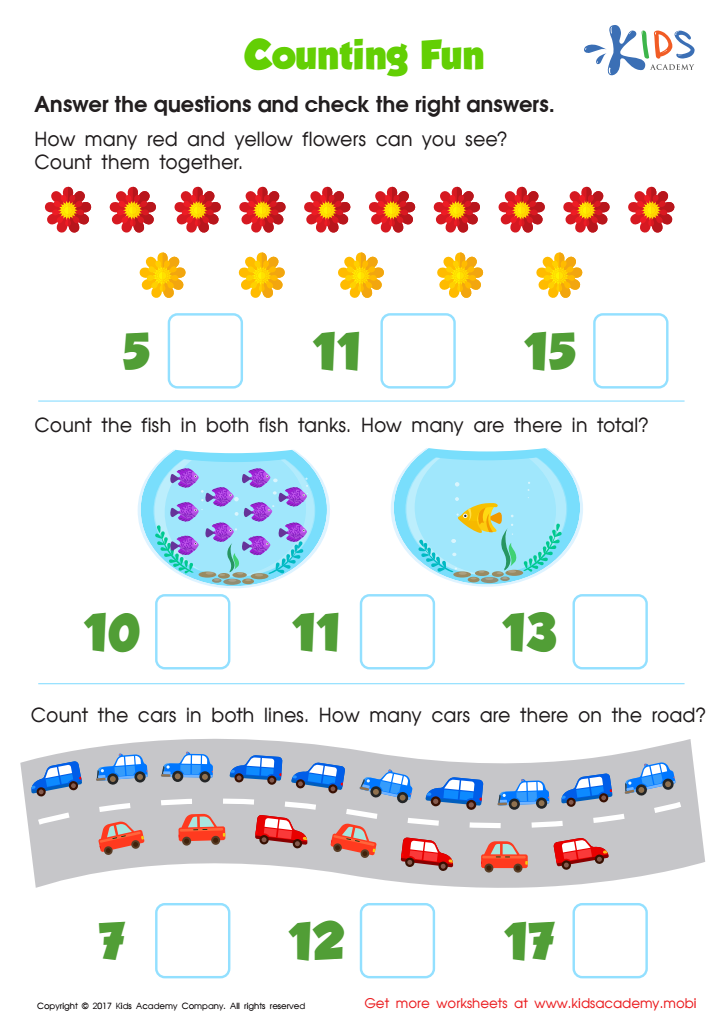
Counting Fun Worksheet
Math and fun can go hand-in-hand with this free PDF worksheet! Bright, colourful illustrations will activate your child's brain, as they count the red and yellow flowers. How many can you see? Count together and write down the total. Make learning and counting fun for your little ones!
 Assign to My Students
Counting Fun Worksheet
Worksheet
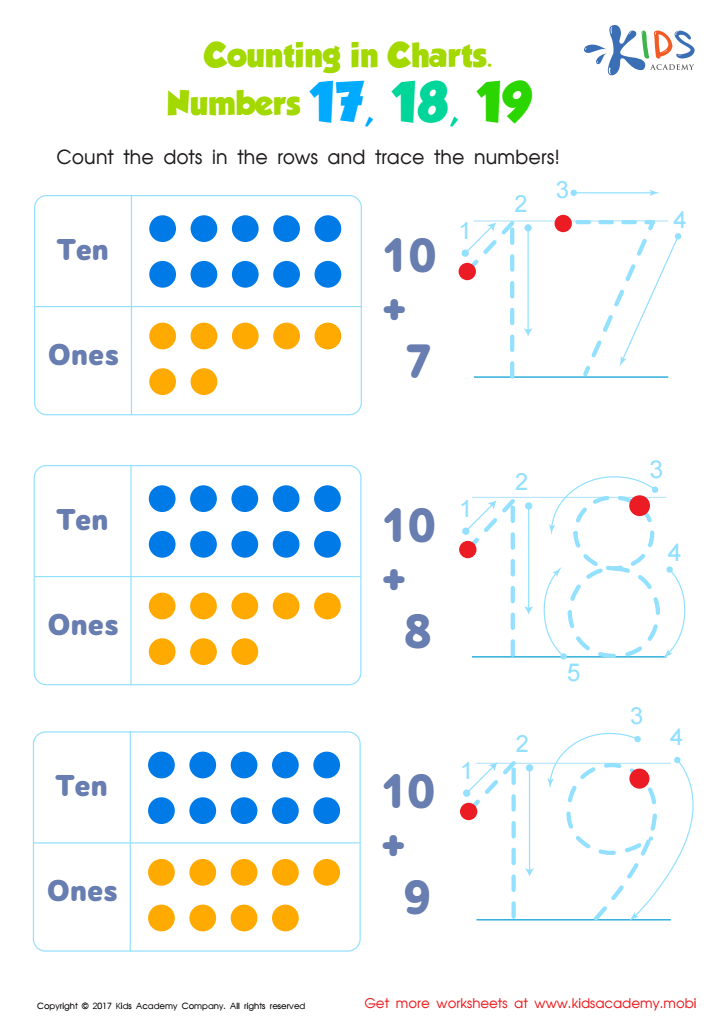
Kindergarten Number Tracing: Counting in Charts Worksheet
Little learners can find big numbers tricky! Help them practice counting and build early math skills, like place value and addition, with this kindergarten number tracing PDF worksheet. Count the dots to solve the problem and trace each answer!
Kindergarten Number Tracing: Counting in Charts Worksheet
Worksheet
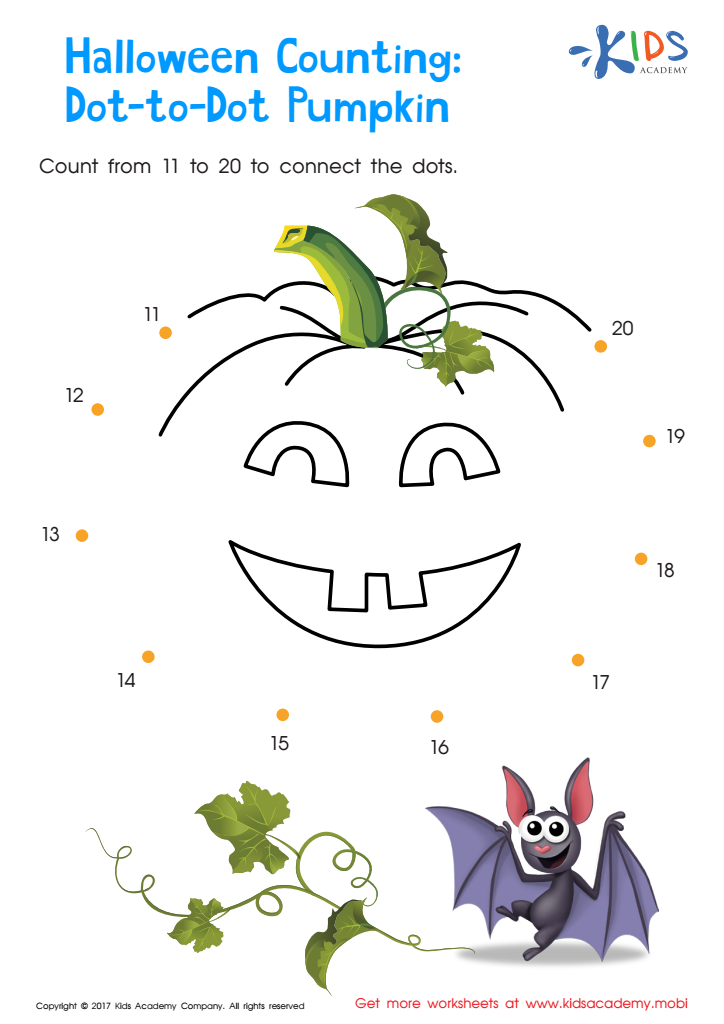
Ordering 11–20: Halloween Counting Worksheet
No matter the time of year, help your child get ready for Halloween with this worksheet. They'll practice counting from 11 to 20, recognizing numbers, and using a pencil to draw. By connecting the dots, they'll create a pumpkin picture, while unknowingly strengthening their early math skills. Print it today for an educational and fun experience!
Ordering 11–20: Halloween Counting Worksheet
Worksheet
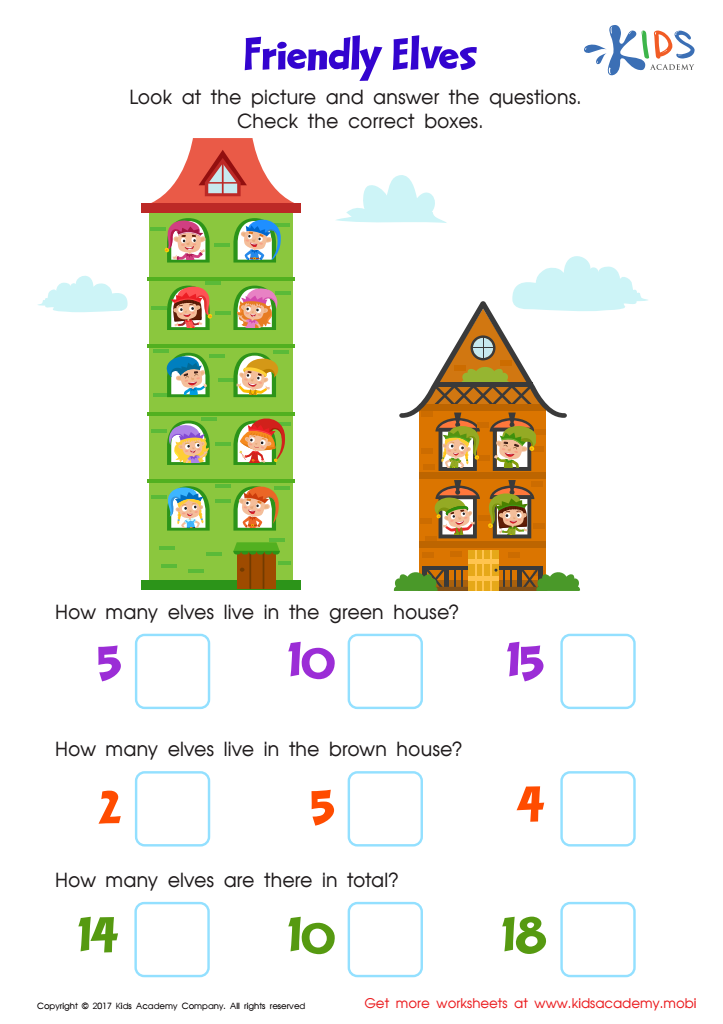
Place Value: Friendly Elves Worksheet
This fun worksheet teaches kids to count elves, answer questions about houses, and practice math! Look at the picture and count the elves in each house. How many are in the green and brown house? Tick the correct answer boxes. Perfect for young learners!
Place Value: Friendly Elves Worksheet
Worksheet
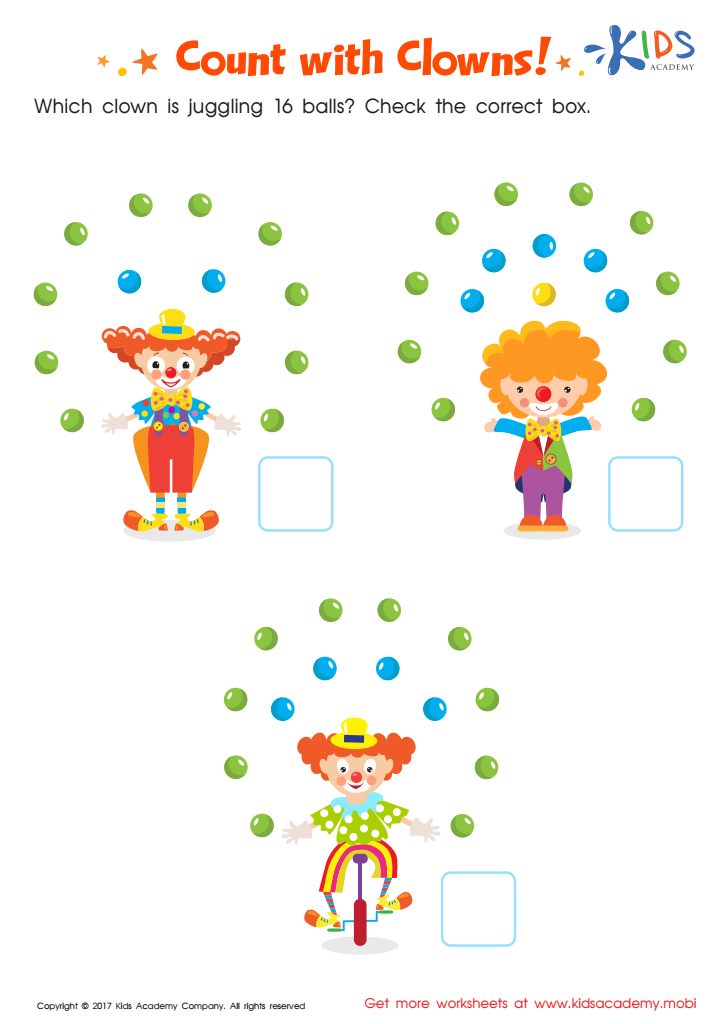
Count with Clowns Worksheet
Math may not be a laughing matter, but this worksheet sure is! Download the PDF and get ready to count balls with the clowns! Your child will have a blast and learn how to count at the same time. It's an easy, fun way to practice math!
Count with Clowns Worksheet
Worksheet
Join Kids Academy for Free
Who is primarily going to use this learning content?



Counting skills are foundational to early mathematics and play a crucial role in cognitive development for children ages 3-5. Focusing on numbers 11–20 helps bridge the transition from basic counting to more advanced numeric understanding. This range emphasizes the concept of 'teen' numbers, introducing children to the idea of groups of ten, which is essential for their future math skills. Mastery of these numbers enhances children’s ability to perform basic addition and subtraction, setting the stage for more complex arithmetic.
Furthermore, integrating counting skills into daily activities fosters language development and promotes social interaction. Engaging children in counting games or using everyday objects to count can build their confidence and interest in learning. This imaginative play not only makes counting fun but also helps reinforce their understanding through practical applications.
Additionally, strong counting skills contribute to problem-solving abilities and logical reasoning. These skills are vital not just for academic success, but also for everyday tasks, like telling time or understanding money. By nurturing counting skills, parents and teachers equip children with essential tools that set a strong academic foundation, encouraging a lifelong love of learning and curiosity in mathematics. Thus, prioritizing counting skills in early education is profoundly important.