Logical thinking development Word Problems Worksheets for Ages 3-5
3 filtered results
-
From - To
Enhance your child's logical thinking skills with our engaging Word Problems Worksheets designed specifically for ages 3-5. These worksheets introduce young learners to problem-solving through fun, age-appropriate scenarios that encourage critical thinking. Each activity promotes cognitive development by challenging children to analyze situations, recognize patterns, and formulate solutions. Ideal for homeschooling or classroom use, our worksheets provide a playful approach to math concepts, ensuring that learning is both effective and enjoyable. Foster your child's confidence while they learn to tackle real-world challenges with these interactive resources. Start nurturing a lifelong love of learning today with our Logical Thinking Development worksheets!
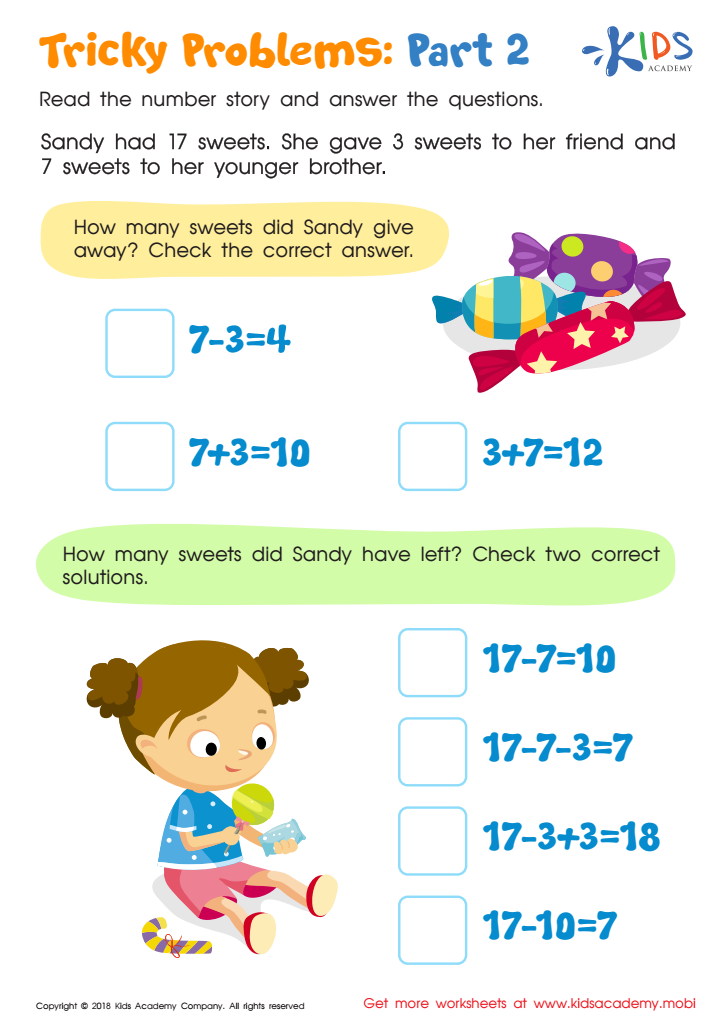
Tricky Problems Worksheet: Part 2
 Assign to My Students
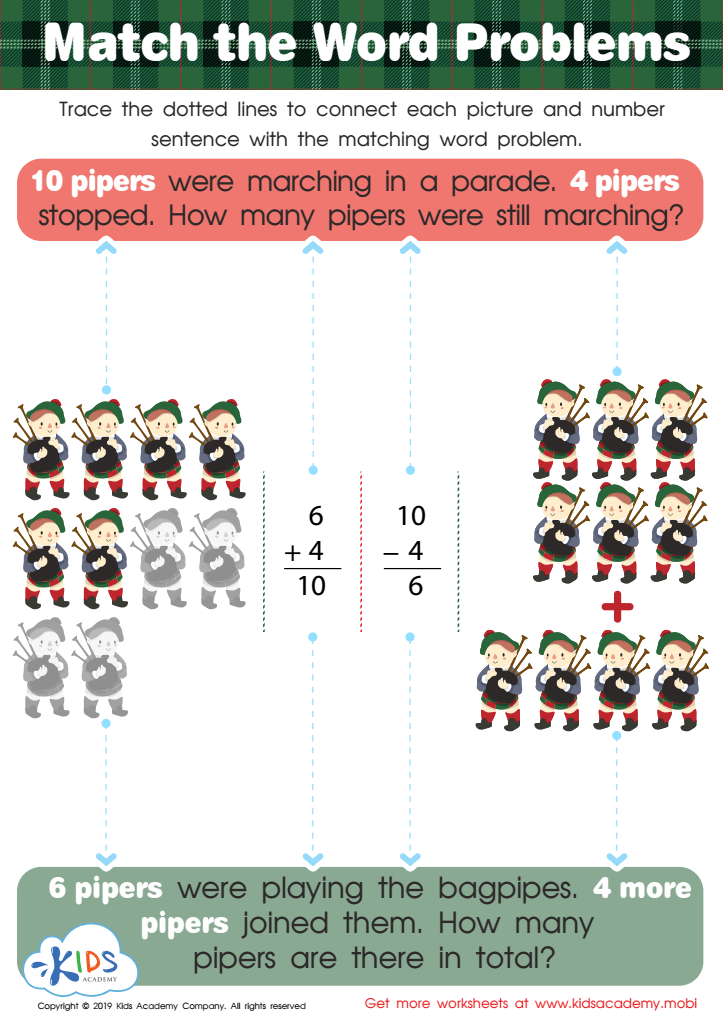
Match the Word Problems Worksheet
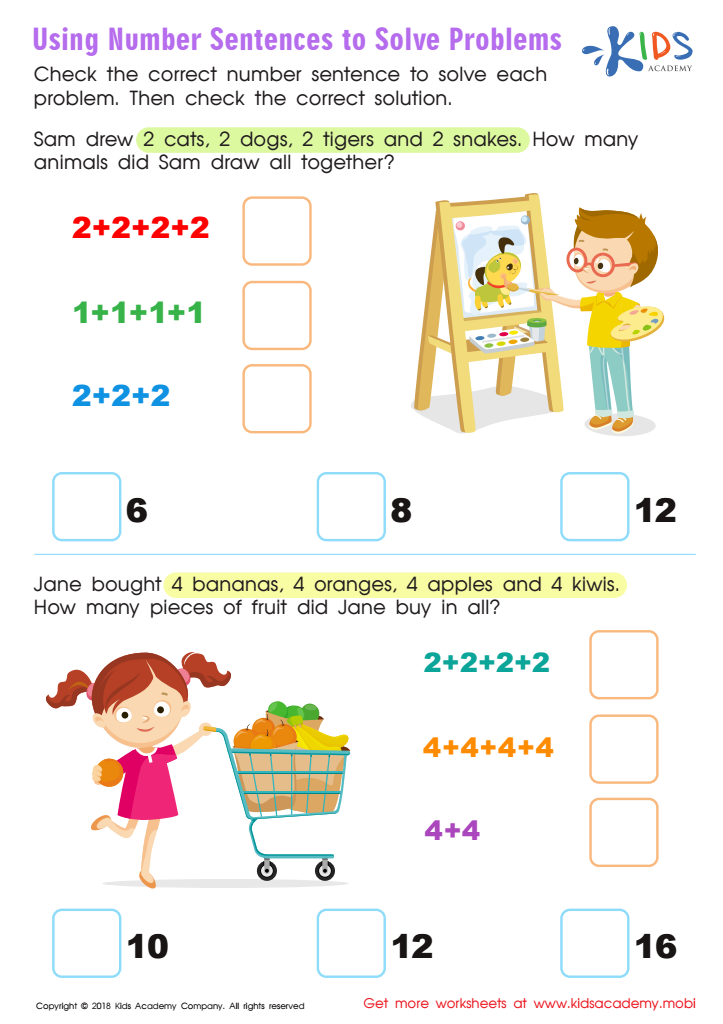
Using Number Sentences to Solve Problems Worksheet








Logical thinking development through word problems is crucial for children aged 3-5 as it lays the foundation for critical thinking, problem-solving, and cognitive skills essential in their academic journey. Engaging young learners with age-appropriate word problems helps them understand concepts of quantity, comparison, addition, and subtraction in a fun and interactive way. These activities encourage children to use contextual cues and language comprehension, promoting not only mathematical skills but also verbal reasoning abilities.
Teaching logical thinking at an early age aids in expanding children's capacity to analyze situations, draw conclusions, and make predictions. It allows them to practice breaking down complex ideas into smaller, manageable parts—a skill that is transferable across various subjects and real-life scenarios. Furthermore, solving word problems fosters perseverance, as children learn that challenges can often be navigated through persistent effort and creative thought.
For parents and teachers, integrating logical thinking and word problems into daily routines can stimulate a child's curiosity and eagerness to learn. Supporting this development cultivates not just a solid academic foundation, but also prepares children for future challenges they’ll encounter, setting them up for success in school and beyond. Through engaging storytelling, everyday situations, and playful problem-solving, we can nurture a skilled and confident thinker.








