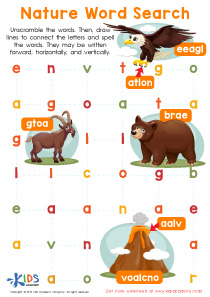
Simplifying Fractions Sight Words Worksheets for Ages 3-5
3 filtered results
-
From - To
Introducing our "Simplifying Fractions Sight Words Worksheets for Ages 3-5", perfect for young learners beginning their educational journey! These engaging worksheets combine the foundational concept of sight words with introductory fraction activities, designed specifically for 3 to 5-year-olds. Our expertly crafted worksheets foster early reading skills while gently introducing mathematical thinking. Kids will enjoy vibrant visuals and interactive exercises that make learning fun and effective. Ideal for use at home or in the classroom, these worksheets are your go-to resource for nurturing both literacy and numeracy in your child. Start simplifying learning today with Kids Academy!
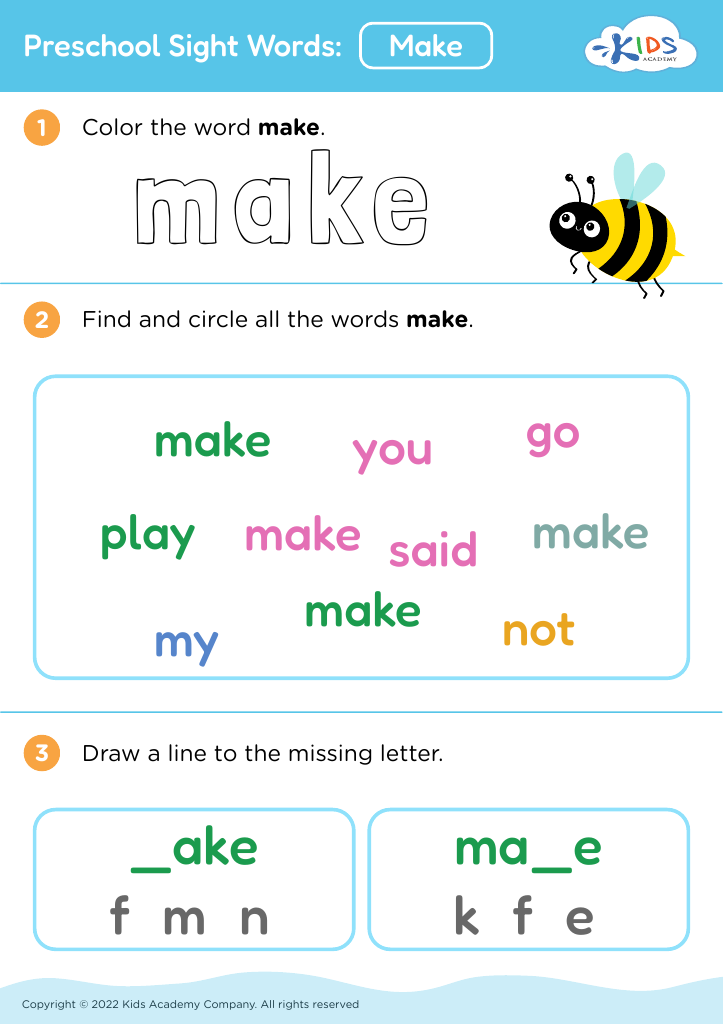


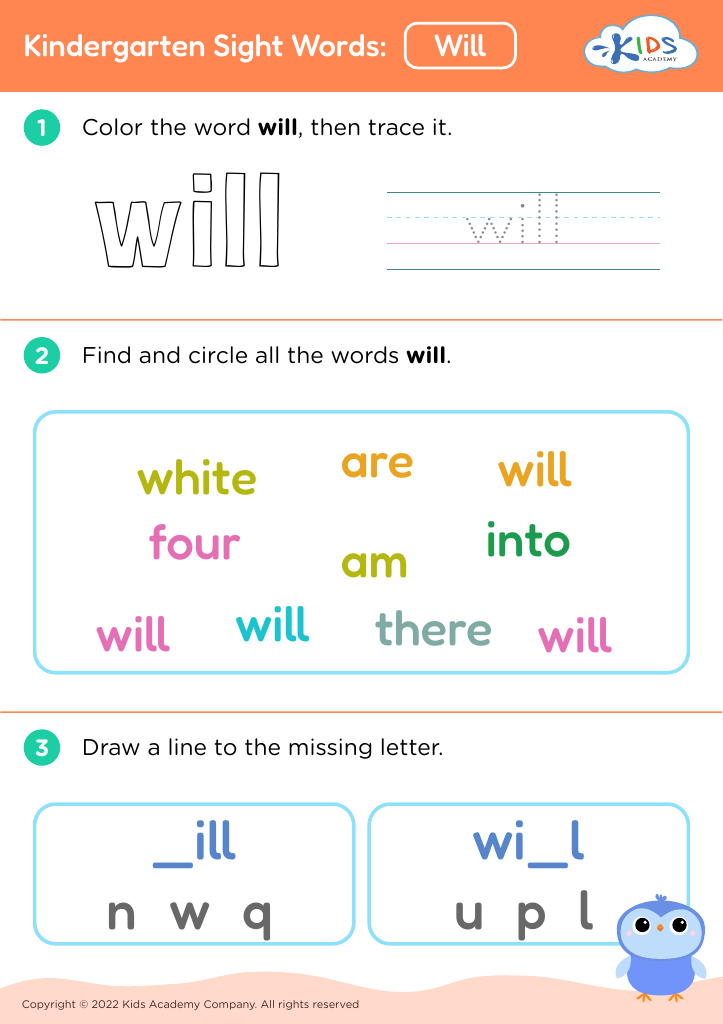
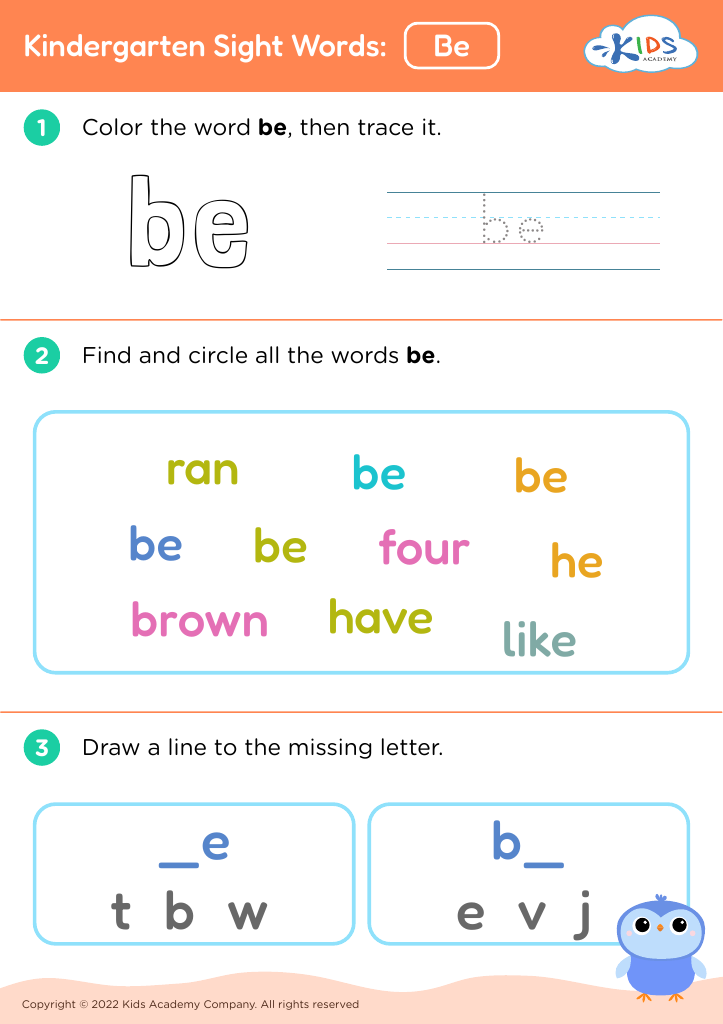







Attention to simplifying fractions in early education, especially for ages 3-5, can provide foundational math skills invaluable for future learning. At this tender age, children are rapidly developing cognitive abilities, including the capacity to understand basic mathematical concepts. By introducing simplified fractions combined with sight words, educators and parents can create a synergistic learning environment where numerical and verbal skills complement each other.
Incorporating fractions in everyday lessons can enhance children's comfort with numbers and their practical applications. Even simple fraction terminology, integrated through play and routine activities, can demystify complex future concepts. For instance, sharing toys or dividing snacks can be a practical illustration, promoting an intuitive grasp of fractions.
Moreover, teaching sight words alongside fractions helps with memorization and recognition, crucial for comprehensive reading and problem-solving skills. These interconnected areas of learning stimulate brain activity, fostering a well-rounded intellectual growth.
Ultimately, early exposure to simplified fractions and sight words cultivates a positive attitude towards learning. This empowerment equips children with confidence and skills that will serve them well beyond their early years, making them more adept at tackling advanced math and literacy in later stages of education. Parents’ and teachers’ dedication to this early intervention is fundamental to children's academic and personal success.