Phonological awareness Elementary Phonics Worksheets for Ages 3-6
8 filtered results
-
From - To
Discover our engaging Phonological Awareness Worksheets specifically designed for children aged 3-6. These fun, interactive resources help young learners develop essential phonemic skills such as rhyming, sound recognition, and blending sounds. Tailored for early childhood education, our worksheets promote critical thinking and literacy foundations through colorful activities that capture kids' attention. Perfect for teachers and parents, these worksheets align with early learning standards, making phonics practice enjoyable. Foster your child's love for reading and writing with these vibrant, age-appropriate resources that support their developmental milestones and enhance their confidence in language skills. Unlock the joy of learning today!
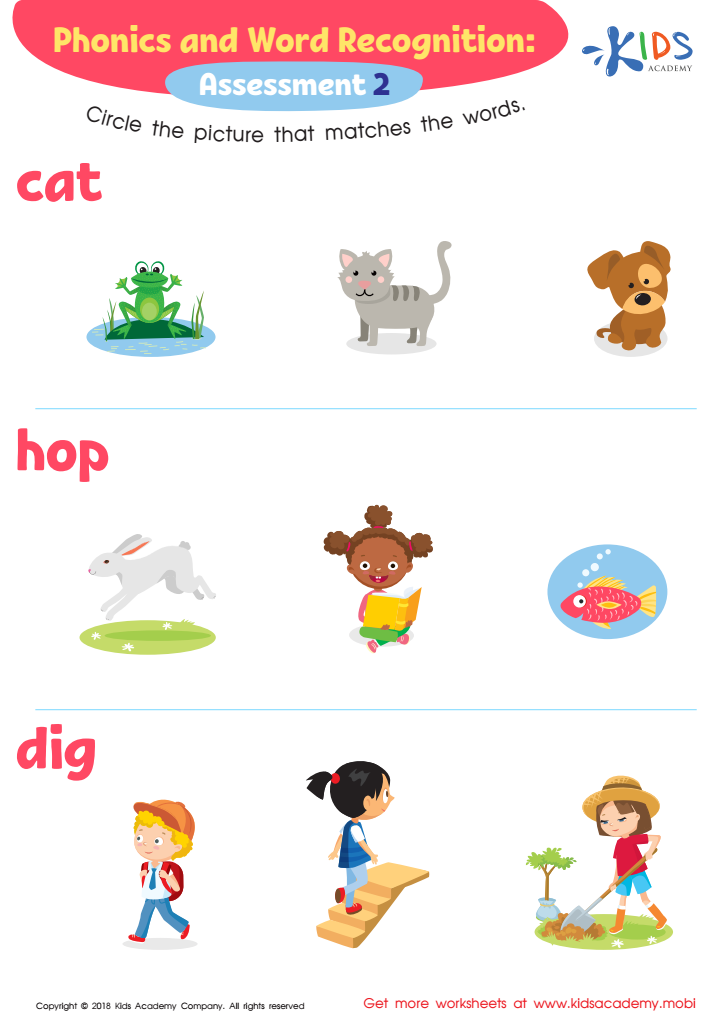
Phonological Awareness: Assessment 2 ELA Worksheet
 Assign to My Students
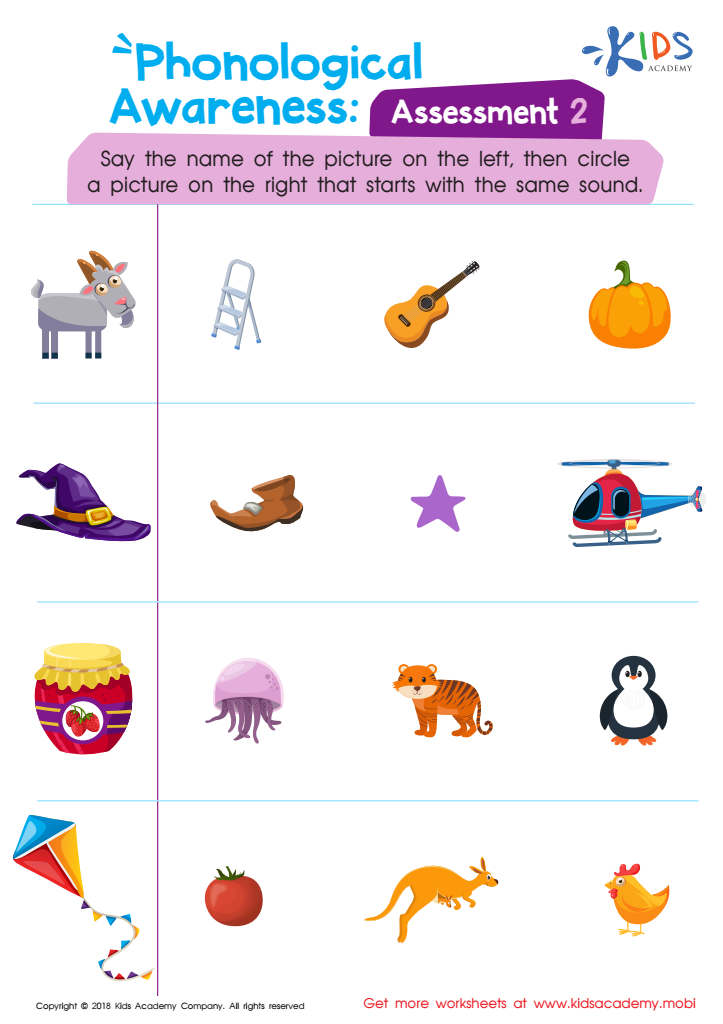
Phonological Awareness: Assessment 2 Worksheet
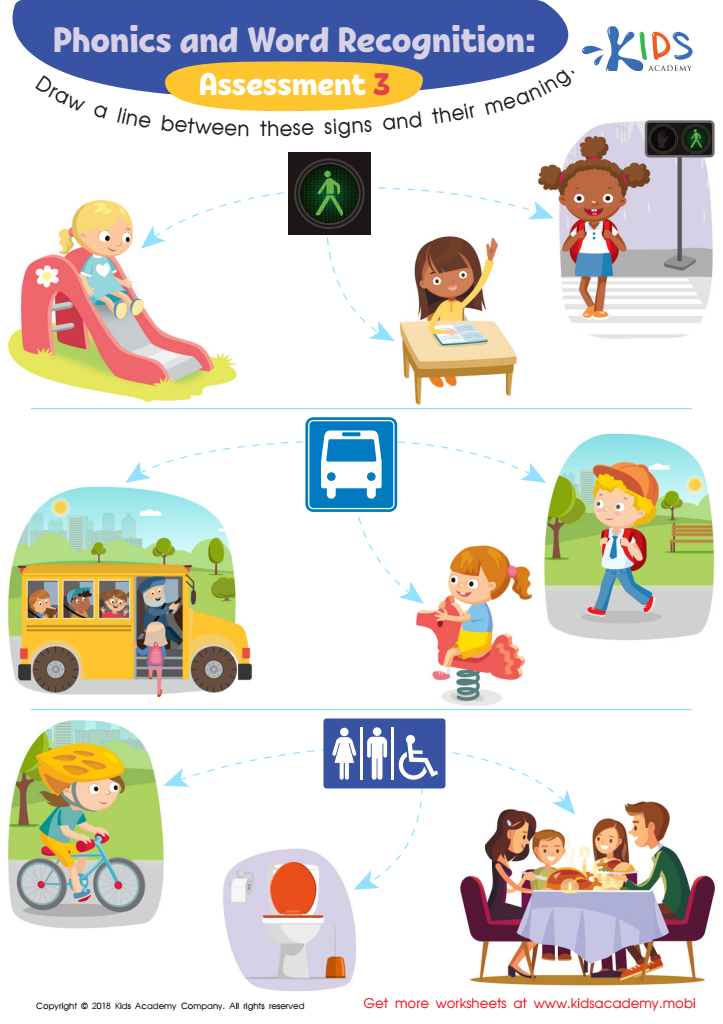
Phonological Awareness: Assessment 3 ELA Worksheet
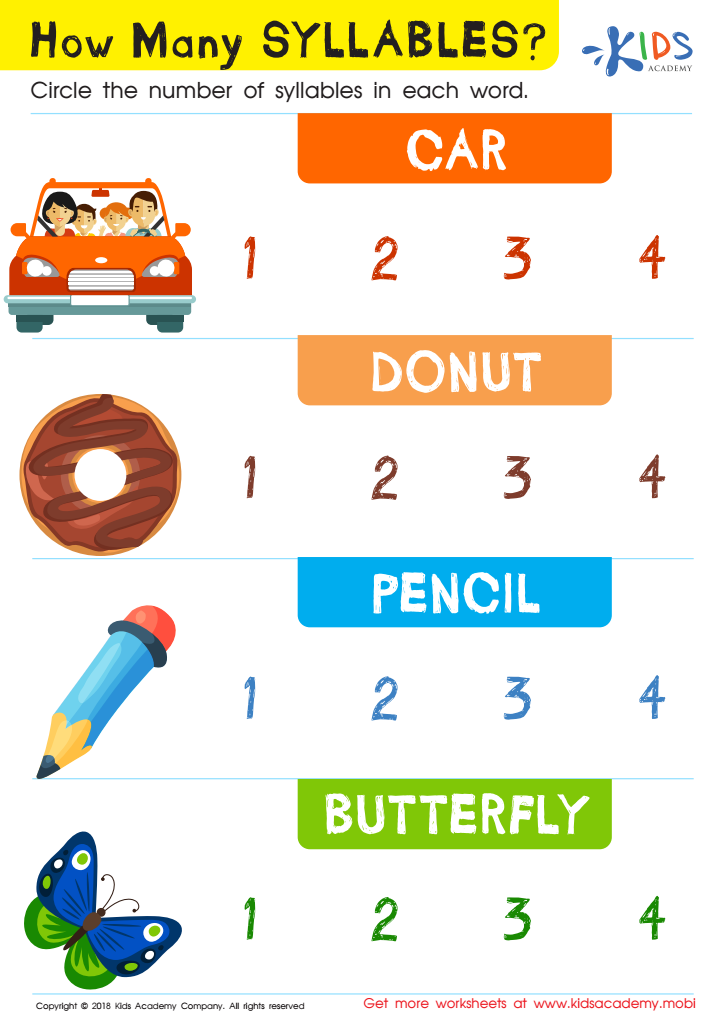
How Many Syllables? Worksheet
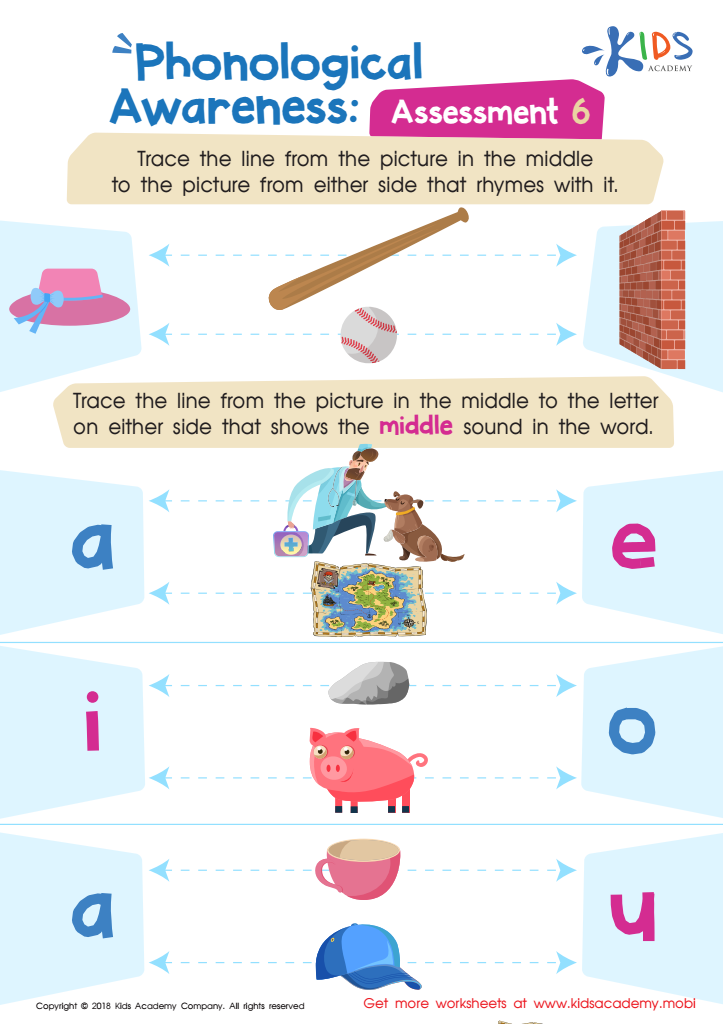
Phonological Awareness: Assessment 6 Worksheet
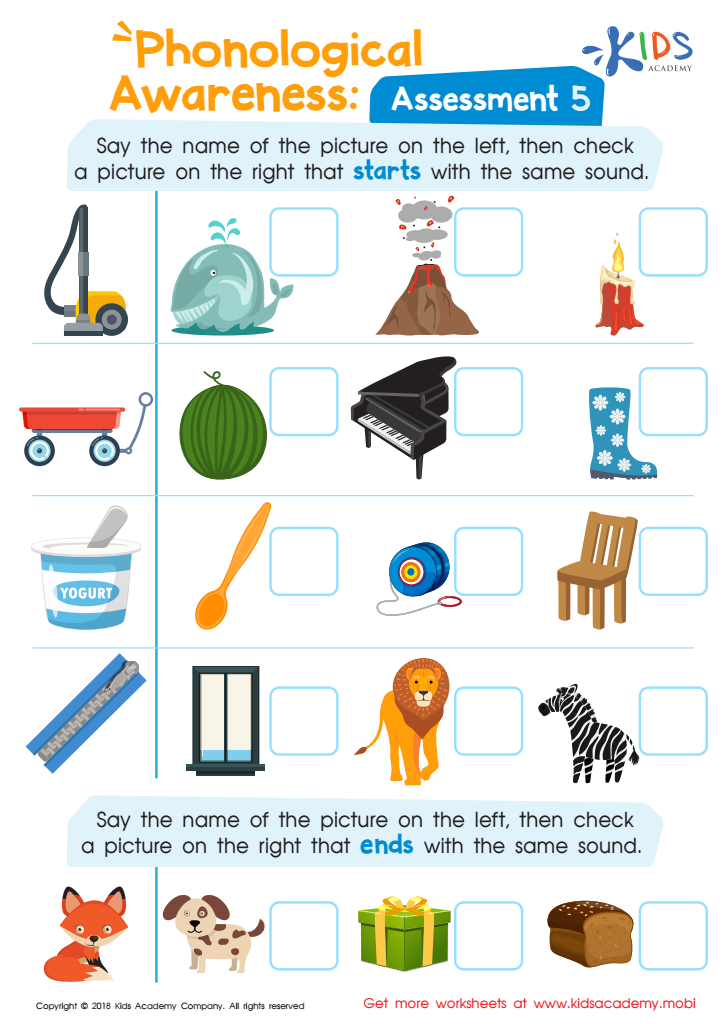
Phonological Awareness: Assessment 5 Worksheet
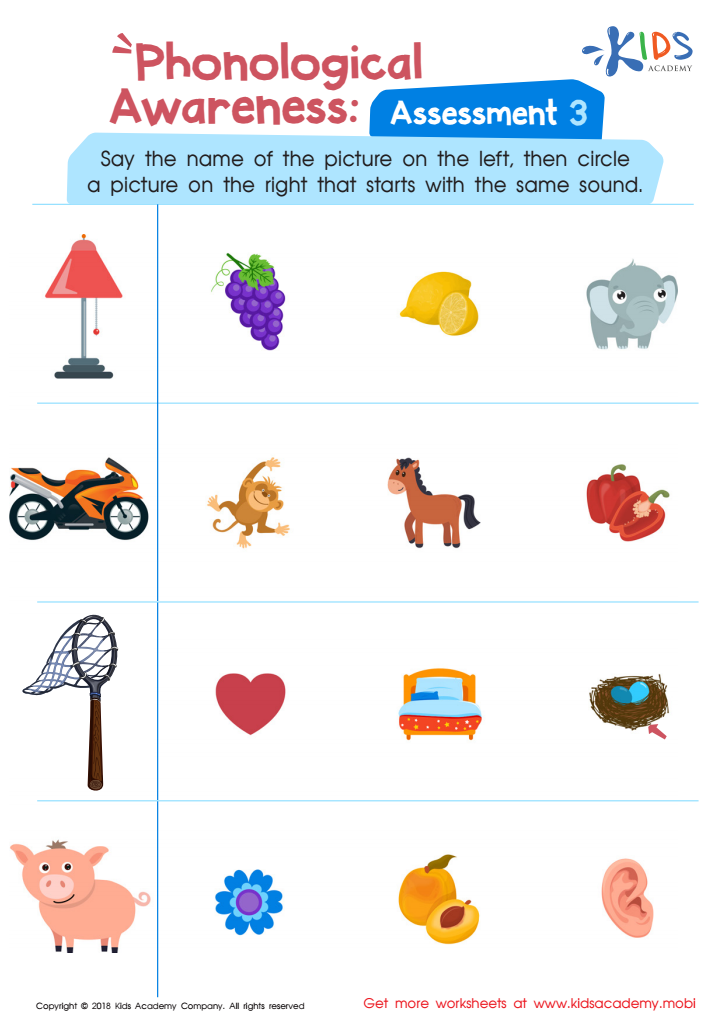
Phonological Awareness: Assessment 3 Worksheet
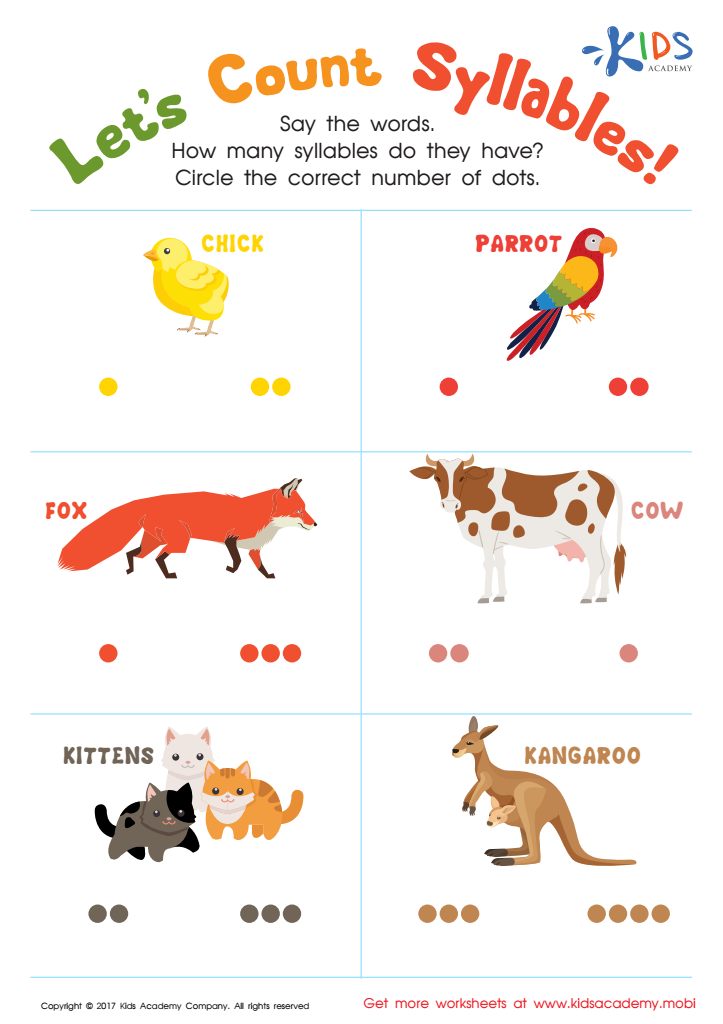
Lets Count Syllables Worksheet




Phonological awareness is a crucial skill for early literacy development in children aged 3 to 6. It involves recognizing and manipulating the sounds in spoken language, which lays the foundation for reading and spelling. Parents and teachers should care about phonological awareness because it significantly impacts a child's ability to decode words and understand text. Strong phonological skills help children identify rhymes, syllables, and individual sounds (phonemes), making it easier for them to connect letters to sounds in written words.
By nurturing phonological awareness, parents and teachers can help children develop confidence and proficiency in reading, which is vital for academic success. Children who struggle with these foundational skills are more prone to reading difficulties later on, leading to potential challenges in their educational journey. Engaging in phonological activities, such as singing songs, playing rhyme games, or segmenting words, can be both enjoyable and supportive, encouraging a love for language and literacy.
Incorporating phonological awareness into everyday learning fosters not only reading readiness but also enhances vocabulary and communication skills, setting a positive trajectory for lifelong learning. Ultimately, investing in phonological awareness at this early stage influences children's overall cognitive development and fosters their ability to succeed in school and beyond.







