Fine motor skills improvement Alphabet Worksheets for Ages 3-6
3 filtered results
-
From - To
Our Fine Motor Skills Improvement Alphabet Worksheets for Ages 3-6 offer a captivating way for young children to develop essential pre-writing skills. Expertly designed to engage children, these worksheets focus on letter recognition, tracing, and forming letters, all while enhancing hand-eye coordination and dexterity. Perfect for little hands just starting their writing journey, our activities transform learning the alphabet into a fun and enriching experience. Incorporate these worksheets into daily routines to track progress as children practice precision and control. Ideal for both parents and educators, our resource supports the foundational skills needed for writing success.
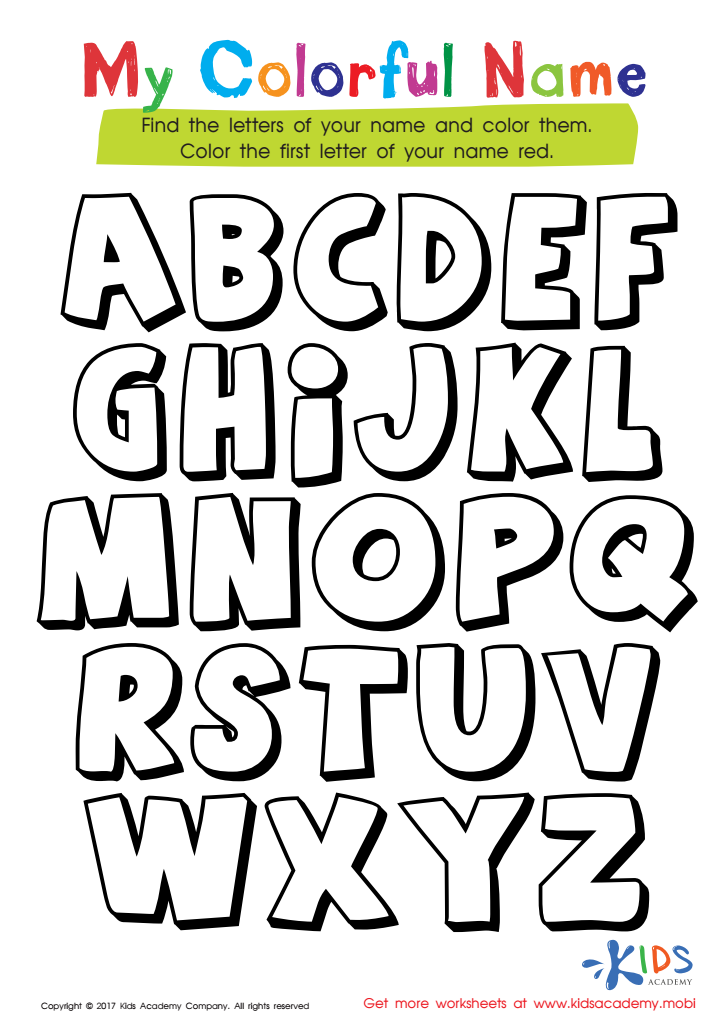
My Colorful Name Worksheet
 Assign to My Students
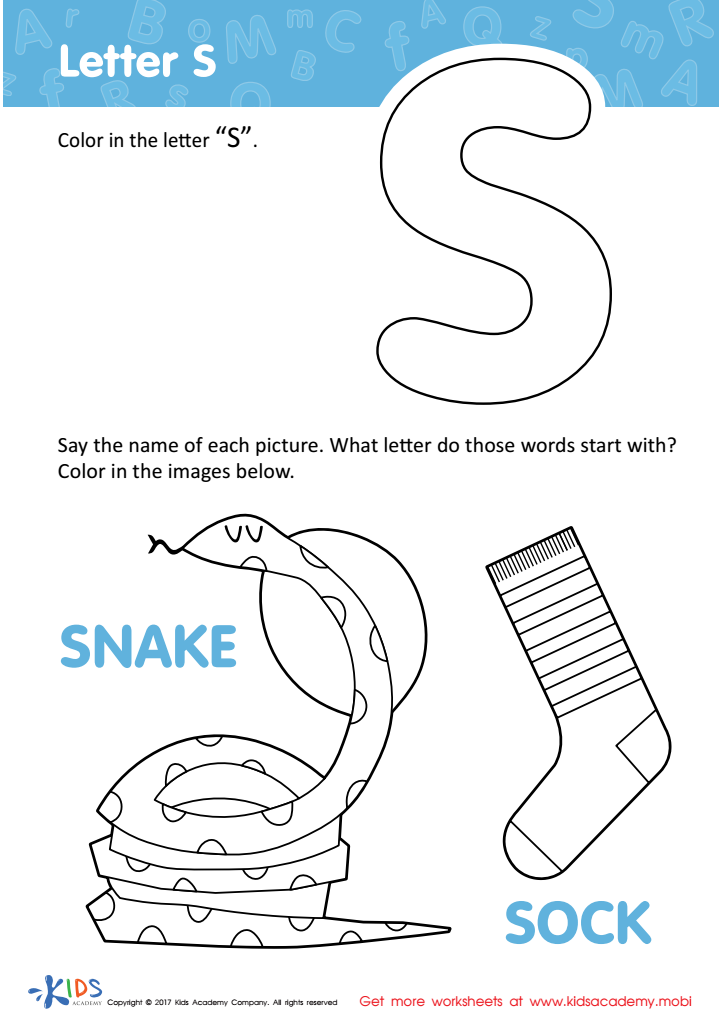
Letter S Coloring Sheet
Assign to My Students
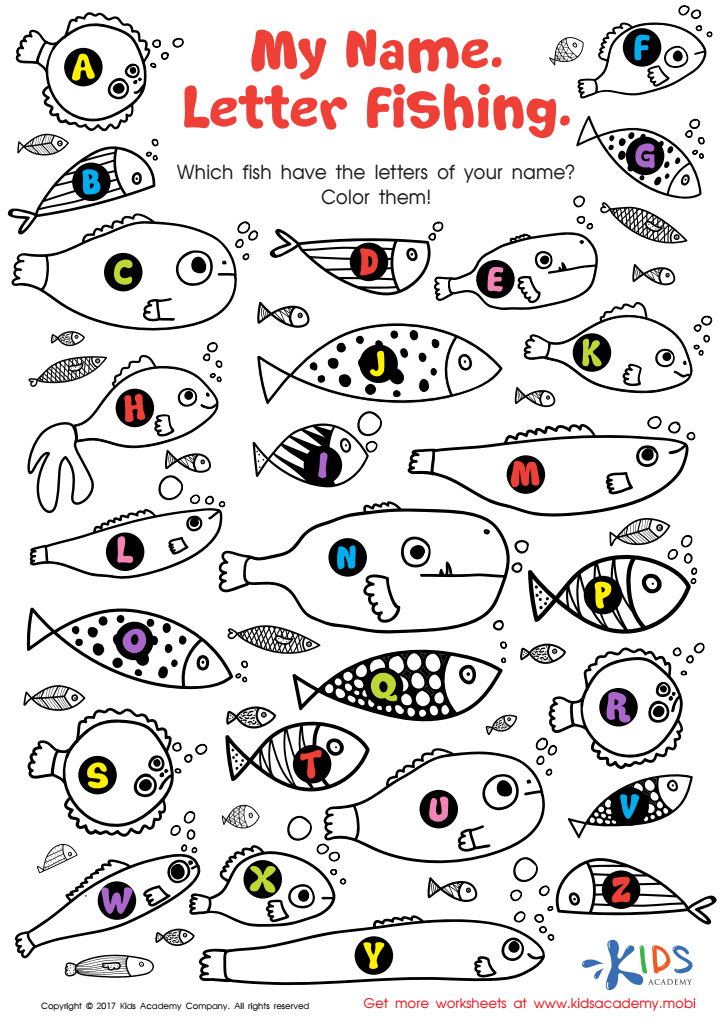
My Name: Letter Fishing Worksheet
Assign to My Students








Improving fine motor skills through activities like alphabet exercises is crucial for children aged 3-6, as these skills form the foundation for many essential daily activities and academic tasks. Fine motor skills involve the coordinated efforts of small muscles in the hands and fingers, enabling tasks such as writing, buttoning clothes, and tying shoelaces.
At ages 3-6, children are in a critical developmental window where enhancing these skills can significantly impact their future academic performance and independence. For instance, practicing the alphabet helps children develop hand-eye coordination and spatial awareness, foundational skills for writing. The ability to hold a pencil, draw lines and shapes, and eventually form letters hinges on well-developed fine motor skills.
Parents and teachers play a pivotal role in this development. Encouraging activities like tracing letters, using playdough, and employing tools like scissors and tweezers can make learning engaging and effective. Improvements in these motor skills also bolster self-esteem and confidence, as children can accomplish tasks more independently.
Incorporating alphabet exercises for fine motor skill development offers a multifaceted benefit: it prepares children academically by familiarizing them with letters and sounds while simultaneously building the physical skills crucial for writing and everyday tasks. Ensuring this developmental support can lead to well-rounded, capable, and confident young learners.







