Rhyming skills development Alphabet Worksheets for Ages 3-6
5 filtered results
-
From - To
Unlock your child's language potential with our Rhyming Skills Development Alphabet Worksheets, designed specifically for ages 3-6! These engaging worksheets enhance phonemic awareness and promote early literacy skills through fun rhyming activities. Each worksheet features captivating illustrations that motivate young learners to explore sounds, recognize patterns, and develop critical thinking skills. As children practice identifying and pairing rhyming words, they build confidence in their reading and language abilities. Perfect for parents and teachers alike, these resources offer a playful and educational experience that fosters a love for language. Start your rhyming adventure today and watch your child's vocabulary flourish!
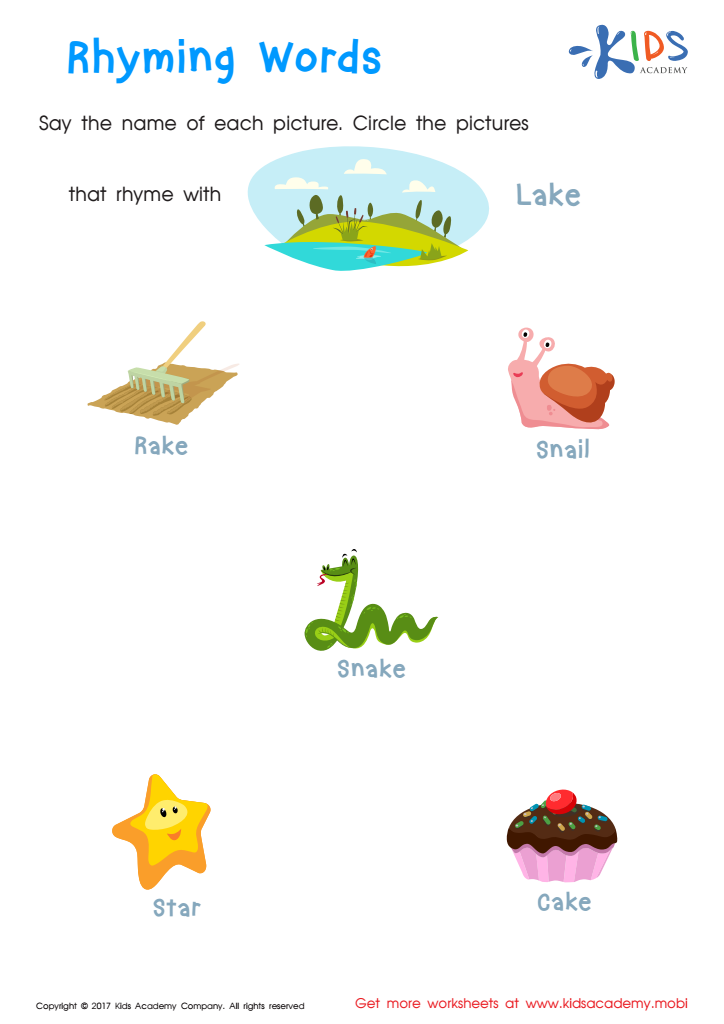
Rhyming Words Rhyming Worksheet
 Assign to My Students
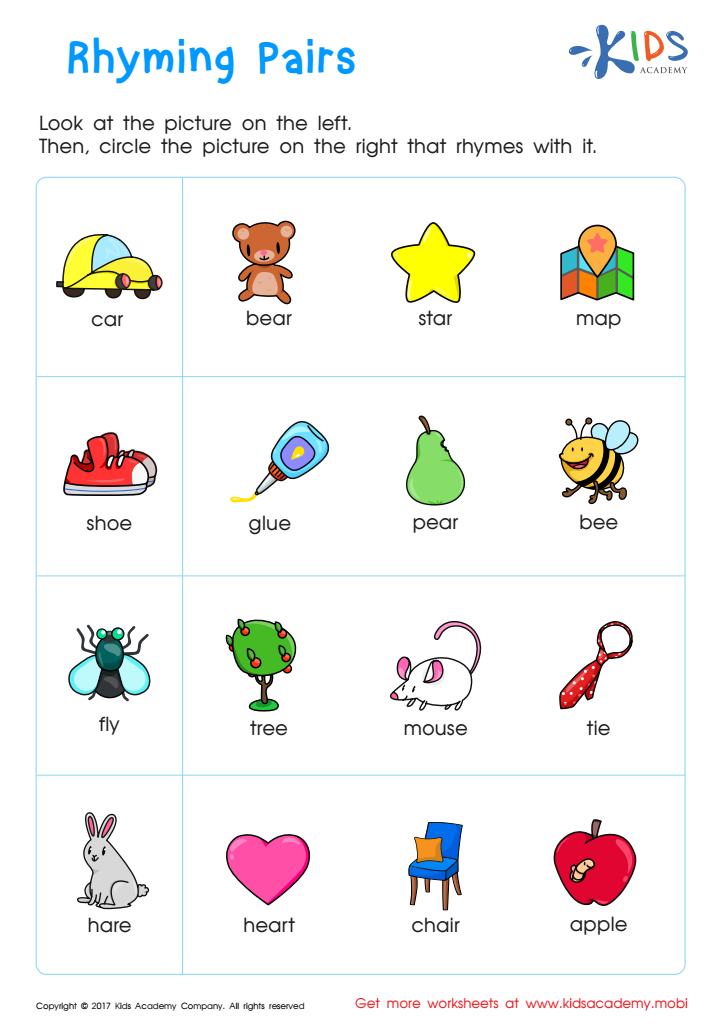
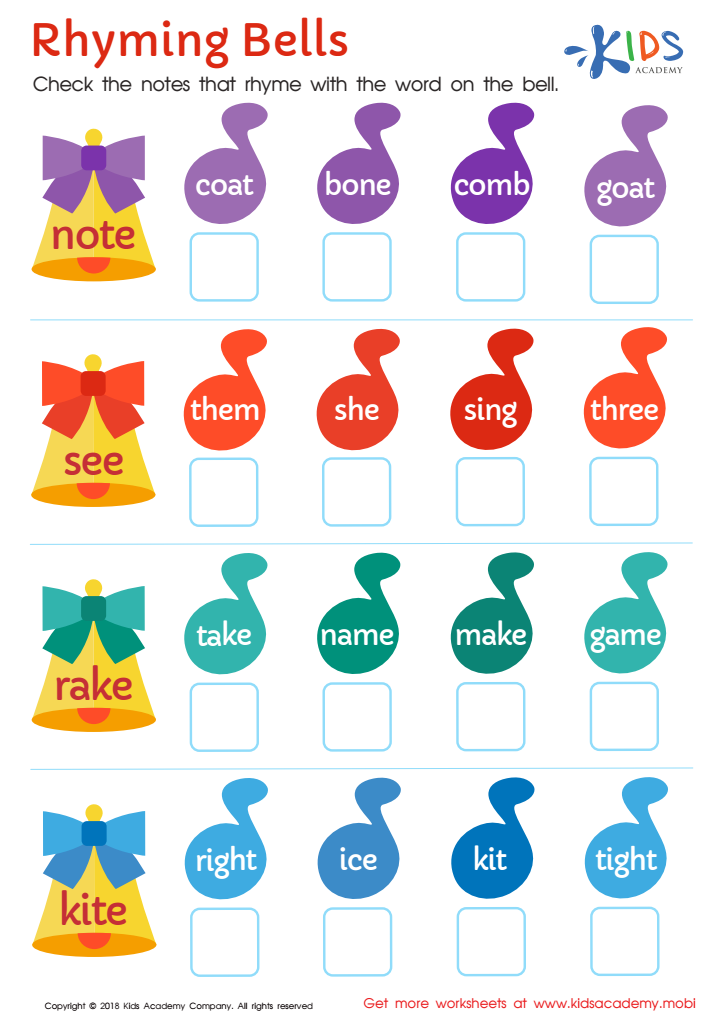
Rhyming Bells Worksheet
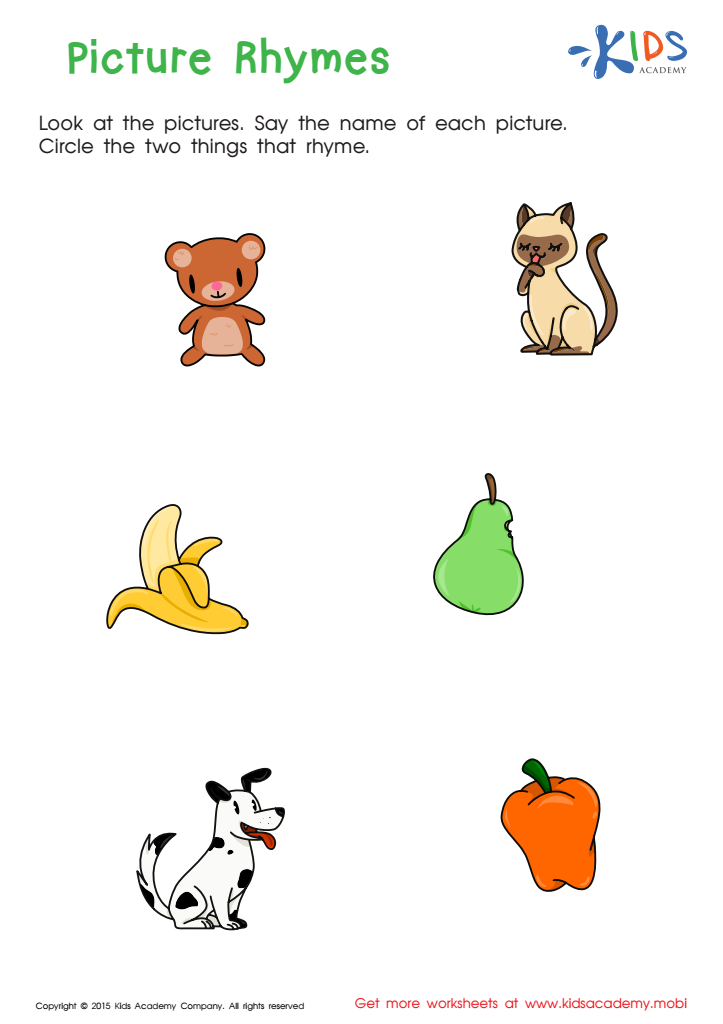
First Words: Picture Rhymes Worksheet
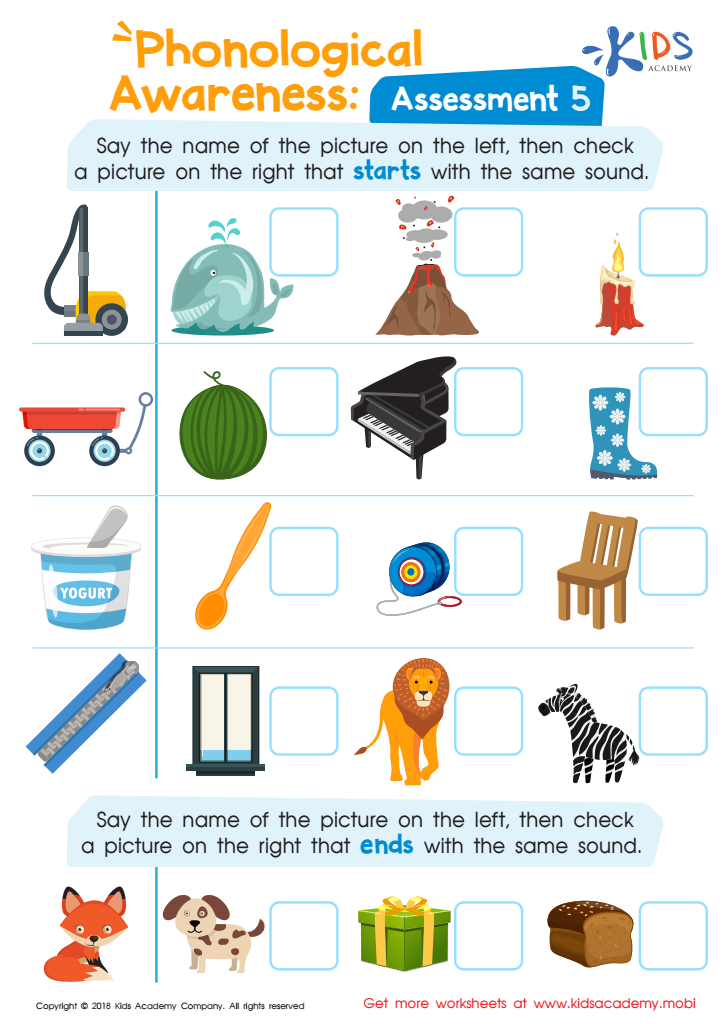
Phonological Awareness: Assessment 5 Worksheet



.jpg)




Rhyming skills are a fundamental component of early literacy development for children aged 3-6. They serve as a vital building block for reading, writing, and overall language acquisition. When children engage with rhymes, they enhance their phonemic awareness, which is the understanding of sound structures in words. This awareness helps them recognize similarities in sounds, fostering better decoding skills when learning to read.
Furthermore, rhyming activities promote vocabulary expansion. By being exposed to different words and their meanings through rhymes, children become familiar with language patterns, which enriches their spoken language skills. Rhymes also make learning more enjoyable, as the playful nature of rhythmic patterns captivates young minds and encourages active participation.
For parents and teachers, nurturing rhyming skills is essential for preparing children for academic success. Engaging children through rhyming games, songs, and books lays a strong literacy foundation, equipping them for future reading challenges. Additionally, developing these skills fosters critical thinking and creativity, as children begin to experiment with words and sounds. Overall, embracing rhyming not only facilitates literacy but also enhances children's cognitive and social development, creating well-rounded learners ready to explore language and communication.







