Sound Association Alphabet Worksheets for Ages 3-6 - Page 2
31 filtered results
-
From - To
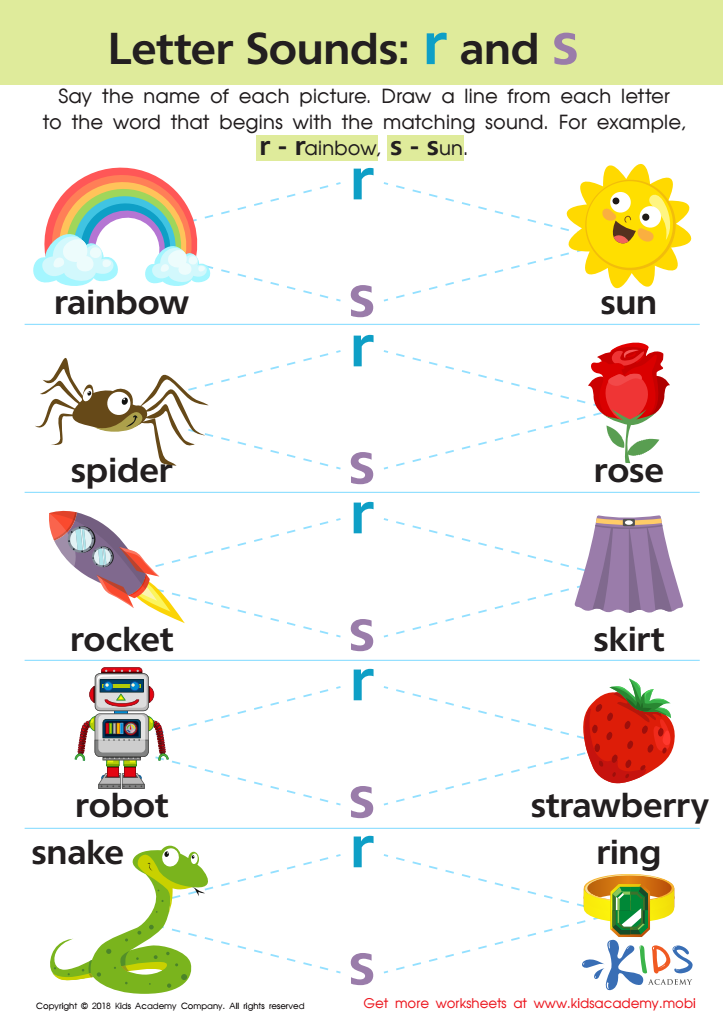
Letter R and S Sounds Worksheet
 Assign to My Students
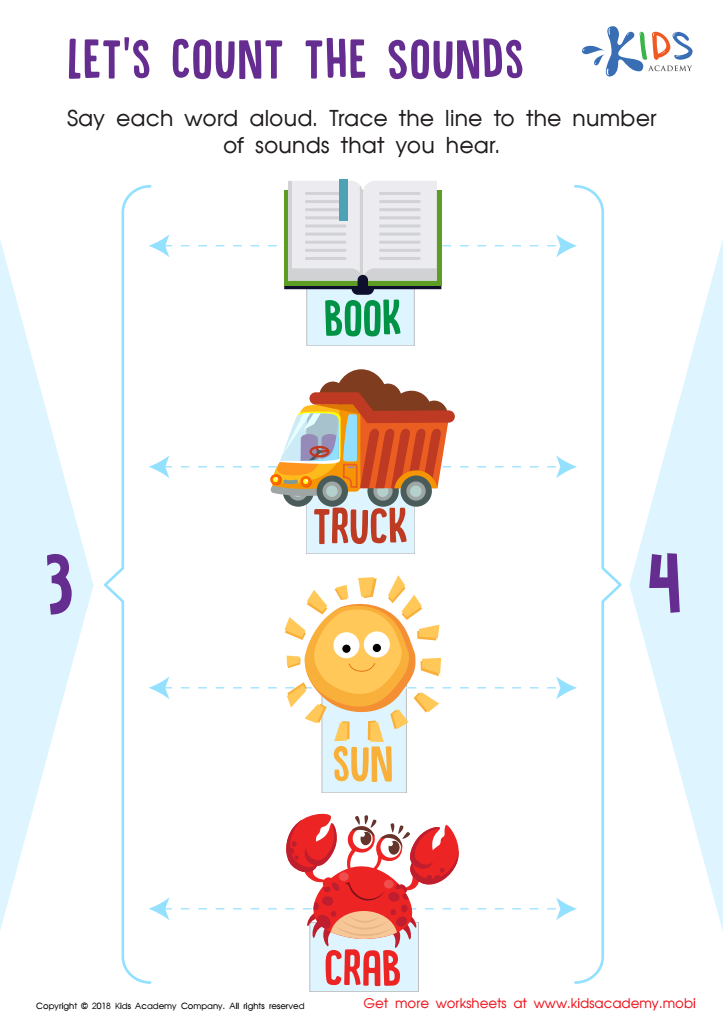
Let's Count the Sounds Worksheet
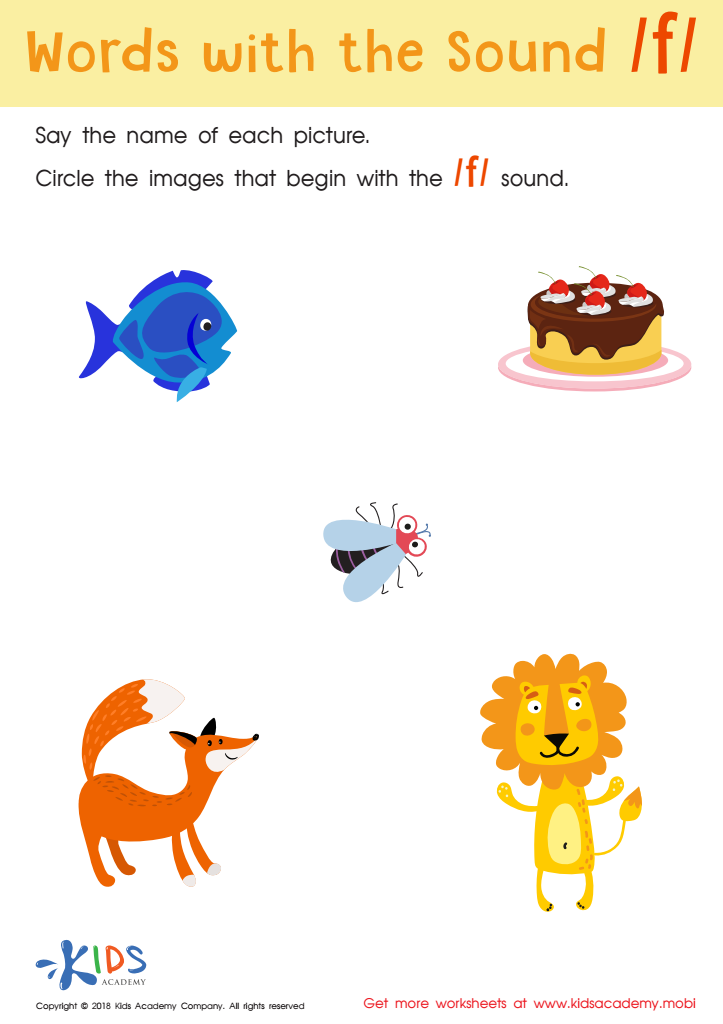
Words with sound f Reading Worksheet
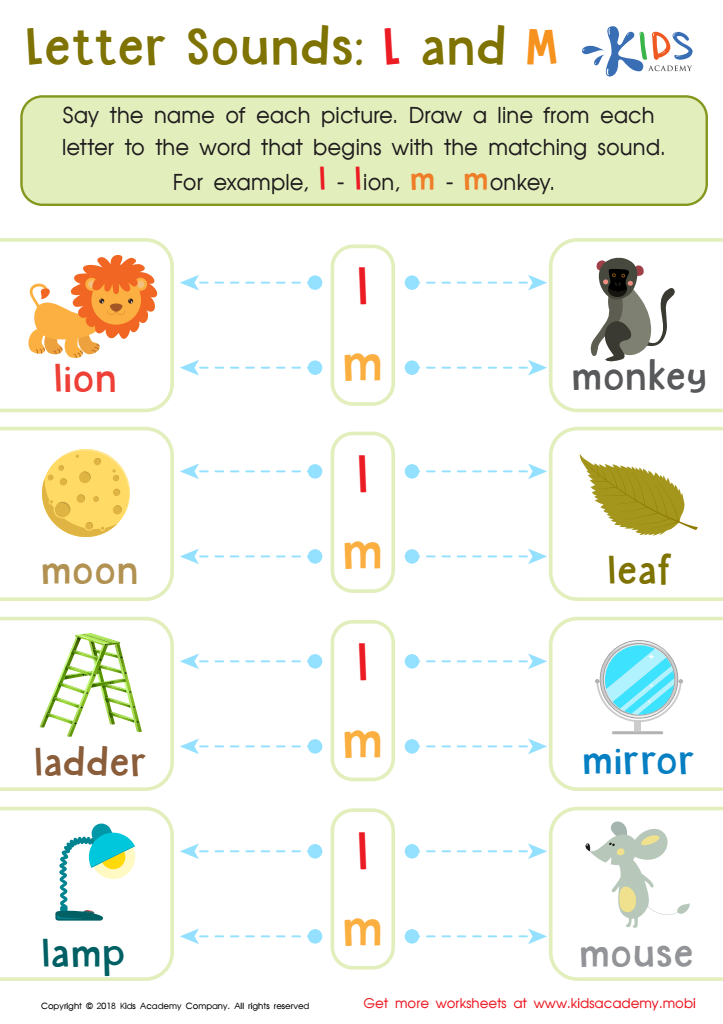
Letter l and M Sounds Worksheet
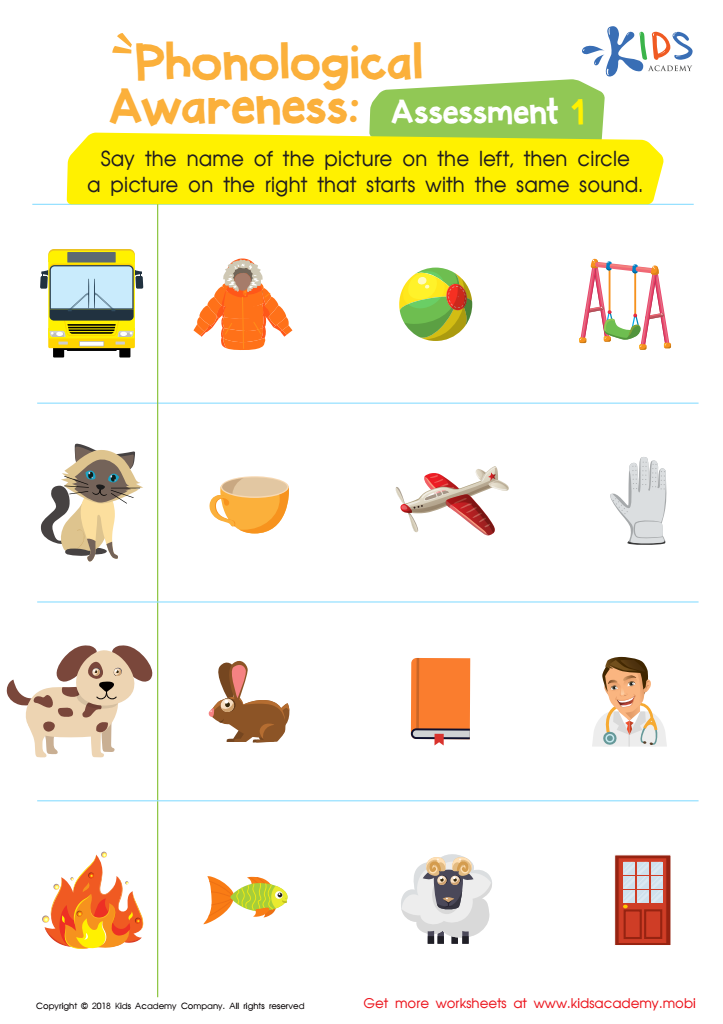
Phonological Awareness: Assessment 1 Worksheet
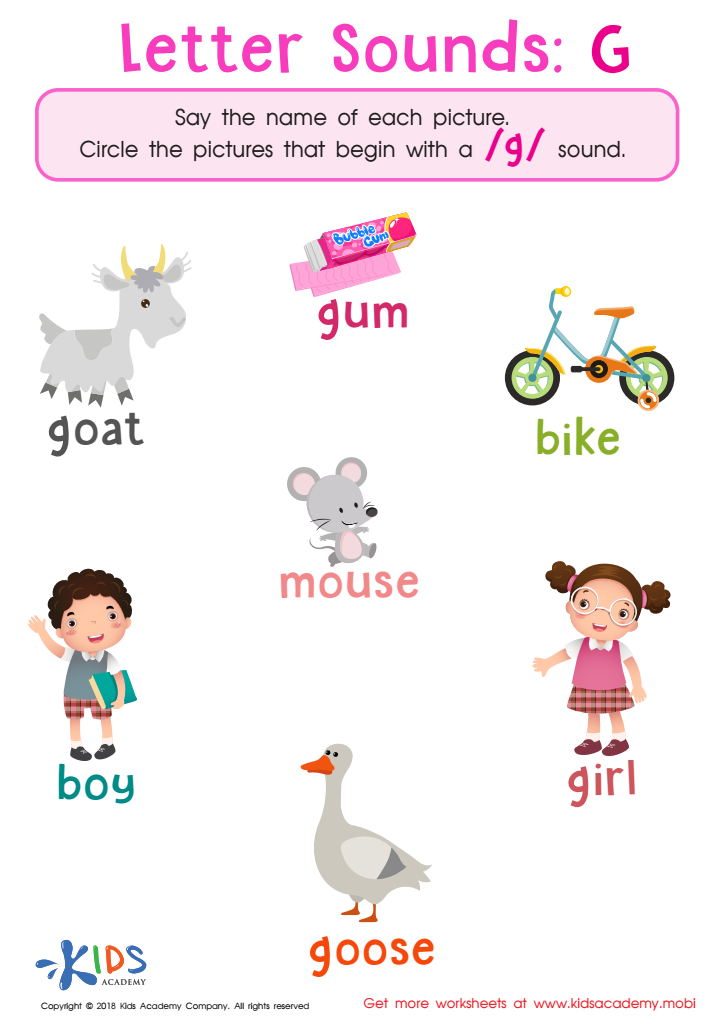
Letter G Sounds Worksheet
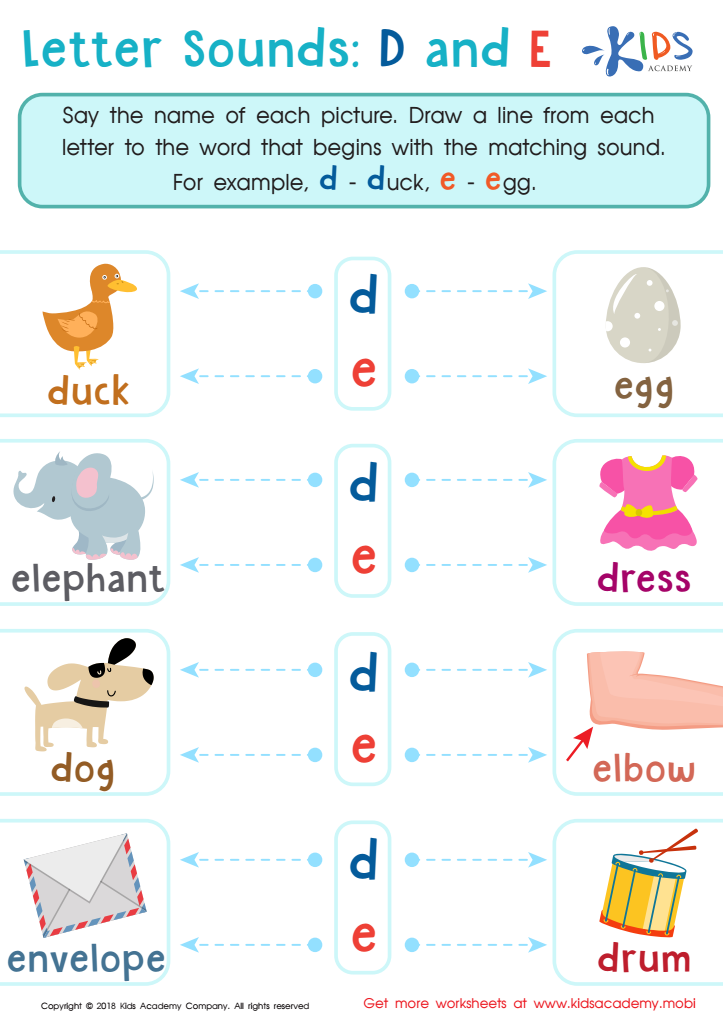
Letter D and E Sounds Worksheet








Parents and teachers should prioritize Sound Association Alphabet for children ages 3-6 because it forms the foundation for early literacy skills. This method engages children in recognizing the connection between sounds and letters, significantly enhancing their reading and writing abilities. At a young age, children's brains are highly receptive to auditory cues, making it an ideal time to introduce phonemic awareness through sound association.
By emphasizing sound associations, educators can cultivate a love for language that fosters curiosity and confidence in young learners. This approach not only aids in letter recognition but also develops essential skills such as vocabulary acquisition and spelling. Furthermore, it is crucial for effective communication, as children learn to connect sounds with words, thus promoting verbal skills.
Navigating the complexities of written language becomes more manageable for children who grasp sound associations early, setting them up for academic success in later stages. Moreover, participation in sound association activities nurtures social skills, as collaborative learning and play enhance classroom dynamics. Ultimately, sound association methods equip children with a toolset for lifelong learning, empowering them to explore the world around them with inquisitiveness and enthusiasm. Therefore, reinforcing sound association in this age group is truly an investment in their future.







