Lowercase identification Letter Recognition Worksheets for Ages 3-6
5 filtered results
-
From - To
Enhance your child's literacy journey with our engaging Lowercase Identification Letter Recognition Worksheets designed specifically for ages 3-6. These worksheets provide a fun and interactive way for young learners to identify and familiarize themselves with lowercase letters. Featuring vibrant illustrations and varied activities, children can improve their recognition skills while enjoying hands-on learning. Perfect for homeschooling or classroom use, these resources help to lay a solid foundation in early reading. Instill confidence in your little one as they master lowercase letters with ease. Start exploring our printable worksheets today and watch your child's love for letters blossom!
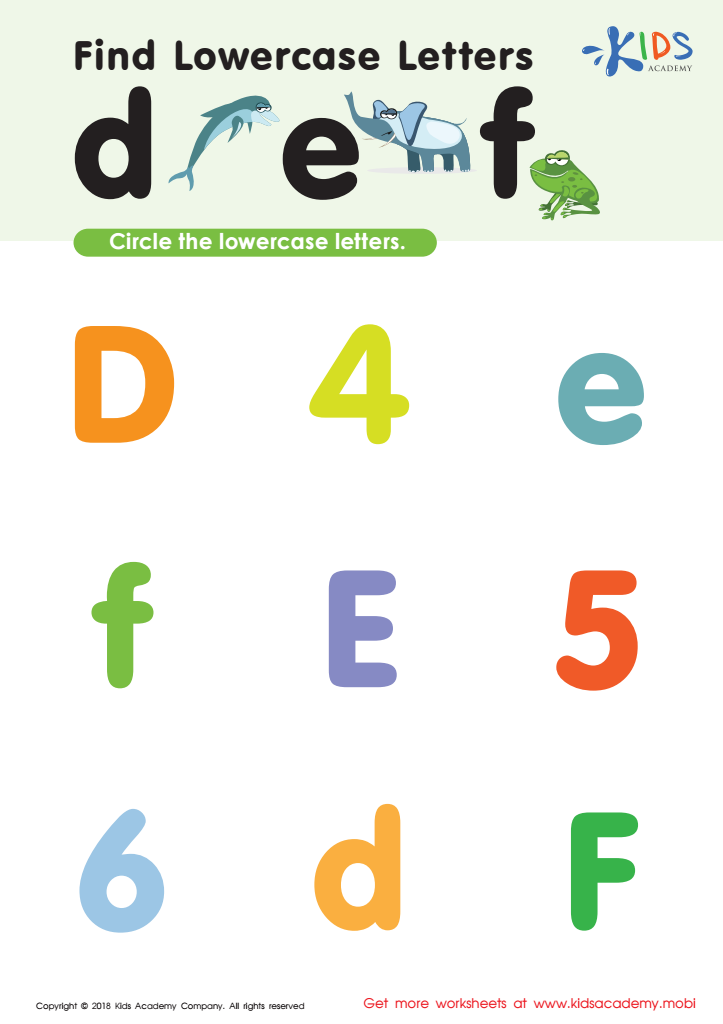
Find Lowercase Letters d e f Worksheet
 Assign to My Students
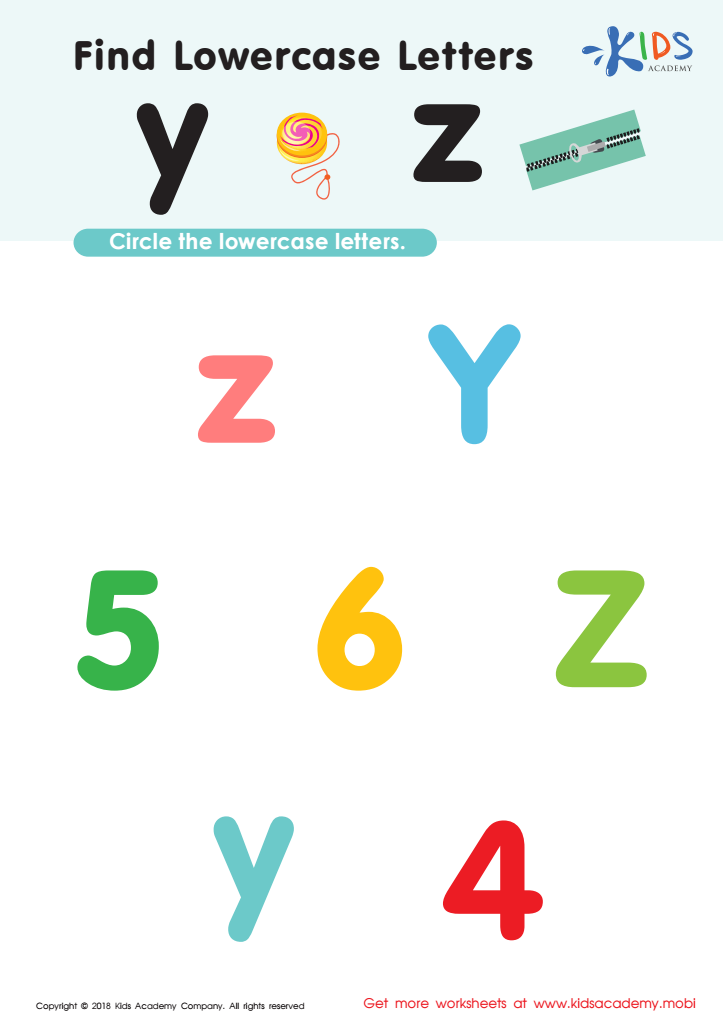
Find Lowercase Letters y z Worksheet
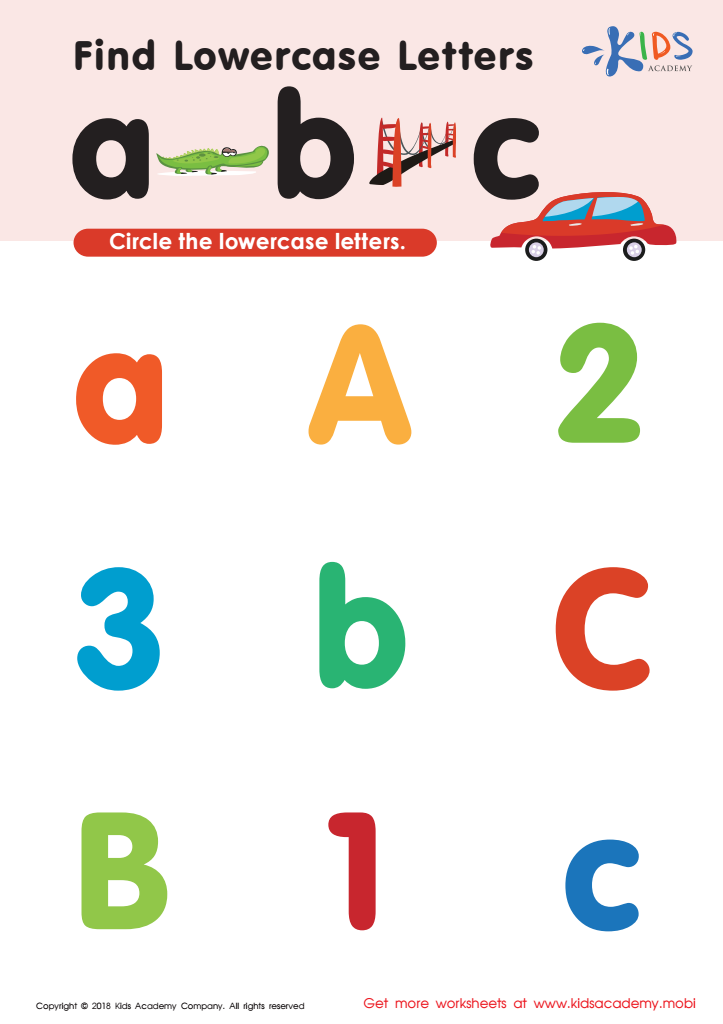
Find lowercase letters a b c Worksheet
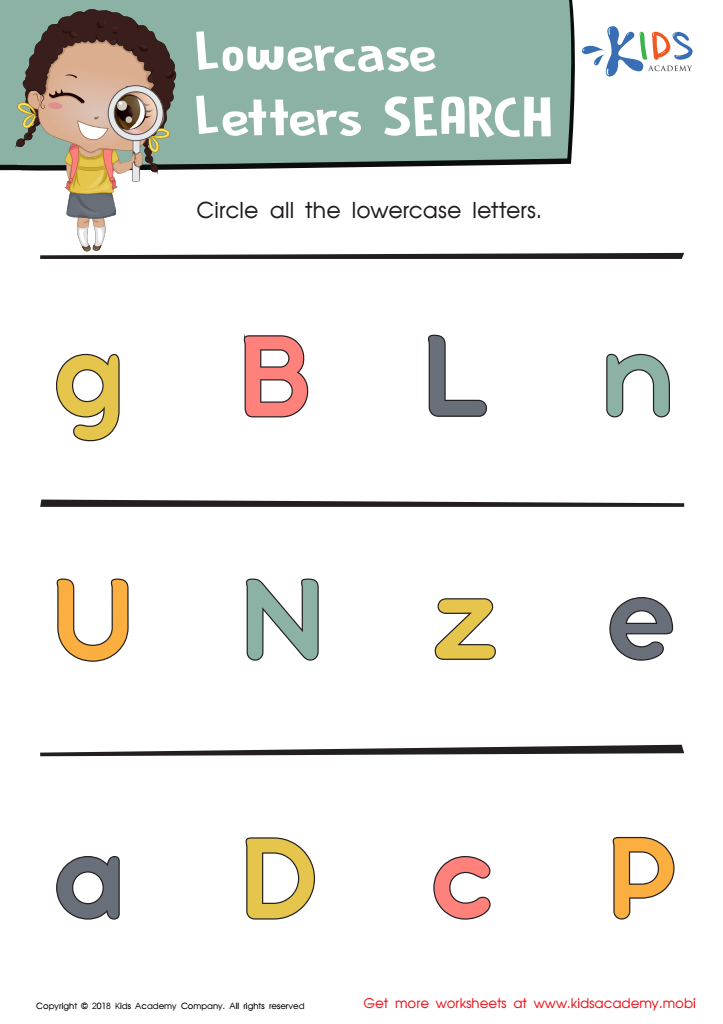
Lowercase Letters Search: Assessment Worksheet
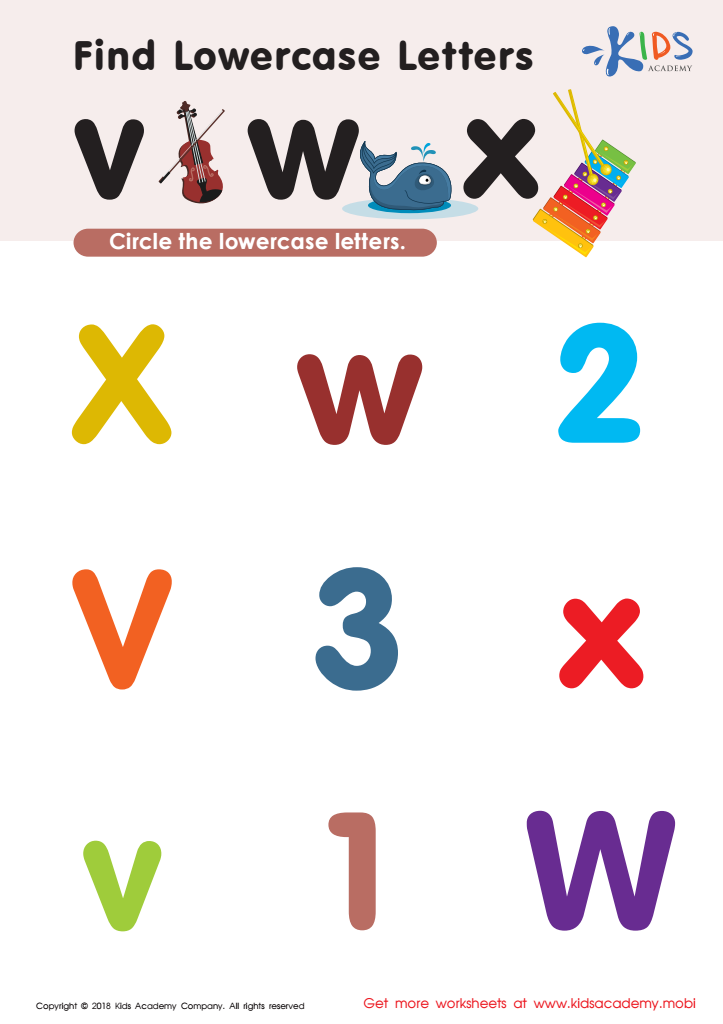
Find Lowercase Letters v w x Worksheet








Lowercase letter recognition is crucial for children aged 3-6 as it lays the foundation for literacy development and overall academic success. At this stage, children begin to explore the world of letters and sounds; recognizing lowercase letters helps them grasp the relationship between written and spoken language. Lowercase letters are more frequently encountered in texts than uppercase letters, making familiarity with them essential for reading fluency.
Encouraging lowercase letter recognition also enhances children’s phonemic awareness and spelling skills, as they learn to connect sounds to their corresponding letters. This skill is particularly important when it comes to writing, as most writing tasks require the use of lowercase letters. By mastering this recognition, children can build confidence in their reading and writing abilities.
Moreover, lowercase letter recognition fosters a love for reading and learning. Engaging parents and teachers in activities that promote this skill, such as interactive games and engaging stories, ensures that children receive consistent and supportive exposure. Ultimately, prioritizing lowercase letter recognition creates a strong literacy foundation, equips children for future learning, and helps them develop essential cognitive and communication skills necessary for their lifelong educational journey.







