Fine Motor Skills Letter W Worksheets for Ages 3-6
4 filtered results
-
From - To
Enhance your child's fine motor skills with our engaging "Letter W Worksheets" designed for ages 3-6. Perfect for little learners, these printable activities focus on tracing, writing, and recognizing the letter W through fun, interactive exercises. Whether your child is drawing wavy lines, connecting dots, or coloring within the lines, these worksheets combine learning with play to improve their precision and hand coordination. Ideal for preschoolers and kindergarteners, our worksheets are a fantastic resource for parents and teachers looking to nurture early literacy and fine motor development. Download and start practicing today!
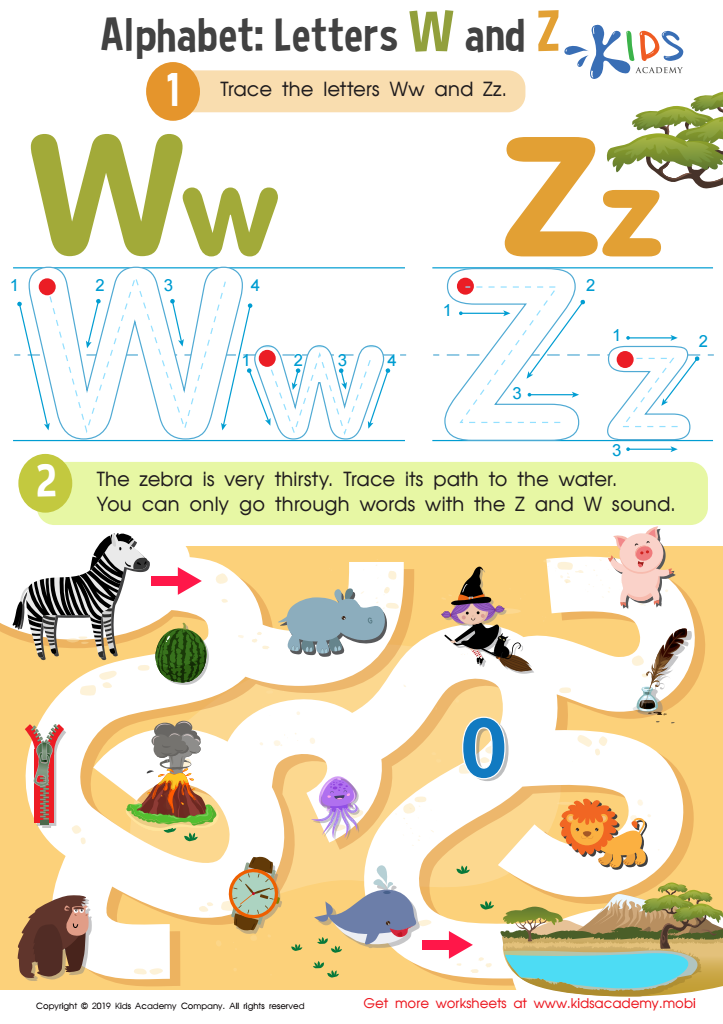
Letters W and Z Tracing Worksheet
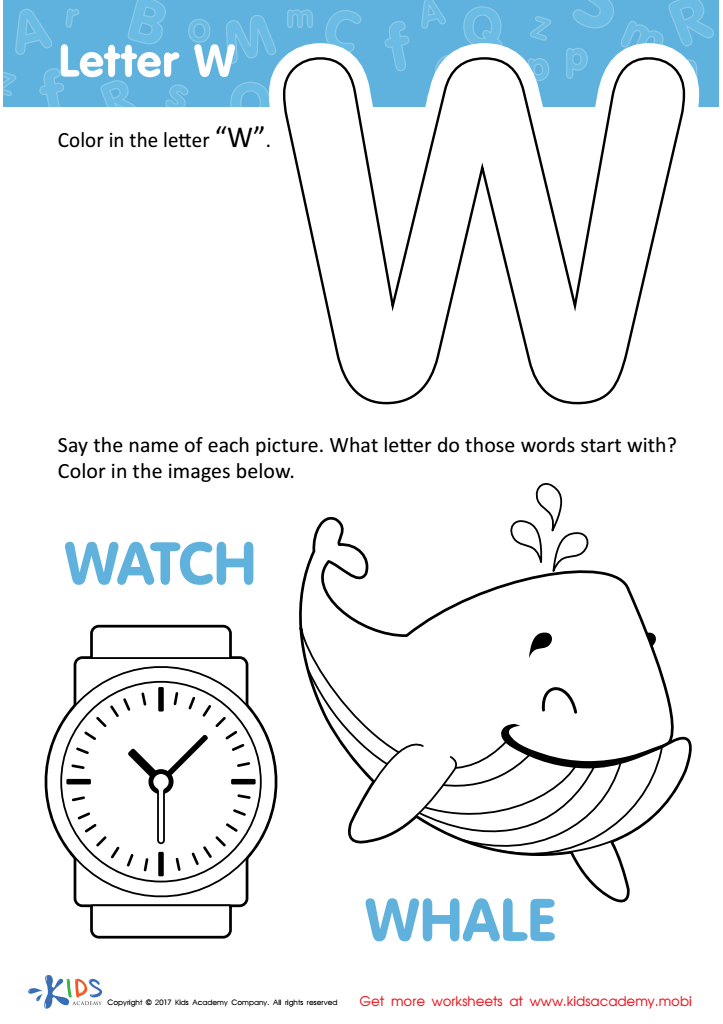
Letter W Coloring Sheet
 Assign to My Students
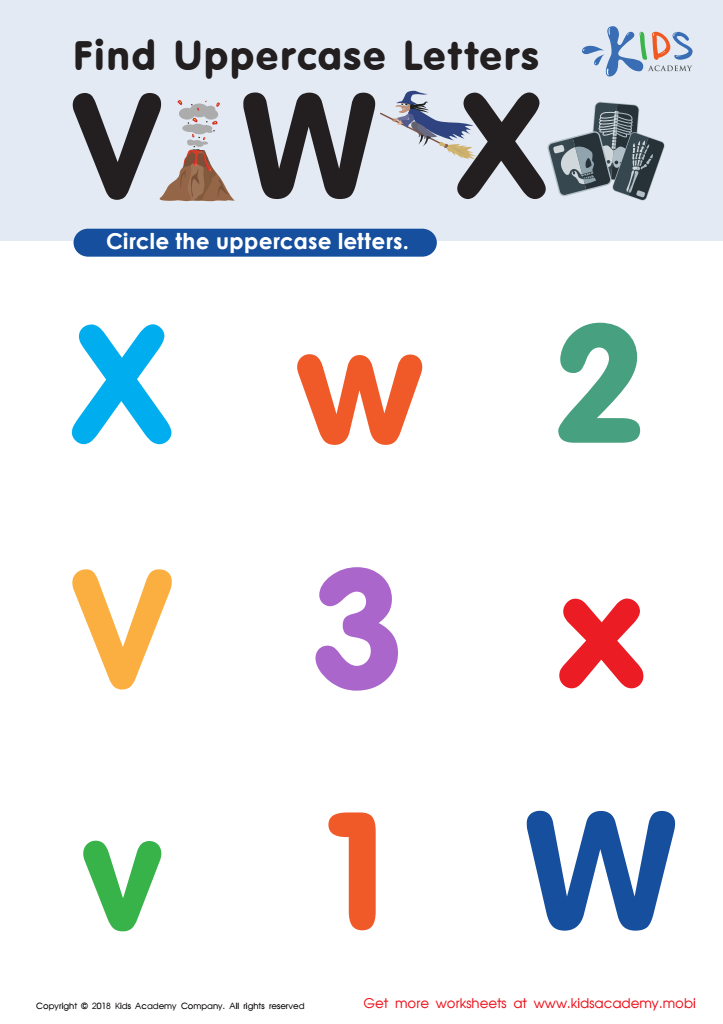
Find Uppercase Letters V, W, X Worksheet
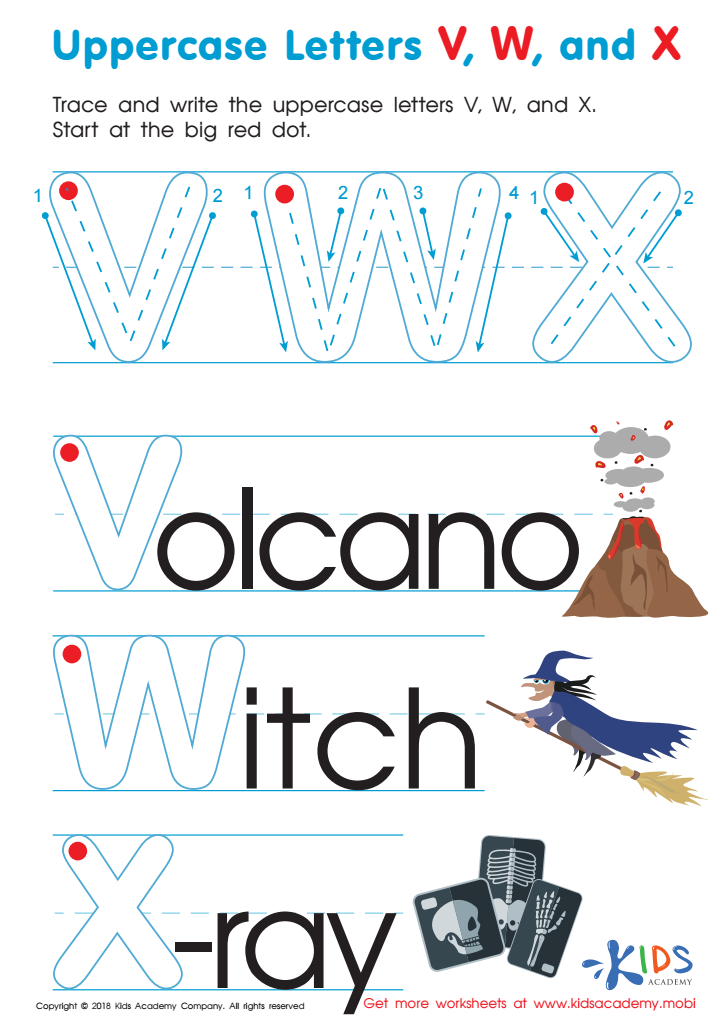
Uppercase Letters V, W, and X Worksheet




Fine motor skills are crucial for young children, especially in the developmental stage between ages 3-6, as they form the foundation for many essential activities. The letter "W," with its unique zigzag pattern of intersecting lines, provides an excellent exercise for these skills. By practicing writing the letter "W," children enhance their hand-eye coordination, control, and precision, which are necessary for various tasks, such as using scissors, buttoning clothes, and, most importantly, writing.
Parents and teachers should emphasize the importance of fine motor skills because they are intertwined with a child's academic progress and self-sufficiency. Developing these skills early fosters confidence and independence, and mastery of simple tasks builds a child’s sense of accomplishment. Furthermore, well-developed fine motor skills ease the transition into formal education, making learning experiences smoother and more enjoyable.
Encouraging children to practice the letter "W" through different activities like tracing, drawing, and manipulating playdough helps them strengthen their fingers and refine their grip. These activities ensure that children not only learn to recognize and write the letter but also develop the underlying muscle strength and dexterity necessary for advanced learning stages. Thus, focusing on fine motor skills at this age significantly impacts their overall cognitive, social, and academic growth.