Sound identification Phonics Worksheets for Ages 3-6
4 filtered results
-
From - To
Discover our engaging Sound Identification Phonics Worksheets designed for children ages 3-6! These interactive resources help young learners develop essential phonemic awareness by focusing on sound recognition and matching. Each worksheet features vibrant illustrations and playful activities that encourage kids to identify sounds and associate them with letters. Our worksheets support early literacy skills, making learning fun and effective. Parents and educators can use these materials to boost confidence in reading as little ones begin their literacy journey. Explore our collection and watch your child's phonics skills flourish—it's the perfect way to kick-start a lifelong love for reading!
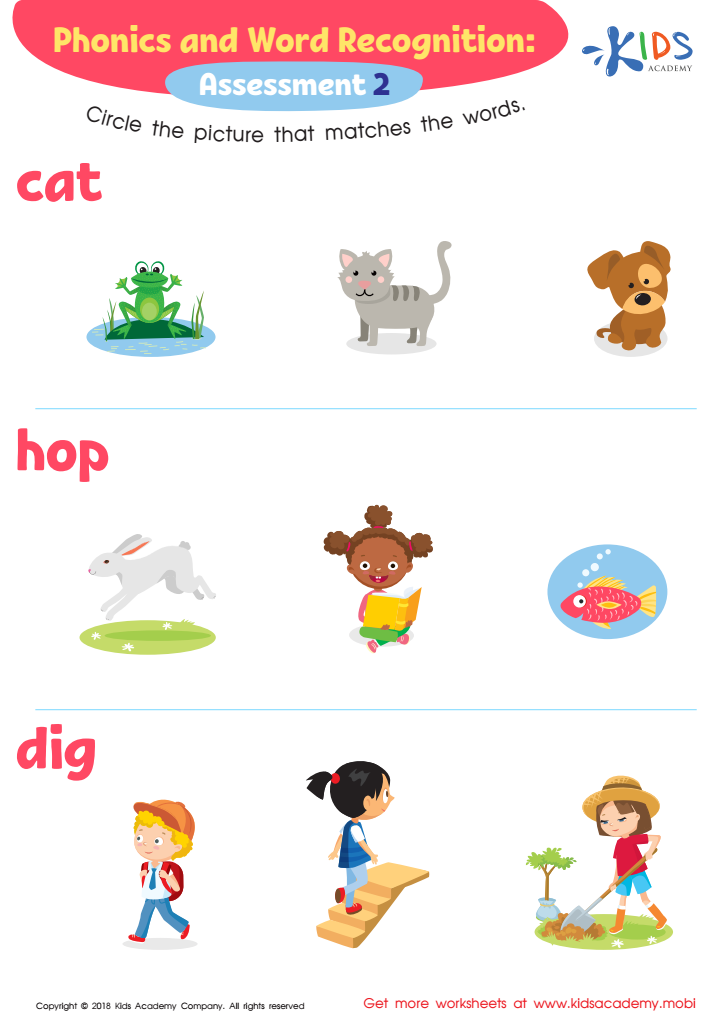
Phonological Awareness: Assessment 2 ELA Worksheet
 Assign to My Students
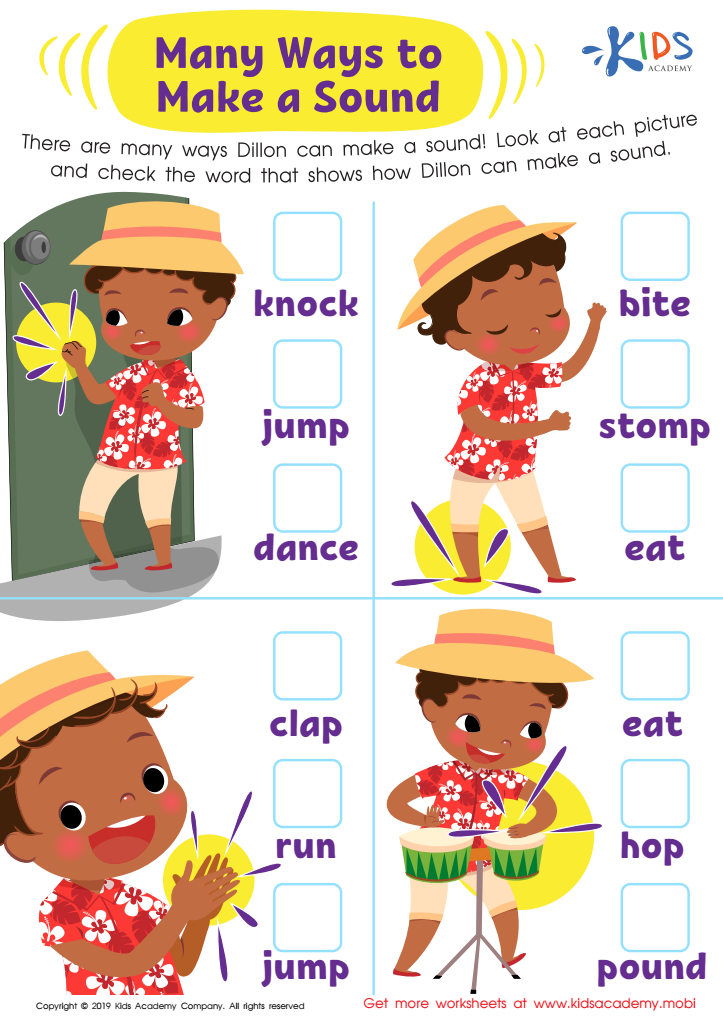
Many Ways to Make a Sound Worksheet
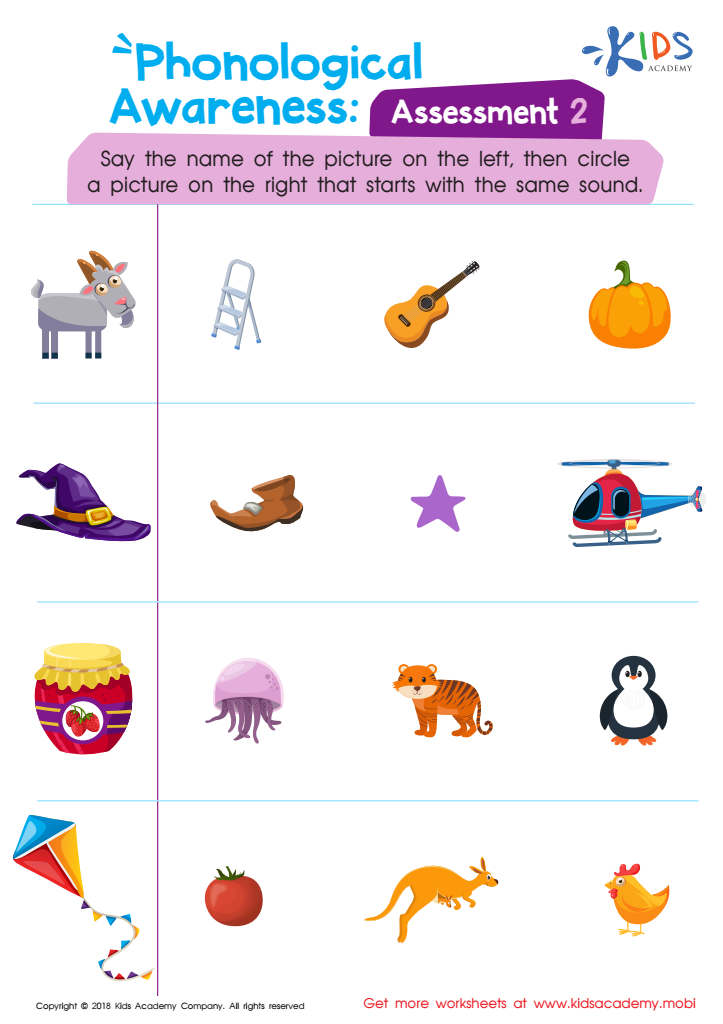
Phonological Awareness: Assessment 2 Worksheet
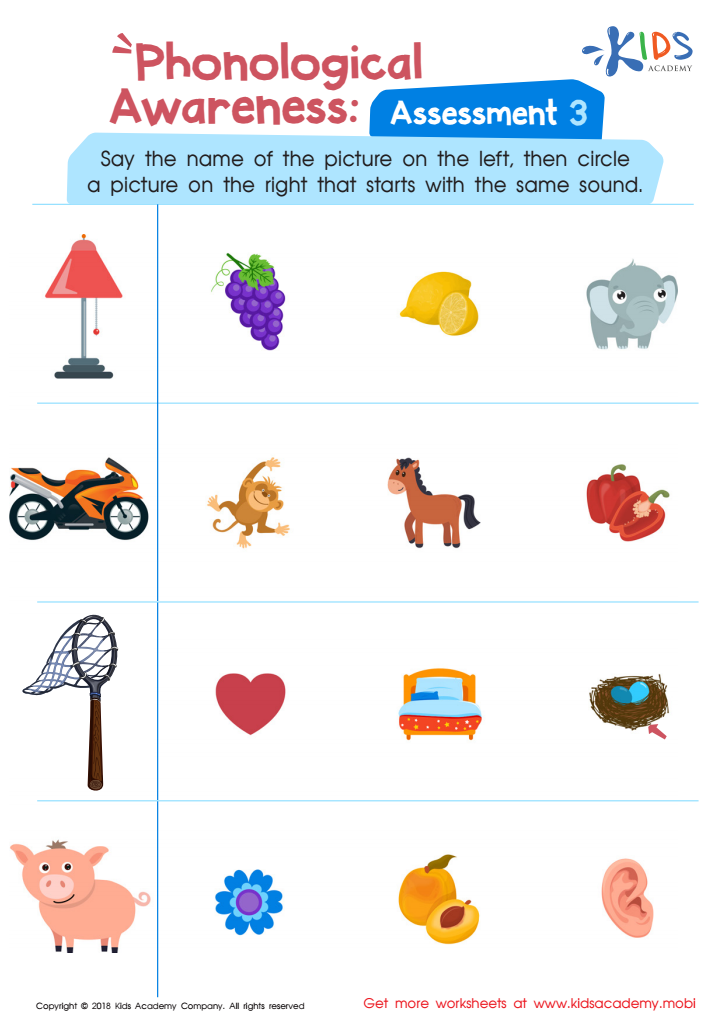
Phonological Awareness: Assessment 3 Worksheet








Sound identification and phonics are crucial aspects of early literacy development for children ages 3-6. At this stage, children are rapidly acquiring language skills, and phonics provides the foundational understanding of how sounds correspond with letters. When parents and teachers emphasize sound identification, they help children recognize individual sounds, which is essential for developing reading and writing abilities.
By mastering phonics, children learn to decode words, enhancing their reading fluency and comprehension. This skill set not only fosters confidence in young learners but also equips them with tools necessary for academic success as they progress in school. Sound identification activities, such as rhyming games, sound matching, and phonemic awareness exercises, can make learning enjoyable and engaging.
Additionally, early exposure to phonics creates a positive relationship with reading, establishing a lifelong love for literature. It can mitigate potential learning difficulties later on, as being adept in sound identification helps prevent challenges associated with reading disorders. Ultimately, prioritizing sound identification and phonics lays a strong foundation for a child’s future educational journey, making it a critical focus for both parents and educators during these formative years.







