Reading comprehension Short Vowels Worksheets for Ages 3-6
6 filtered results
Difficulty Level
Grade
Age
-
From - To
Subject
Activity
Standards
Empower your child's reading journey with our engaging "Reading Comprehension Short Vowels Worksheets for Ages 3-6." Specially designed to enhance early literacy, these worksheets focus on short vowel sounds, aiding preschoolers and kindergarteners in recognizing and pronouncing essential word patterns. Perfect for new readers, our activities combine captivating stories and playful exercises to make learning fun and effective. Your child will improve phonics skills, enhance vocabulary, and develop a lifelong love for reading. Visit our page to explore how these expertly crafted resources can boost your child's reading comprehension and give them a head start in their education.
Favorites
With answer key
Interactive
The Short I Words Reading Worksheet
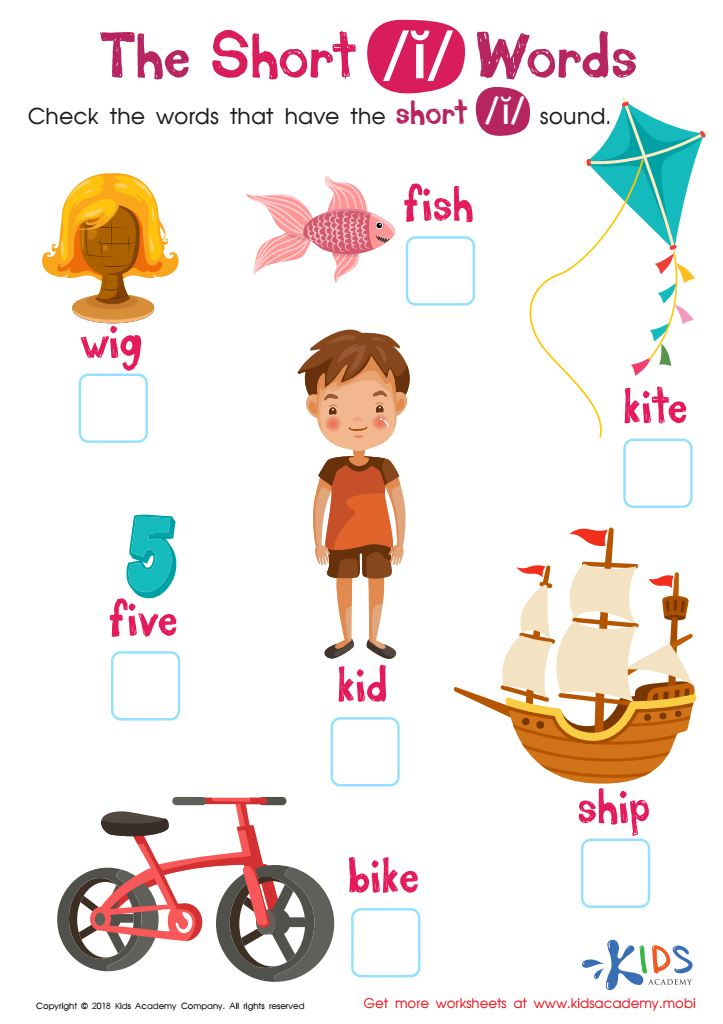
Teach your kindergartner phonics with this printout worksheet! It introduces the short «i» sound and helps them differentiate and articulate sounds and letters of the alphabet. With practice, your child will soon find it easy to classify sounds into long and short vowels.
The Short I Words Reading Worksheet
Worksheet
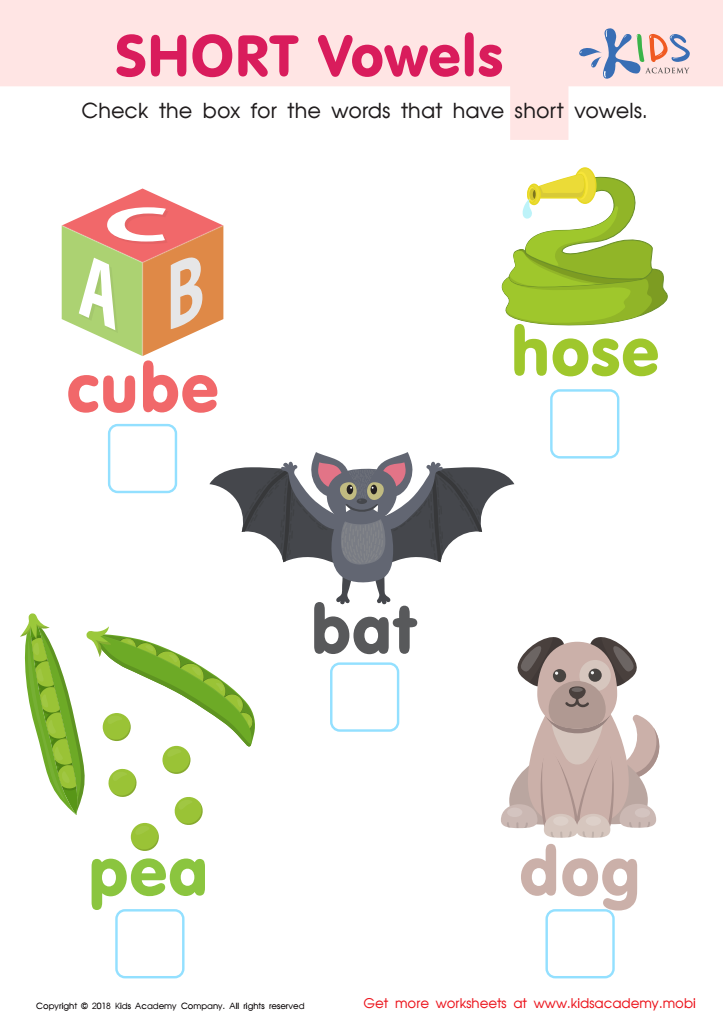
short vowels Worksheet
Say "dog" and notice how long it takes to pronounce the vowel. Is it short or long? Compare it to "pea" and use this worksheet to quickly assess your child's mastery. Have them name each picture and listen for the vowel sounds. Only check the boxes for words with short vowel sounds.
short vowels Worksheet
Worksheet
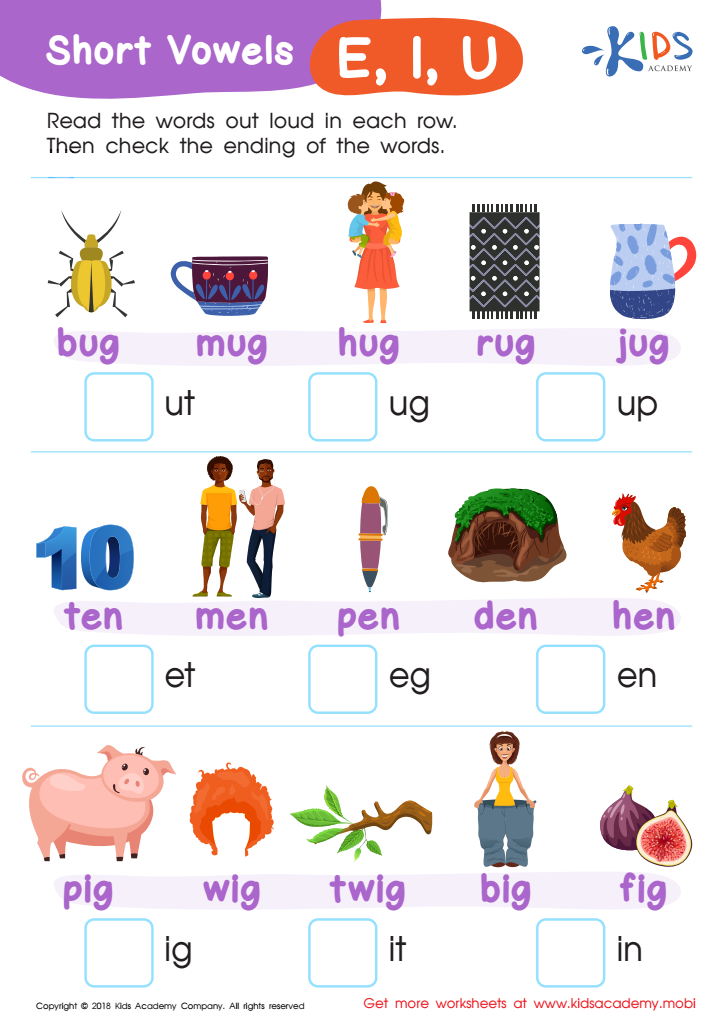
Short Vowels /e/, /i/, and /u/ Worksheet
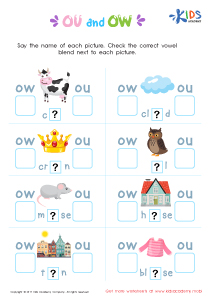
Your emergent reader can have fun while practicing their short vowel sounds with this free, brightly colored worksheet. They'll identify one-syllable words by their pictures, then match the correct ending for each. They'll gain an understanding of how short vowel sounds vary in closed syllables with different endings, without even realizing it!
Short Vowels /e/, /i/, and /u/ Worksheet
Worksheet
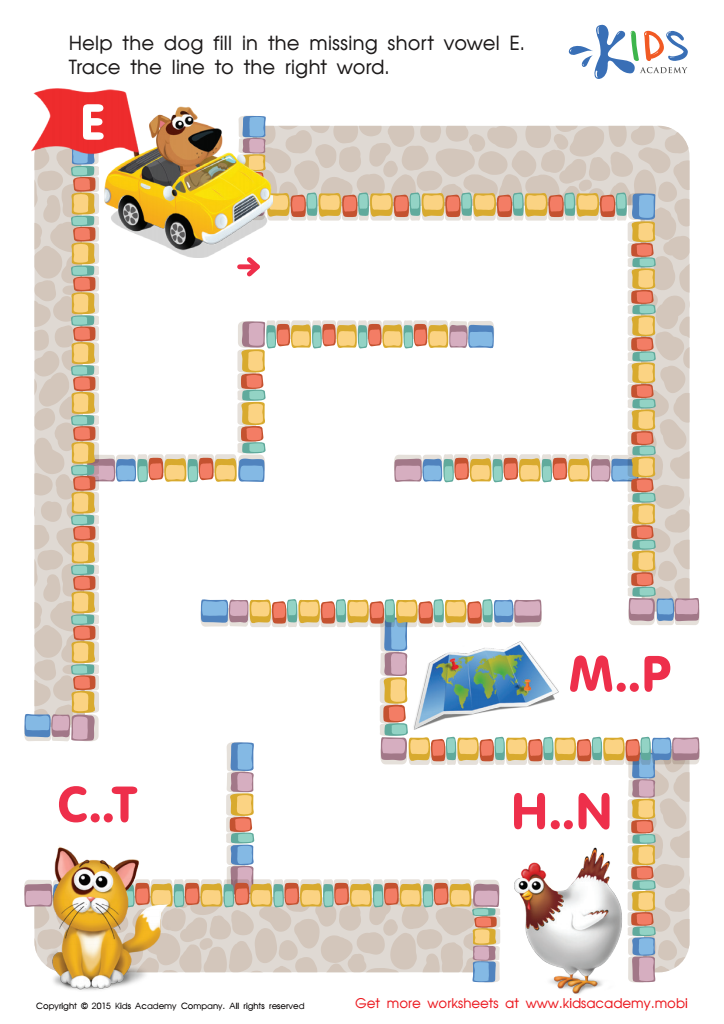
Short Vowel Sound E Worksheet
This free printable phonics worksheet helps kids learn the short vowel sound E. Kids need to help the dog complete the word “hen” by finding their way through a maze. It teaches kids to see the connection between letters and sounds and also strengthens their writing and spelling skills. Fun and educational, this phonics worksheet is great for kids. Want more? Check out here.
Short Vowel Sound E Worksheet
Worksheet
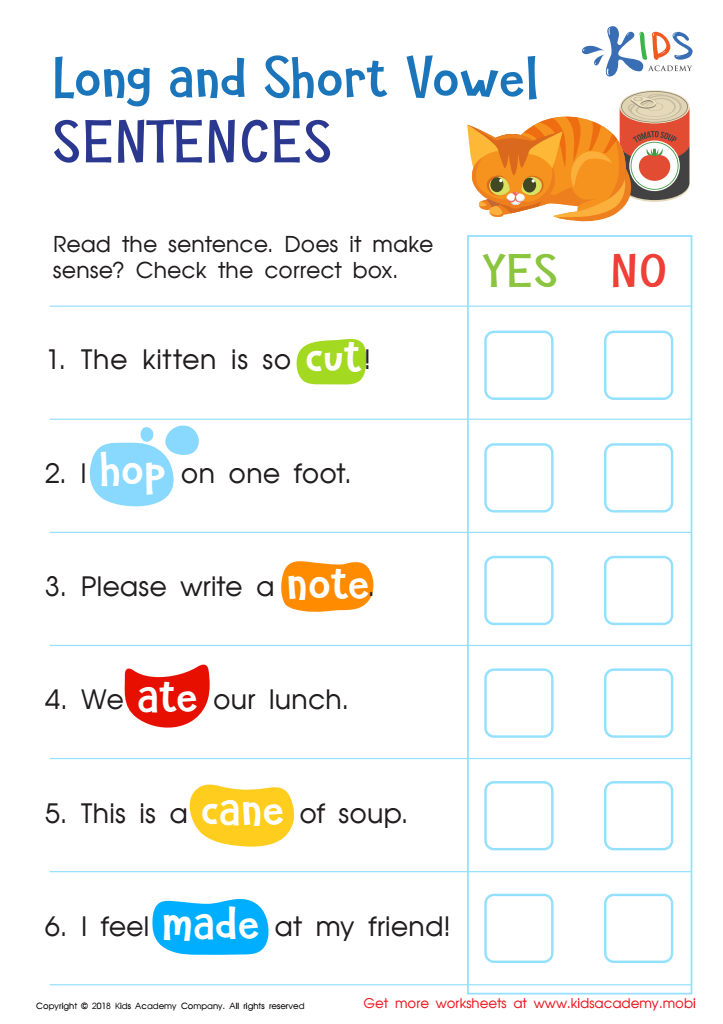
Long and Short Vowel Sentences: Assessment Worksheet
This printable worksheet helps kids practice differentiating between short and long vowel sounds. They'll use context clues to figure out which words make sense in simple sentences. A great way to build reading and writing skills!
Long and Short Vowel Sentences: Assessment Worksheet
Worksheet
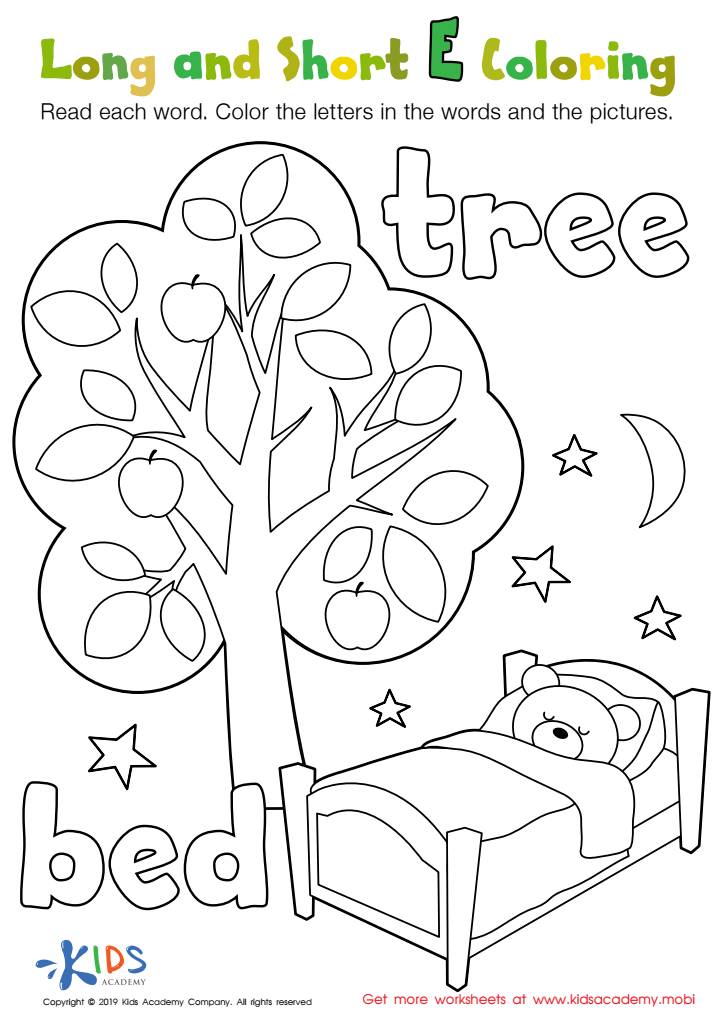
Long and Short E Worksheet
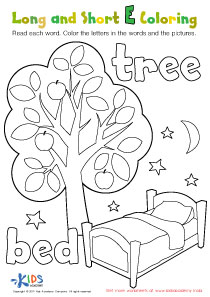
This fun printout makes learning phonics enjoyable for Grade 3 students. Get them to read the words “tree” and “bed” to recognize the different sounds of the letter “E”. After hearing the words they can color the words and the pictures to understand differences between long and short vowels.
Download (PDF)
 Assign to My Students
Assign to My Students
Long and Short E Worksheet
Worksheet
Join Kids Academy for Free
Who is primarily going to use this learning content?



Reading comprehension and the understanding of short vowels are foundational skills in early literacy that parents and teachers should prioritize for children aged 3-6. At this developmental stage, children's brains are particularly receptive to language acquisition, making it a critical period for establishing essential reading skills.
Short vowels, such as 'a' in 'cat' or 'e' in 'bed,' are basic sounds that appear frequently in English. Mastery of these sounds aids in the ability to decode simple words, which builds a child’s confidence and eagerness to learn more complex terms. A solid grasp of short vowels allows children to quickly recognize, pronounce, and spell new words, aiding in overall reading fluency.
Furthermore, good reading comprehension means that children not only pronounce words correctly but also understand their meanings and context within a sentence. This integrated skill enhances enjoyment and engagement with reading, transforming it from a rote task to an enriching activity.
For parents and teachers, focusing on these early literacy skills helps in identifying any potential learning difficulties early, providing a chance for timely intervention. Activities like phonics games, reading aloud, and interactive storytelling can make learning these skills enjoyable and effective, setting the stage for future academic success and a lifelong love of reading.