Lowercase identification Upper & Lowercase Letters Worksheets for Ages 3-6
5 filtered results
-
From - To
Discover our engaging Lowercase Identification Worksheets designed for children aged 3-6! These fun and colorful resources focus on helping young learners recognize and differentiate between uppercase and lowercase letters. As early literacy is crucial for a child's development, our worksheets incorporate interactive activities that foster essential skills through play. Children will enjoy sorting, matching, and identifying lowercase letters while building their confidence in reading and writing. Whether used at home or in the classroom, these worksheets align perfectly with early education goals. Prepare your little ones for a successful academic journey with our captivating lowercase letter identification activities!
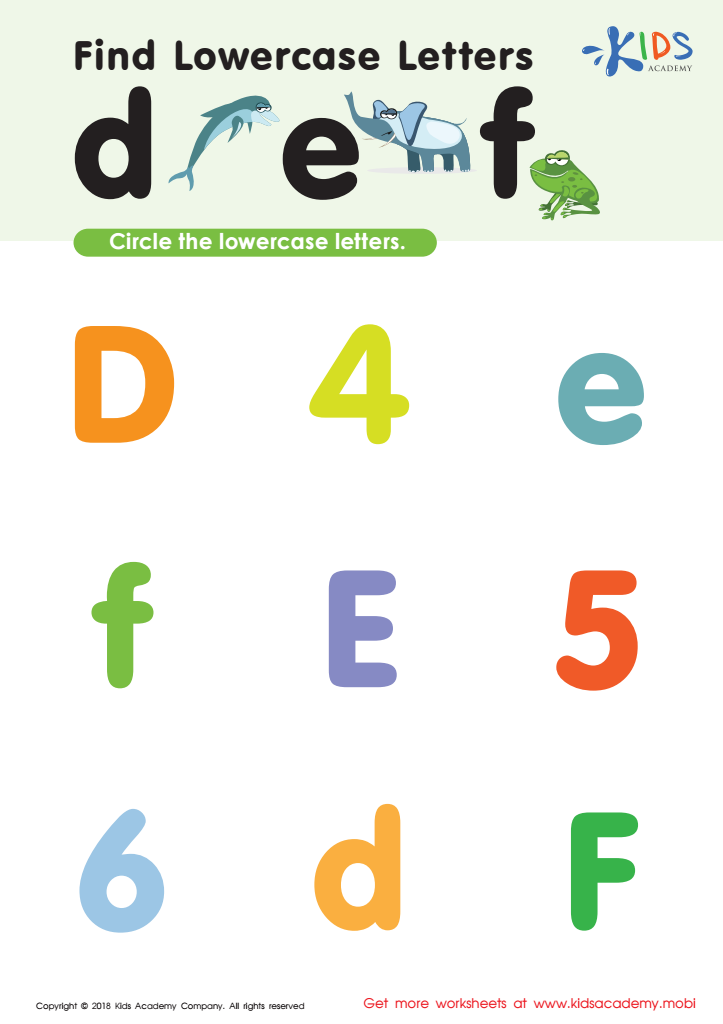
Find Lowercase Letters d e f Worksheet
 Assign to My Students
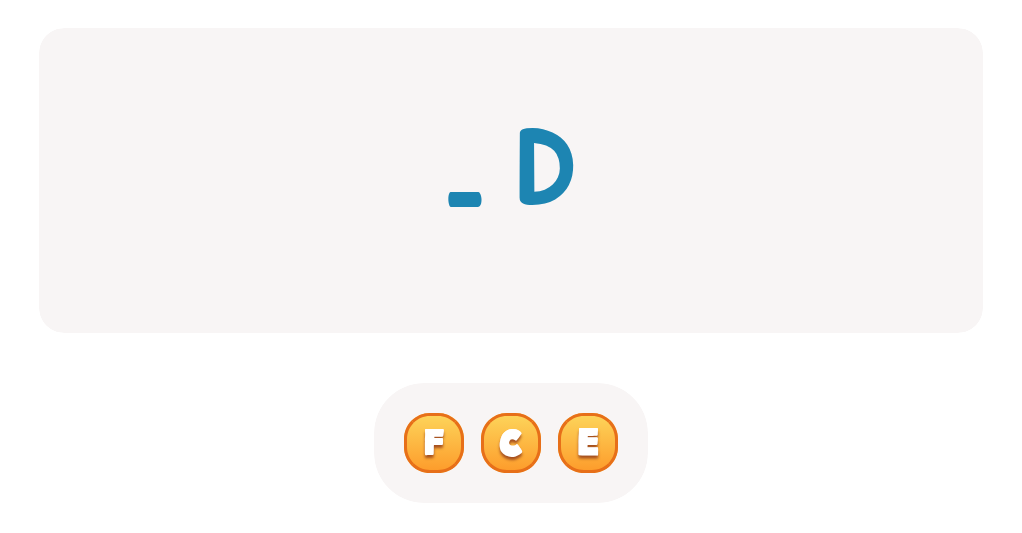

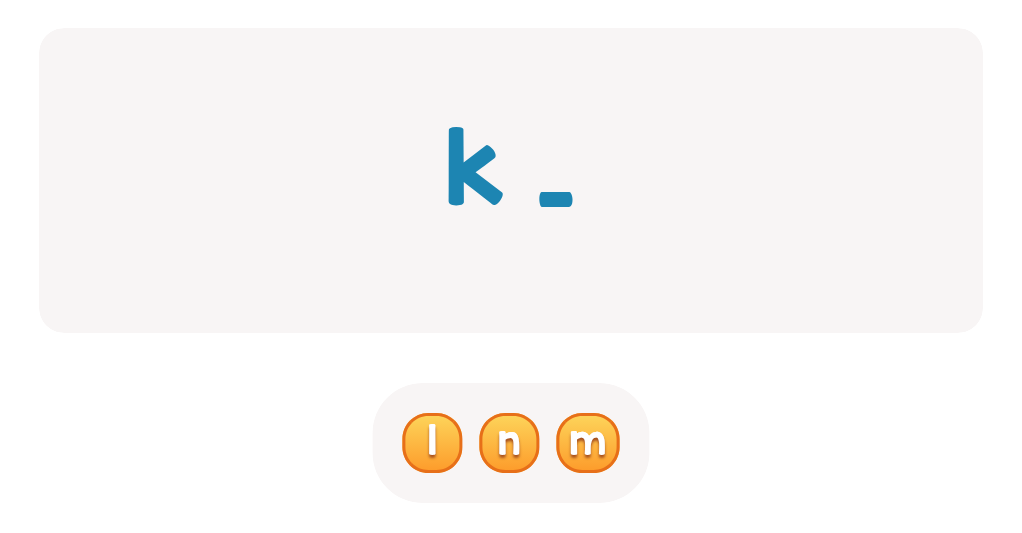
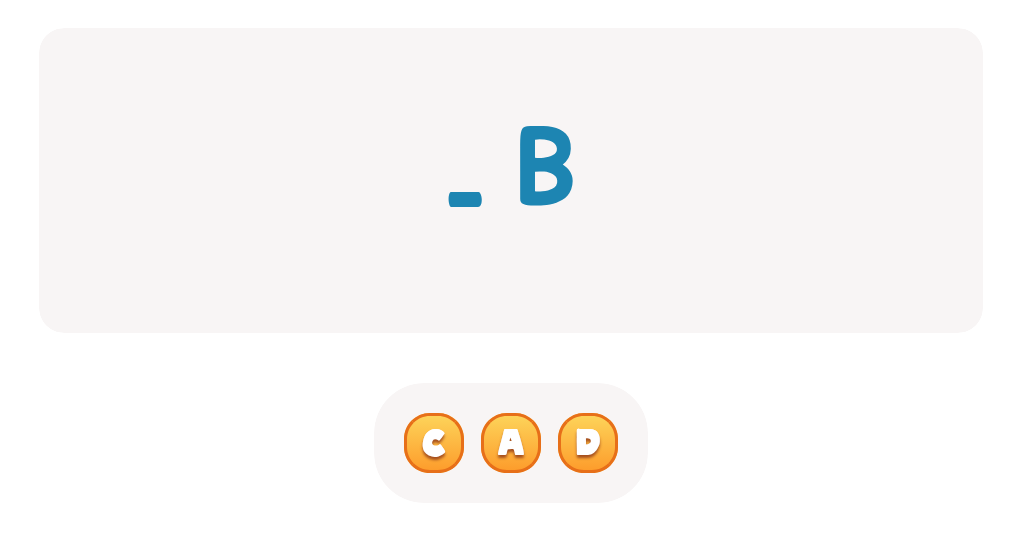
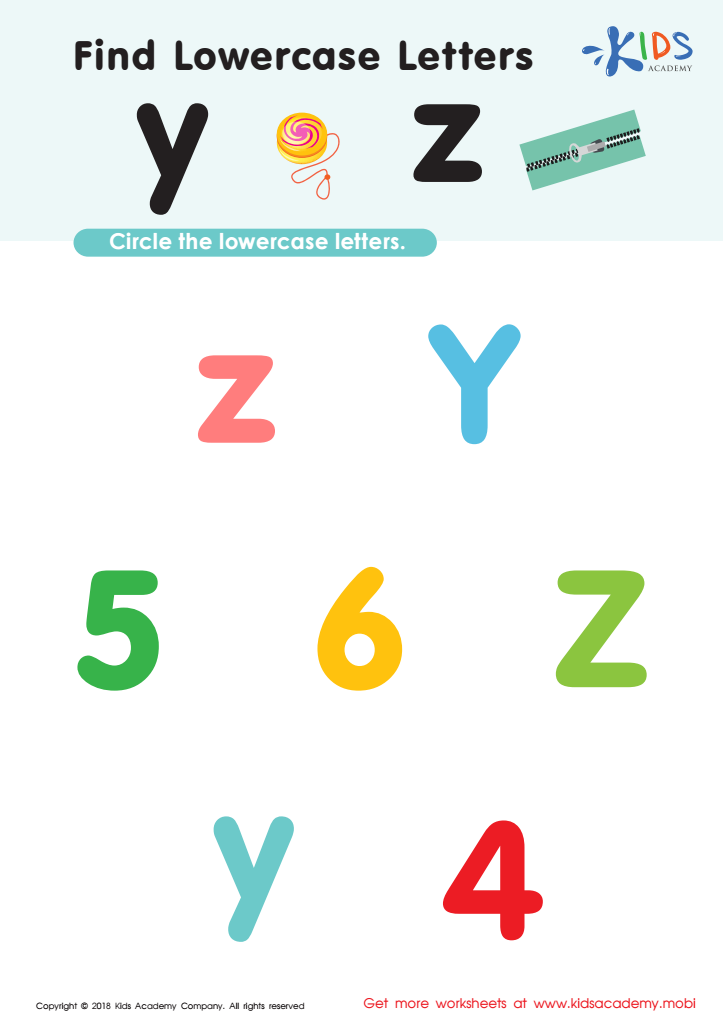
Find Lowercase Letters y z Worksheet
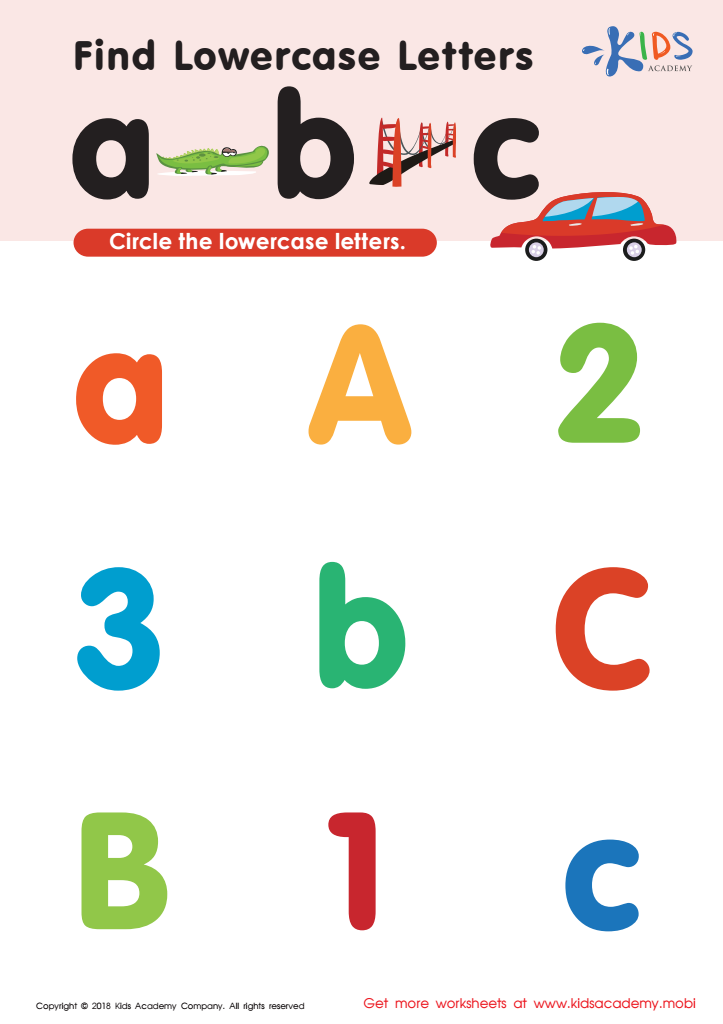
Find lowercase letters a b c Worksheet
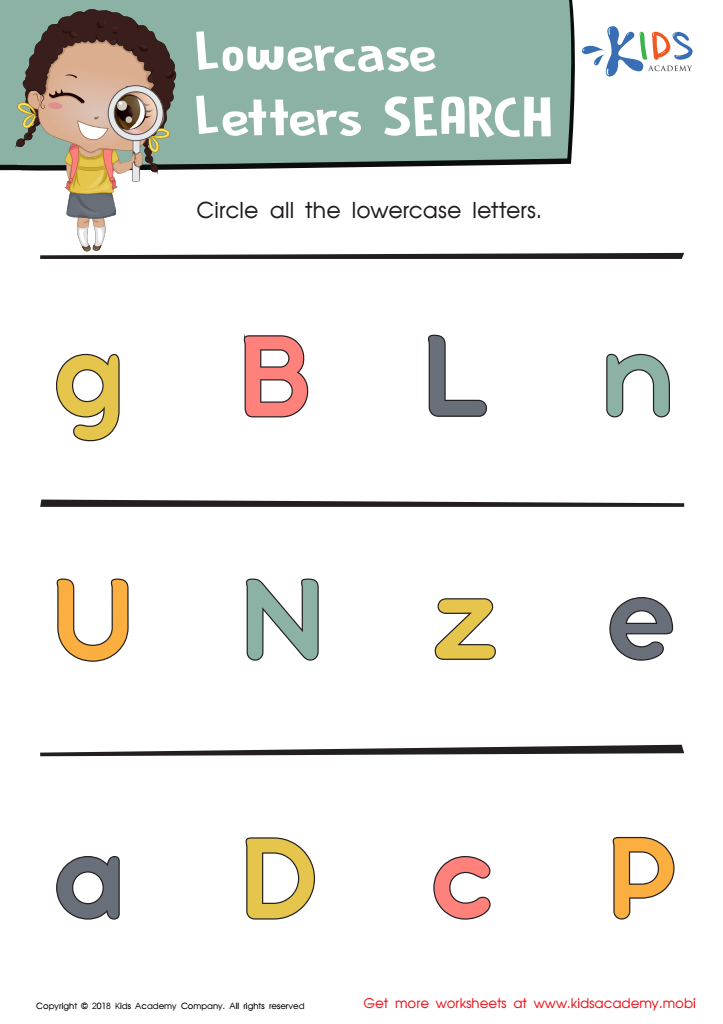
Lowercase Letters Search: Assessment Worksheet
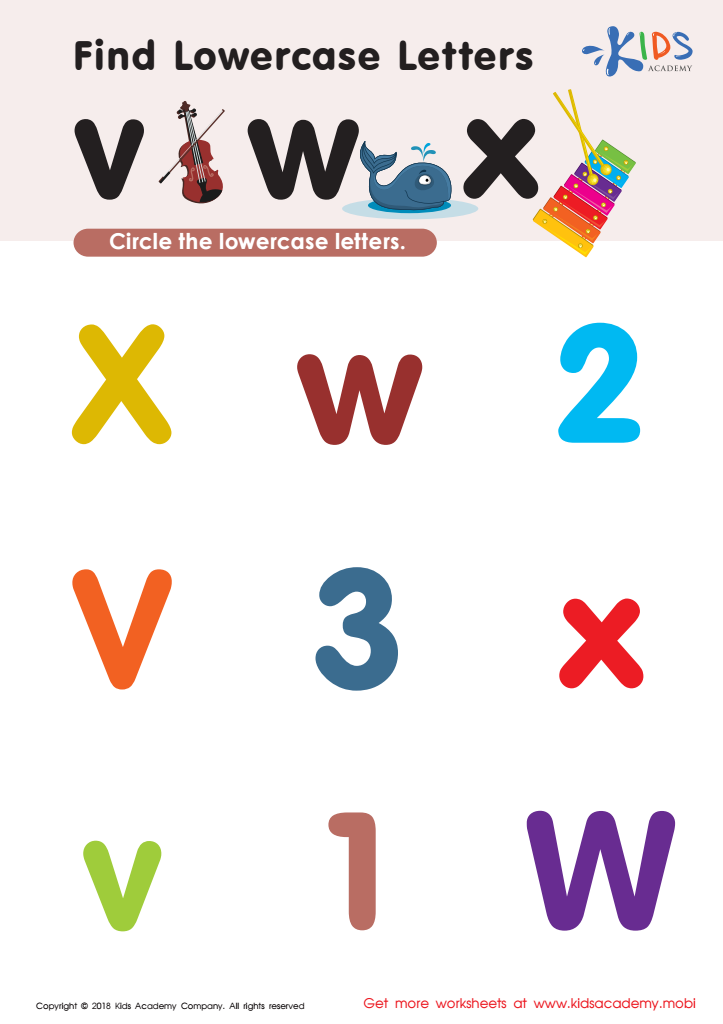
Find Lowercase Letters v w x Worksheet






Understanding lowercase and uppercase letters is fundamental for early literacy development in children aged 3 to 6. Teaching the distinction between lowercase and uppercase letters helps children recognize and differentiate letters in both forms, a necessary skill for reading and writing.
Initially, children learn to recognize the uppercase letters often because they are larger and frequently used at the start of names and sentences. However, exposure to lowercase letters is crucial as they appear more frequently in text. For example, about 80-90% of the letters in written materials are lowercase. Recognizing lowercase letters equips children to process written language more effectively, enhancing their reading fluency and comprehension.
Furthermore, understanding these differences aids in developing phonemic awareness, as children can connect sounds with corresponding letters. This skill serves as the foundation for spelling and vocabulary development. Parents and teachers should focus on playful and engaging activities, like games and reading aloud, to foster this understanding organically.
In summary, emphasizing lowercase and uppercase identification helps build essential literacy skills, making it an important focus for parents and teachers supporting early childhood education. Nurturing these skills now lays the groundwork for future academic success.







