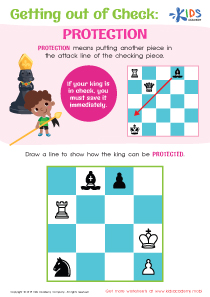
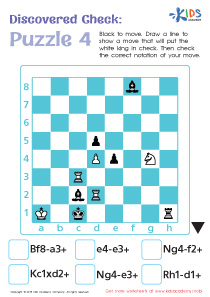
Spatial awareness Chess Worksheets for Ages 3-6
3 filtered results
-
From - To
Enhance your child's spatial awareness with our engaging Chess Worksheets designed specifically for ages 3-6. These worksheets promote critical thinking and problem-solving skills while introducing young learners to the basics of chess. Through fun activities, kids will develop an understanding of spatial relationships, improving their ability to visualize and manipulate objects in space. Our user-friendly format makes it easy for parents and teachers to incorporate these worksheets into learning routines. Help your little ones build confidence and cognitive skills in a playful way! Discover the exciting world of chess and nurture essential developmental skills with our printable worksheets today.
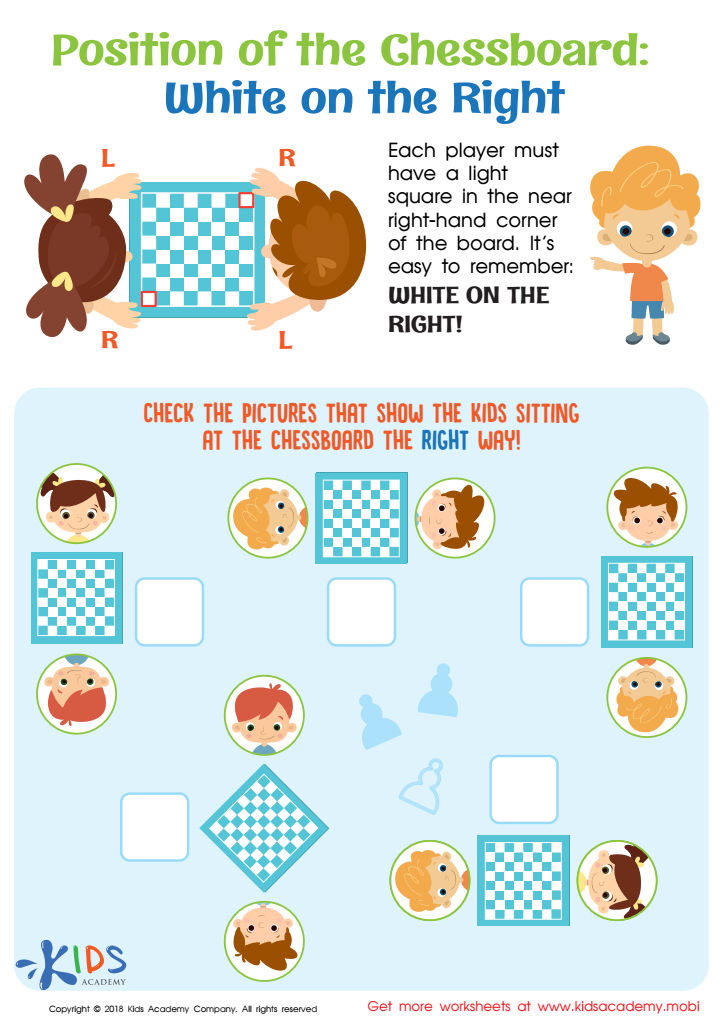
Position of the Chessboard: White on the Right Worksheet
 Assign to My Students
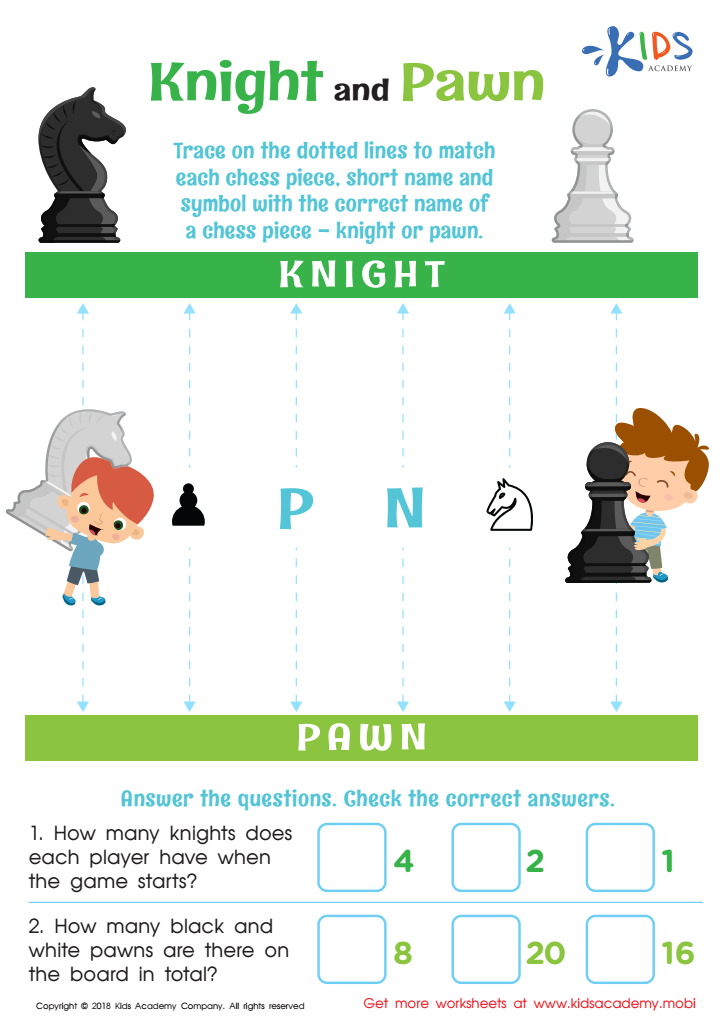
Knight and Pawn Worksheet
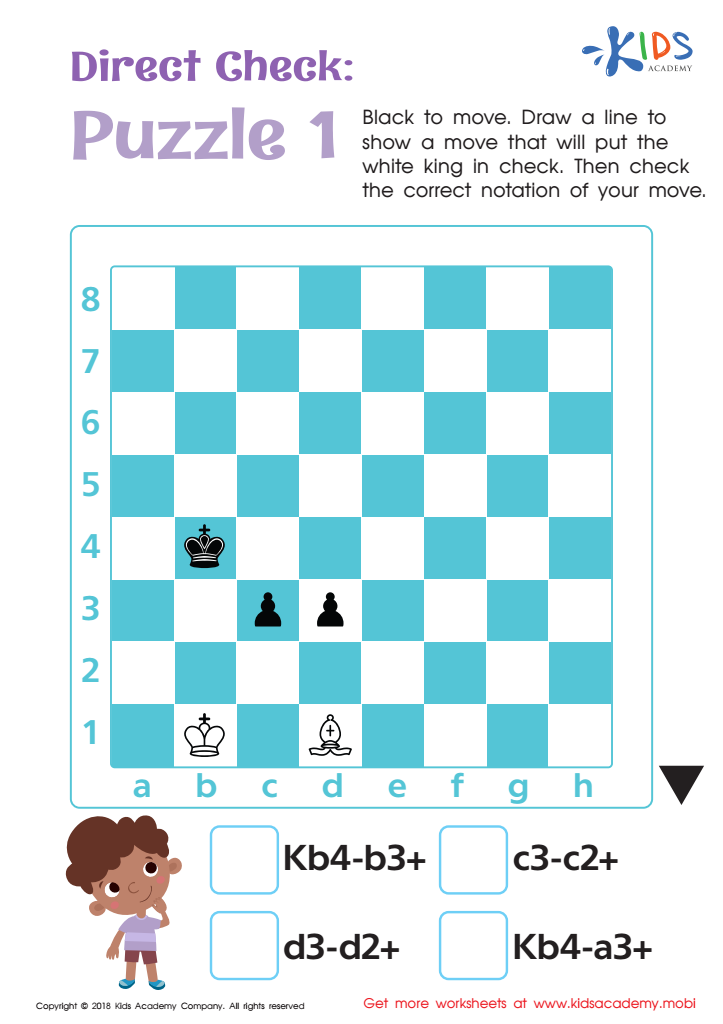
Direct Check: Puzzle 1 Worksheet







Spatial awareness is a crucial skill for young children, as it helps them understand the relationship between objects and spaces, laying the foundation for mathematics, reading, and problem-solving. Introducing chess to children aged 3-6 is a valuable way to enhance this skill while engaging their minds in a fun and structured environment.
Chess requires players to visualize the board, anticipate moves, and think several steps ahead. When children learn to move pieces, they actively engage their spatial reasoning abilities, recognizing patterns, and developing strategic thinking. This early exposure to spatial awareness through chess can translate to improved skills in other areas, such as geometry, reading maps, and comprehending spatial narratives in stories.
Moreover, chess cultivates essential life skills, such as patience, critical thinking, and decision-making. It fosters social interaction and teaches children how to handle winning and losing gracefully.
For parents and teachers, incorporating chess into early childhood education not only enhances cognitive development but also creates a bond between the adult and child through shared learning experiences. In conclusion, the introduction of chess to young learners can profoundly influence their spatial awareness and overall growth, making it a worthwhile investment in their education.