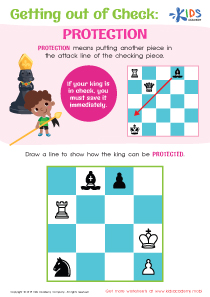
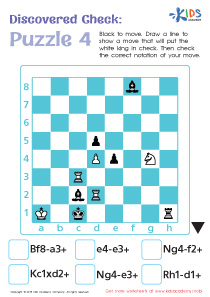
Understanding chess rules Chess Worksheets for Ages 3-6
7 filtered results
-
From - To
Discover our engaging "Understanding Chess Rules" worksheets designed for children ages 3-6. These printable resources introduce young learners to the fundamental rules of chess in a fun and interactive way. With colorful illustrations and a variety of activities, children will build their familiarity with the chessboard, piece movement, and basic game strategies. Perfect for early grade educators and parents, these worksheets promote critical thinking, problem-solving, and patience, essential skills in early childhood development. Dive into the exciting world of chess with our worksheets, making learning enjoyable and accessible for your little ones as they embark on their chess journey!
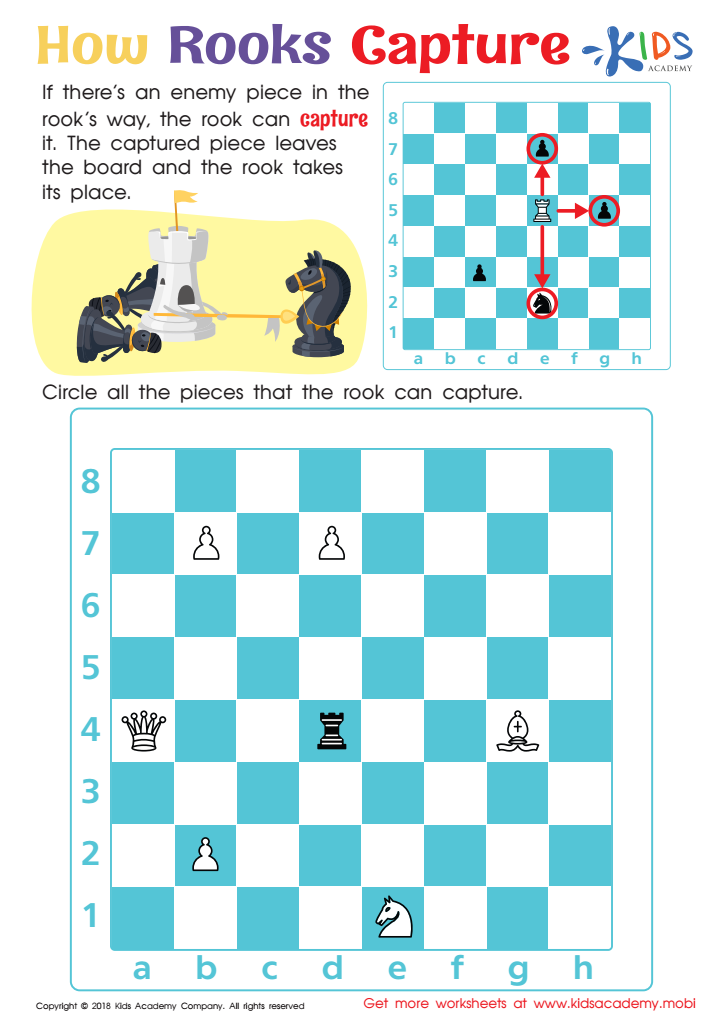
How Rooks Capture Worksheet
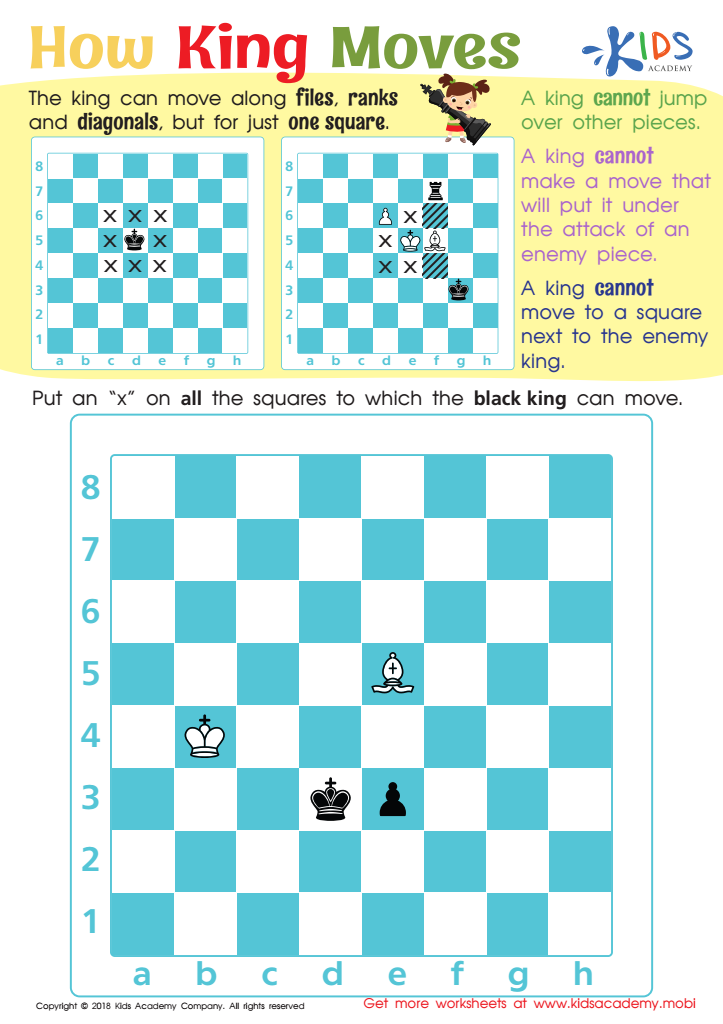
How King Moves Worksheet
 Assign to My Students
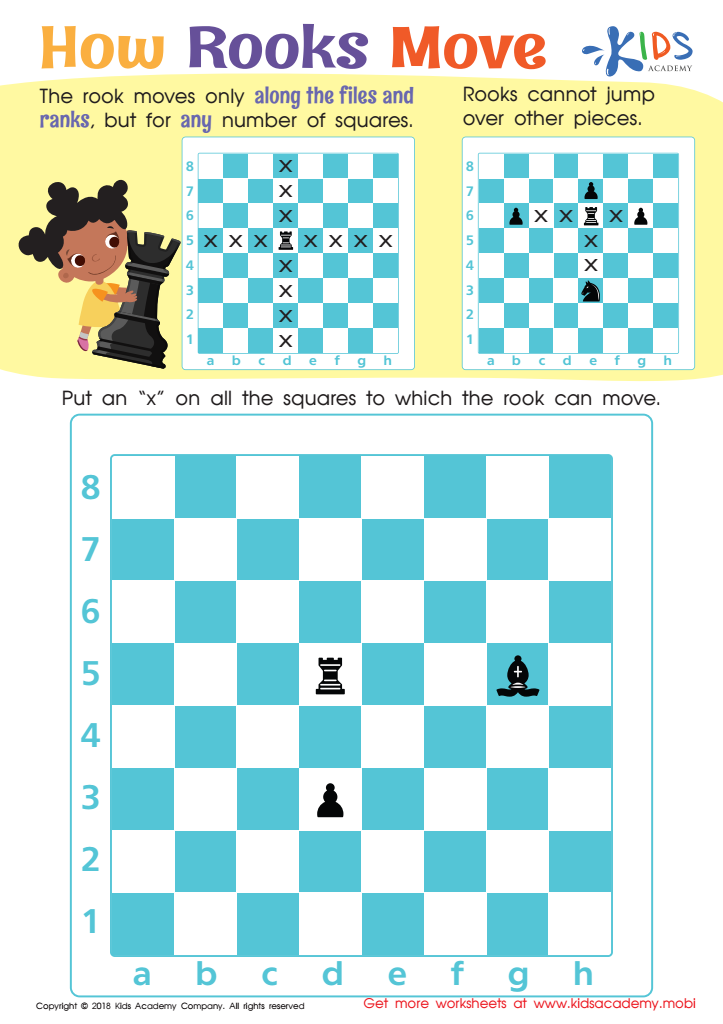
How Rooks Move Worksheet
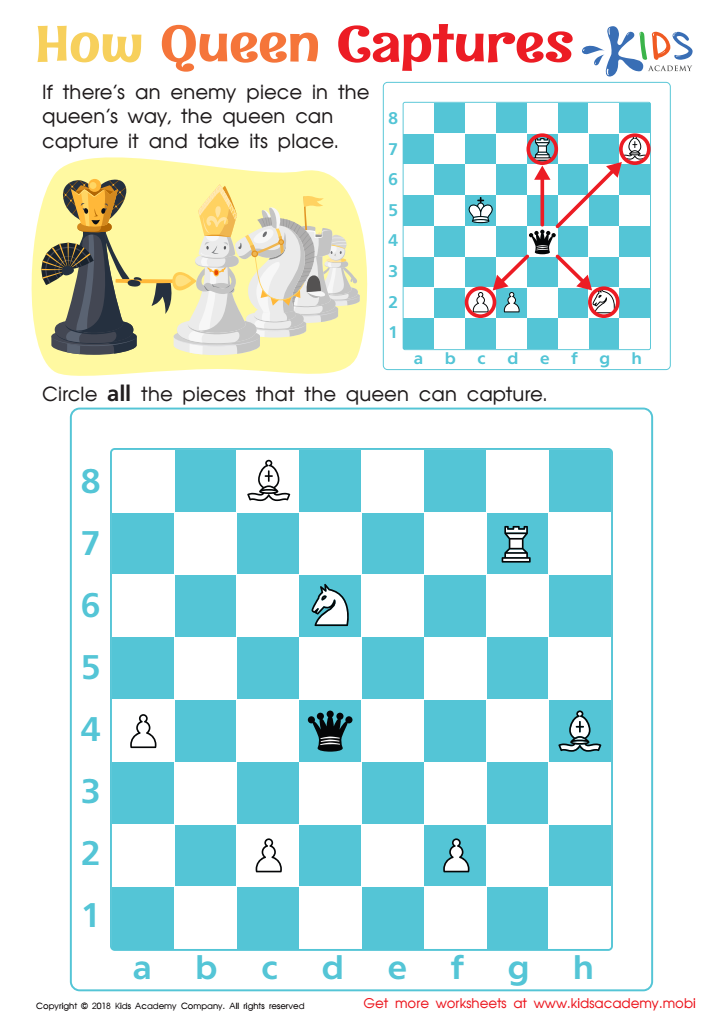
How Queen Captures Worksheet
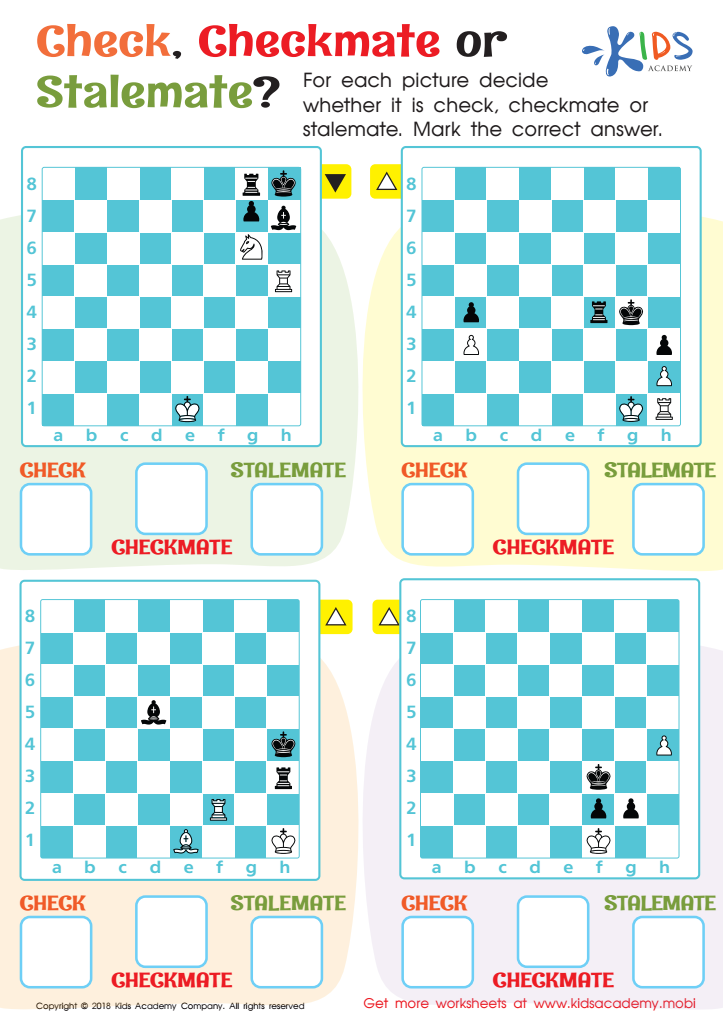
Check. Checkmate or Stalemate? Worksheet
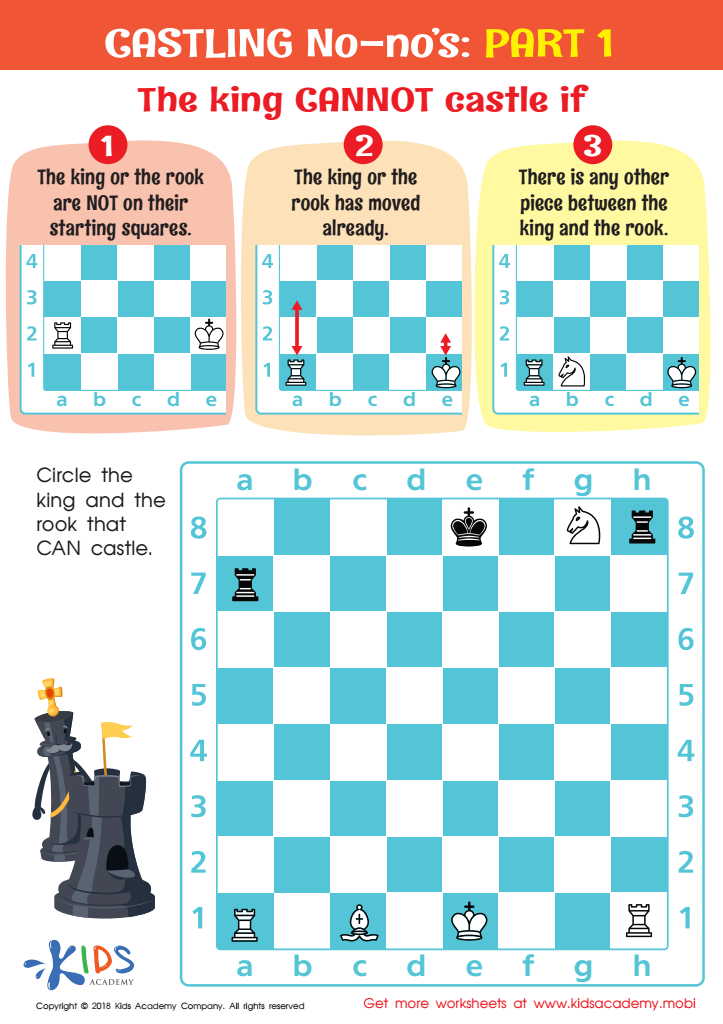
Castling No–no's: Part 1 Worksheet
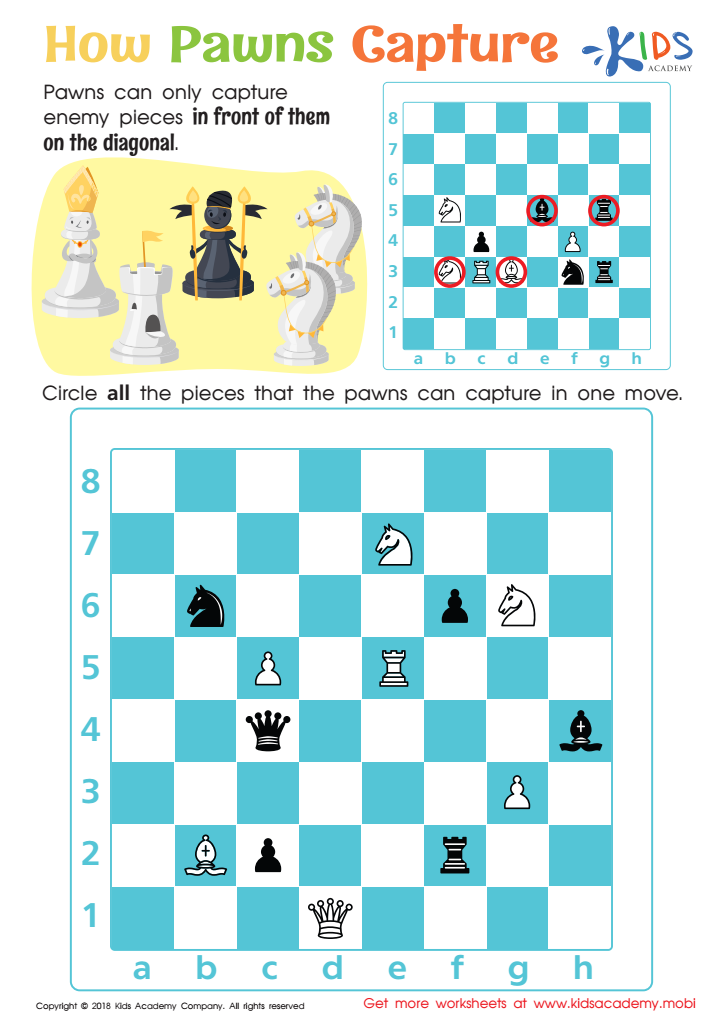
How Pawns Capture Worksheet







Understanding chess rules, even for young children aged 3-6, is vital for developing critical thinking and problem-solving skills. Introducing chess at this early age fosters cognitive abilities, such as memory and concentration. As children engage with the game, they learn to focus, make decisions, and think ahead – skills that transfer to academic settings and everyday life.
Moreover, chess promotes social interaction. Children can bond with peers, family members, or teachers while playing. This interaction enhances social skills such as communication and teamwork. Familiarity with chess rules also encourages patience, as children learn to wait for their turn and deal with setbacks, teaching them resilience.
Parents and teachers should care about chess education because it forms the foundation for lifelong learning. Developing strategic thinking early on not only supports academic achievement but also nurtures creativity, emotional control, and self-confidence. Additionally, chess can serve as an engaging and enjoyable activity, reducing screen time, which is essential in today’s digital age.
In conclusion, understanding chess rules not only equips young learners with game-related knowledge but also instills valuable life skills that contribute positively to their overall development.