
Basic math concepts Worksheets for Ages 3-6
19 filtered results
Difficulty Level
Grade
Age
-
From - To
Subject
Activity
Standards
Enhance your child's early math skills with Kids Academy's Basic Math Concepts Worksheets for Ages 3-6. Designed to make learning fun and effective, these expert-crafted worksheets cover fundamental topics such as counting, shapes, addition, subtraction, and pattern recognition. Perfect for both classroom and at-home learning, each worksheet is engaging and easy to follow, ensuring your little one develops a strong math foundation while enjoying the process. Foster a love for numbers and problem-solving with our interactive, printable worksheets, tailored specifically for preschoolers and kindergarteners. Start your math adventure today at Kids Academy!
Favorites
With answer key
Interactive
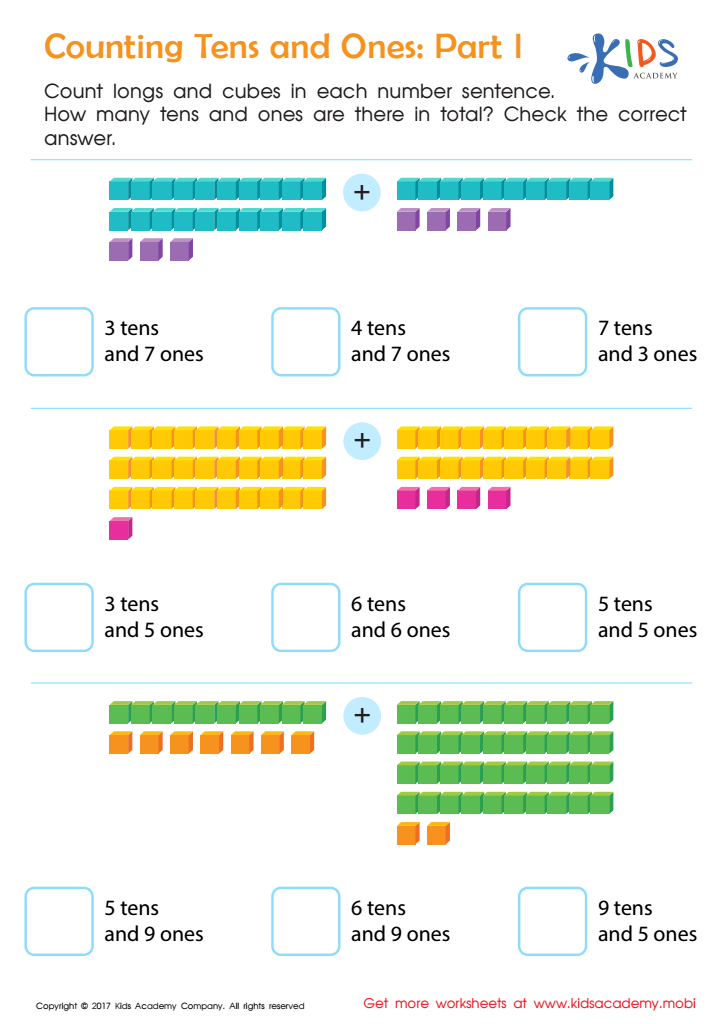
Counting Tens and Ones: Part 1 Worksheet
Kids Academy has a great place value worksheet to help kids learn when they don't have manipulatives at home! It includes longs and cubes that kids can count and add to find the sum. Colorful and downloadable, this page will help kids understand addition and place value better. Give it a try!
 Assign to My Students
Counting Tens and Ones: Part 1 Worksheet
Worksheet
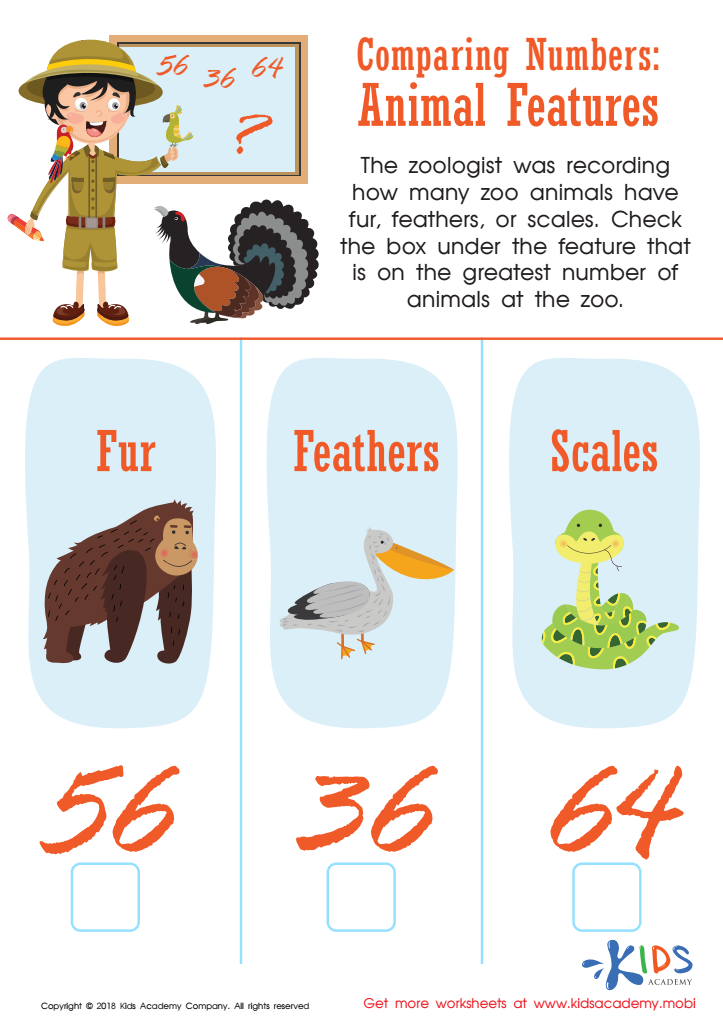
Animal Features Worksheet
Let your kids join a budding zoologist! They can count zoo animals' fur, feathers or scales, then use numbers and comparison to check the box with the most friends. The PDF will captivate them and help them understand how the value of '6' changes based on its position.
Animal Features Worksheet
Worksheet
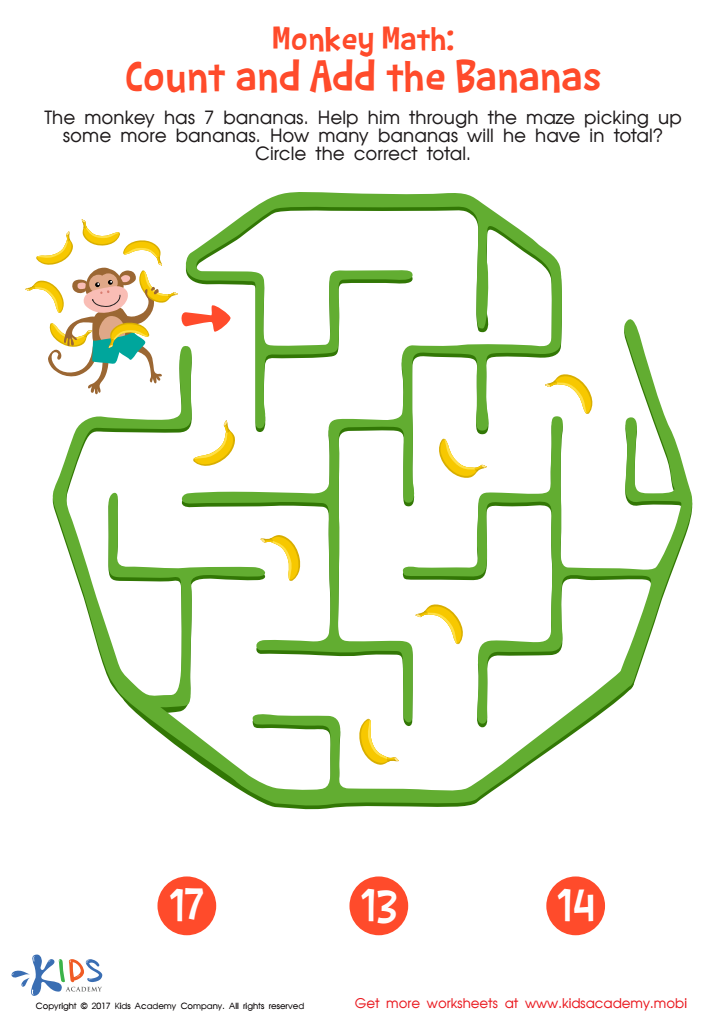
Monkey Math Worksheet
Worksheet
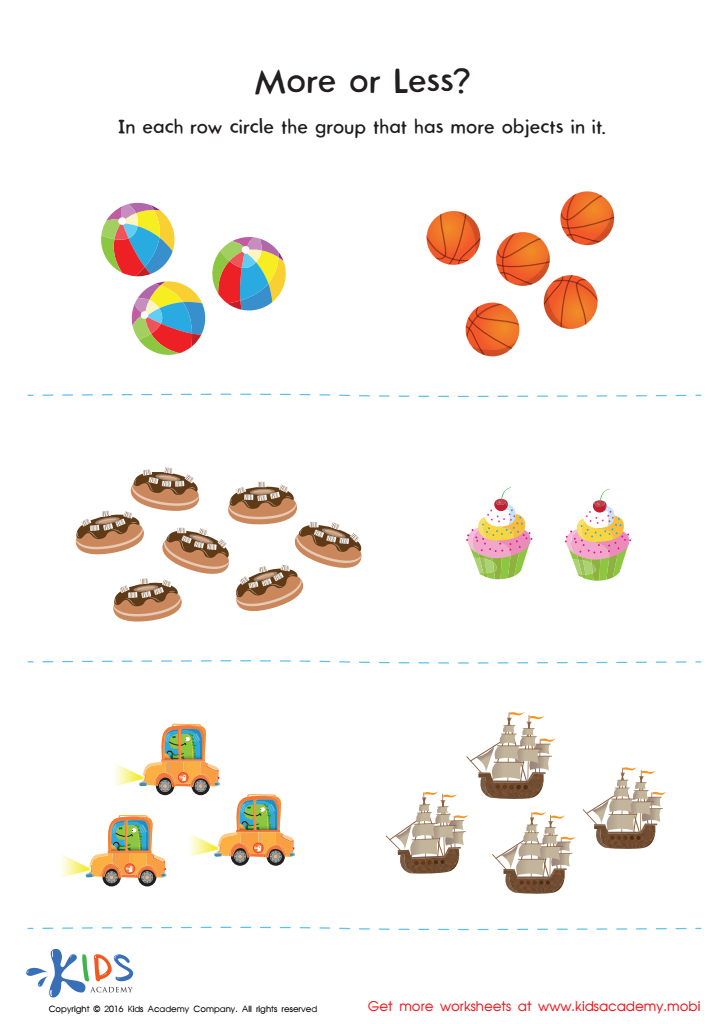
More or Less Size Worksheet
Worksheet
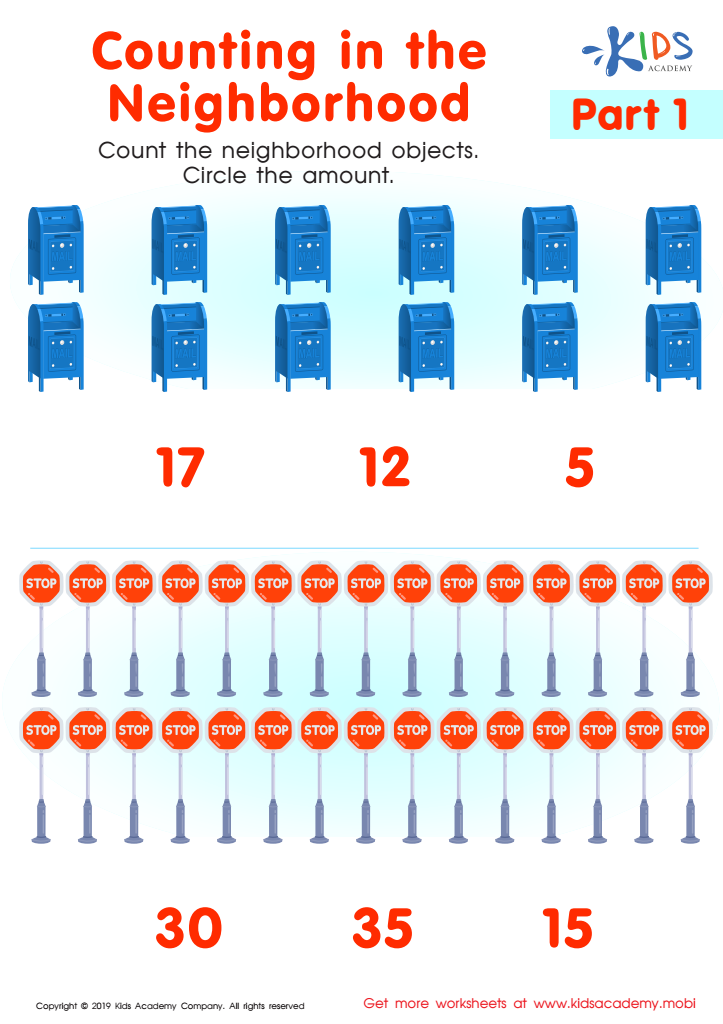
Counting in the Neighborhood Part1 Worksheet
Counting using one-to-one representation is a great way to develop a child's number sense. Use objects, pictures and images to help counting beyond the fingers. This worksheet uses everyday objects to practice counting. It encourages children to find the correct number and count forward. Give it a try!
Counting in the Neighborhood Part1 Worksheet
Worksheet
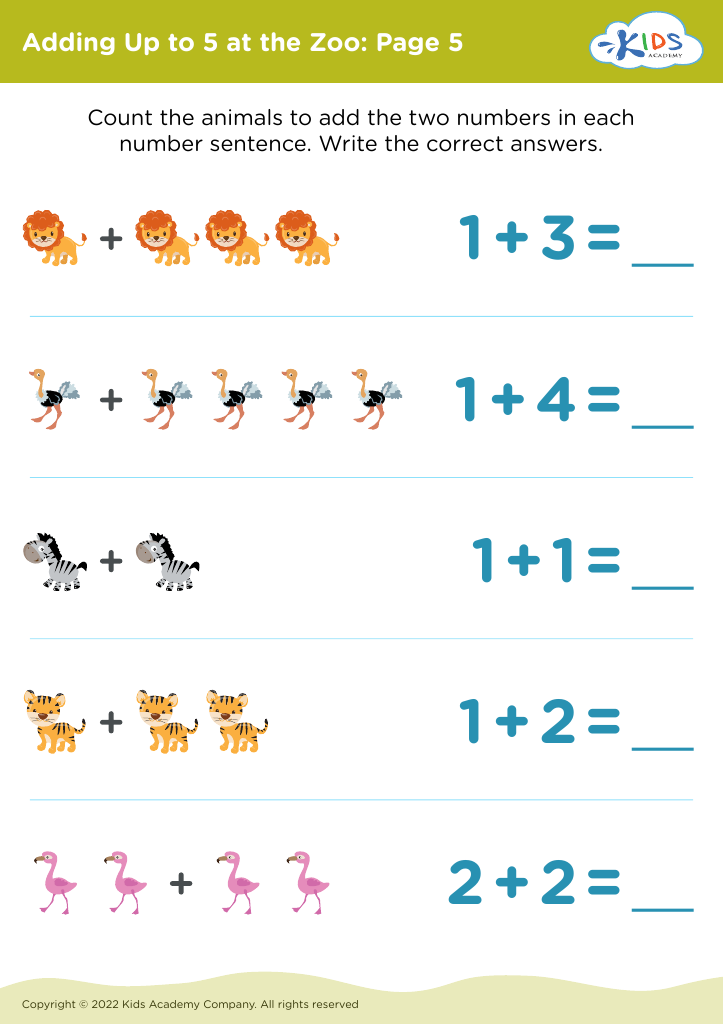
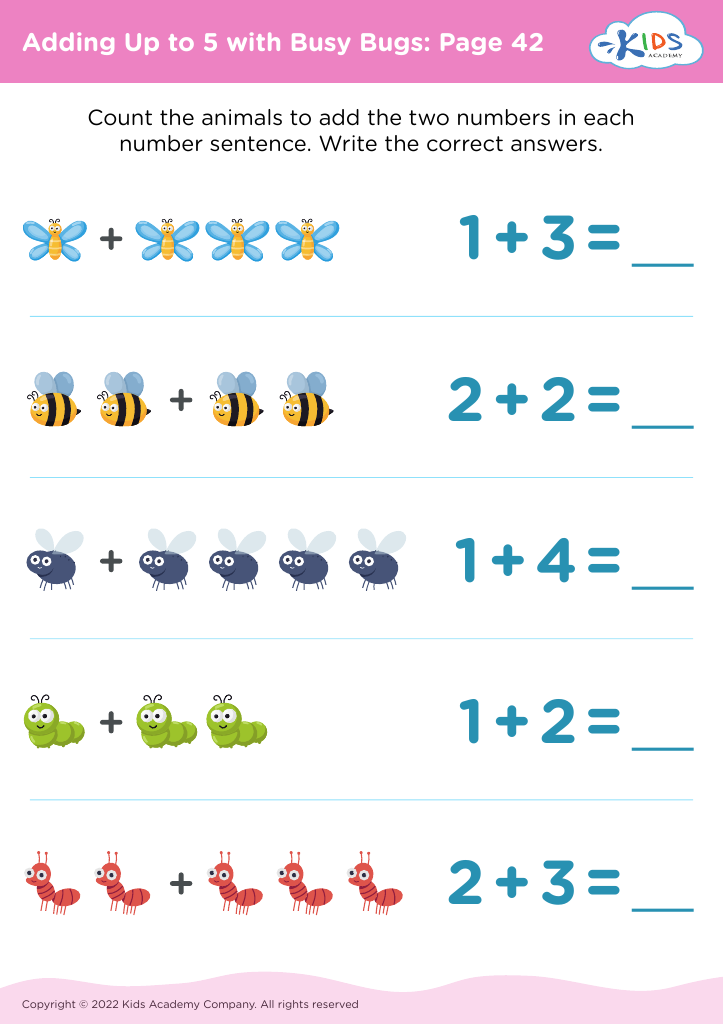
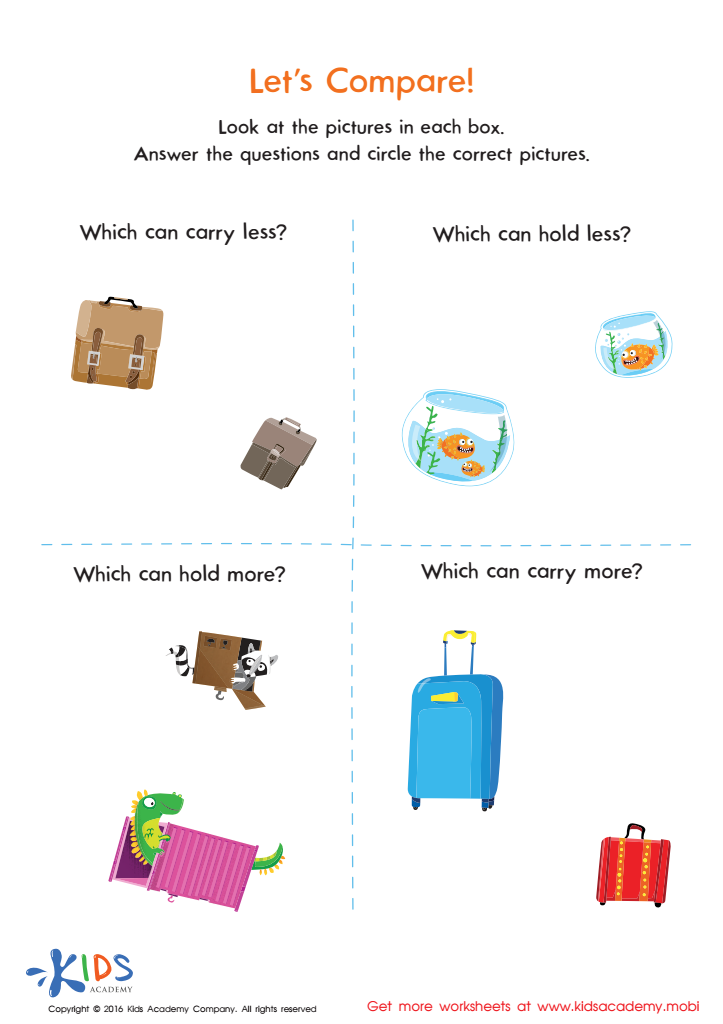
Let's Compare Worksheet: Big or Small
This worksheet will help your child gain an awareness of simple geometry and strengthen cognitive skills. Visualizing objects in 3D and comparing sizes helps to practice solving problems mentally and build analytical skills. Let's Compare worksheet will challenge your child to think hard.
Let's Compare Worksheet: Big or Small
Worksheet
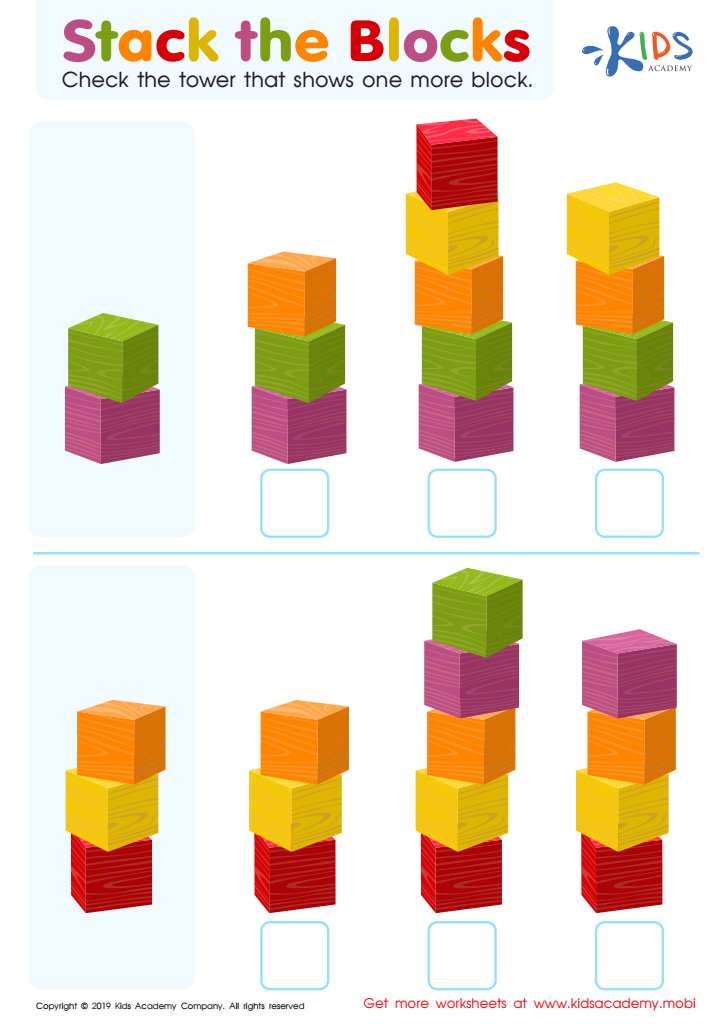
Stack the Blocks Worksheet
Playing with blocks is a great way for kids to learn! They can create patterns, shapes, and even count. In this worksheet, ask them to identify the colors and count each stack of blocks. If they can spot one extra block in the tower, even better! Encourage learning through play with these fun blocks.
Stack the Blocks Worksheet
Worksheet
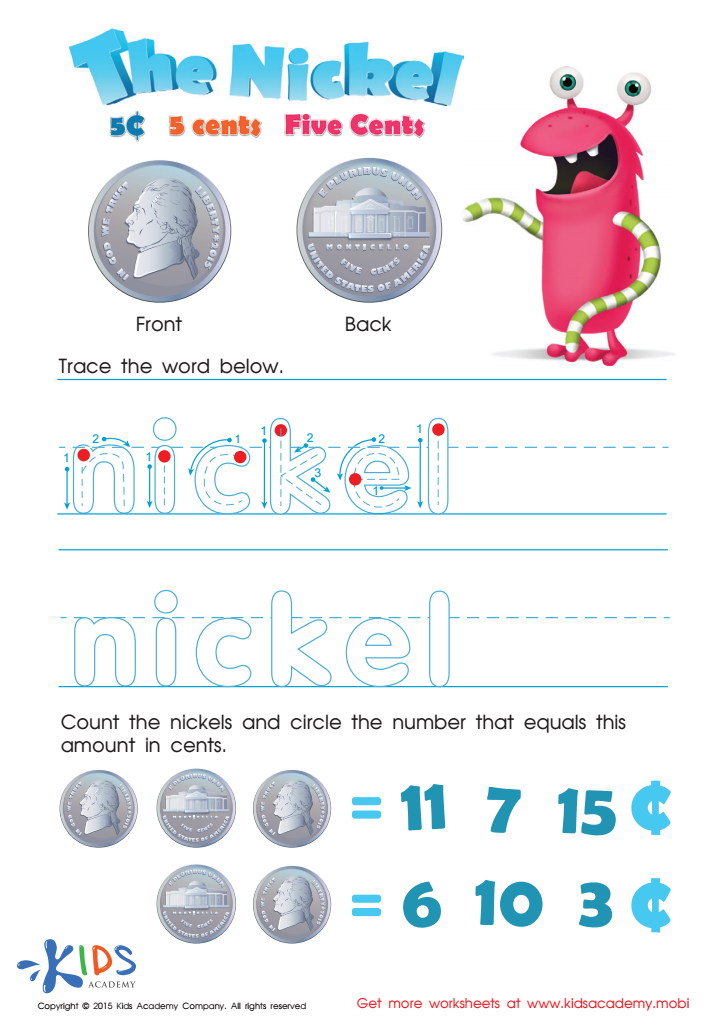
Five Cents or the Nickel Money Worksheet
Counting money games help kids make learning money fun and easy. Next up: the 5 cent coin, or nickel. Look at both sides and remember them. Then, trace the word "nickel" to help you remember. Finally, count the nickels and work out amounts in cents. Let's do this! Kids Academy helps make money learning easy and fun!
Five Cents or the Nickel Money Worksheet
Worksheet
Join Kids Academy for Free
Who is primarily going to use this learning content?







Parents and teachers should prioritize basic math concepts for children aged 3-6 because early math skills form a crucial foundation for future academic success and everyday life skills. During these formative years, children's brains are highly receptive to new information, making it the optimal time to introduce fundamental math concepts like counting, number recognition, and simple addition and subtraction. Engaging young children in math helps develop their problem-solving abilities, logical reasoning, and spatial awareness, all of which are important skills for later learning.
Furthermore, early exposure to math enhances cognitive development overall. Research has shown that children with strong early math skills are more likely to perform well in other subjects, including reading. Additionally, familiarity with math concepts can boost children's confidence and reduce anxiety related to math, setting a positive attitude toward the subject in later years.
Incorporating fun, age-appropriate math activities into daily routines, like sorting toys by shape or counting steps, helps children see math as a part of everyday life. For parents and teachers, fostering these skills in a supportive and engaging environment paves the way for lifelong learning and sets children on a path to academic and personal success.








