Character recognition Worksheets for Ages 3-6
3 filtered results
-
From - To
Discover engaging Character Recognition Worksheets for children ages 3-6 at Kids Academy! Our thoughtfully designed printable worksheets help young learners develop essential reading skills by recognizing letters and frequently used characters. With colorful graphics and interactive activities, these worksheets make learning fun and captivating. Perfect for preschool and kindergarten, our resources support parents and educators in fostering early literacy. Children will not only enhance their character recognition abilities but also build confidence and enthusiasm for reading. Check out our diverse collection and give your child a head start in their educational journey today! Explore the world of literacy with Kids Academy!
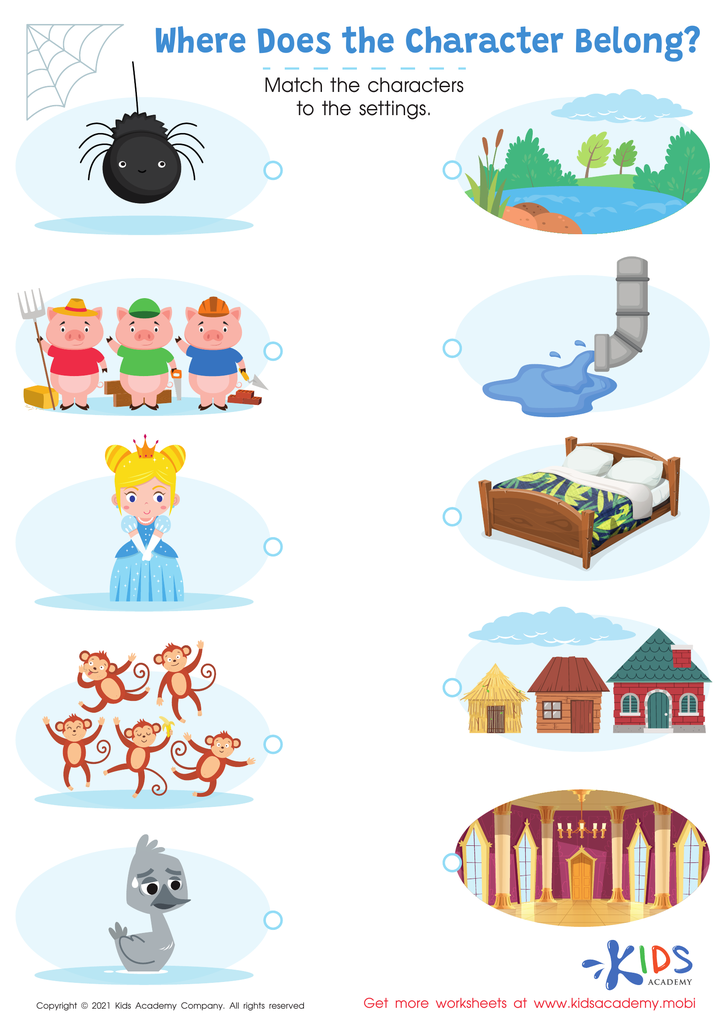
Where Does the Character Belong? Worksheet
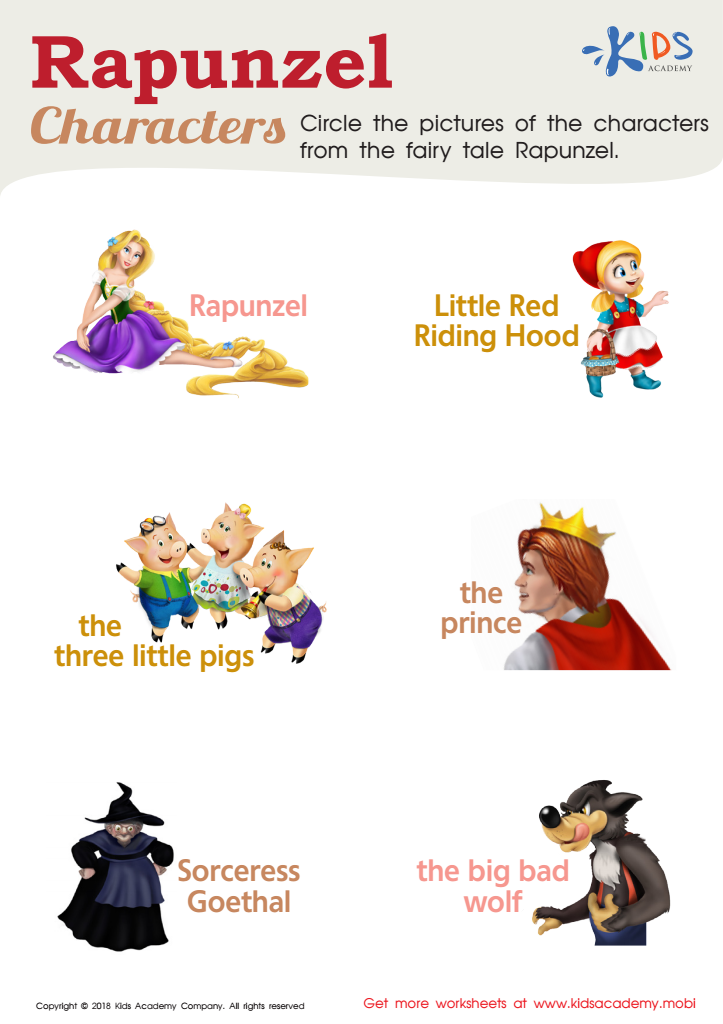
Rapunzel Characters Worksheet
 Assign to My Students
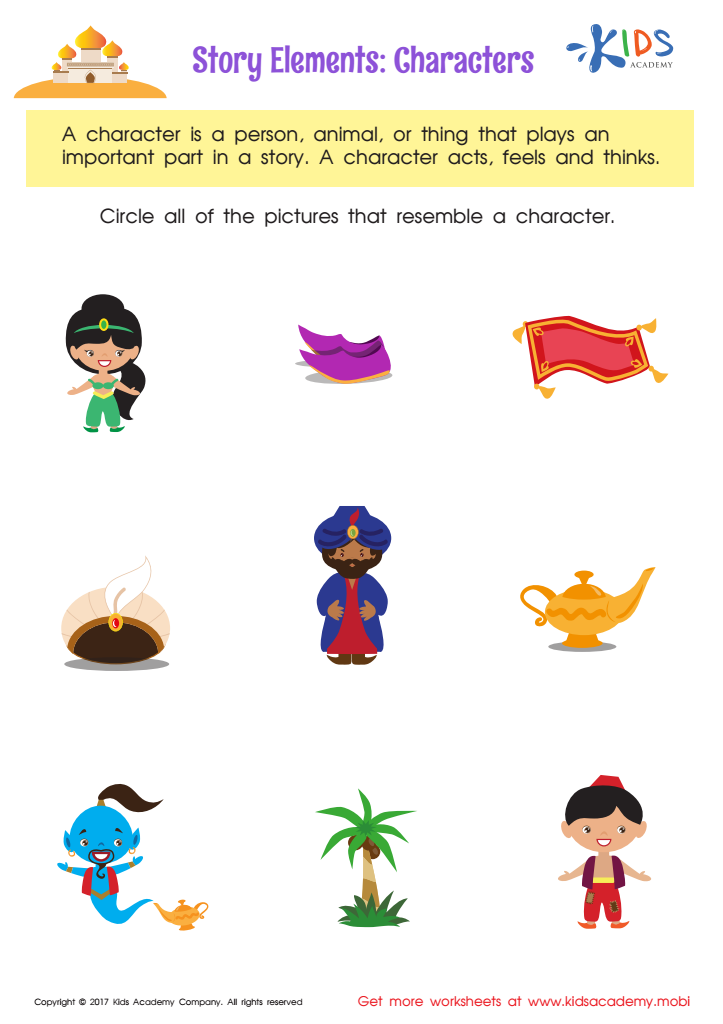
Story Elements Printable







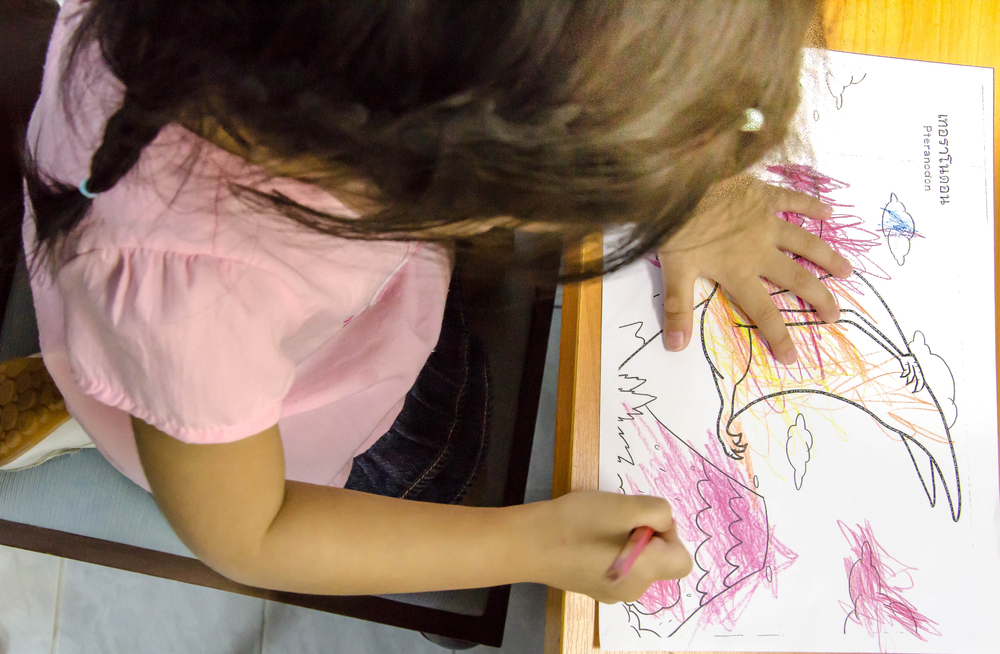
Character recognition is a fundamental skill for children aged 3-6, serving as the foundation for literacy development. During these early years, children's brains are actively developing, making it crucial for parents and teachers to promote literacy experiences that include character recognition. This skill not only helps children to identify letters and their shapes, but also fosters their ability to connect sounds with specific letters, which is essential for reading.
Moreover, character recognition supports language development and vocabulary growth. Children who master these early literacy skills demonstrate increased confidence in reading and writing activities, laying a strong groundwork for future academic success. Additionally, understanding letters enables children to engage in storytelling and communication activities, helping them express their thoughts and emotions more effectively.
Parents and teachers play a critical role by providing engaging, interactive learning opportunities, such as reading letters together, playing alphabet games, or using visual aids. These activities boost a child’s enthusiasm for learning, making it both fun and meaningful. Investing in character recognition at this age cultivates a love for reading and writing from an early age, setting children on a path to strong literacy skills and lifelong learning advantages.








