Comparative skills Worksheets for Ages 3-6
3 filtered results
-
From - To
Enhance your child's cognitive development with our engaging Comparative Skills Worksheets for Ages 3-6! Designed to simplify basic comparative concepts such as "bigger vs. smaller" or "taller vs. shorter," these worksheets offer fun activities that promote critical thinking. Children will learn to recognize differences through vibrant illustrations and interactive tasks that encourage comparison in everyday situations. Ideal for preschool or kindergarten settings, our downloadable resources are easy to use and perfect for at-home learning. Foster curiosity and analytical skills as your little ones explore concepts of comparison while enjoying colorful images and creative exercises tailored just for their age group!
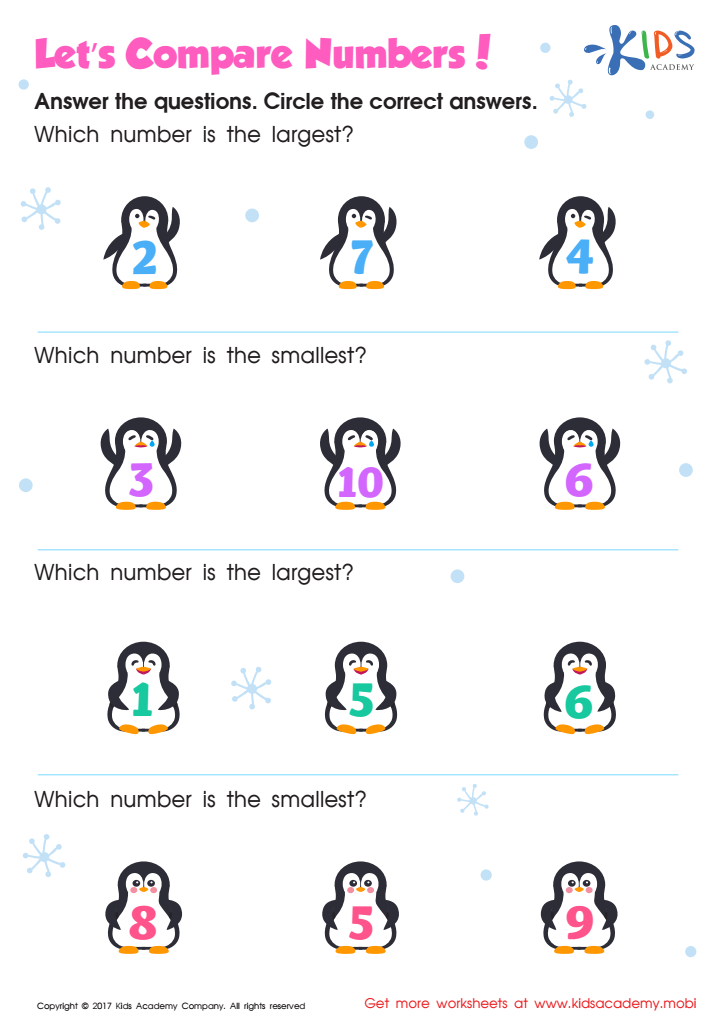
Comparing Numbers 1–10 Worksheet Kindergarten
 Assign to My Students
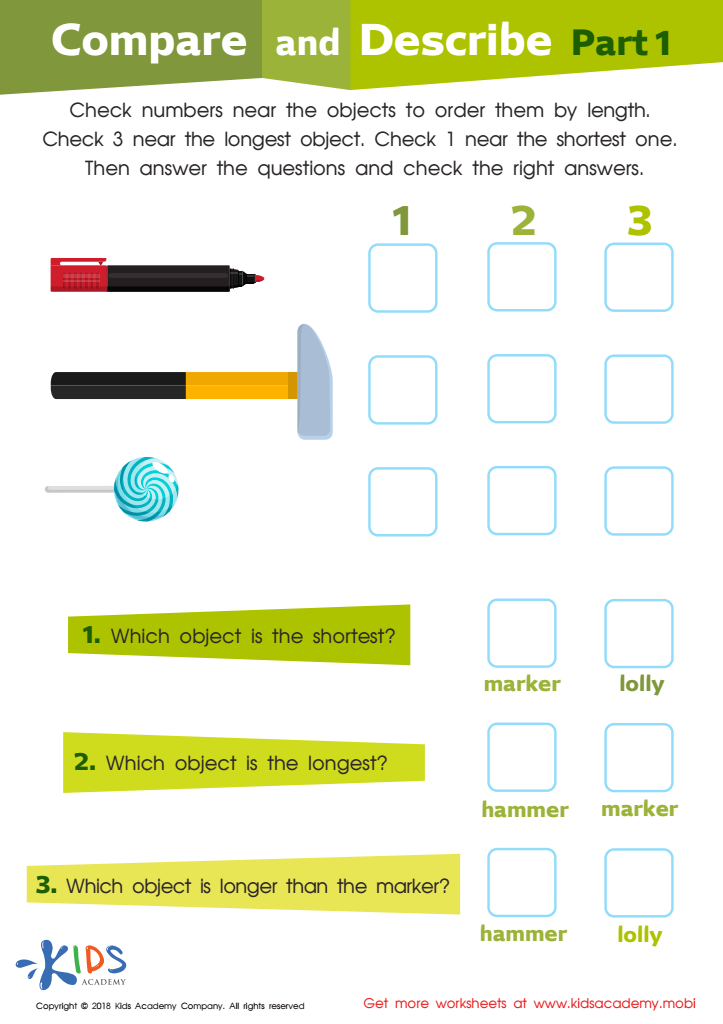
Compare and Describe: Part 1 Worksheet
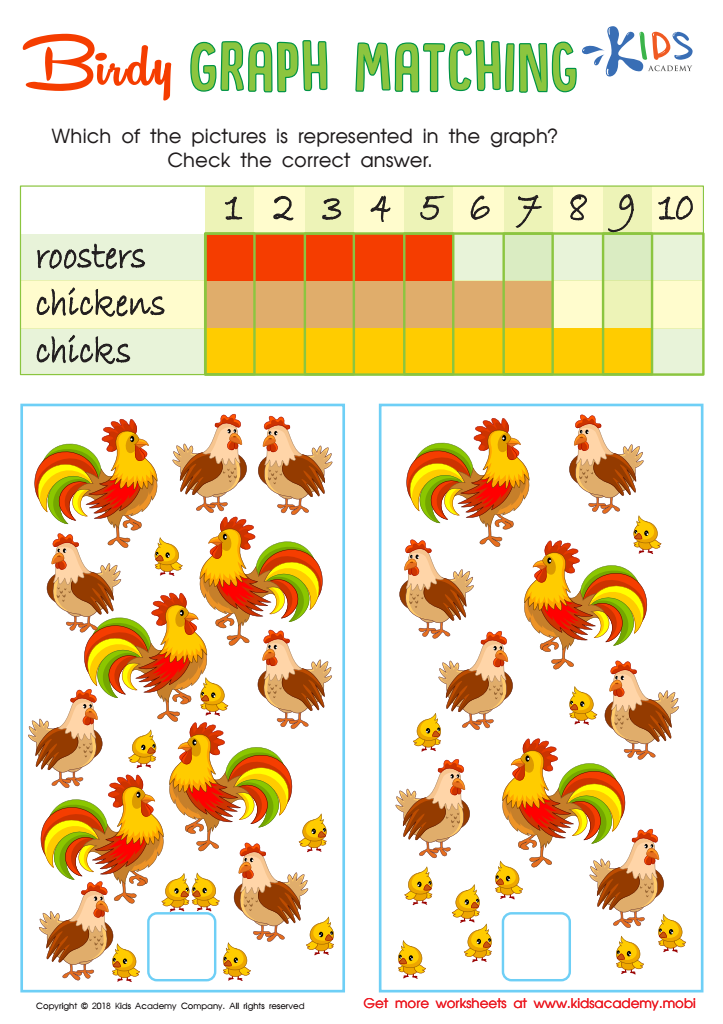
Birdy Graph Matching Worksheet




.jpg)


Comparative skills are essential for children ages 3-6 as they lay the foundation for critical thinking and problem-solving abilities. Understanding comparisons helps children categorize and differentiate between objects, ideas, and experiences. At this age, children are naturally curious and eager to explore their environment, making it an ideal time for them to learn about similarities and differences.
Developing comparative skills enhances language acquisition, as children learn new vocabulary to describe attributes such as size, color, and quantity. For instance, using comparative words like "bigger," "smaller," "more," and "less" fosters communication skills and helps children articulate their thoughts more clearly.
Comparative skills also support mathematical concepts. Recognizing patterns and understanding measurements can be crucial as children progress in their education. Additionally, these skills promote social development by enabling children to evaluate and relate to others’ emotions, actions, and perspectives.
Ultimately, parents and teachers who emphasize comparative skills equip children with the necessary tools to navigate the world around them. This ability not only cultivates independent thinking but also boosts confidence, setting a strong academic and social foundation for future learning. Prioritizing the development of these skills is pivotal in fostering well-rounded and capable learners.








