
Comparing object weights Worksheets for Ages 3-6
3 filtered results
Difficulty Level
Grade
Age
-
From - To
Subject
Activity
Standards
Our engaging comparing object weights worksheets are perfect for children ages 3-6! Designed to make learning fun, these worksheets help young minds grasp the concept of weight by comparing different objects. Colorful illustrations and interactive activities encourage hands-on exploration, enhancing critical thinking and problem-solving skills. Ideal for home or classroom use, each worksheet aligns with early learning standards to ensure developmental milestones are met. Whether lifting, comparing, or discussing, children will enjoy every moment as they build foundational math and science skills. Spark curiosity and foster a love of learning with our delightful comparing object weights worksheets today!
Favorites
With answer key
Interactive
 Assign to My Students
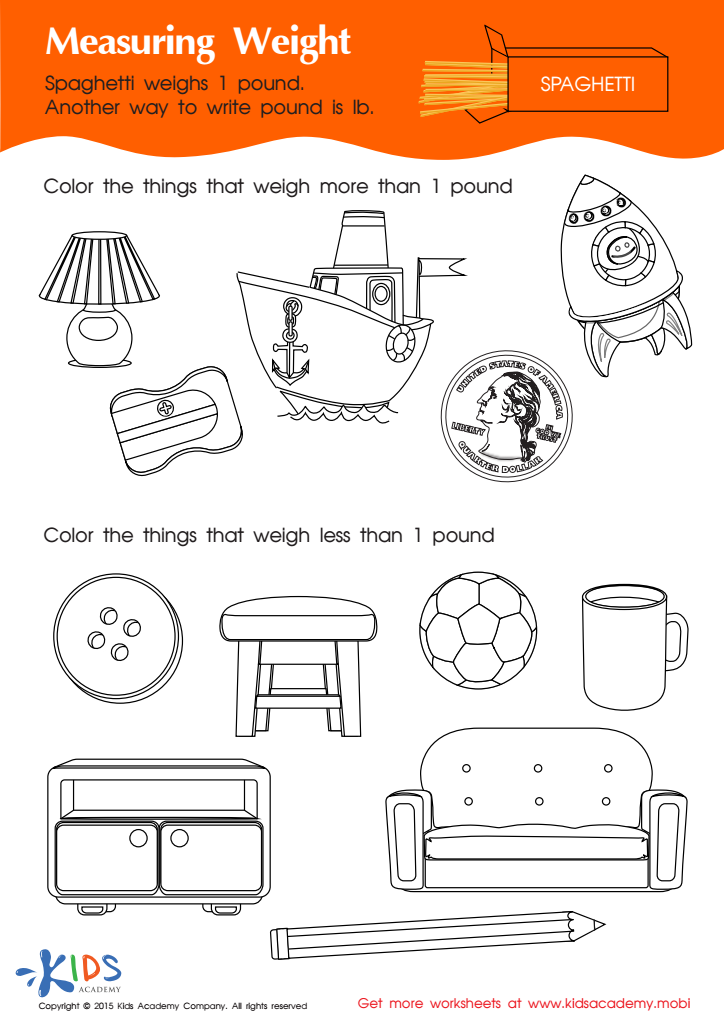
Measurement: Measuring Weight in Pounds 1 Worksheet
Worksheet
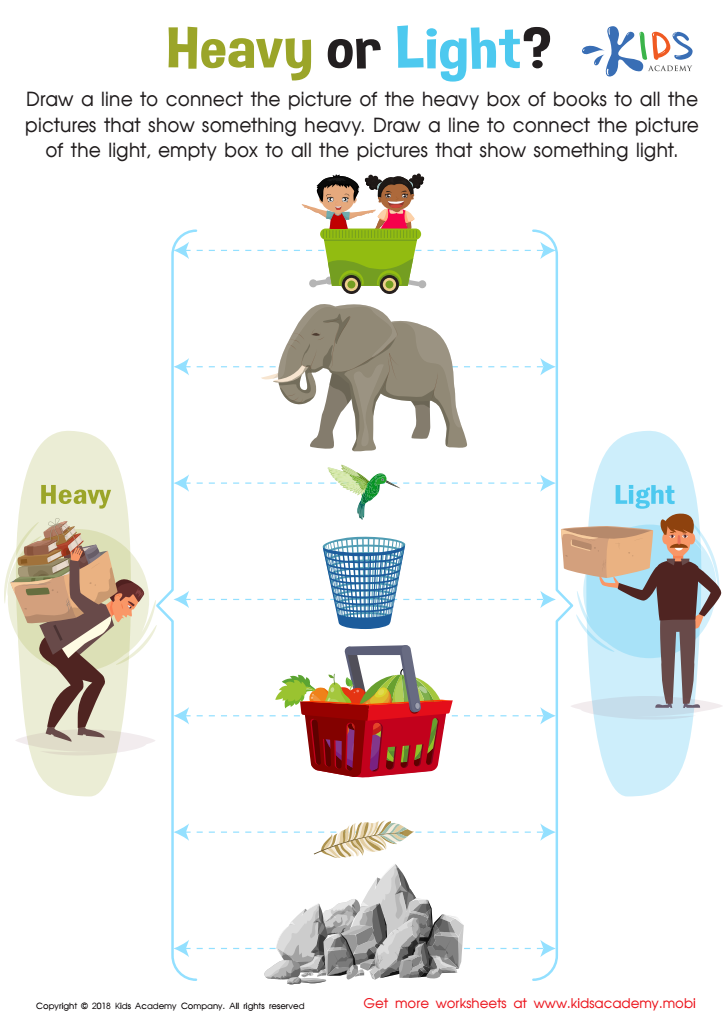
Heavy or Light? Worksheet
Kids can struggle to understand weight comparison, as size and mass matter. This free PDF helps develop fine-motor and hand-eye skills as kids trace lines to match pictures. The familiar pictures create concrete representations, ideal for learning more complex concepts.
Heavy or Light? Worksheet
Worksheet
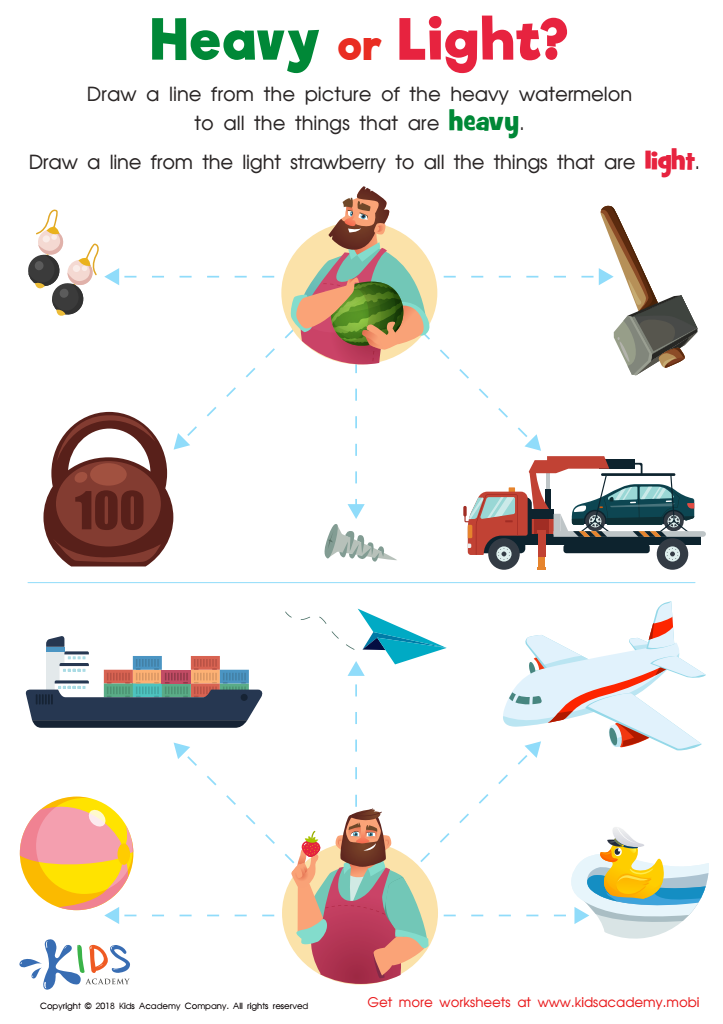
Heavy or Light? Worksheet
This fun, free worksheet helps kids build measurement skills and reinforce concepts of 'heavy' and 'light', while also improving their fine motor skills. Kids use traceable lines to connect the gentleman to objects they know, giving them a strong foundation for understanding weight.
Heavy or Light? Worksheet
Worksheet
Join Kids Academy for Free
Who is primarily going to use this learning content?


.jpg)





Understanding and comparing object weights is a vital early learning skill for children ages 3-6, as it fosters cognitive and sensory development. When parents and teachers engage children in weighing activities, they help them grasp foundational math concepts such as measurement, comparison, and estimation. These activities enhance a child's ability to observe, analyze, and articulate differences between objects, foundational for later academic learning and problem-solving.
Weighing exercises strengthen fine motor skills as children manipulate scales and objects. They can integrate these lessons with vocabulary development, as kids learn and use terms like "heavy," "light," "balance," and "compare." This early exposure to language connected with physical experiences supports dual areas of growth—cognitive and communicative.
Moreover, practical weighing exercises can be tied to everyday real-world contexts. For example, comparing fruits during snack time grounds abstract concepts in relatable examples, enhancing understanding and retention. These activities also encourage curiosity and a scientific mindset, (embracing experimentation and discovery), essential for later STEM success.
Lastly, early exposure to basic scientific and mathematical principles through a hands-on, visual approach captures young children's naturally explorative nature, fostering a love for learning and discovery that can last a lifetime. Thus, parents and teachers play a crucial role in shaping these critical early experiences.








