
Develop problem-solving abilities Worksheets for Ages 3-6
5 filtered results
Difficulty Level
Grade
Age
-
From - To
Subject
Activity
Standards
Unlock the potential of young learners with our "Develop Problem-Solving Abilities Worksheets" designed for ages 3-6. These engaging and interactive worksheets promote critical thinking and creativity, helping children navigate challenges independently. Each worksheet includes fun activities like puzzles, patterns, and logic games tailored to develop cognitive skills and enhance reasoning abilities. Our resources are crafted by educators to blend learning with play, ensuring a delightful experience for your little ones. Ideal for preschool and kindergarten settings, these worksheets foster essential skills that lay the groundwork for future academic success. Explore our collection and watch your child's confidence grow!
Favorites
With answer key
Interactive
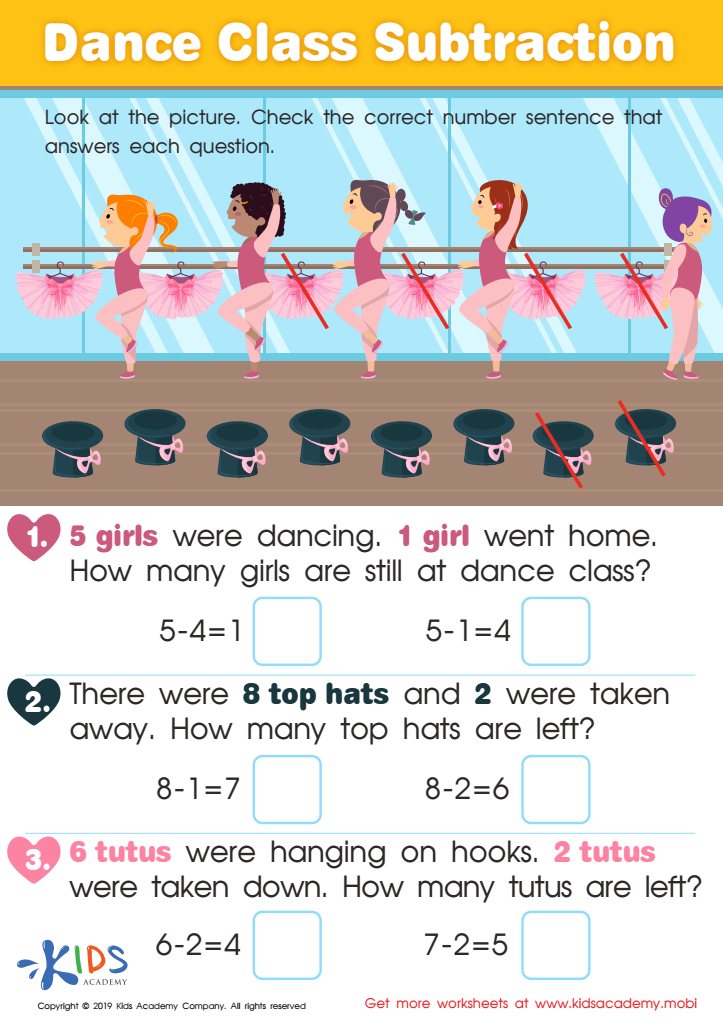
Dance Class Subtraction Worksheet
Dancing is an excellent form of exercise, and some people dance professionally, expressing their feelings through body movements. Help your kids identify the type of dance in the picture and answer the word problems in this worksheet. Encourage them to check the correct number sentence that answers the question.
 Assign to My Students
Dance Class Subtraction Worksheet
Worksheet
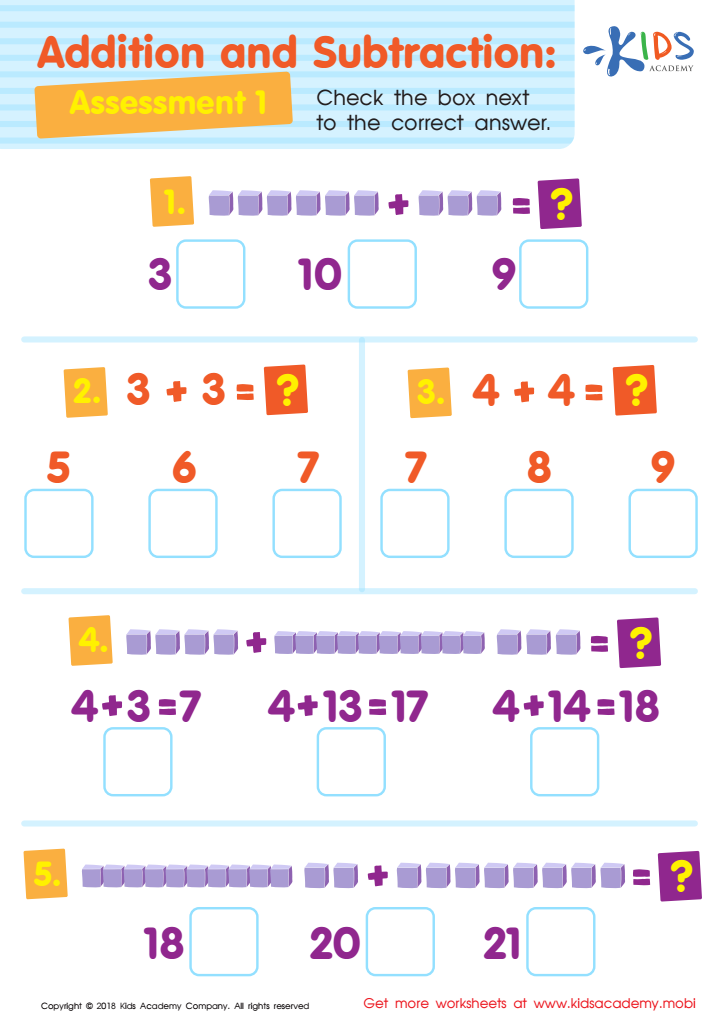
Addition and Subtraction Assessment 1 Worksheet
Kids often find math difficult, even adults! But it's important they learn the basics, like adding and subtracting. Use this worksheet to help them practice. Check the box next to the correct answer for each equation. It's a great way to give them a jump start and help them succeed in math.
Addition and Subtraction Assessment 1 Worksheet
Worksheet
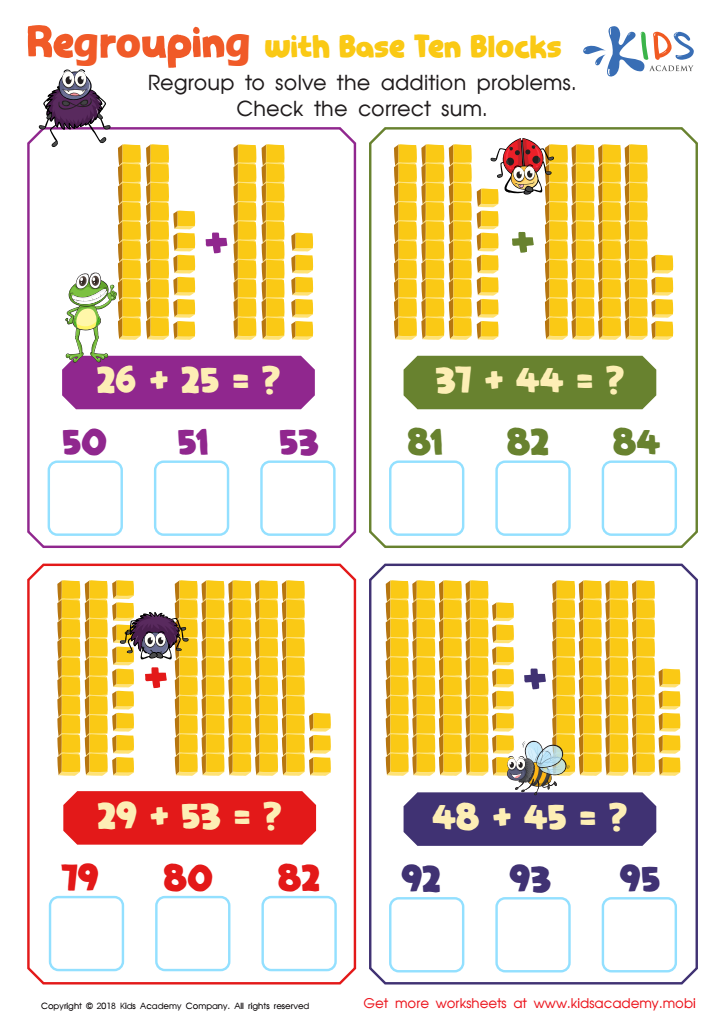
Regrouping With Base Ten Blocks Worksheet
Challenge your child to regroup the base ten blocks and solve the four equations in this worksheet. This exercise requires counting and adding up in base ten. When they are done, help them check the correct sum.
Regrouping With Base Ten Blocks Worksheet
Worksheet
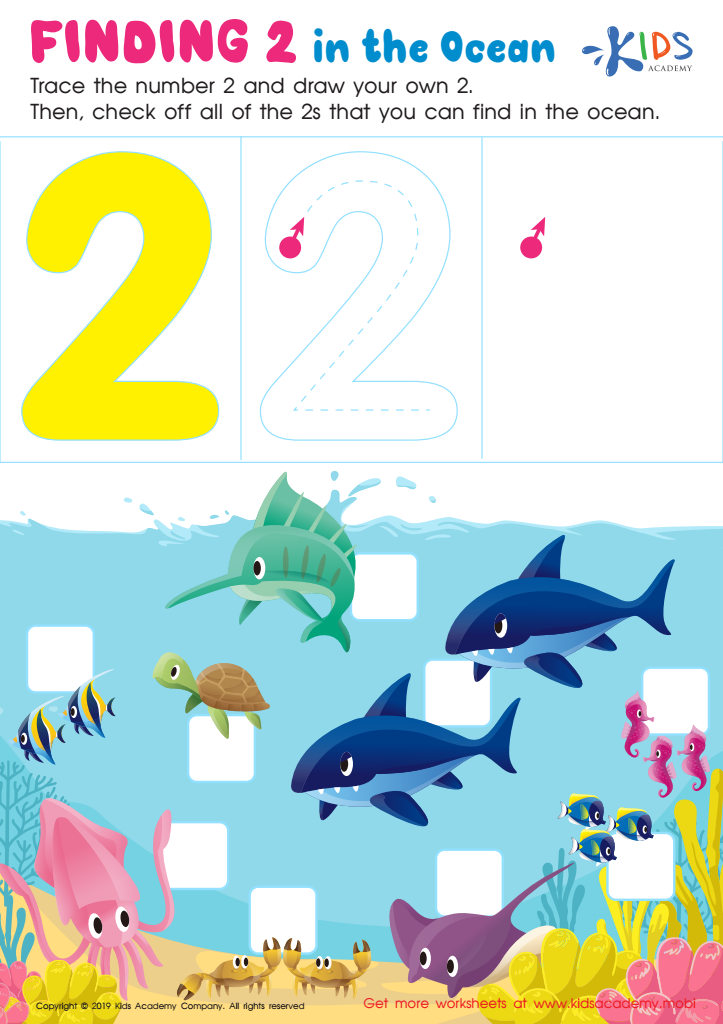
Finding 2: In the Ocean Worksheet
Kids start their math journey with basic numbers. Finger counting, number representation with pictures and this worksheet help build number sense. Kids trace lines and dots to write the number two and identify groups of two sea creatures for easy success and to feel proud of their math skills.
Finding 2: In the Ocean Worksheet
Worksheet
Join Kids Academy for Free
Who is primarily going to use this learning content?





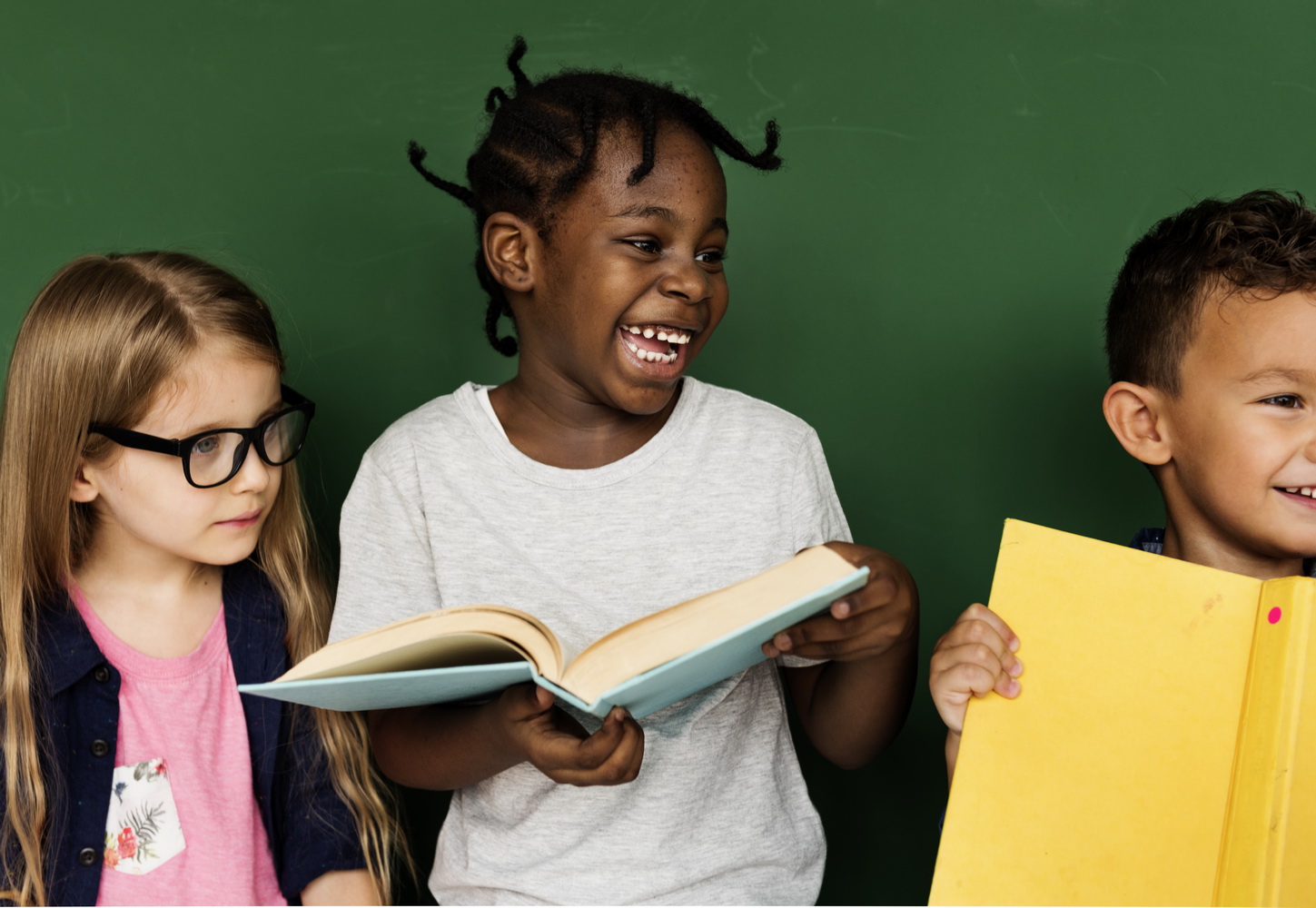

Developing problem-solving abilities in children aged 3-6 is crucial for their overall cognitive and social development. At this stage, children are naturally curious and eager to explore their environment. Cultivating their problem-solving skills not only enhances their critical thinking but also fosters independence. When parents and teachers engage children in activities that challenge their reasoning, it pushes them to think creatively and explore different solutions.
Moreover, problem-solving is interconnected with emotional and social skills. Through group activities and collaborative problem-solving, children learn to communicate effectively, take turns, and empathize with others. This cooperative learning environment helps them build essential interpersonal skills.
Additionally, the ability to navigate challenges helps children develop resilience. When they encounter difficulties and are guided to find solutions, they learn that challenges are part of learning and growth. This instills a positive mindset that encourages them to tackle problems head-on throughout their lives.
Engaging in problem-solving activities also prepares children for academic success. They develop foundational skills in logical reasoning, mathematics, and language which are pertinent in future educational pursuits. Therefore, fostering problem-solving abilities is a vital investment in a child’s holistic development and future potential.








