Developing critical thinking Worksheets for Ages 3-6
5 filtered results
-
From - To
Welcome to our "Developing Critical Thinking Worksheets for Ages 3-6"! Our specially designed worksheets help young learners enhance their critical thinking skills through engaging activities fun and appropriately challenged for their age group. Each worksheet encourages creativity, problem-solving, and reasoning abilities, promoting cognitive development in an interactive way. From sorting and classifying objects to simple puzzles and games, these resources stimulate curiosity and foster independent thinking. Perfect for both classroom settings and home learning, our worksheets are an excellent tool for parents and educators alike. Dive into a world of learning where your child’s imagination and intellect can flourish!
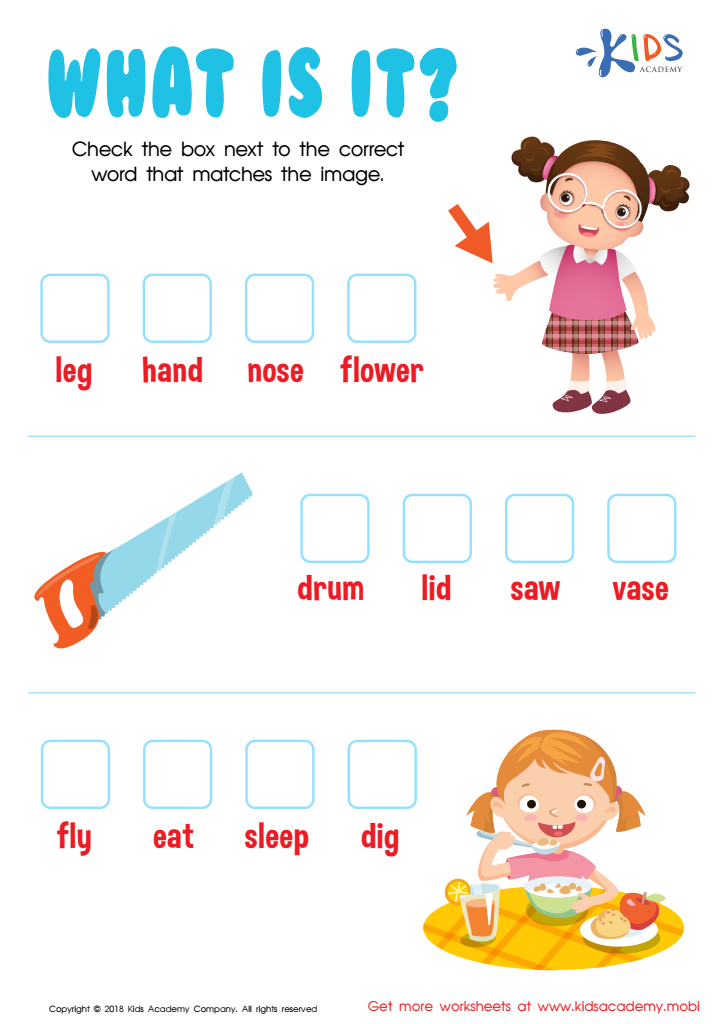
What Is It? Worksheet
 Assign to My Students
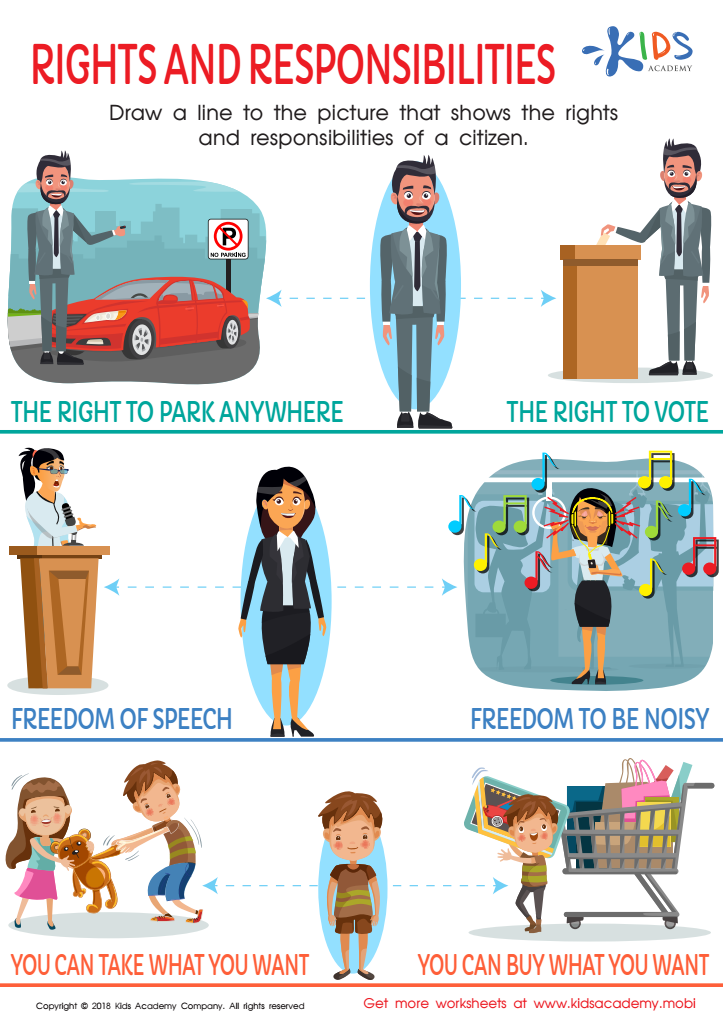
Rights and Responsibilities Worksheet
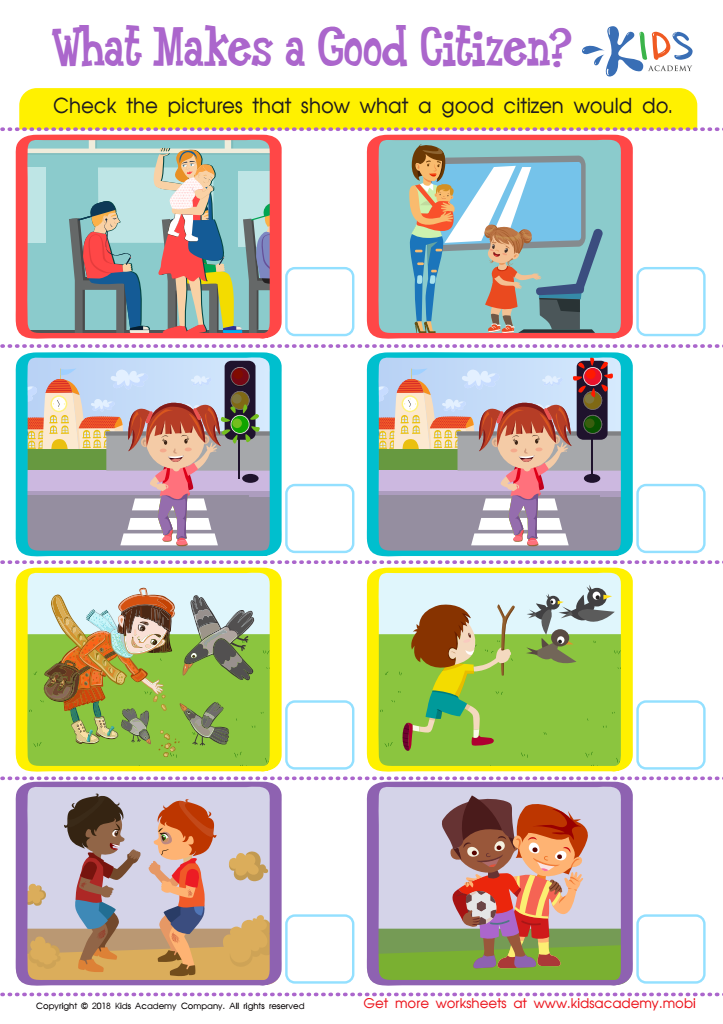
What Makes a Good Citizen? Worksheet
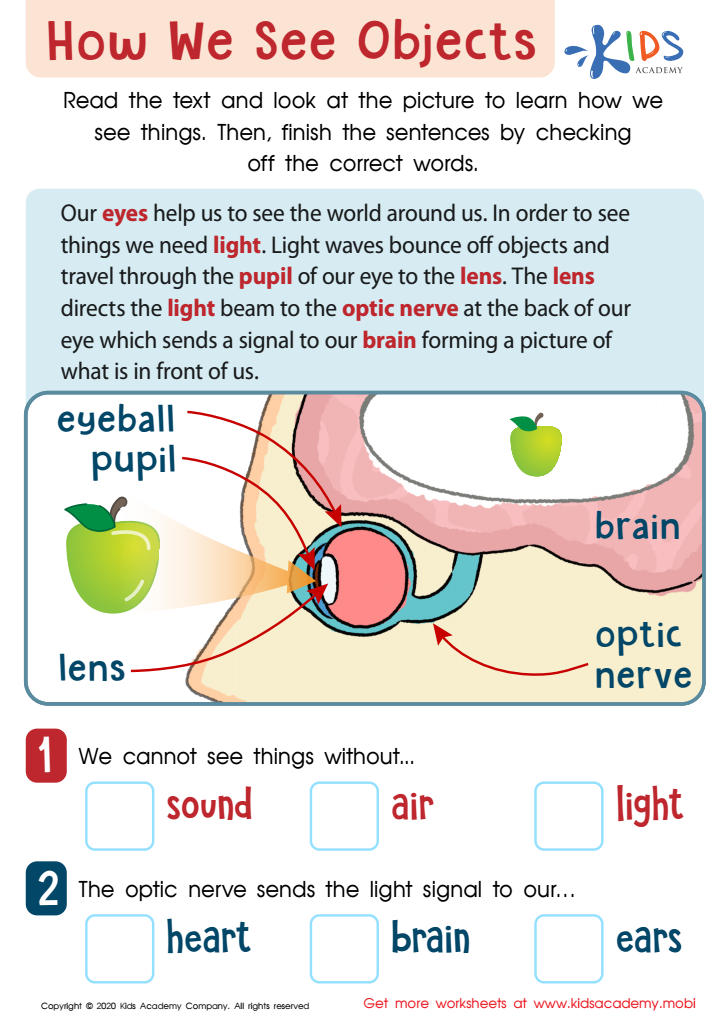
How We See Objects Worksheet

Man-Made or Natural? Worksheet








Developing critical thinking skills in children aged 3-6 is crucial for several reasons. First, this foundational stage of development is marked by rapid cognitive growth; children are naturally curious and eager to explore their environment. Encouraging critical thinking allows them to ask questions, evaluate information, and develop problem-solving skills early on. These abilities are vital as they foster independence and a sense of agency.
Moreover, critical thinking helps children learn how to approach challenges in a systematic way. Instead of simply accepting information as presented, they start to analyze, interpret, and synthesize it, enabling them to make informed decisions. As they engage in discussions, play-based learning, and guided exploration, they learn to express their thoughts and respect diverse perspectives.
For educators and parents, nurturing these skills not only enhances learning in the short term but also prepares children for future academic pursuits and everyday life. They become adept at navigating complex situations and understanding the consequences of their choices. In a world increasingly driven by information, critical thinking equips young children to be thoughtful, engaged citizens who can contribute positively to society. Thus, prioritizing critical thinking during these formative years sets the groundwork for lifelong learning and success.








