Division practice Worksheets for Ages 3-6
6 filtered results
-
From - To
Introducing our engaging Division Practice Worksheets designed specifically for children ages 3-6! These fun and interactive resources are perfect for young learners to grasp the basic concepts of division through colorful visuals and relatable examples. Our carefully crafted worksheets encourage early math skills, fostering a love for learning while building confidence in problem-solving. Ideal for parents and educators, these printable activities cater to various learning styles, making math enjoyable and accessible for little minds. Nurture your child’s mathematical journey today and set the foundation for future success with our division practice worksheets! Explore and download now!
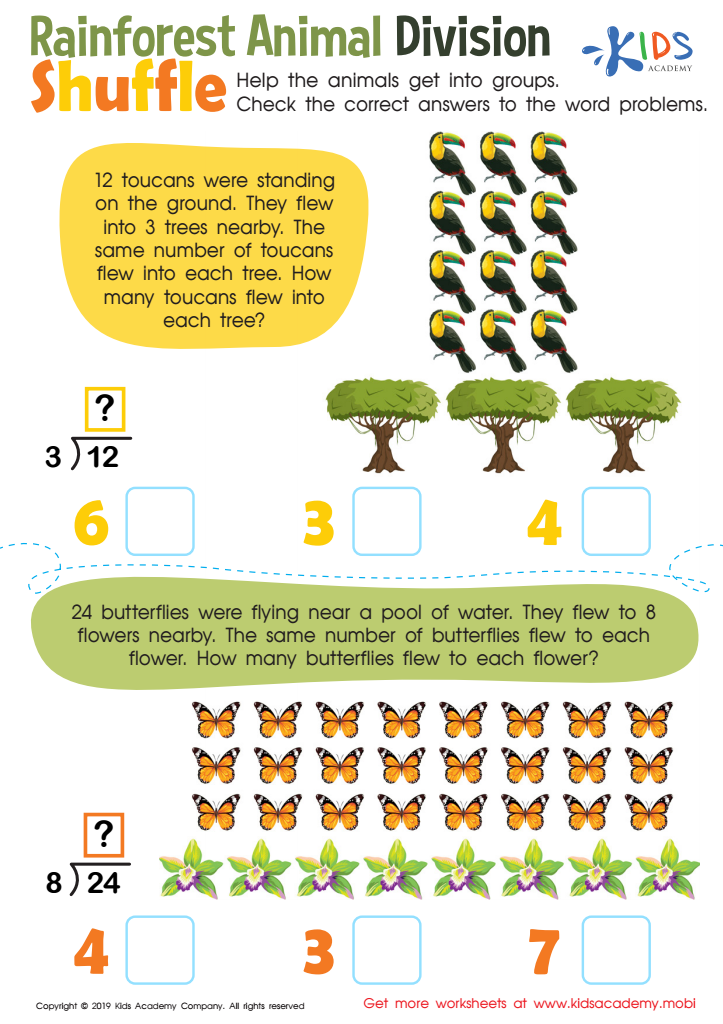
Rainforest Animal Division Worksheet
 Assign to My Students
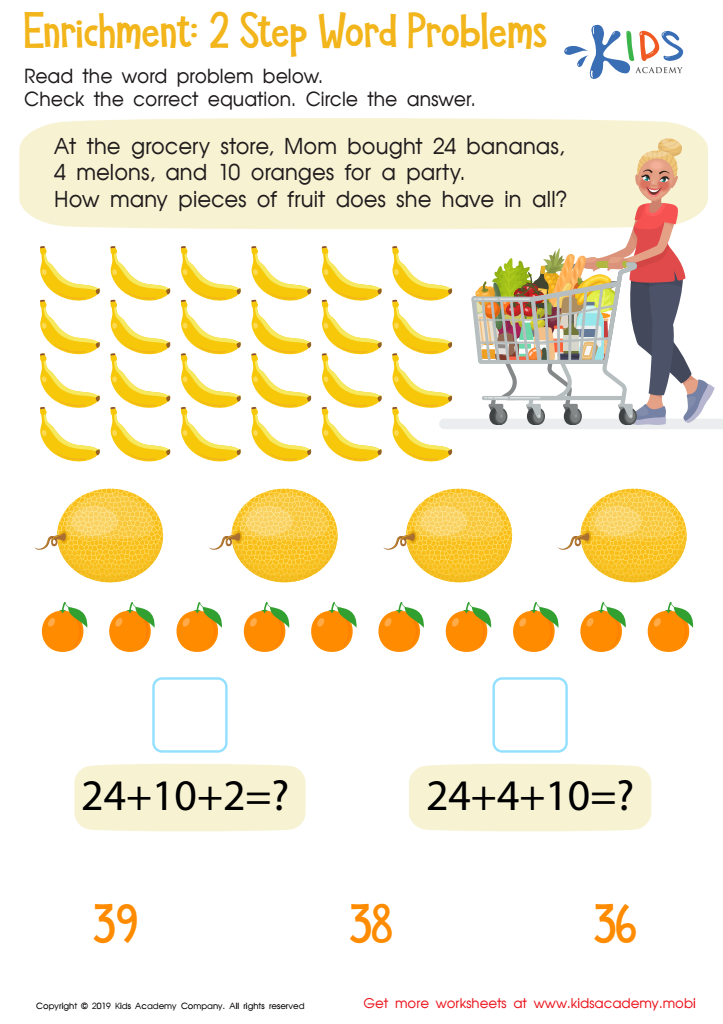
Enrichment -2 Step Word Problems Worksheet
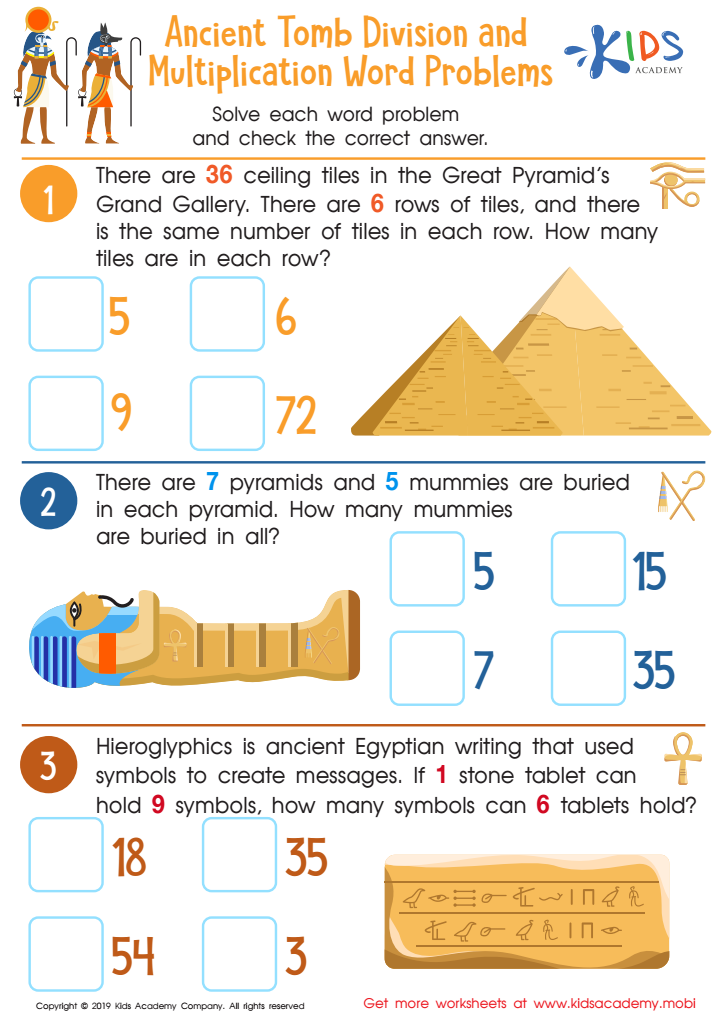
Ancient Tomb Division and Multiplication Word Problems Worksheet
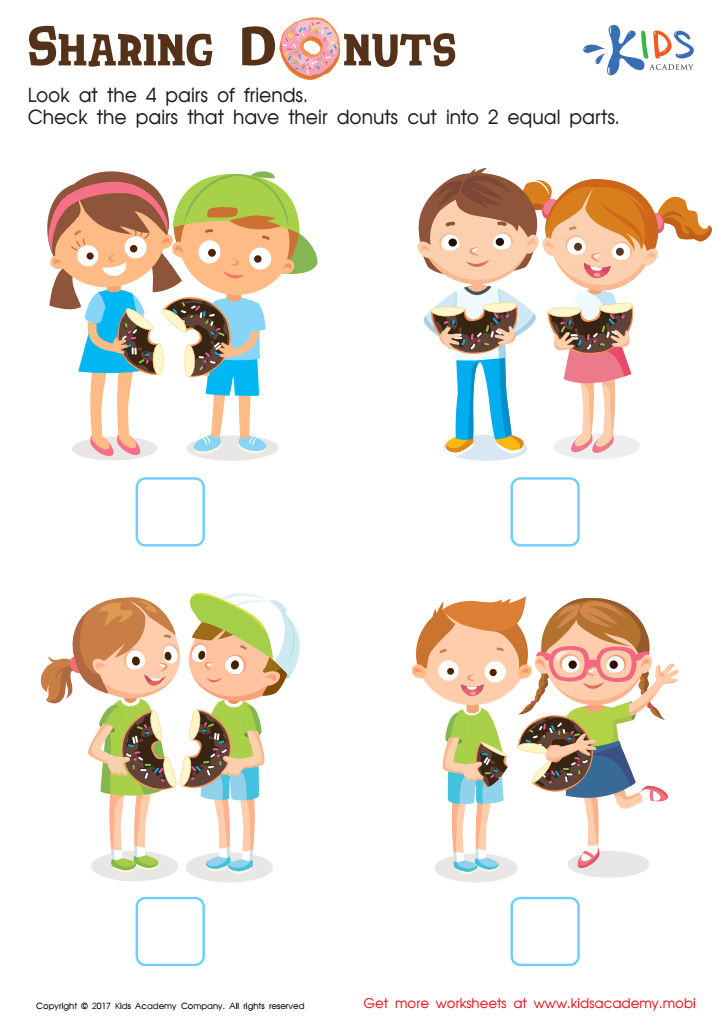
Sharing Donuts Worksheet
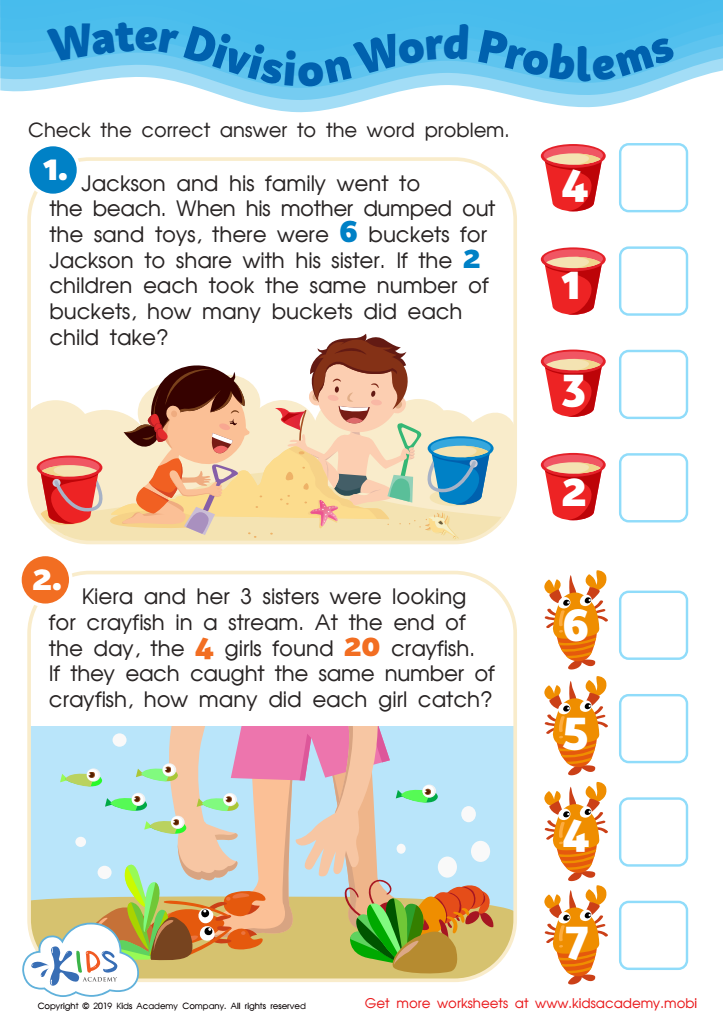
Water Division Word Problems Worksheet
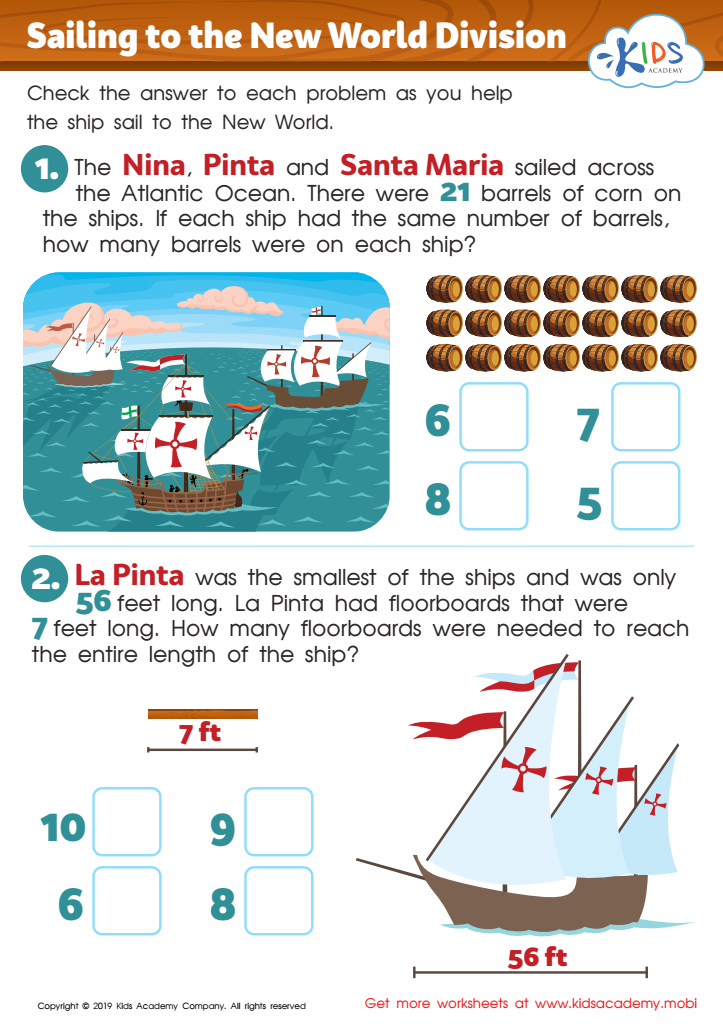
Sailing to the New World Division Worksheet


.jpg)

.jpg)


Division practice for ages 3-6 lays a crucial foundation for mathematical understanding that extends beyond simple arithmetic. While young children may not grasp division in the traditional sense, engaging in early numeracy activities that involve sharing, grouping, and comparing sets helps them develop essential mathematical thinking and reasoning skills.
First, division-related concepts promote critical thinking. When children split groups of objects, they learn to recognize the relationship between numbers and how to manipulate these quantities, fostering a sense of numerical fluency. These activities encourage counting, one-to-one correspondence, and basic problem-solving techniques.
Second, early exposure to division helps build confidence in mathematics. When children engage in playful, hands-on division activities, such as sharing snacks or toys, they experience math as a fun and interactive part of their everyday lives. This positive experience can instill a love for math that lasts throughout their educational journey.
Lastly, division practice enhances social skills. Collaborative activities where children share resources teach them about fairness, cooperation, and communication, essential components of social development. For parents and teachers, facilitating these experiences is vital in helping children develop both their mathematical and social competence, setting them up for future learning success.








