
Enhancing critical thinking Worksheets for Ages 3-6
11 filtered results
Difficulty Level
Grade
Age
-
From - To
Subject
Activity
Standards
Unlock your child's potential with our "Enhancing Critical Thinking Worksheets for Ages 3-6." Designed to spark curiosity and promote problem-solving skills, these engaging activities keep young minds actively learning. Our worksheets encourage children to analyze, evaluate, and create as they explore various themes and concepts. From puzzles to pattern recognition, each resource is tailored to develop essential cognitive skills in a fun and interactive way. Perfect for parents and educators alike, our worksheets make learning enjoyable while fostering independence and critical thinking abilities. Equip your child for future success by instilling a love for learning early on!
Favorites
With answer key
Interactive
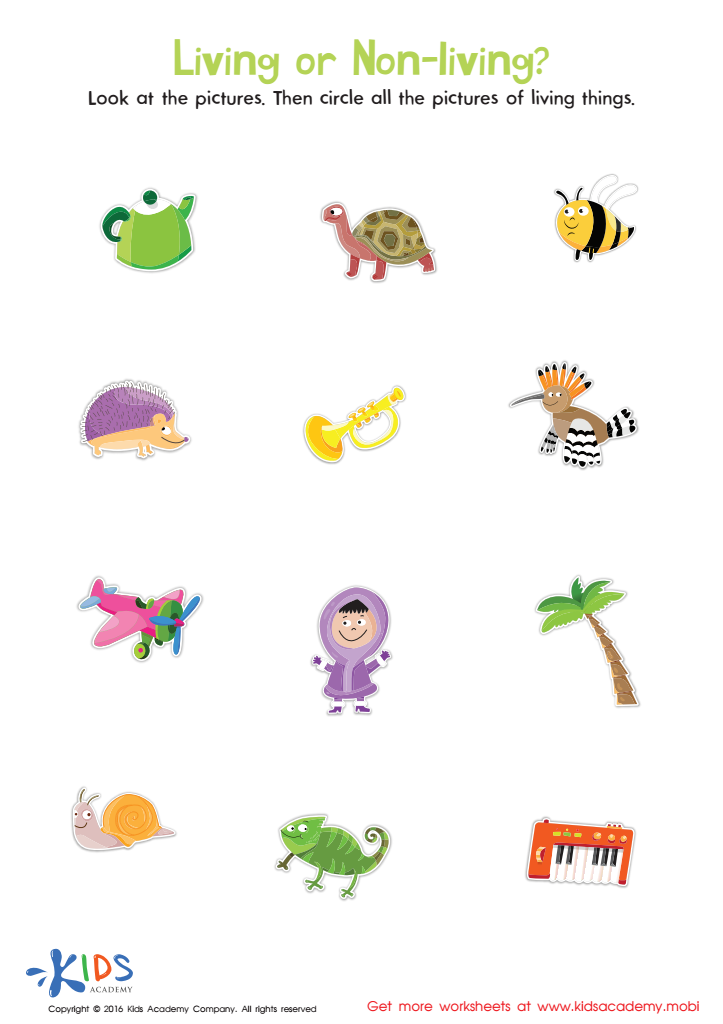
Identifying Living and Non–living Things Sorting Worksheet
Help your child sort living and non-living objects with this cute worksheet. Kids will use problem-solving skills to recognize and categorize the images they see. Matching worksheets available to help their skills soar.
 Assign to My Students
Identifying Living and Non–living Things Sorting Worksheet
Worksheet
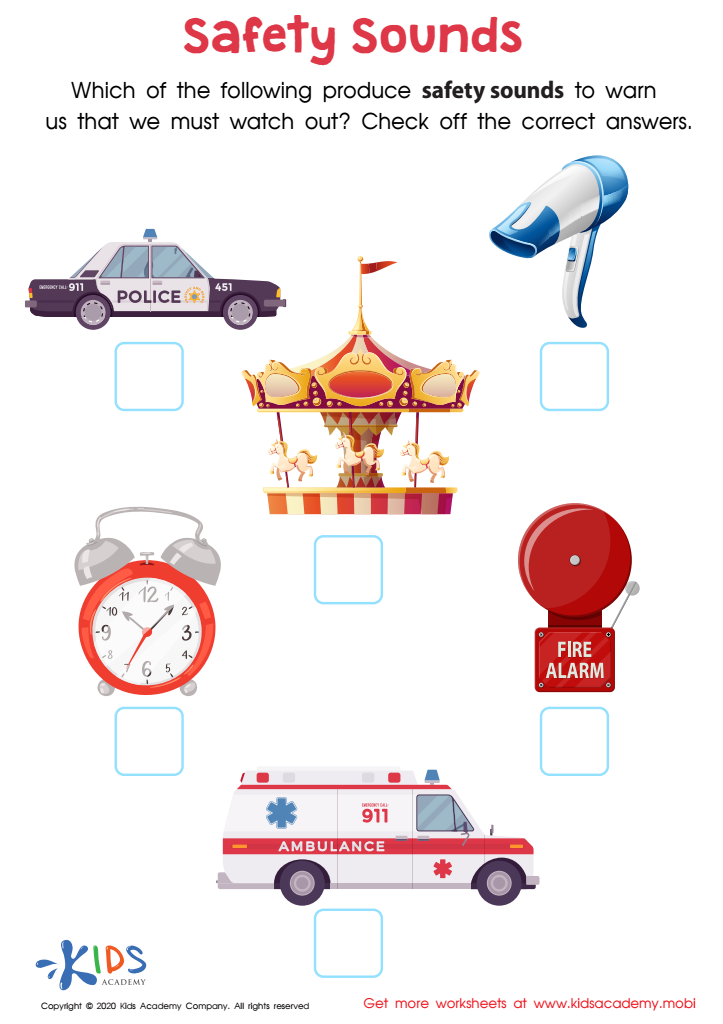
Safety Sounds Worksheet
Teach your kids about safety. Explain the rules and let them know what sounds to be aware of. Review the worksheet with pictures of objects and ask them to recognize which ones produce safety sounds. Have them check their answers. Doing this will help ensure their safety and that of others.
Safety Sounds Worksheet
Worksheet
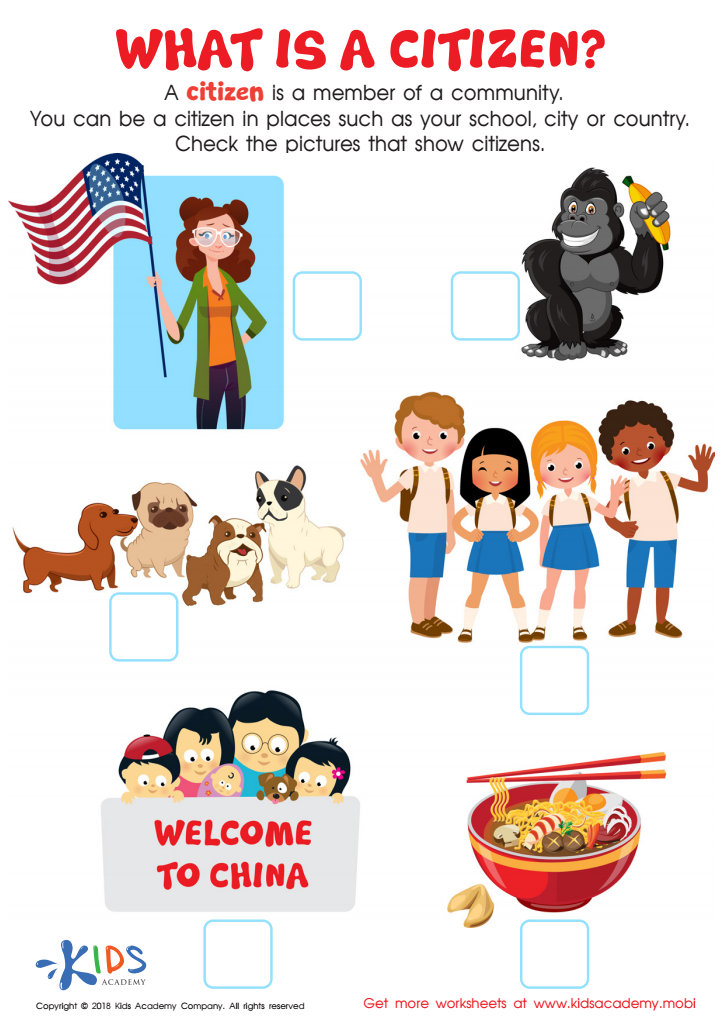
What is a Citizen? Worksheet
Do your students know who a citizen is? Use this worksheet to teach them: a citizen is a member of a community, such as your school, city or country. Look at the pictures in the pdf with your students. Ask them to identify who or what is in the pictures, and help them check which are citizens.
What is a Citizen? Worksheet
Worksheet
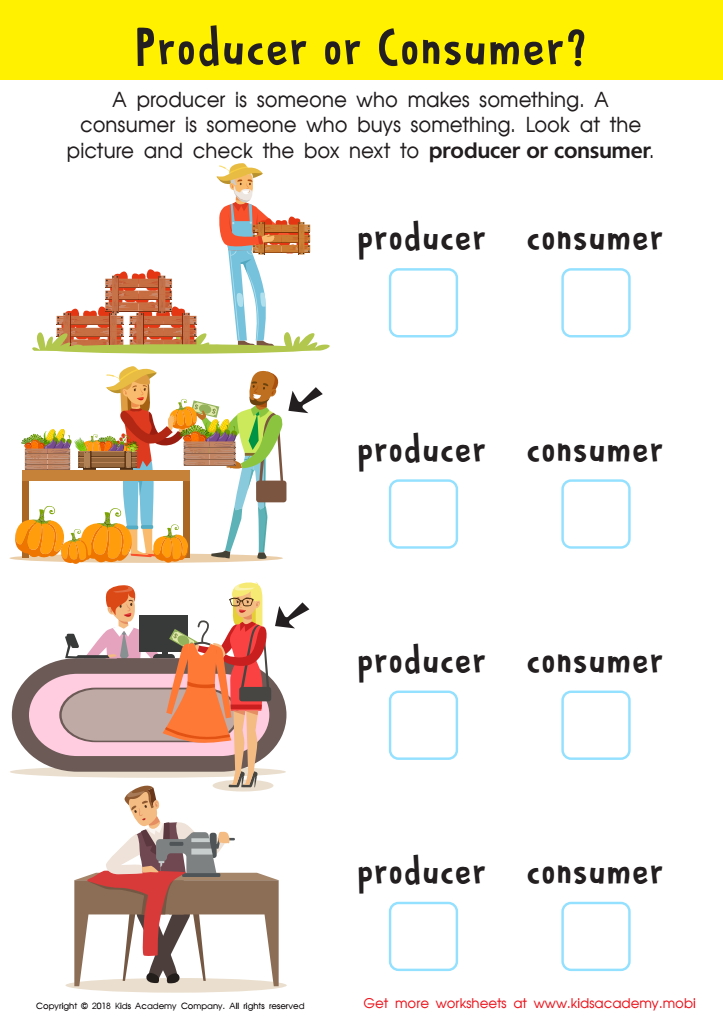
Producer or Consumer? Worksheet
Test your child's knowledge by asking who's a producer and consumer. Explain producer makes things and consumer buys them. Use a snack example. Look at the picture with your kids and help them check the box next to producer or consumer.
Producer or Consumer? Worksheet
Worksheet
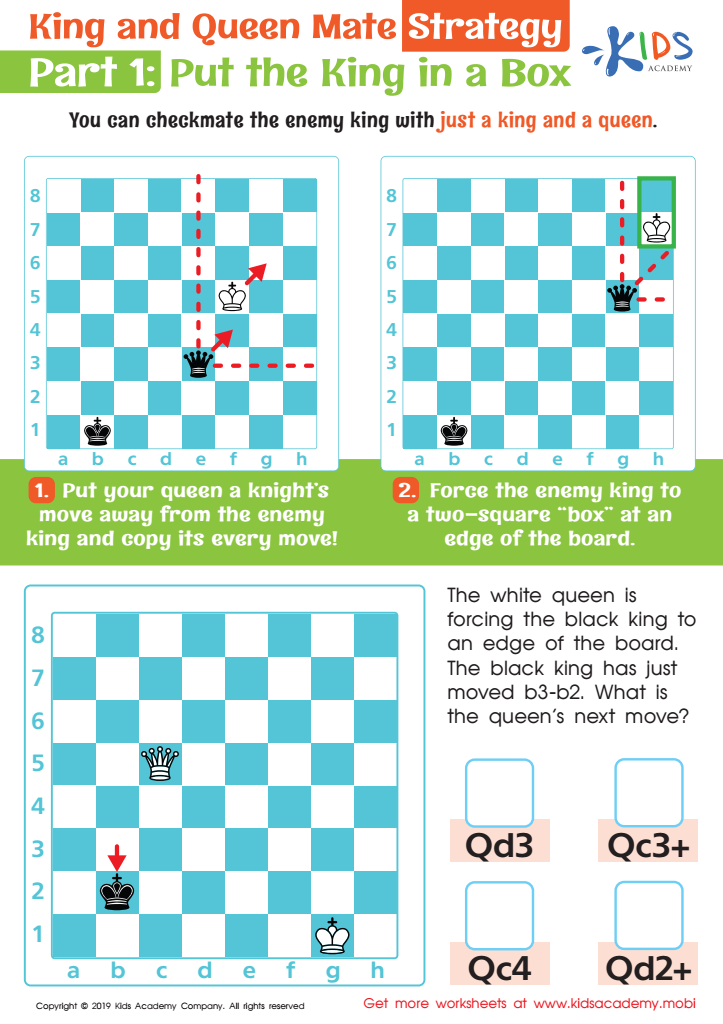
King and Queen Mate Strategy: Part 1 Worksheet
This worksheet will help your young chess player strategize. They’ll learn how to checkmate the opponent’s king using just a king and a queen. Descriptive sample boards will show them the strategy and then a practice board will test their knowledge. Allowing them to plan the queen’s next move to checkmate the opposing king.
King and Queen Mate Strategy: Part 1 Worksheet
Worksheet
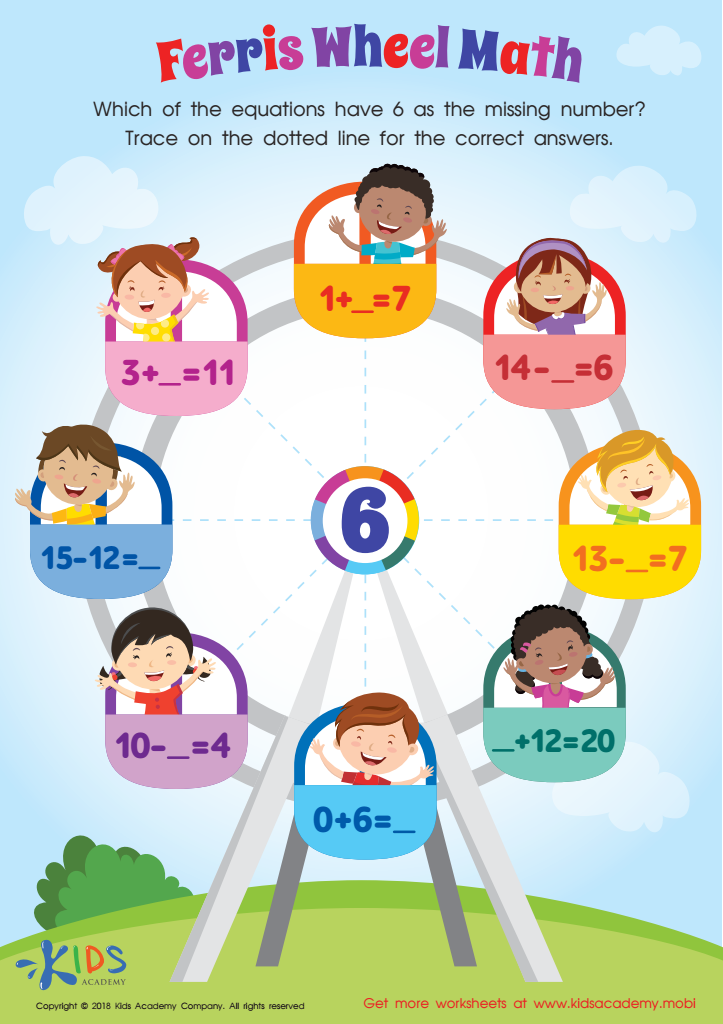
Missing Number: Ferris Wheel Math Worksheet
Hop on the Ferris wheel and solve the equations in the baskets! If the missing number is 6, draw a line from the basket to the middle of the wheel. Kids Academy's addition worksheet will not only help practice pre-algebra but also keep kids entertained with its vibrant illustrations. So, go round and round and have fun with math!
Missing Number: Ferris Wheel Math Worksheet
Worksheet
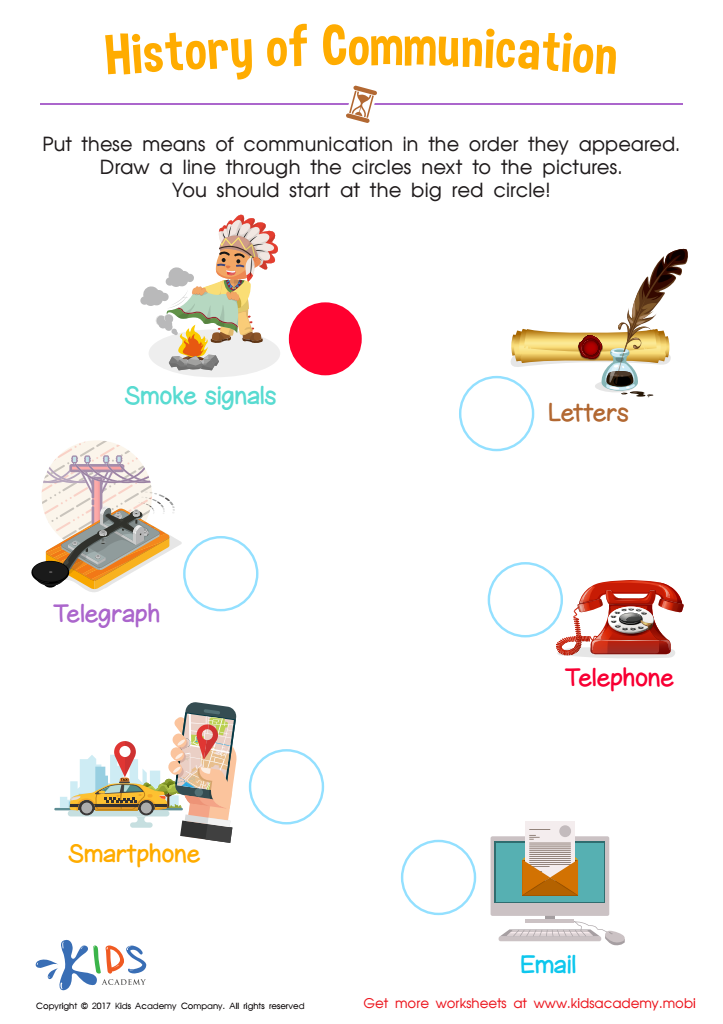
History of Communication Worksheet
Help your child understand history's communication evolution! With this worksheet, your child will learn about the various ways people communicated over time, and how that compares to today. It'll also foster an interest in history and bring the past to life!
History of Communication Worksheet
Worksheet
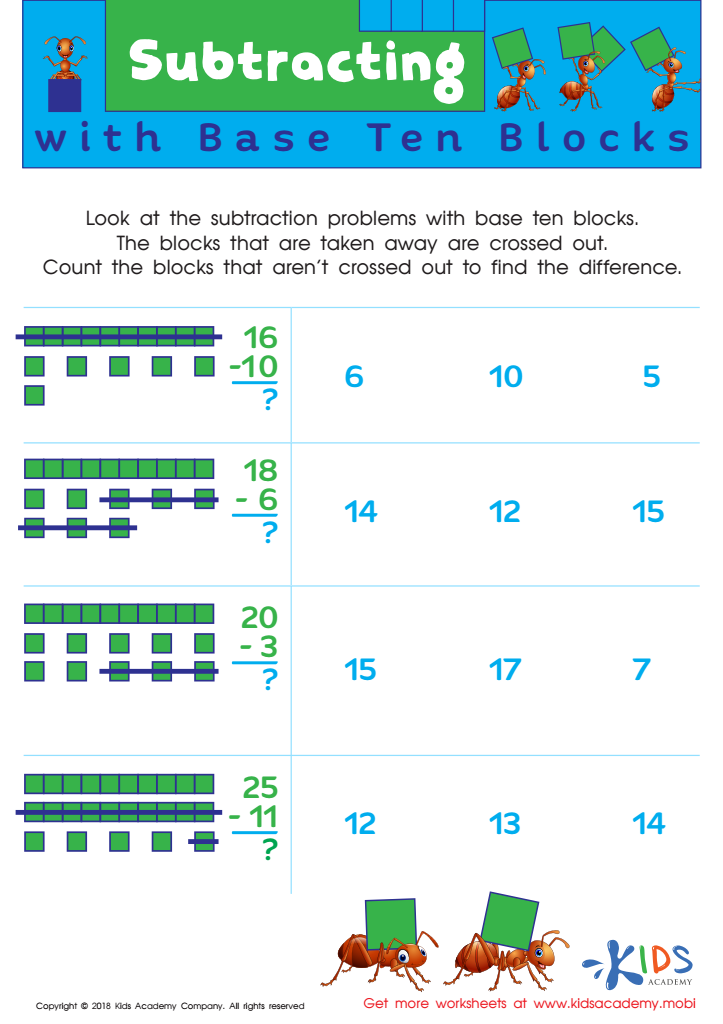
Subtracting with Base Blocks Worksheet
Little mathematicians can use base ten blocks to understand place value for subtraction. This worksheet helps them cross out blocks to solve problems with accuracy. Seeing equations like this boosts their number reasoning skills and helps them work with larger numbers.
Subtracting with Base Blocks Worksheet
Worksheet
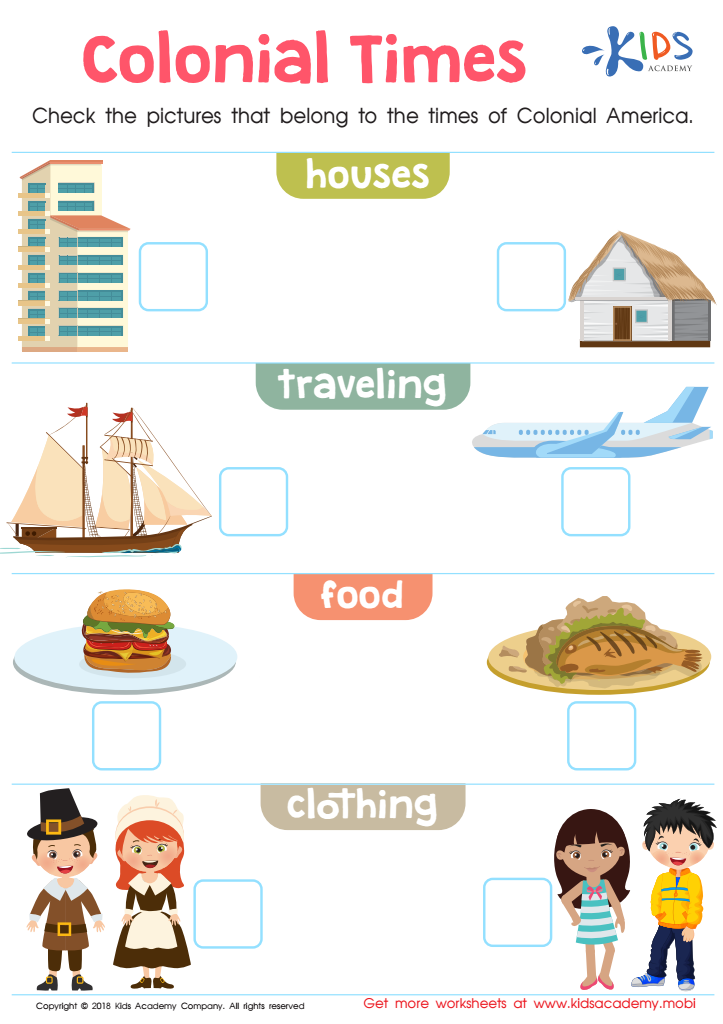
Colonial Times Worksheet
Test your students' knowledge of colonial times with this easy social studies worksheet. Look at the pictures to see how people lived back then. See if your little ones understand what structures they had, what food they ate, and what type of clothing they wore. You might be surprised by how much or how little they know!
Colonial Times Worksheet
Worksheet
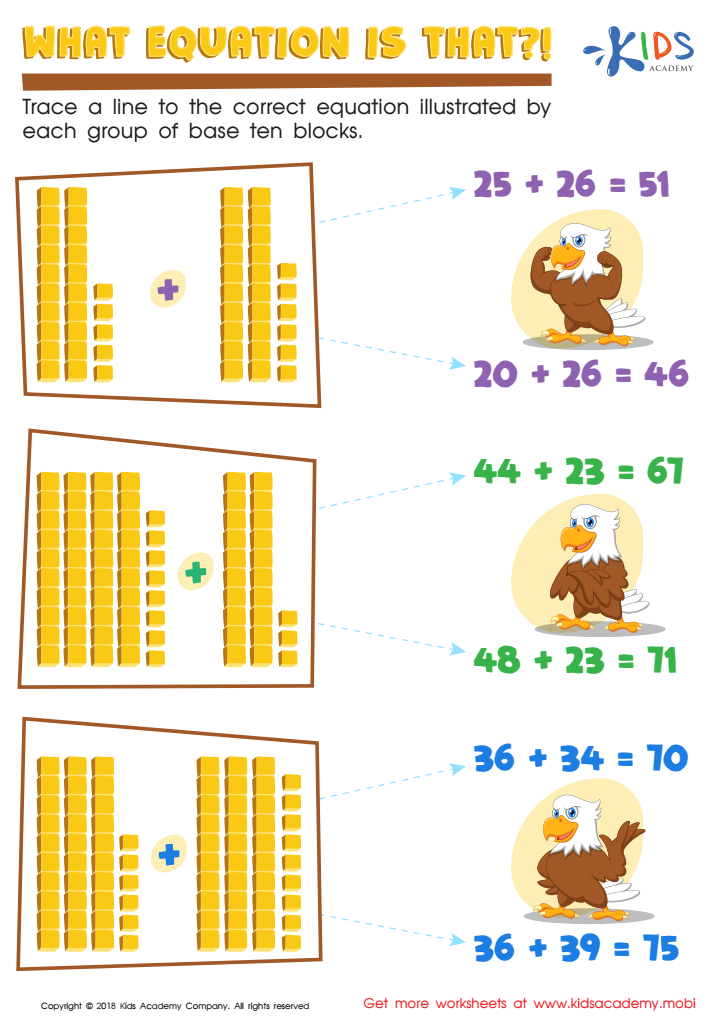
What Equation Is That? Worksheet
Have your students practice counting with base ten blocks. This will help them with math struggles. Homework and worksheets will help them improve; ask them to trace lines to the correct equation on a tracing sheet. Guide them as they count the blocks and trace the lines.
What Equation Is That? Worksheet
Worksheet
Join Kids Academy for Free
Who is primarily going to use this learning content?







Enhancing critical thinking in children aged 3-6 is essential for their overall development and future success. At this early age, children are naturally curious and eager to explore the world around them. By fostering critical thinking skills, parents and teachers can empower children to ask questions, analyze information, and solve problems independently.
Critical thinking helps children develop the ability to evaluate situations, make informed decisions, and understand different perspectives. This foundation of thought prepares them for academic challenges and equips them with essential social skills, enabling them to interact effectively with peers and adults. It encourages creativity, as children learn to explore various solutions and think outside the box.
Moreover, engaging in critical thinking activities promotes language development and enhances literacy skills. For instance, discussing stories, exploring real-world problems, or participating in hands-on learning experiences can significantly improve children’s ability to articulate their thoughts and ideas.
In a rapidly changing world, the ability to think critically is vital. By nurturing these skills early on, parents and teachers are cultivating a generation of informed, confident, and adaptable learners capable of navigating future challenges with resilience and insight. This investment in critical thinking will benefit not just the children, but society as a whole.








