
Fine motor skills improvement Worksheets for Ages 3-6
6 filtered results
Difficulty Level
Grade
Age
-
From - To
Subject
Activity
Standards
Our Fine Motor Skills Improvement Worksheets for Ages 3-6 are designed to enhance your child's dexterity and coordination through engaging activities. These worksheets feature a variety of exercises, such as tracing lines, cutting shapes, and coloring within boundaries, which are crucial for developing precision and control. Perfect for preschoolers and kindergarteners, our expertly crafted printables not only boost motor skills but also lay a solid foundation for writing. Help your little ones build confidence and skill with our fun and educational worksheets. Visit Kids Academy to access a treasure trove of resources to support your child's growth.
Favorites
With answer key
Interactive
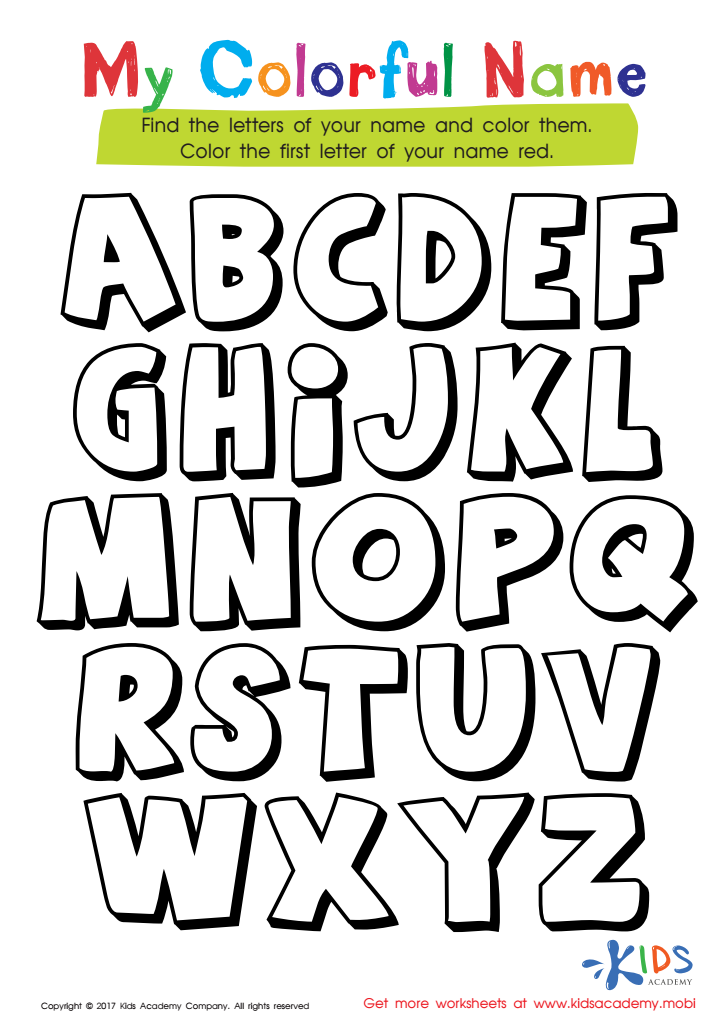
My Colorful Name Worksheet
Writing their names is a milestone for children. With this worksheet, they recall the letters in their name and color the letters one at a time. Spelling and alphabet order are reinforced as they find each letter. Use this fun printable to help kids learn to write their names!
Download (PDF)
 Assign to My Students
Assign to My Students
My Colorful Name Worksheet
Worksheet
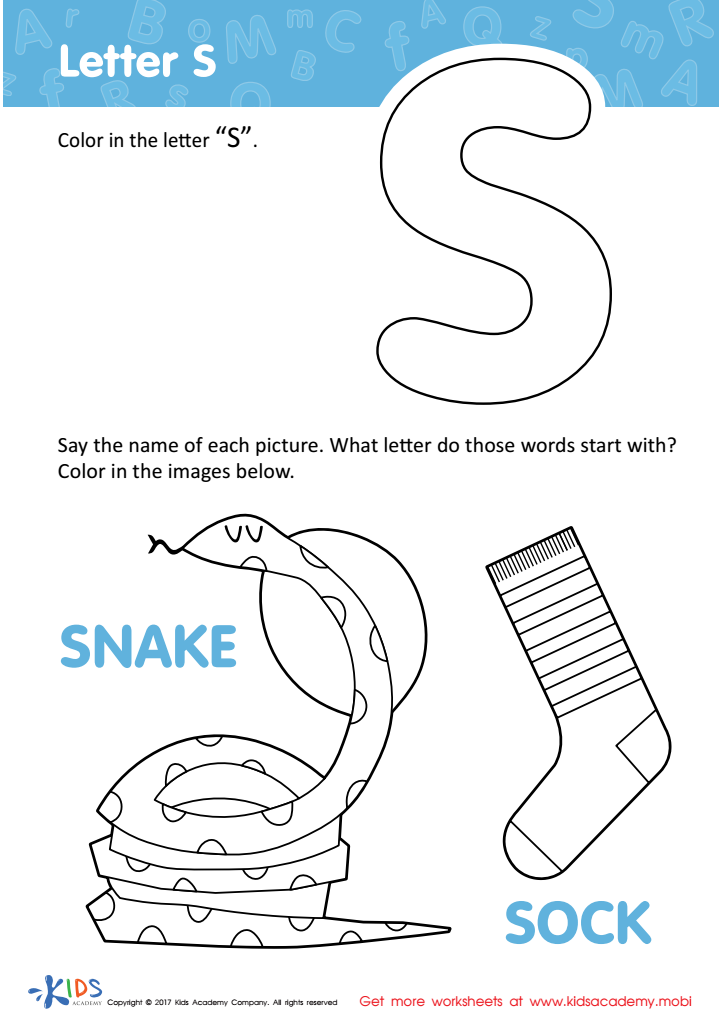
Letter S Coloring Sheet
Help your child practice recognizing the letter "S" and the sound it makes with this fun coloring page. It features a slippery snake, smelly sock and more! Give them extra practice by coming up with more "S" sounds and words.
Download (PDF)
Assign to My Students
Assign to My Students
Letter S Coloring Sheet
Worksheet
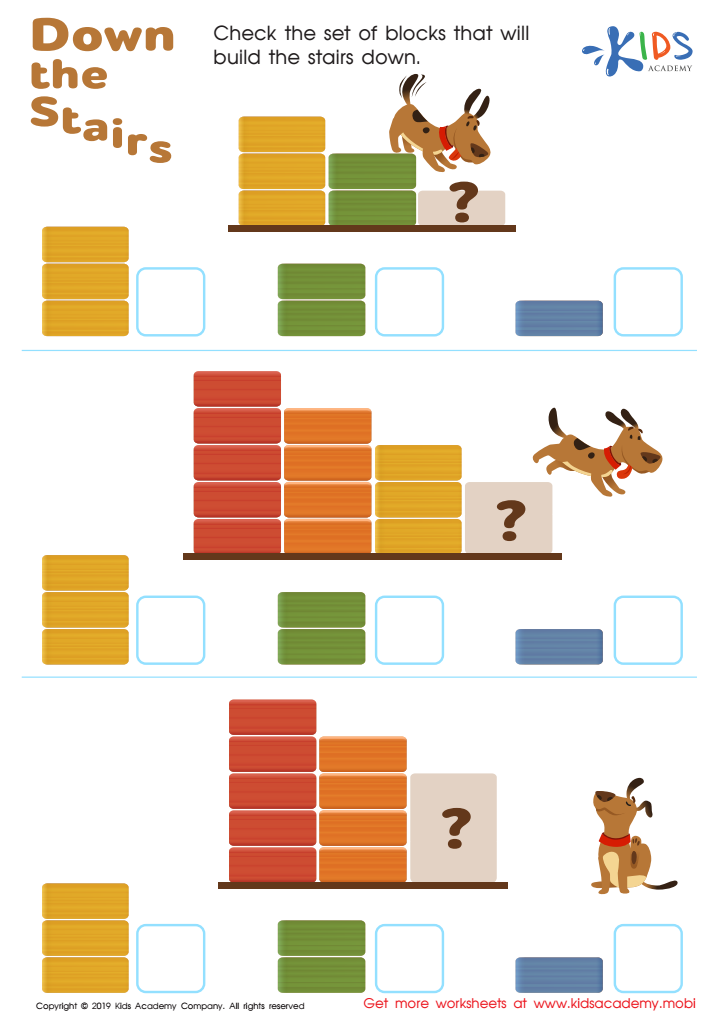
Down the Stairs Worksheet
Let your kids' imaginations run wild with this worksheet featuring a cute and friendly dog! Ask them to point out the dog in the printout, then help count the blocks in each set. Aim to stack them in descending order and build stairs for the pup to get down. Count each block and check the set - it's that easy!
Down the Stairs Worksheet
Worksheet
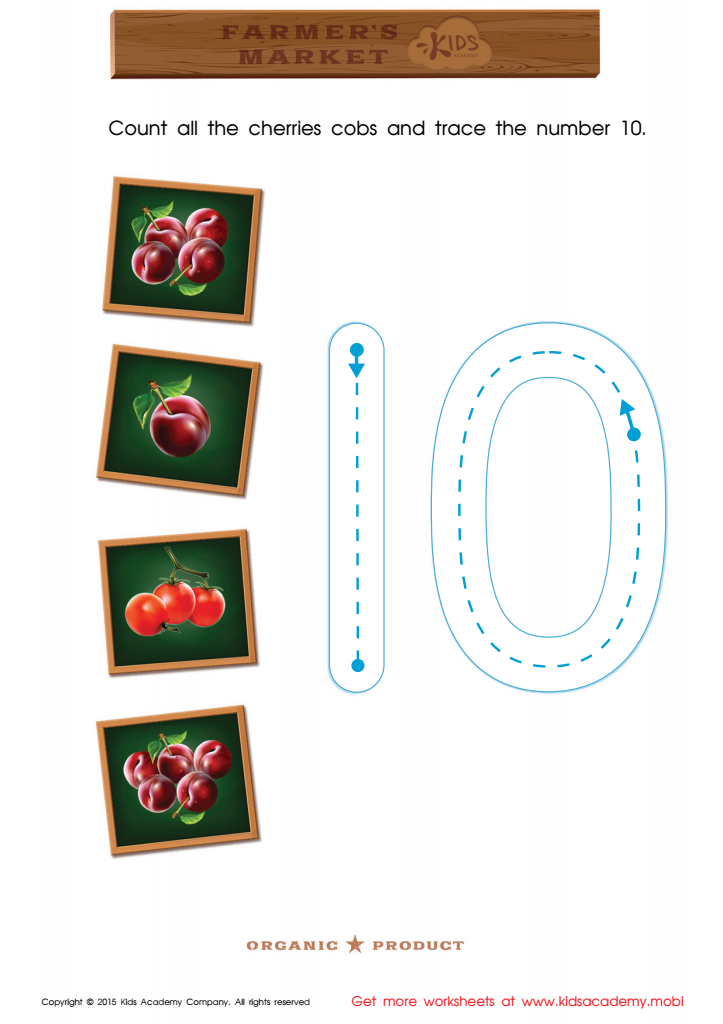
Count the Cherries and Trace the Number 10 Printable
Download this fun math and number worksheet to help your kid practice counting and tracing. Reinforce addition facts and handwriting skills while counting sweet cherries. Check out Kids Academy for more free printable worksheets by topic.
Count the Cherries and Trace the Number 10 Printable
Worksheet
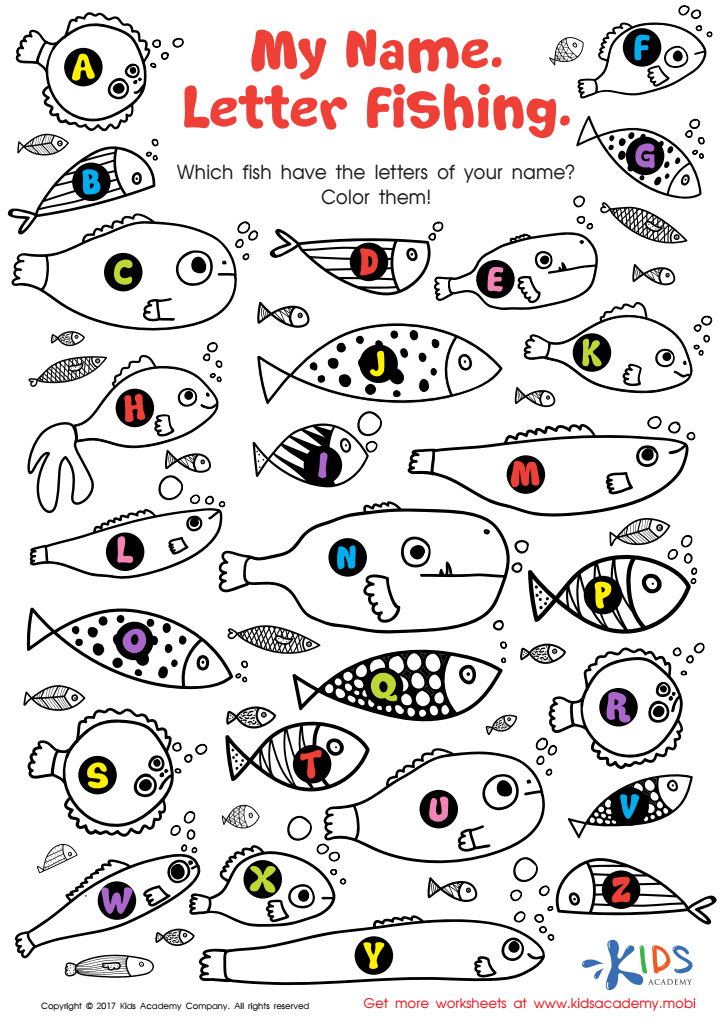
My Name: Letter Fishing Worksheet
Dive into the deep sea and search for fish with a letter on them. Can you find all the letters from your name? Color your favorite fish with crayons and be creative! On the other side, use the letters you found to write your name. Have fun coloring and finding the letters of your name! (80 words)
Download (PDF)
Assign to My Students
Assign to My Students
My Name: Letter Fishing Worksheet
Worksheet
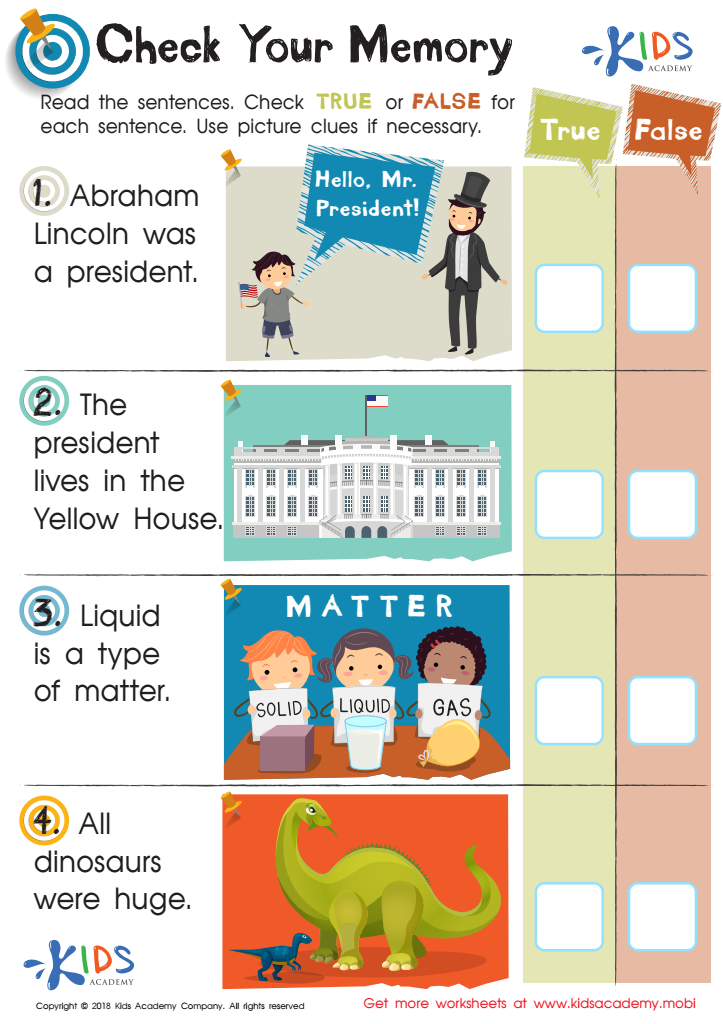
Check Memory Worksheet
Assisting your kids with their homework and using worksheets is a great way for them to learn. The vibrant visuals in this printout can help stimulate the mind and motivate your child. Have them read the sentences and then point to the associated images. Afterwards, ask them to state True or False for each sentence. If they are still uncertain, offer them the picture clues to assist further.
Check Memory Worksheet
Worksheet
Join Kids Academy for Free
Who is primarily going to use this learning content?


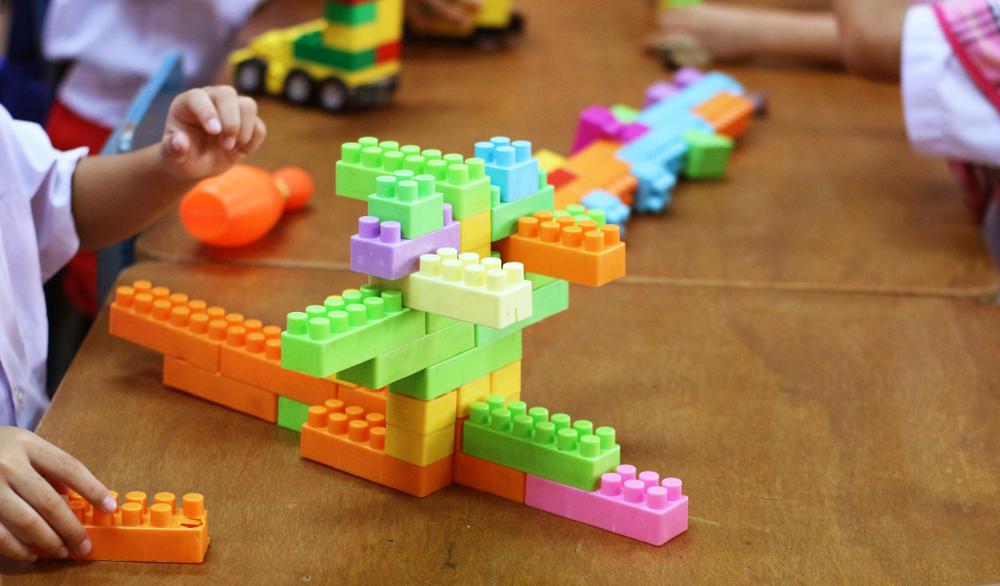





Fine motor skills development is crucial for children between the ages of 3 and 6 because it lays the foundation for their overall growth and academic readiness. Fine motor skills involve the coordination of small muscles, particularly in the hands and fingers, with the eyes, enabling children to perform tasks like holding a pencil, fastening buttons, and using scissors.
Firstly, solid fine motor skills are essential for academic success. Writing, drawing, and cutting activities are fundamental components of early education curriculums. Children with well-developed fine motor skills can engage more effectively in these tasks, which boosts their confidence and enthusiasm for learning. Without these skills, children may struggle, leading to frustration and possibly impacting their emotional and social development.
Secondly, refining these skills fosters independence. Everyday tasks like dressing, feeding, and personal hygiene all require the efficient use of fine motor skills. Improved dexterity enables children to perform these tasks with minimal adult help, giving them a sense of autonomy and competence.
Lastly, engaging in activities that enhance fine motor skills encourages cognitive development. Manipulating small objects and creating with their hands help improve problem-solving abilities, spatial awareness, and hand-eye coordination.
By prioritizing fine motor skills development, parents and teachers provide a sturdy foundation for a child's educational journey, personal independence, and overall cognitive abilities, setting them up for future successes.








