
Improving handwriting Worksheets for Ages 3-6
3 filtered results
Difficulty Level
Grade
Age
-
From - To
Subject
Activity
Standards
Enhance your child's handwriting skills with our engaging "Improving Handwriting Worksheets" designed for ages 3-6. Our worksheets are crafted to help young learners develop fine motor skills and improve letter formation through fun, interactive activities. Featuring a variety of exercises that focus on tracing letters, connecting dots, and practicing simple words, these worksheets make handwriting practice enjoyable and rewarding. Perfect for preschool and kindergarten classrooms or home learning, our resources will boost your child's confidence while promoting essential writing skills. Explore our collection today and set your child on the path to becoming a proficient writer!
Favorites
With answer key
Interactive
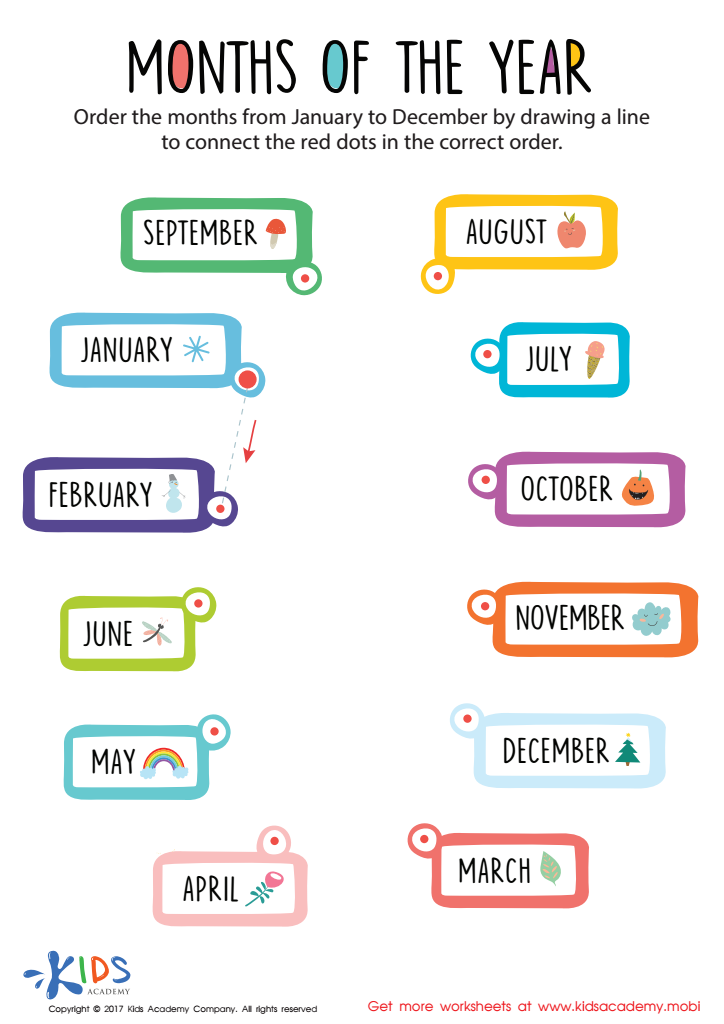
Months of the Year Worksheet
Challenge your child with this months of the year worksheet! Help them remember the yearly calendar by having them connect the dots from January to December. It's a fun way to test their knowledge of the twelve months and sharpen their memory!
 Assign to My Students
Months of the Year Worksheet
Worksheet
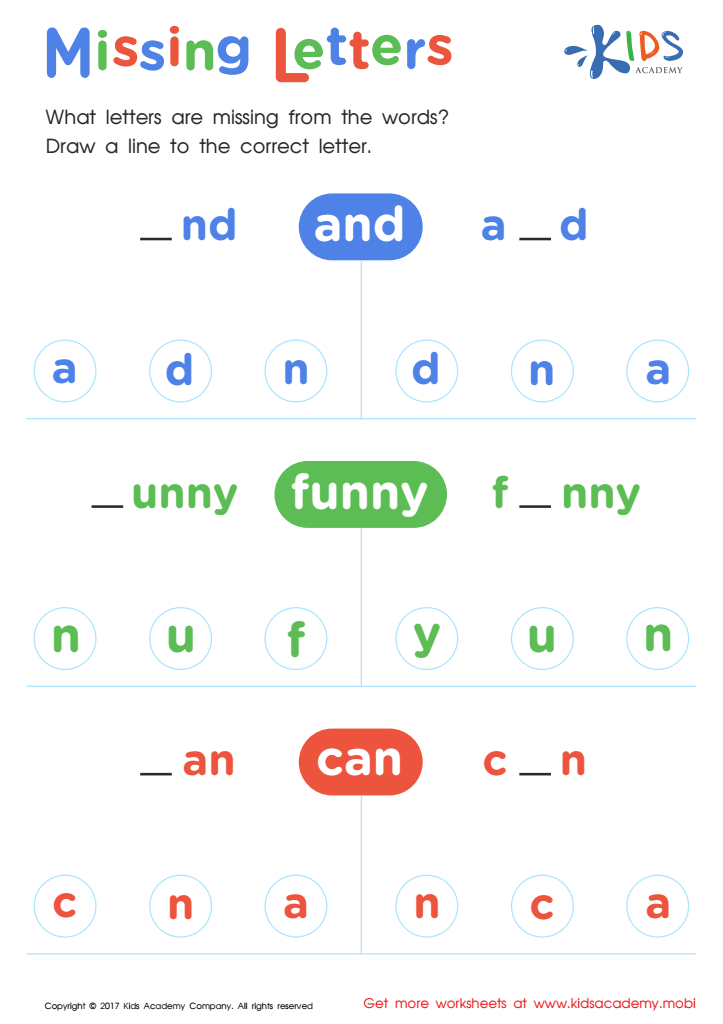
Missing Letters Worksheet
Review sight words with this fun matching worksheet from Kids Academy! Look at the sight words in the middle, read them aloud and find the missing letter on each side for each word. Draw a line to the correct letter to complete the sheet!
Missing Letters Worksheet
Worksheet
Join Kids Academy for Free
Who is primarily going to use this learning content?







Improving handwriting in children aged 3-6 is crucial for several reasons. First, it lays the foundation for effective communication skills. At this age, children are beginning to explore writing, which is essential for expressing their thoughts and emotions. Developing fine motor skills through handwriting activities also enhances overall motor development, aiding in coordination and control.
Additionally, strong handwriting contributes to academic performance. Children who can write legibly are more likely to engage successfully in school-related tasks, reducing frustration for both students and teachers. As these early writers learn to express themselves, they build confidence and a sense of accomplishment.
Moreover, handwriting is tied to cognitive development. As children practice letter formation, they also engage in the process of language acquisition, learning letter sounds and vocabulary simultaneously. Handwriting can also promote focus and attention, as children must concentrate on forming each letter, reinforcing the connection between handwriting and better concentration in other academic areas.
Finally, emphasizing the importance of handwriting early on fosters a positive attitude toward learning and strengthens the parent-teacher bond, as both parties work together to cultivate a child's readiness for future educational challenges. Overall, the dual focus on these skills enriches children's early educational experience.








