Noun identification Worksheets for Ages 3-6
7 filtered results
-
From - To
Discover engaging noun identification worksheets designed for young learners ages 3-6! Our colorful, age-appropriate resources help children recognize and understand nouns through fun, interactive activities. Each worksheet features familiar images and simple language that make learning enjoyable and effective. As kids identify people, places, and things, they develop essential language skills and build the foundation for future literacy. Explore a variety of exercises, from matching games to fill-in-the-blank activities, all aimed at reinforcing noun recognition in a playful way. Perfect for homeschooling or classroom use, these worksheets will inspire creativity and confidence in every young learner. Start their journey today!
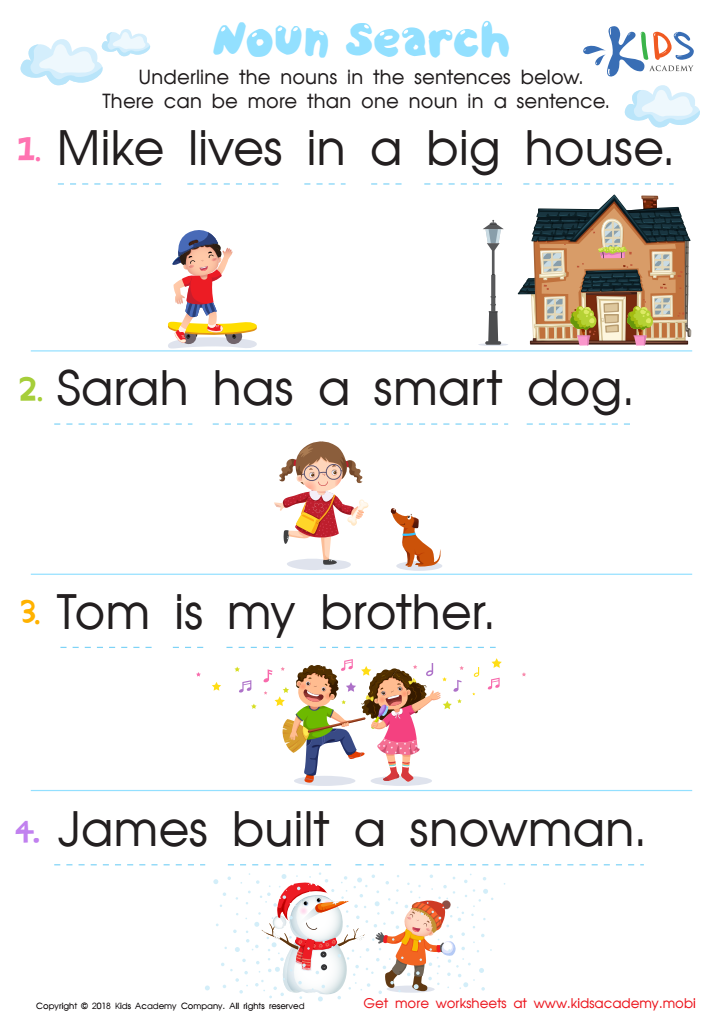
Noun Search Worksheet
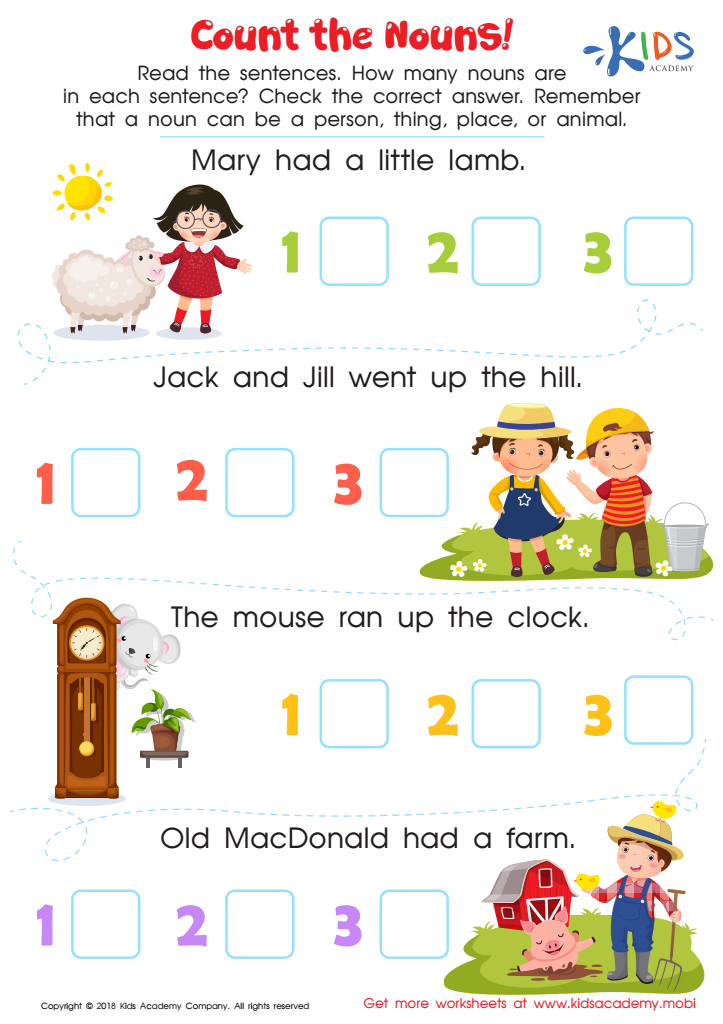
Count the Nouns Worksheet
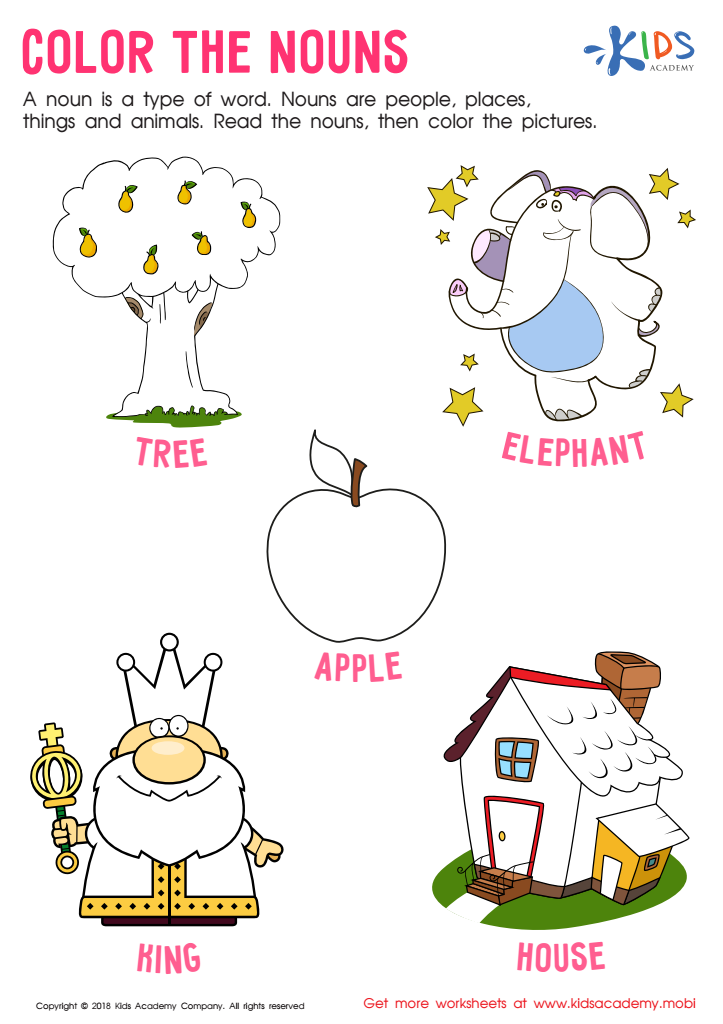
Color the Nouns Worksheet
 Assign to My Students
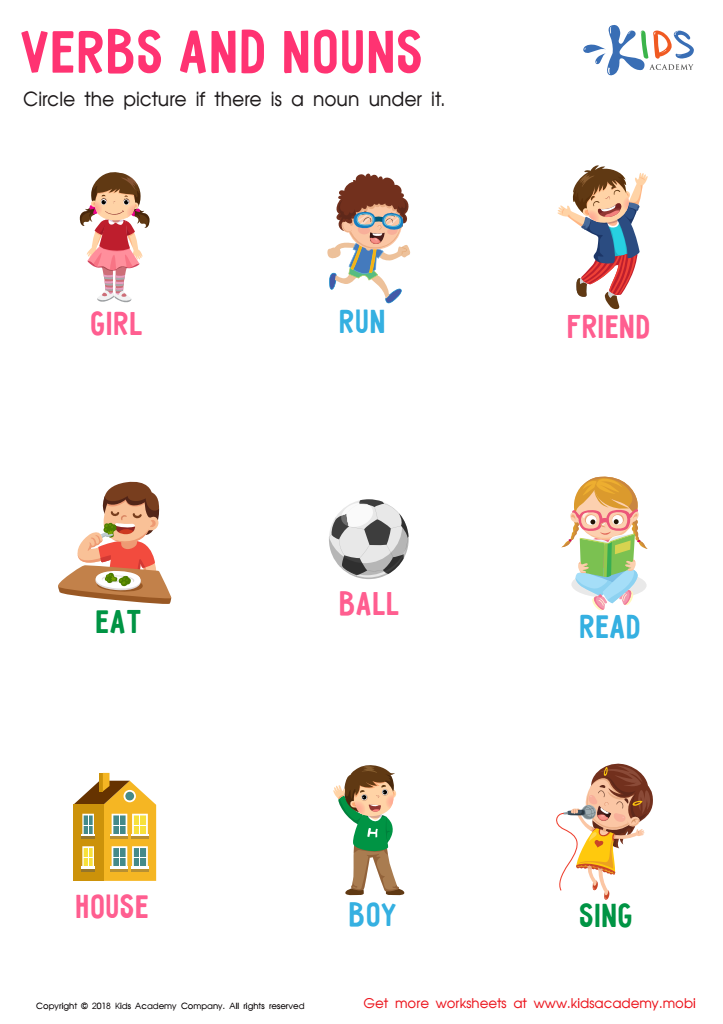
Verbs and Nouns Worksheet
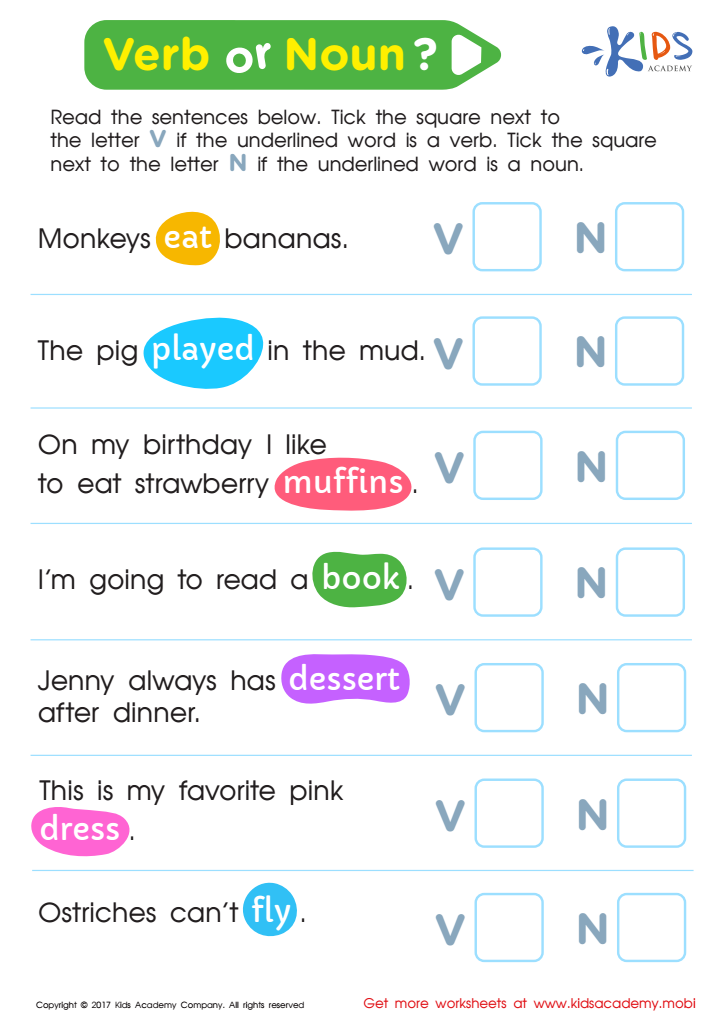
Verb or Noun Worksheet
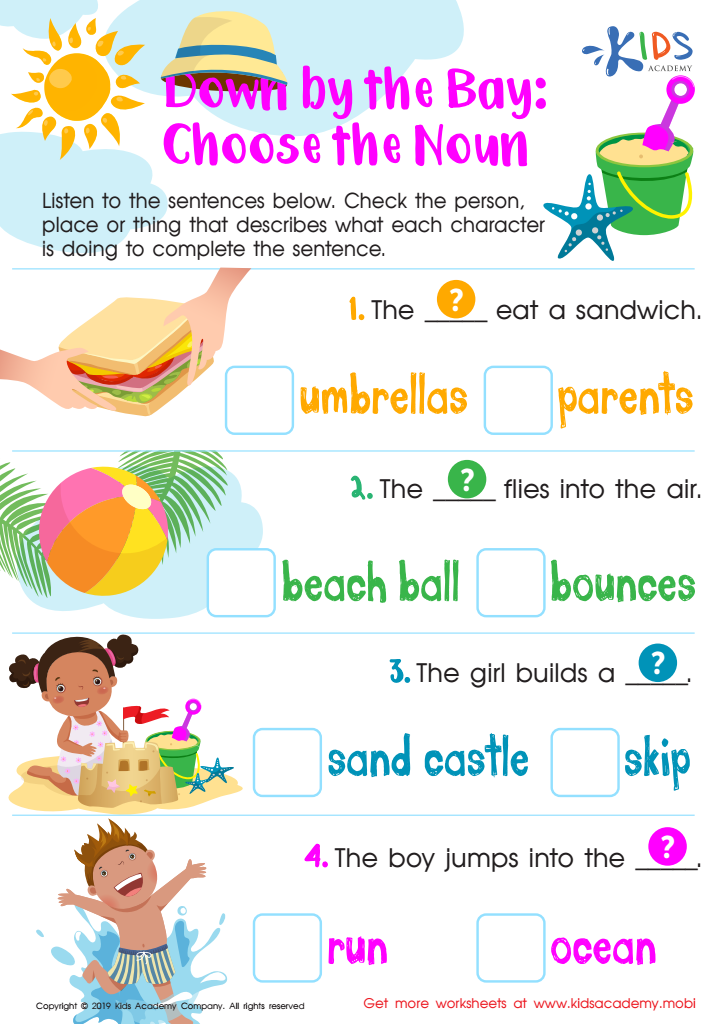
Down by the Bay: Choose the Noun Worksheet
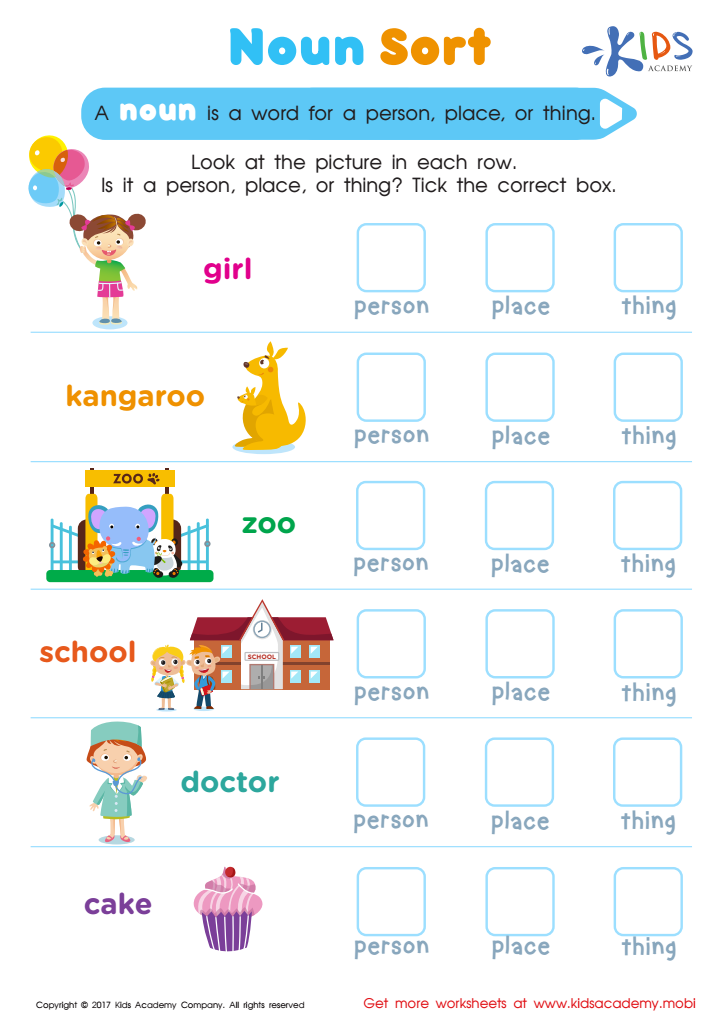
Noun Sort Printable







Noun identification is a foundational skill in language development that plays a vital role in early childhood education, particularly for children aged 3-6. For parents and teachers, understanding and facilitating noun identification is crucial for several reasons.
Firstly, nouns are the building blocks of language. They represent people, places, things, and ideas, helping children to effectively communicate and express themselves. By mastering nouns, children can expand their vocabulary, which enhances their speaking and listening skills.
Secondly, identifying nouns supports reading readiness. As kids learn to recognize nouns in spoken and written language, they become better equipped to understand sentence structure and meaning, paving the way for successful reading skills later on.
Additionally, emphasizing nouns in play and everyday interactions fosters cognitive development. Engaging with nouns during activities encourages children to categorize and connect concepts, enhancing critical thinking skills.
Moreover, strong noun identification skills can boost confidence in children's social interactions as they find it easier to initiate conversations and engage with peers. Ultimately, when parents and teachers prioritize noun identification during these formative years, they lay the groundwork for children's lifelong literacy and communication competencies.








