Phonological awareness Worksheets for Ages 3-6
9 filtered results
-
From - To
Discover our engaging Phonological Awareness Worksheets for children aged 3-6, designed to boost early literacy skills through fun and interactive activities. These worksheets help young learners develop essential skills like rhyming, syllable segmentation, and sound manipulation, all vital for reading success. With colorful visuals and age-appropriate exercises, your child will enjoy practicing phonemic awareness in a playful manner. Ideal for home or classroom use, our printable resources make learning exciting and effective. Whether for reinforcing classroom learning or supporting at-home education, these worksheets promote a strong foundation in phonological awareness, setting the stage for confident reading and writing skills. Visit us today!
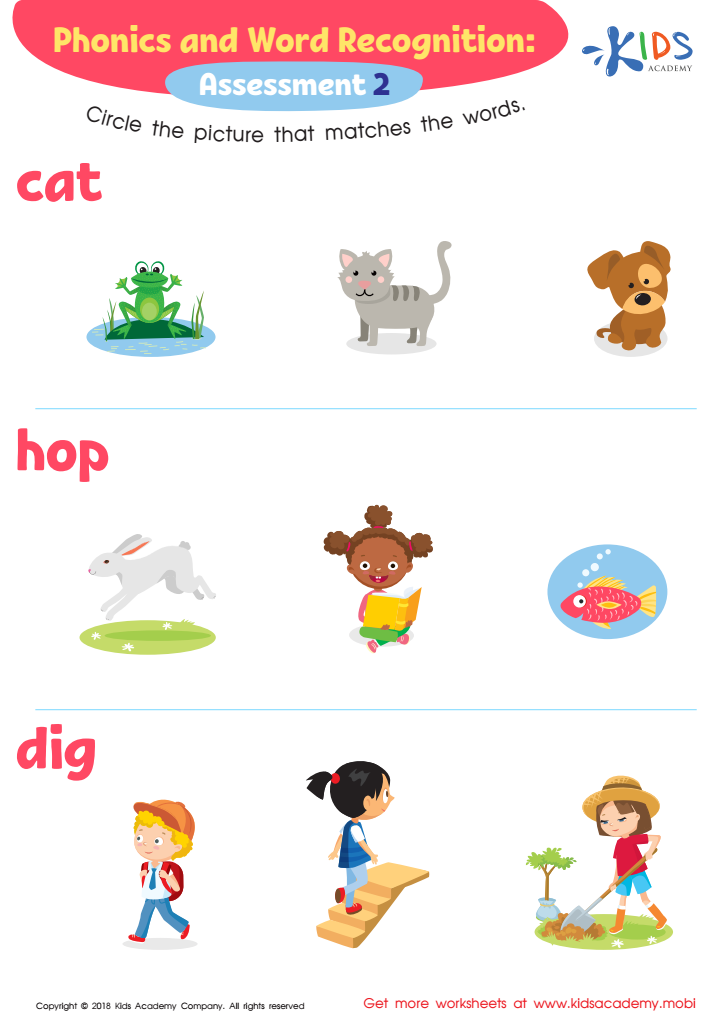
Phonological Awareness: Assessment 2 ELA Worksheet
 Assign to My Students
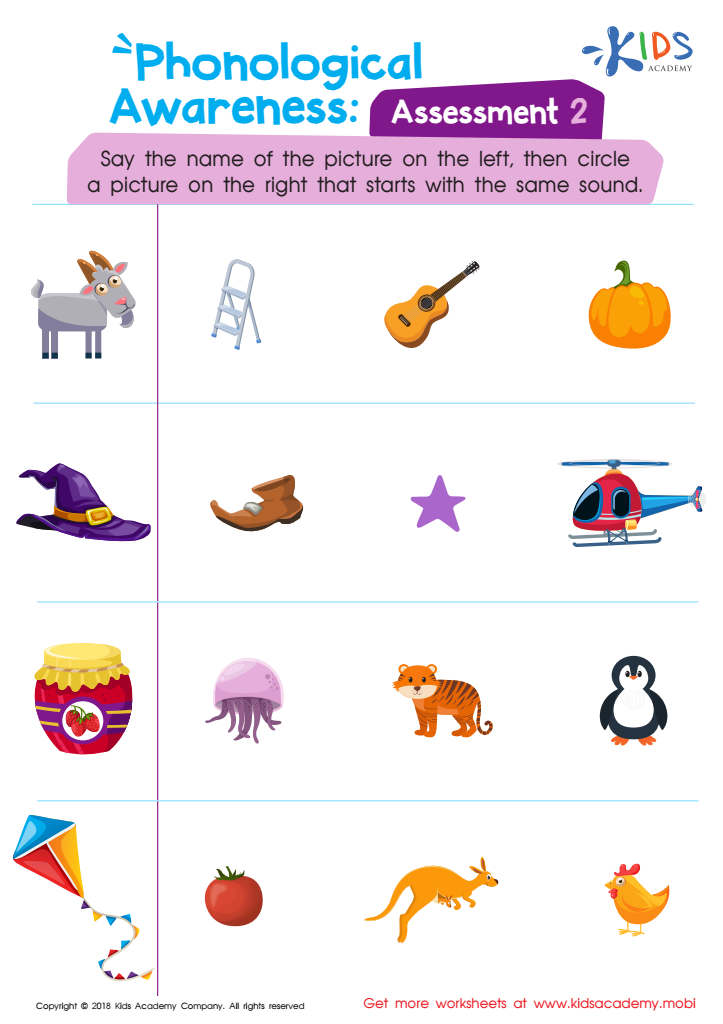
Phonological Awareness: Assessment 2 Worksheet
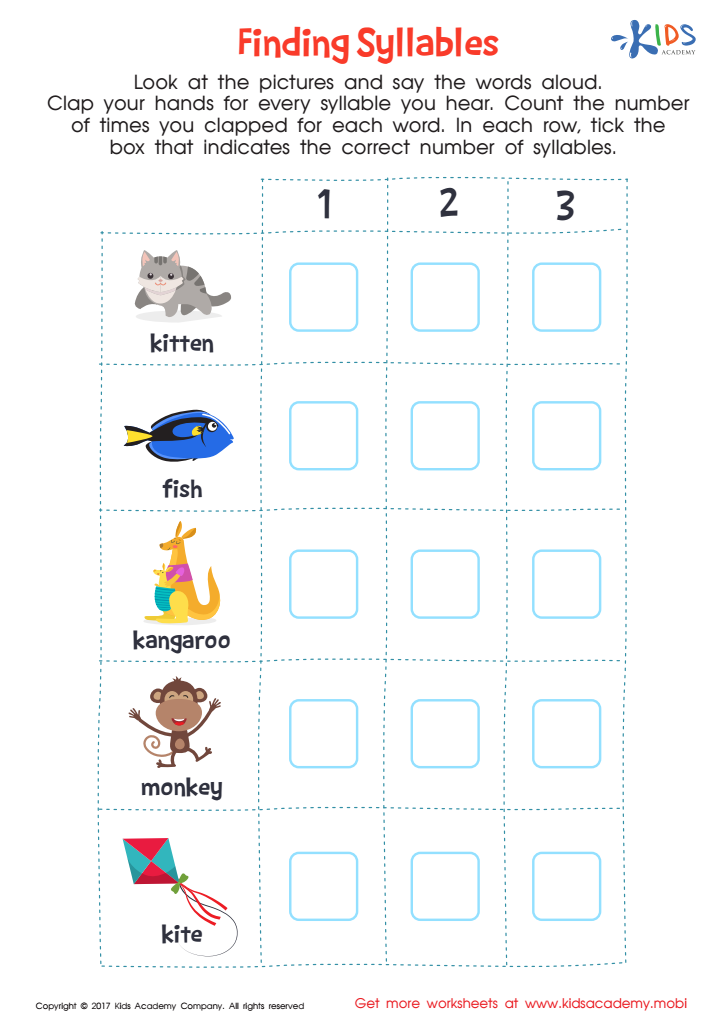
Finding Syllables Word Structure Worksheet
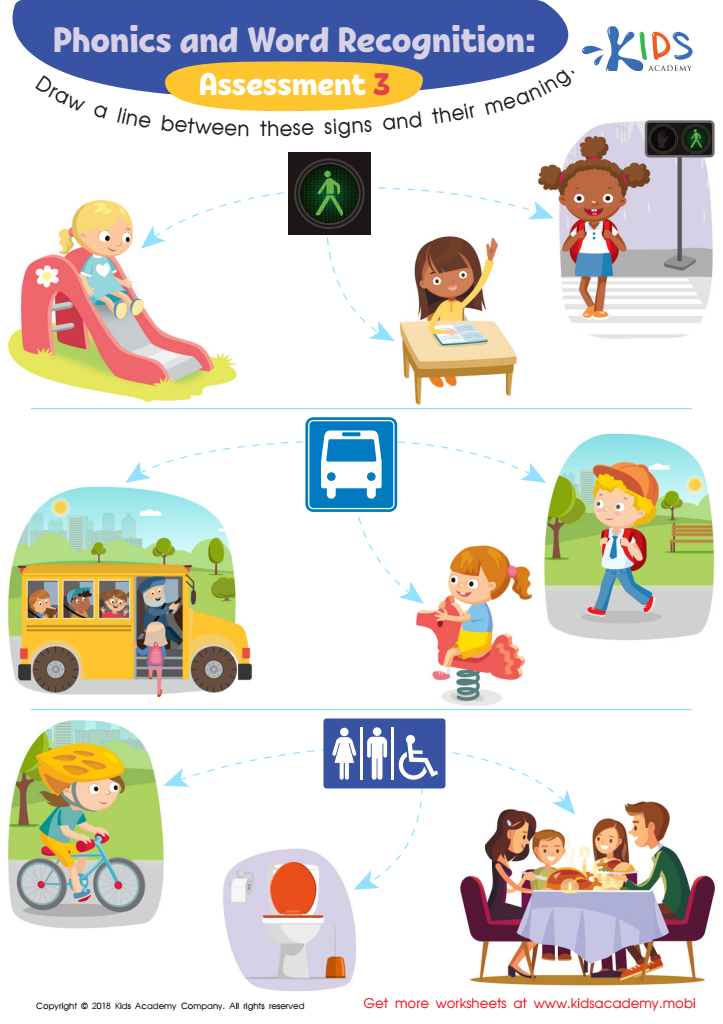
Phonological Awareness: Assessment 3 ELA Worksheet
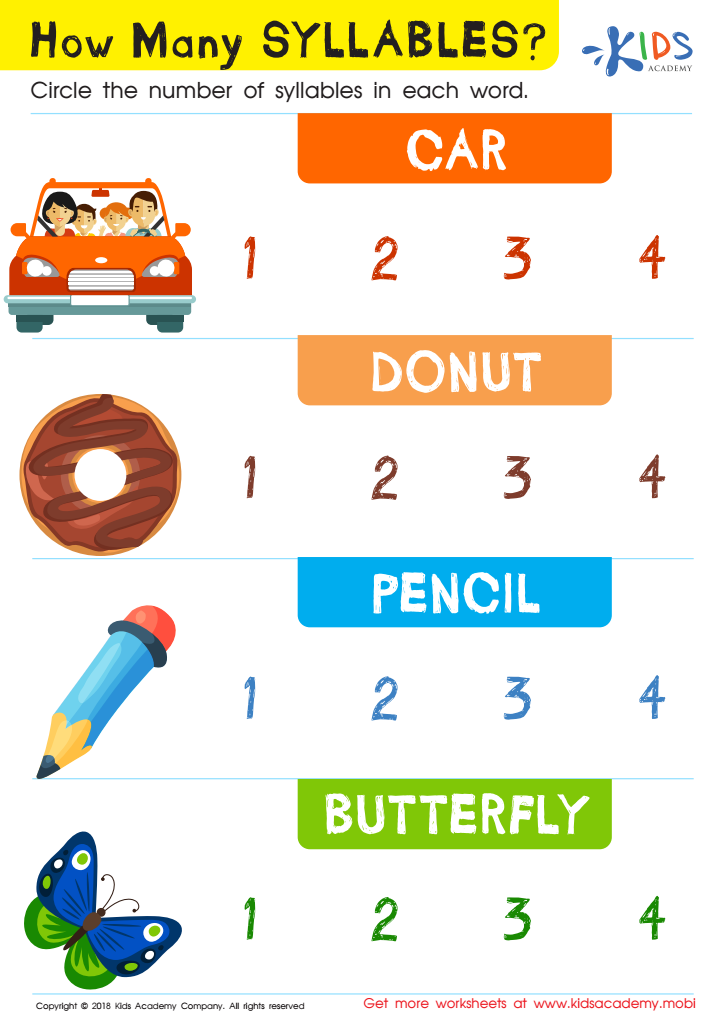
How Many Syllables? Worksheet
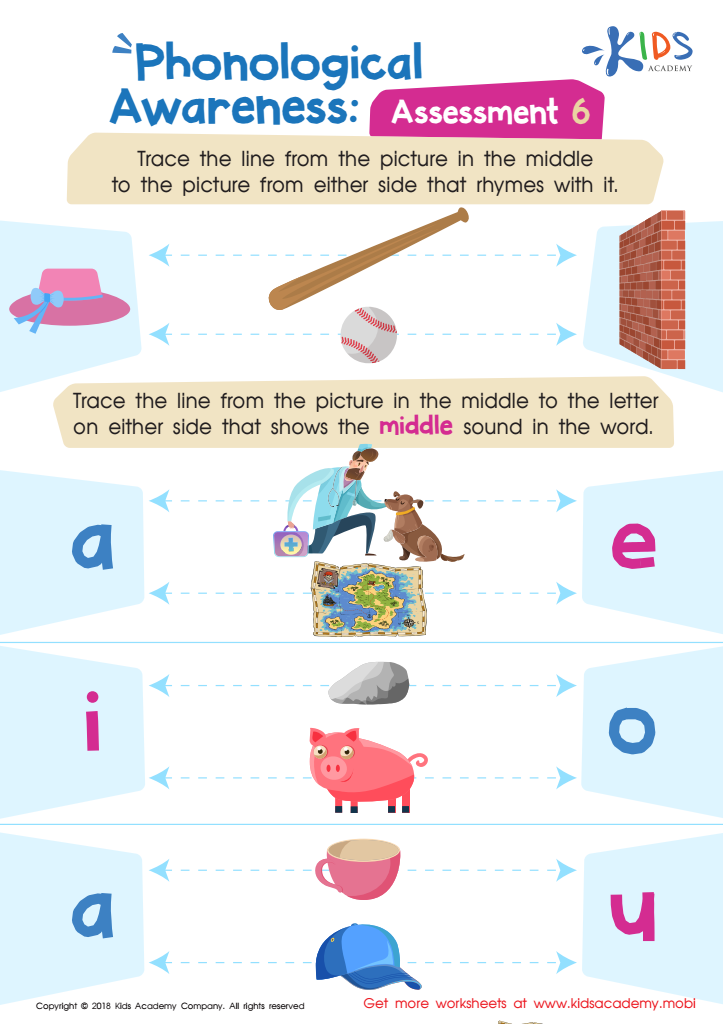
Phonological Awareness: Assessment 6 Worksheet
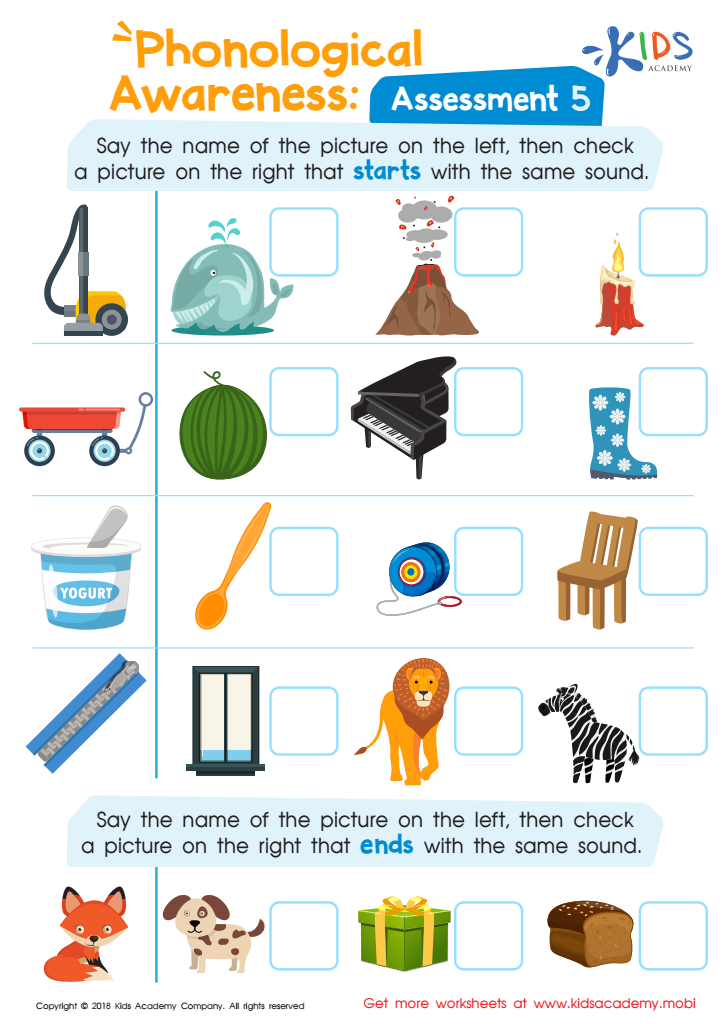
Phonological Awareness: Assessment 5 Worksheet
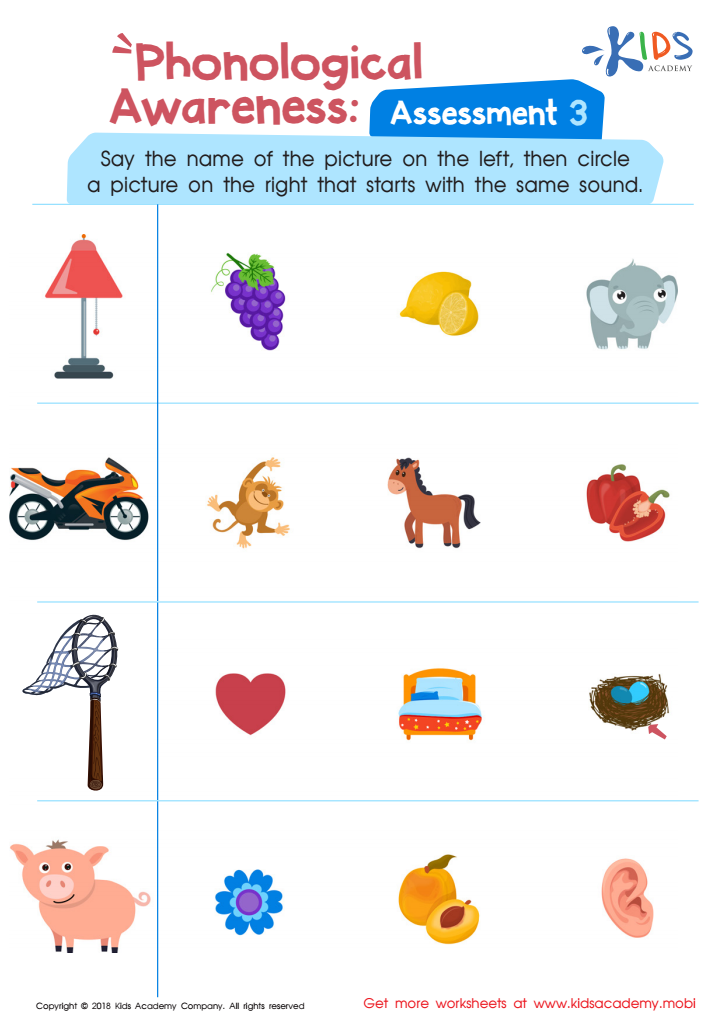
Phonological Awareness: Assessment 3 Worksheet
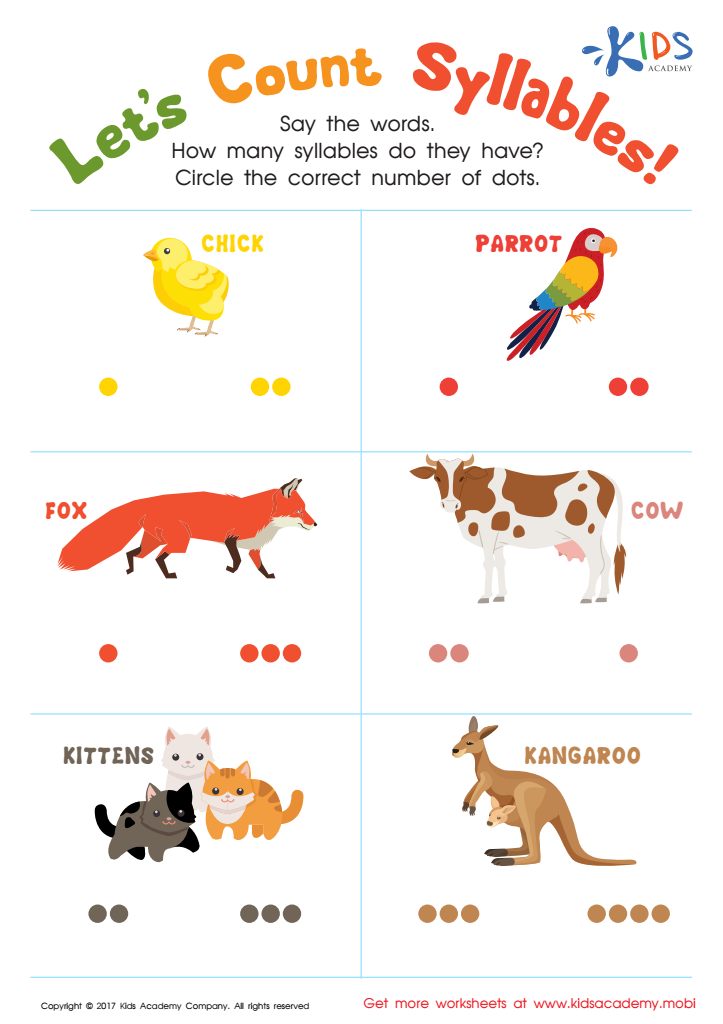
Lets Count Syllables Worksheet







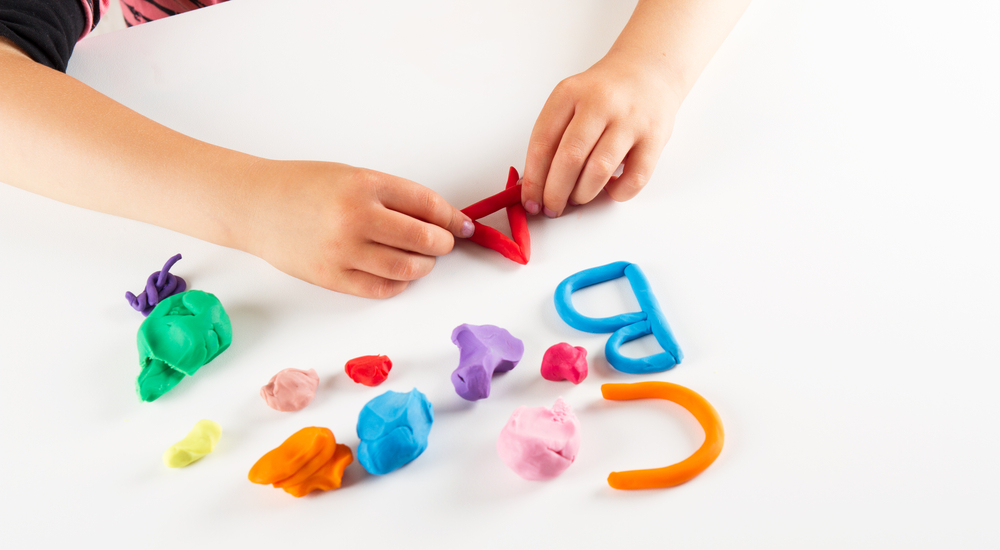
Phonological awareness is a critical skill for children aged 3-6, serving as a foundational component for later reading and language development. This set of skills involves the ability to recognize and manipulate sounds in spoken language, which includes identifying rhymes, syllables, and initial sounds in words. By nurturing phonological awareness, parents and teachers can significantly enhance a child's literacy trajectory.
Research shows that strong phonological skills correlate with successful reading abilities. Children who develop these skills early are better equipped to tackle decoding, spelling, and comprehension when they start formal education. Moreover, phonological awareness supports vocabulary development and overall language proficiency, providing children with the tools necessary for effective communication.
Engaging in playful activities—like singing songs, playing rhyming games, or reading aloud—can make phonological awareness both fun and meaningful. Furthermore, fostering these skills can help identify potential struggles early on, enabling timely interventions for children who may need additional support. By prioritizing phonological awareness, parents and teachers empower children to build confidence and enthusiasm for reading, ultimately laying the groundwork for lifelong learning and success. Therefore, promoting phonological skills in young children is a crucial step in their educational journey.








