Reading thermometers Worksheets for Ages 3-6
3 filtered results
-
From - To
Introduce your little ones to the fascinating world of temperatures with our engaging Reading Thermometers Worksheets designed for ages 3-6. These fun, easy-to-follow printable worksheets help children understand how to read both digital and analog thermometers. Featuring colorful graphics and relatable scenarios, each worksheet combines interactive activities with practical skills to make learning enjoyable. Perfect for preschoolers and kindergarteners, our worksheets foster early science literacy while enhancing critical thinking. Tailored to support both classroom learning and at-home practice, these resources make understanding temperatures a breeze for young learners. Boost your child's scientific curiosity today!
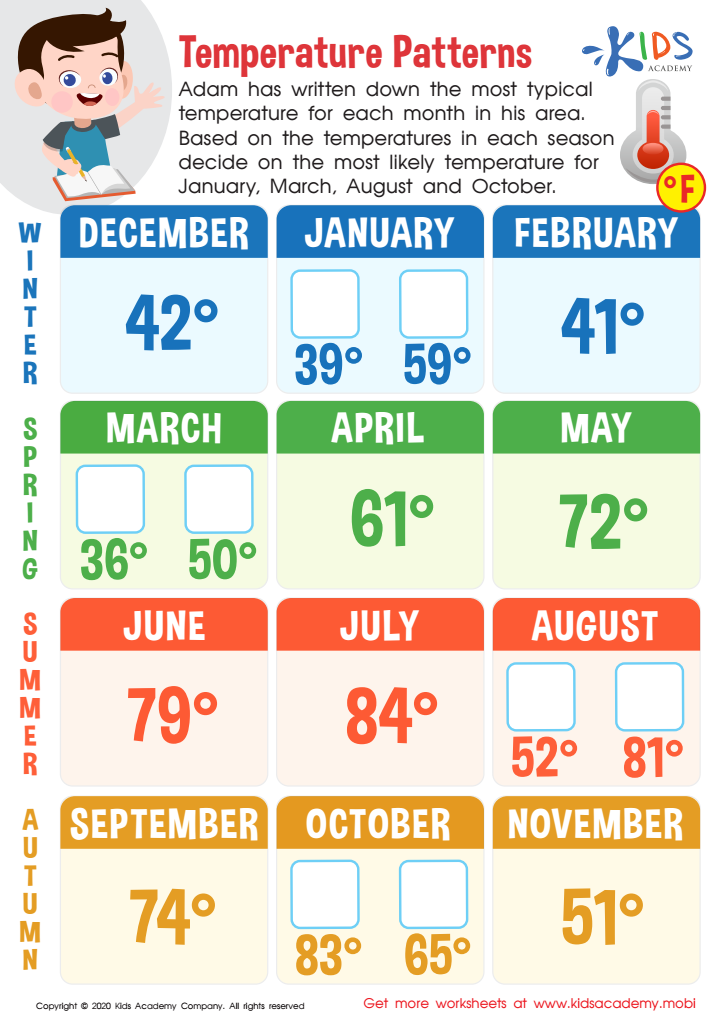
Temperature Patterns Worksheet
 Assign to My Students
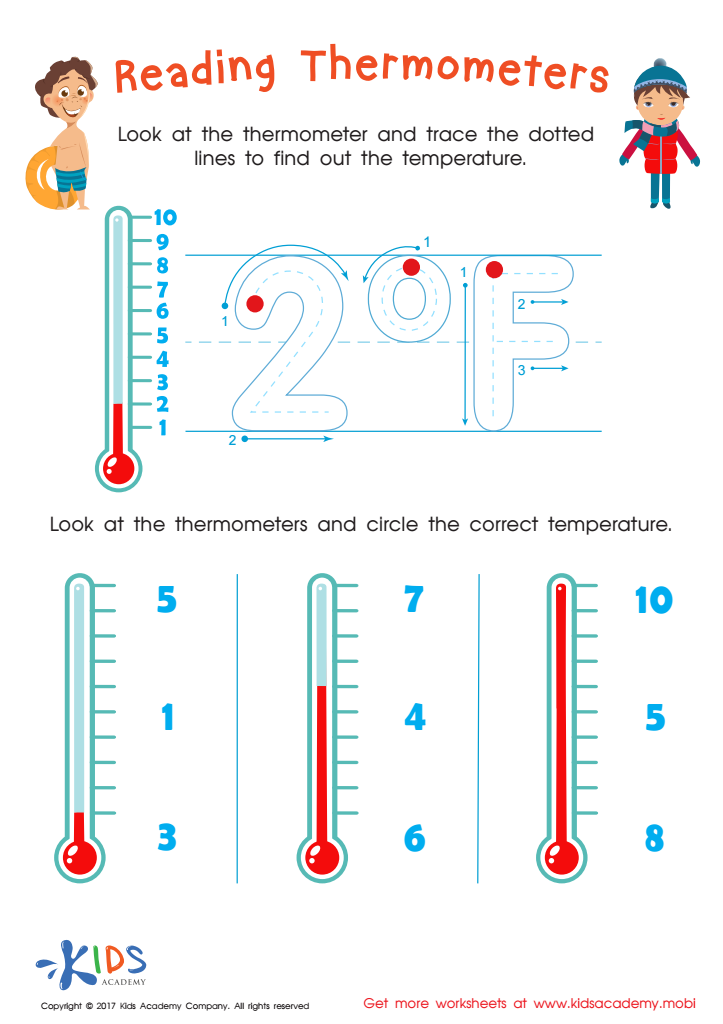
Reading Thermometers Printable


.jpg)
.jpg)



Understanding how to read thermometers is a fundamental skill that holds importance beyond the science classroom. For children ages 3-6, learning to read thermometers supports cognitive and practical development in several ways. Firstly, it introduces basic numeracy skills, allowing children to recognize numbers and understand their significance in real-world contexts, such as gauging weather or body temperature. This fosters a sense of independence and confidence when participating in everyday activities.
Secondly, comprehending temperature readings can directly impact a child's health and safety. For instance, recognizing a fever promptly enables immediate attention and care, potentially preventing serious illness. This skill becomes valuable in understanding appropriate dressing choices based on weather conditions, ensuring the child remains comfortable and healthy.
Moreover, engaging with thermometers promotes scientific thinking; children begin to grasp cause and effect relationships and develop observational skills. Such an early introduction to measurement concepts lays a strong foundation for more complex scientific understanding in later stages of education.
Parents and teachers can integrate these lessons into playful and interactive teaching moments, such as comparing temperature readings during different weather conditions or discussing the sensation of cold and warmth, thus making the learning both enjoyable and memorable.








