
Sentence comprehension Worksheets for Ages 3-6
4 filtered results
Difficulty Level
Grade
Age
-
From - To
Subject
Activity
Standards
Explore our collection of engaging sentence comprehension worksheets designed specifically for children ages 3-6! These interactive activities focus on enhancing early literacy skills by helping young learners understand and interpret sentences through fun exercises. Each worksheet is colorful, age-appropriate, and aims to improve vocabulary, listening skills, and critical thinking. With themes that capture children's interests and dynamic formats, these worksheets make learning enjoyable while fostering essential reading comprehension skills. Perfect for use at home or in the classroom, our resources provide the ideal foundation for lifelong learning. Start your child’s reading journey today with our user-friendly sentence comprehension worksheets!
Favorites
With answer key
Interactive
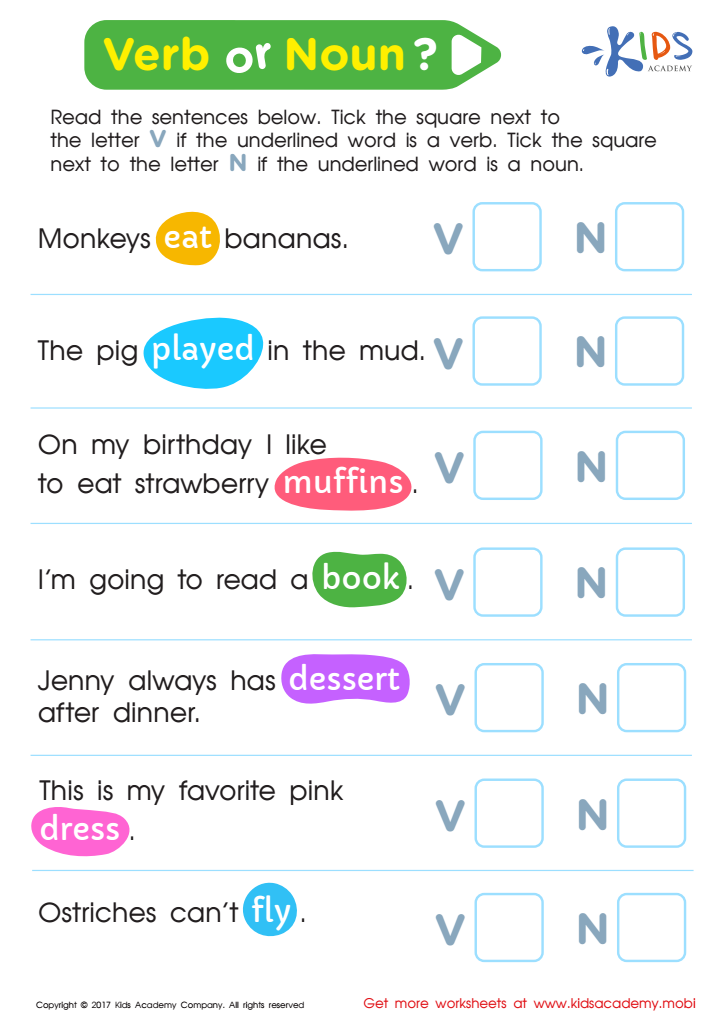
Verb or Noun Worksheet
This worksheet will help your child identify verbs and nouns quickly. With colorful highlights and simple sentences, they'll master parts of speech in no time! Get ahead of the game with this incredible worksheet.
 Assign to My Students
Verb or Noun Worksheet
Worksheet
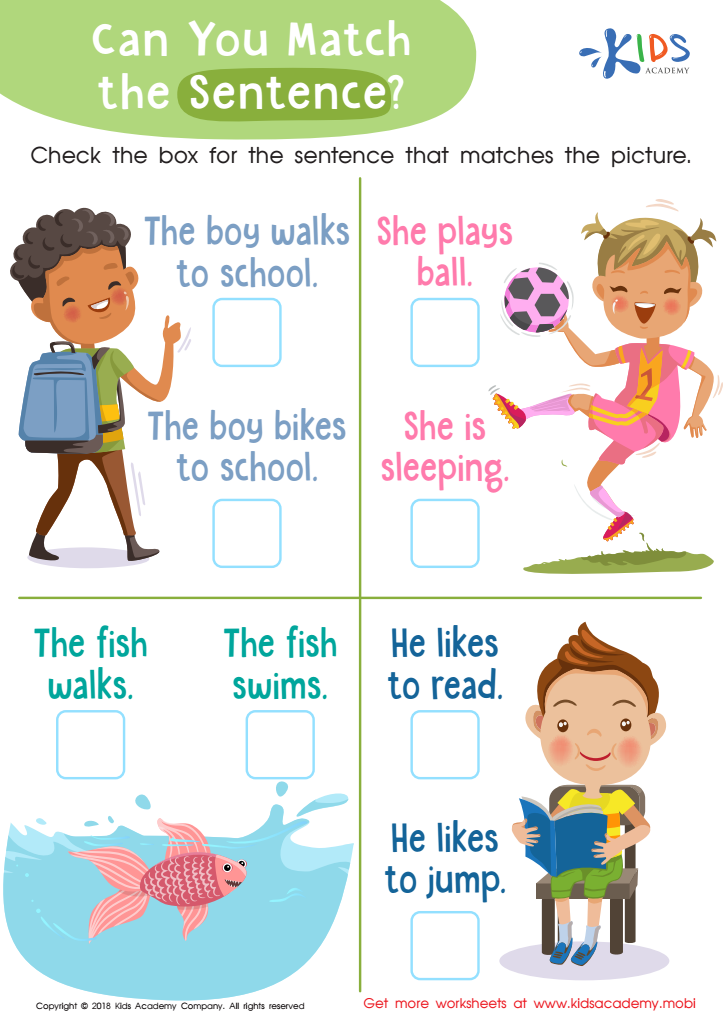
Can You Match the Sentence? Worksheet
Kids gain fluency with this worksheet which uses bright pictures. They select the sentence that matches the image and check the box. This repetition of words and phrases helps them improve their reading skills while having fun.
Can You Match the Sentence? Worksheet
Worksheet
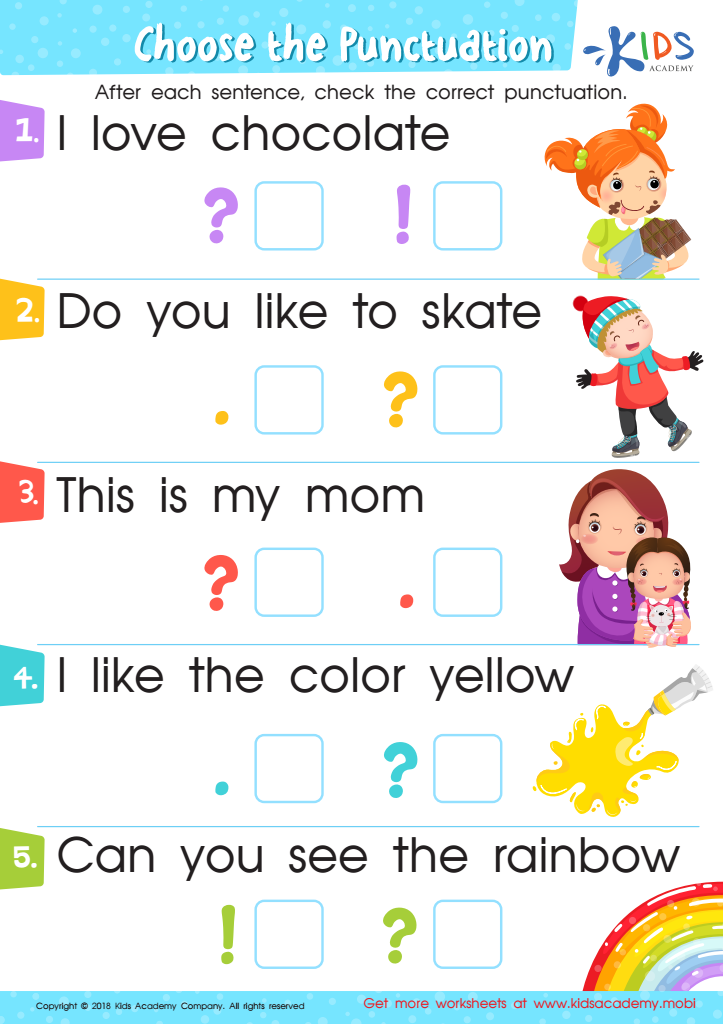
Choose the Punctuation: Assessment Worksheet
Does your child know punctuations? Found at the end of words, they signify the tone of the sentence. Ask them which punctuations they use daily. With your little one, look at a worksheet. Read each sentence aloud and ask them to identify the two punctuations given. Instruct them to choose the correct one. 80 words.
Choose the Punctuation: Assessment Worksheet
Worksheet
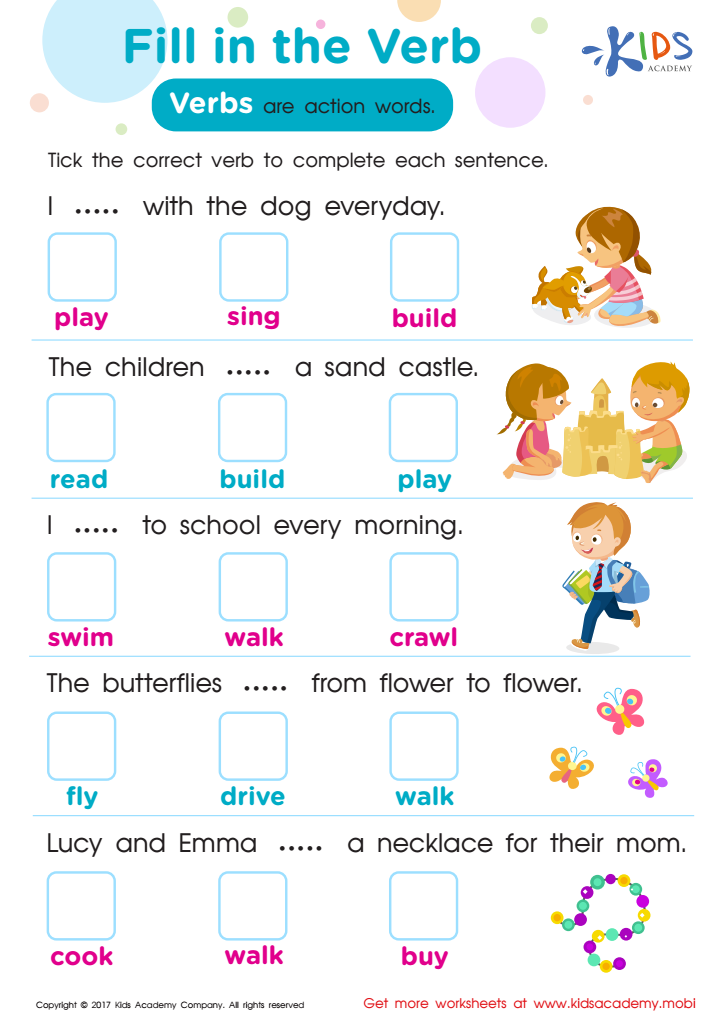
Fill in the Verb Printable
Help your child learn about verbs with this fun worksheet! Colorful images prompt them to fill in the verb, helping build their writing skills. It's a great way to make learning enjoyable.
Fill in the Verb Printable
Worksheet
Join Kids Academy for Free
Who is primarily going to use this learning content?





Sentence comprehension is a critical area of language development for children aged 3-6, and both parents and teachers should prioritize it for several reasons. During these formative years, children are not just learning to speak but also to understand and interpret language, which lays the foundation for effective communication skills. Good sentence comprehension helps children follow directions, engage in conversations, and express their thoughts clearly.
Furthermore, strong comprehension skills are closely linked to literacy development. As children grow, their ability to understand sentences enhances their reading skills, enabling them to decode written language and grasp meaning. Early support in this area can lead to better academic outcomes down the line.
Additionally, sentence comprehension fosters social-emotional skills. Children who can comprehend verbal communication can better interact with peers and adults, improving their social connections and emotional intelligence. This understanding also supports their ability to listen and respond appropriately in various situations.
For these reasons, both parents and teachers play a pivotal role in nurturing sentence comprehension through interactive reading, play, and engaging conversations. By prioritizing this skill, they contribute to a well-rounded foundation for their children's future learning and interpersonal success.








