
Sound-letter association Worksheets for Ages 3-6
5 filtered results
Difficulty Level
Grade
Age
-
From - To
Subject
Activity
Standards
Unlock the joy of early reading with our engaging Sound-letter Association Worksheets for Ages 3-6! Tailored for preschool and kindergarten children, these printable sheets enhance phonemic awareness and letter recognition. Each worksheet is crafted to help young learners connect letters with their corresponding sounds through fun, interactive activities. From matching games to tracing and coloring exercises, these resources make early literacy education both enjoyable and effective. Ideal for both classroom and at-home learning, our worksheets are perfect for setting the foundation of reading skills in an exciting, age-appropriate way. Explore our collection and watch your child’s language skills blossom!
Favorites
With answer key
Interactive
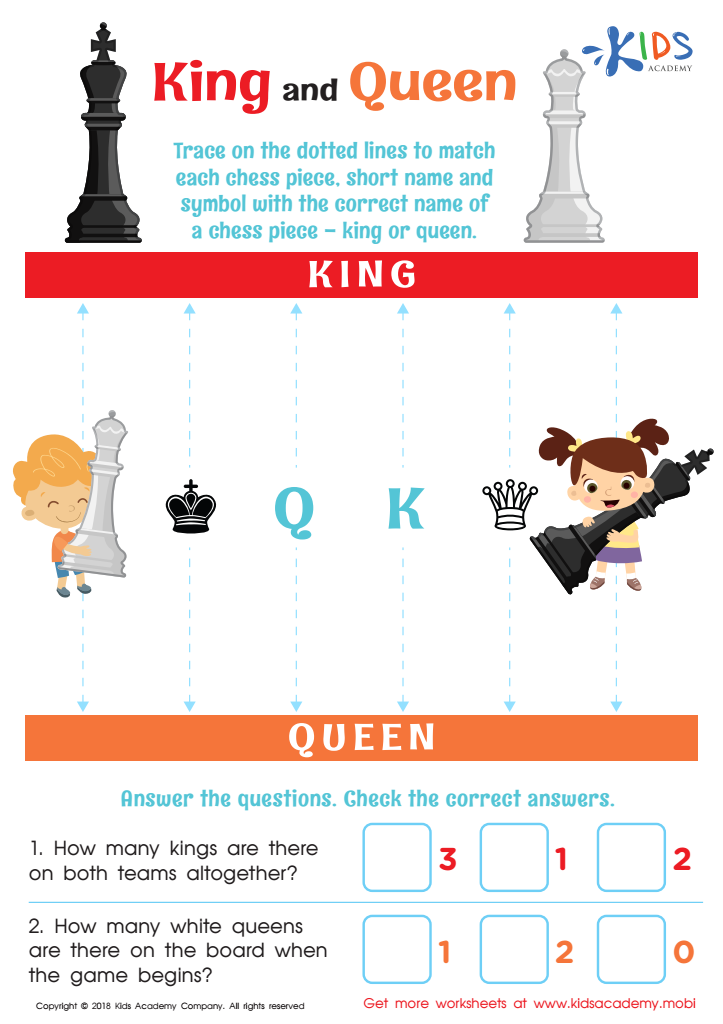
King and Queen Worksheet
Instruct your kids to trace the dotted lines to match each chess piece, short name, and symbol with either king or queen.Answer the questions at the bottom and check the answers. This exercise will help your children to differentiate between a king and queen chess piece and know their symbols.
King and Queen Worksheet
Worksheet
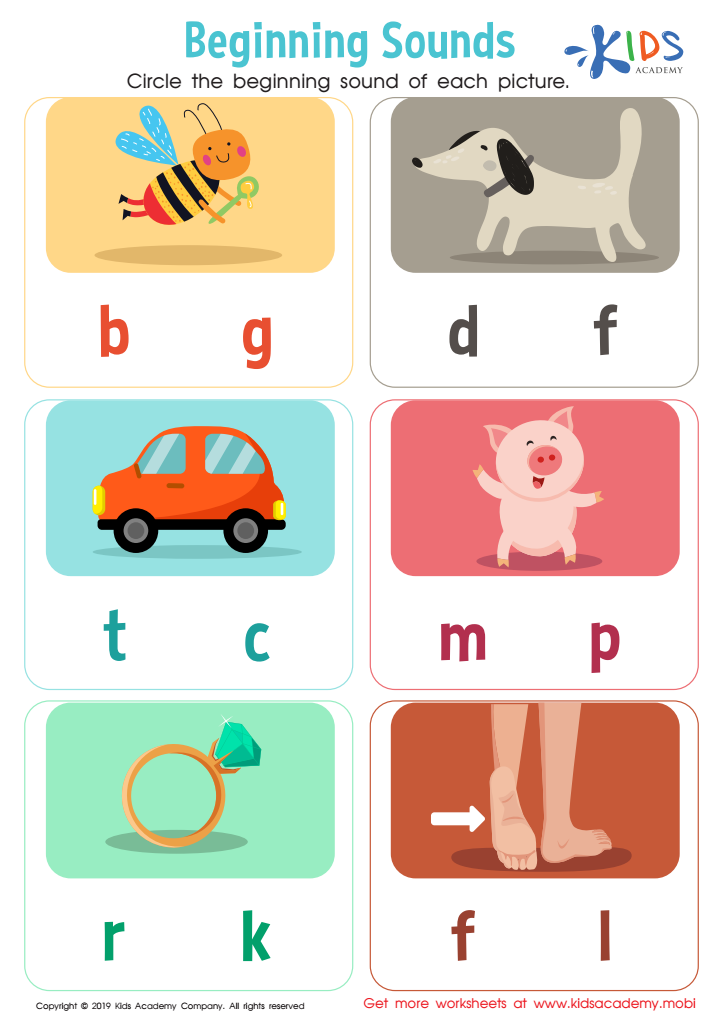
Beginning Sounds Worksheet
Test your child's knowledge with this colorful worksheet! Before beginning, have your kids recite the alphabet and sound them off. Give examples and ask them to do the same, then help them circle the beginning sound of each picture to complete the exercise.
Beginning Sounds Worksheet
Worksheet
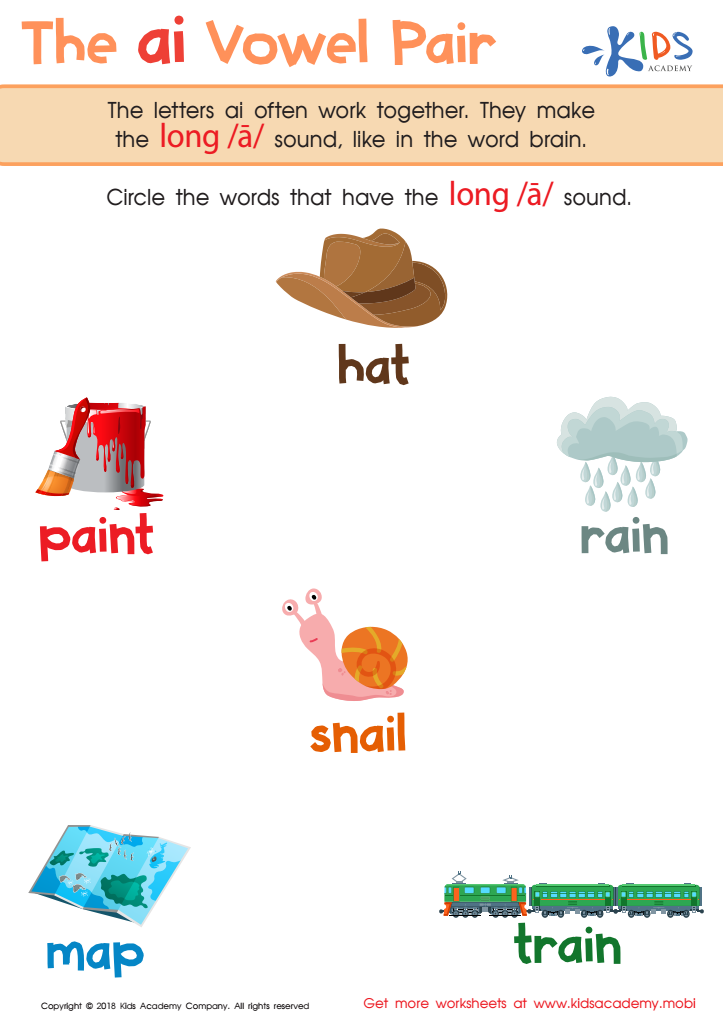
The AI Vowel Pair Worksheet
Vowel pairs make different sounds than individual letters. The 'ai' combination often forms the long /a/ sound, like in 'brain' and 'strain'. Get your kids to look at the pictures in the worksheet, identify each and say the name aloud. Help them circle the words with the long /a/ sound.
The AI Vowel Pair Worksheet
Worksheet
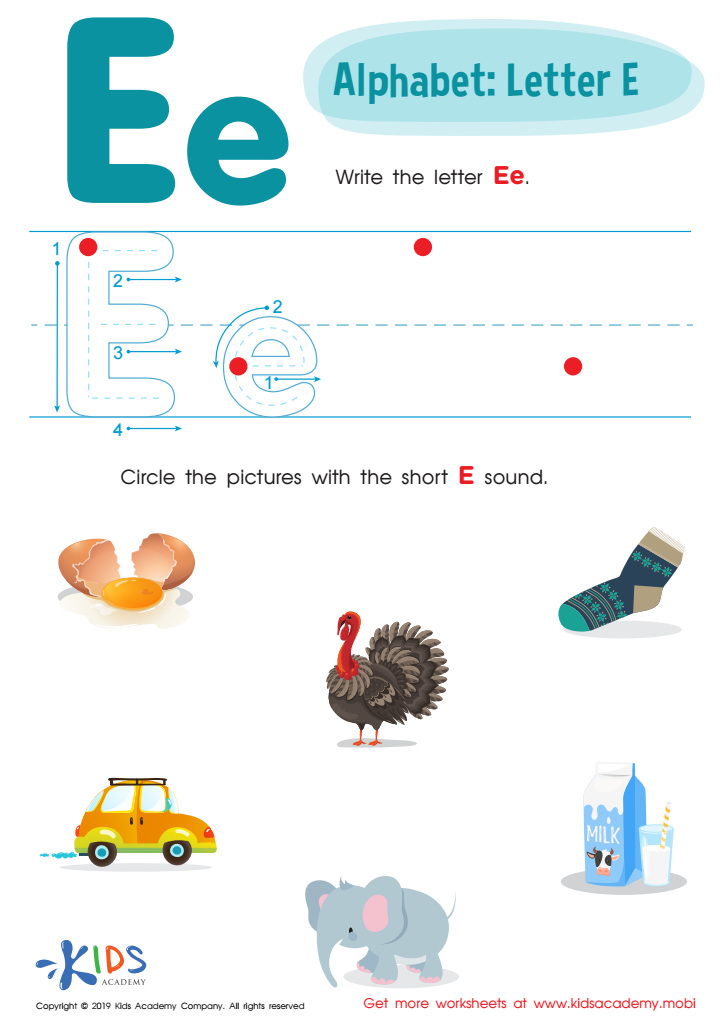
Letter E Tracing Worksheet
Students trace and write uppercase and lowercase letter E. They sound out "E" words, choosing those with short "E" sounds. Preschoolers identify the difference between the 'E' sounds in words like "egg" and "turkey." A tracing sheet helps them to understand.
Letter E Tracing Worksheet
Worksheet
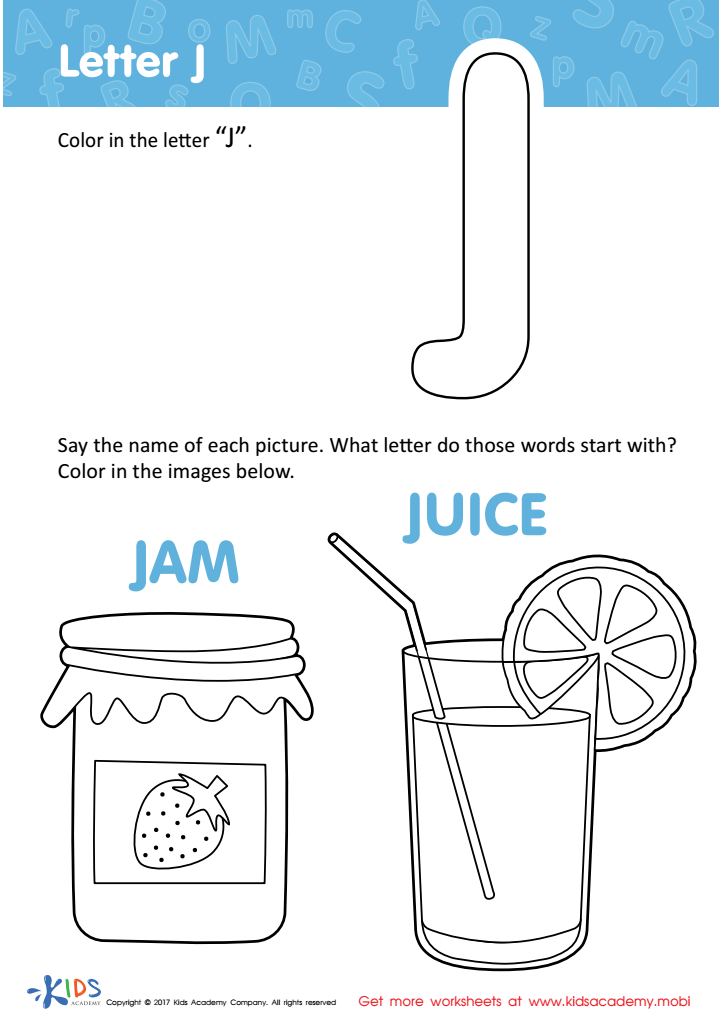
Letter J Coloring Sheet
Practice the letter 'J' with your little one with this fun coloring page! Pictures of jar, juice, jam and jelly make it an enjoyable experience for kids. Learning the letter and coloring is fun for even the youngest learners.
Download (PDF)
 Assign to My Students
Assign to My Students
Letter J Coloring Sheet
Worksheet
Join Kids Academy for Free
Who is primarily going to use this learning content?







Sound-letter association is a foundational element of early literacy that parents and teachers should prioritize for children ages 3-6. This essential skill involves understanding that letters represent sounds, a concept critical for reading and writing development. By nurturing sound-letter associations, children begin to decode words by linking letters to the corresponding sounds. This phonemic awareness not only aids them in recognizing words more easily but also enables them to spell and write effectively.
Early exposure to sound-letter associations can significantly enhance a child’s academic success. It lays the groundwork for more advanced reading skills, such as fluency and comprehension. Children who develop strong sound-letter associations are more likely to become confident readers who enjoy exploring books and learning new information.
From a cognitive perspective, mastering sound-letter associations engages various parts of the brain, fostering neural connections that support overall cognitive development. This skill also empowers children with effective communication tools, enabling them to express their thoughts and ideas more clearly.
Moreover, teaching sound-letter associations enhances fine motor skills through activities like writing letters. It also provides an opportunity for familial bonding when parents participate in reading and writing activities. Educators and parents should thus place a strong emphasis on nurturing this crucial literacy skill in young children.








