Help your little ones embark on a fun-filled journey into the world of chess with our "Understanding Chess Rules Worksheets for Ages 3-6"! Designed specifically for young learners, these engaging worksheets introduce basic chess concepts and rules in a playful manner. Kids will enjoy colorful illustrations and interactive activities that nurture critical thinking, problem-solving, and strategic skills. Ideal for parents and educators, these resources make learning chess simple and enjoyable. Watch as your children gain confidence on the board and develop a lifelong passion for this classic game. Start their chess journey today with our comprehensive and approachable worksheets!

Check out this FREE "Understanding chess rules" Trial Lesson for age 3-6!

Rook

Favorites
With answer key
Interactive
  • 3-6
  • Understanding chess rules
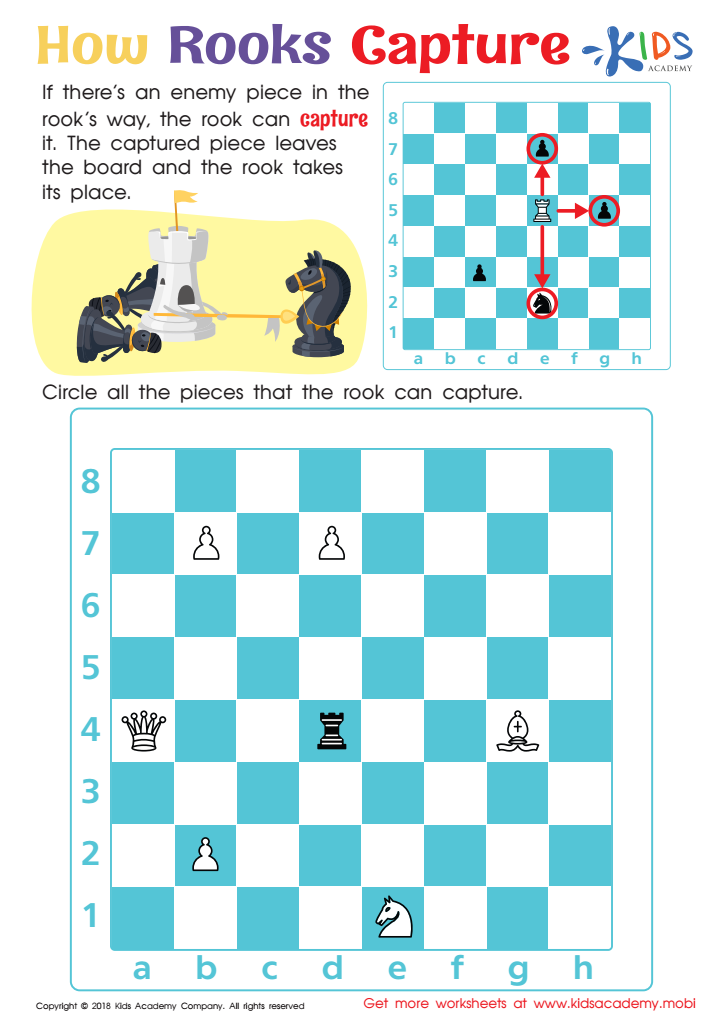
How Rooks Capture Worksheet

How Rooks Capture Worksheet

Chess is a game that requires skill, concentration and planning. Players must move their chess pieces strategically to capture pieces from their opponent. Do your kids know how to use the rook to capture pieces? Go through the worksheet with them and circle the pieces the rook can capture.
How Rooks Capture Worksheet
Worksheet
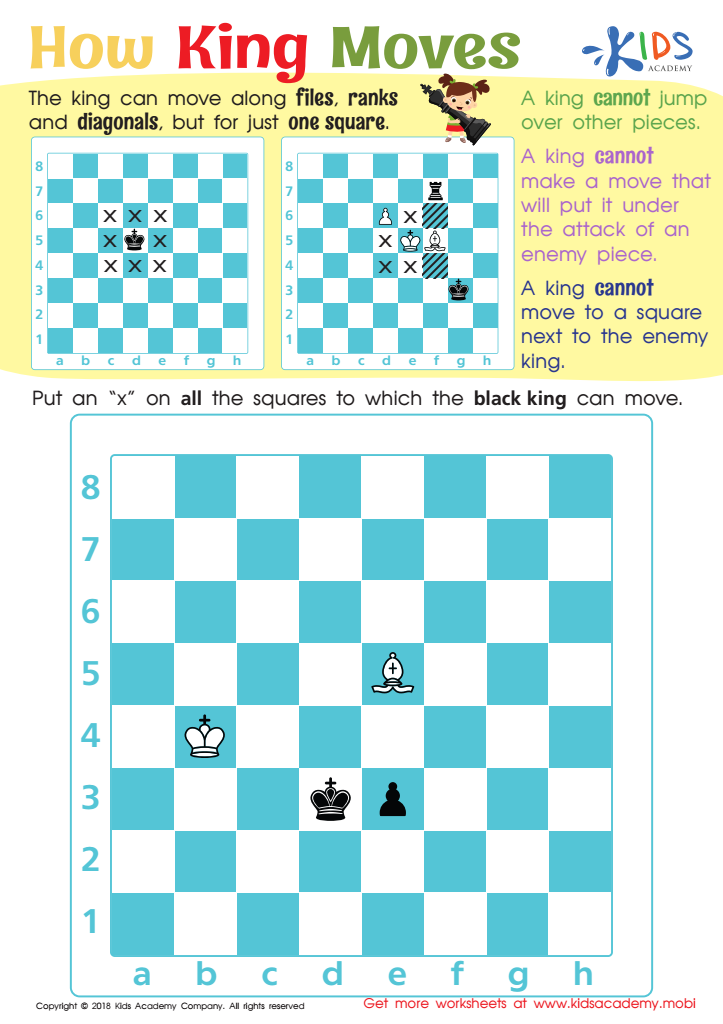
How King Moves Worksheet

How King Moves Worksheet

Teach your kids the fundamentals of chess with this worksheet! The goal is to checkmate the opponent's king, so it must be protected at all times. The king moves along files, ranks, and diagonals (except one square at a time), and cannot move to a square next to the enemy king. Your kids will soon master the art of checkmate!
How King Moves Worksheet
Worksheet
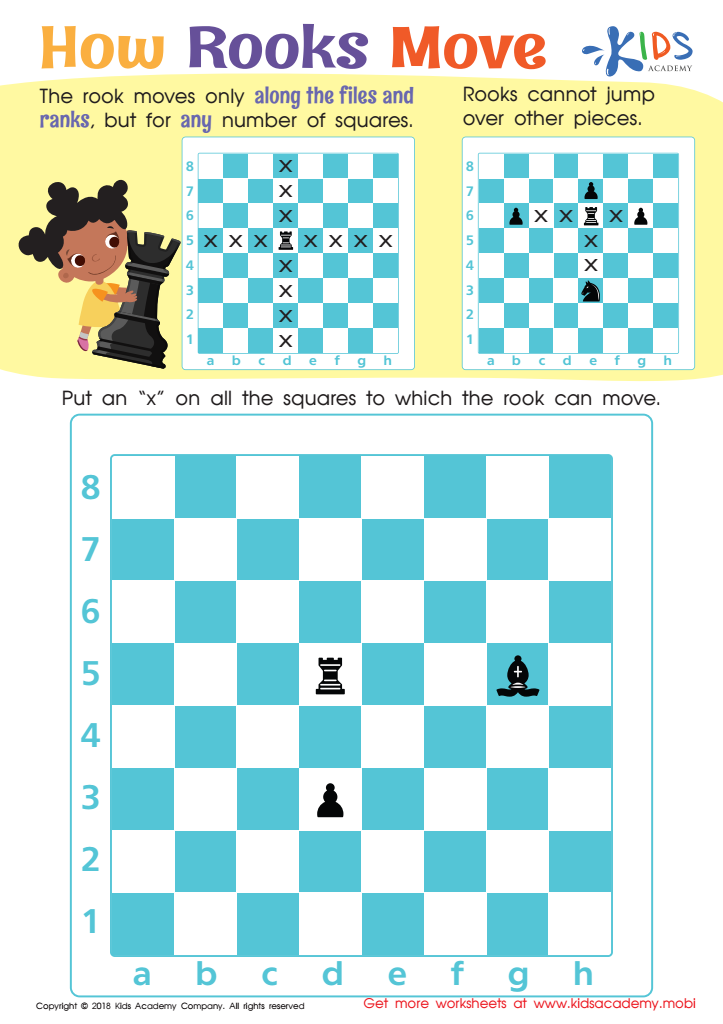
How Rooks Move Worksheet

How Rooks Move Worksheet

Help your kids master chess with this worksheet! Explain how rook pieces move along ranks and files, and have them mark the squares it can move to. Note that it can't jump over other pieces. With your guidance, they'll soon understand the game they love.
How Rooks Move Worksheet
Worksheet
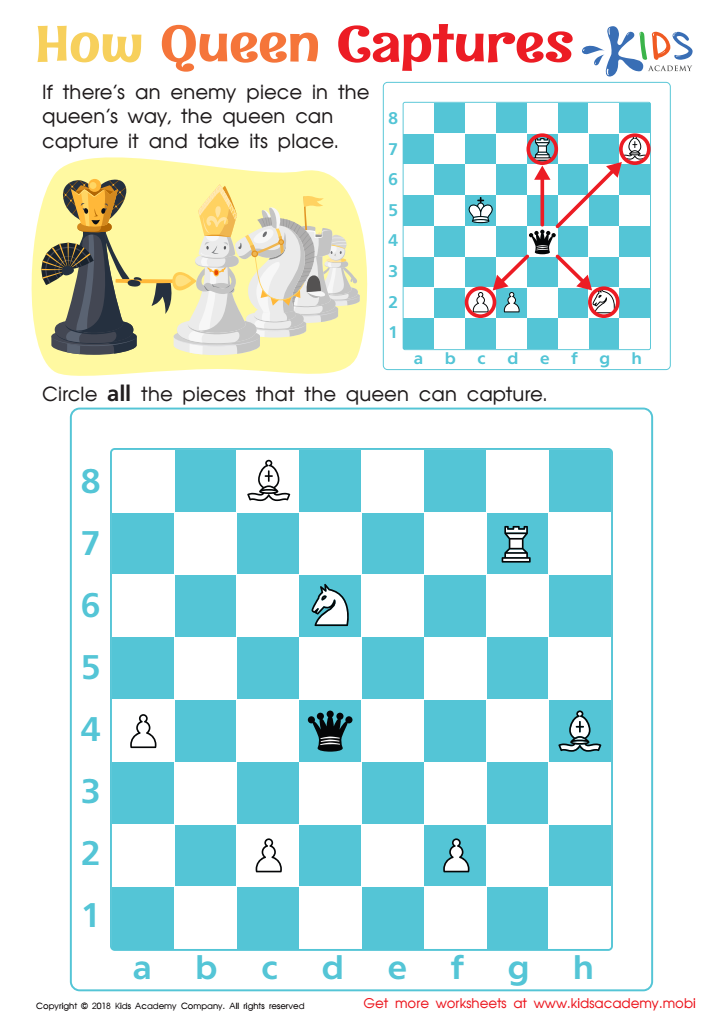
How Queen Captures Worksheet

How Queen Captures Worksheet

Chess is a great game for sharpening math skills, strategic thinking, and knowledge of how each piece moves. If your child is interested, introduce them with this worksheet. It demonstrates how the queen can capture opposing pieces, such as another queen, and take their place.
How Queen Captures Worksheet
Worksheet
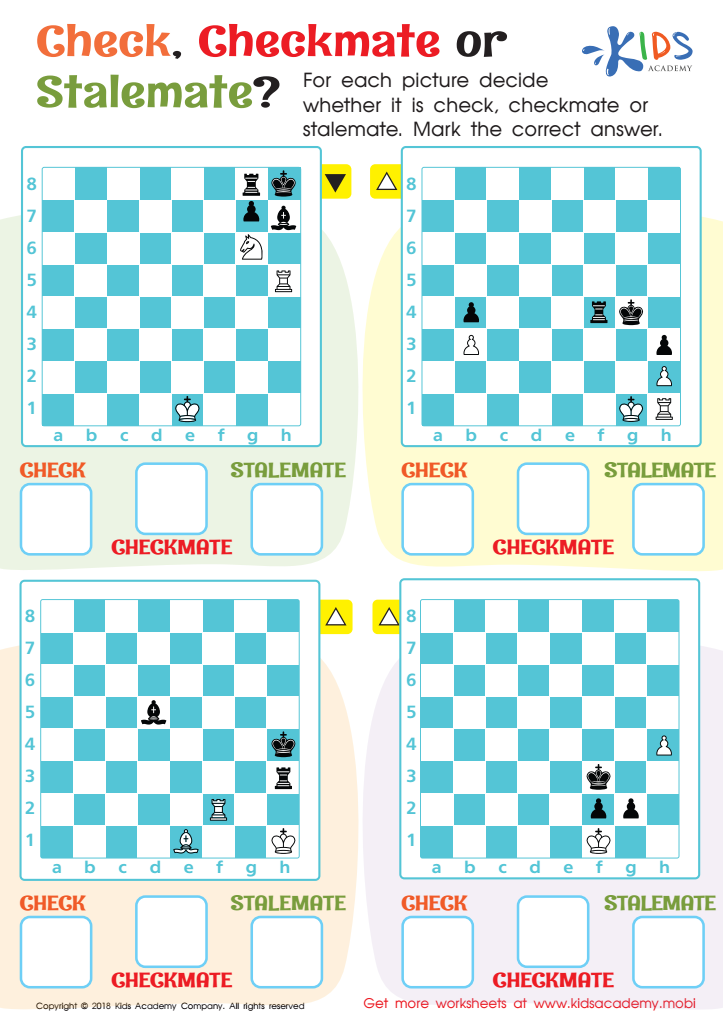
Check. Checkmate or Stalemate? Worksheet

Check. Checkmate or Stalemate? Worksheet

Chess teaches critical thinking, reasoning, and logic skills in a fun way. With this downloadable worksheet, kids can look at chess boards and decide if the sides are in check, checkmate, or stalemate. Win or lose, a stalemate can be a great outcome, and kids can learn and build skills with each move!
Check. Checkmate or Stalemate? Worksheet
Worksheet
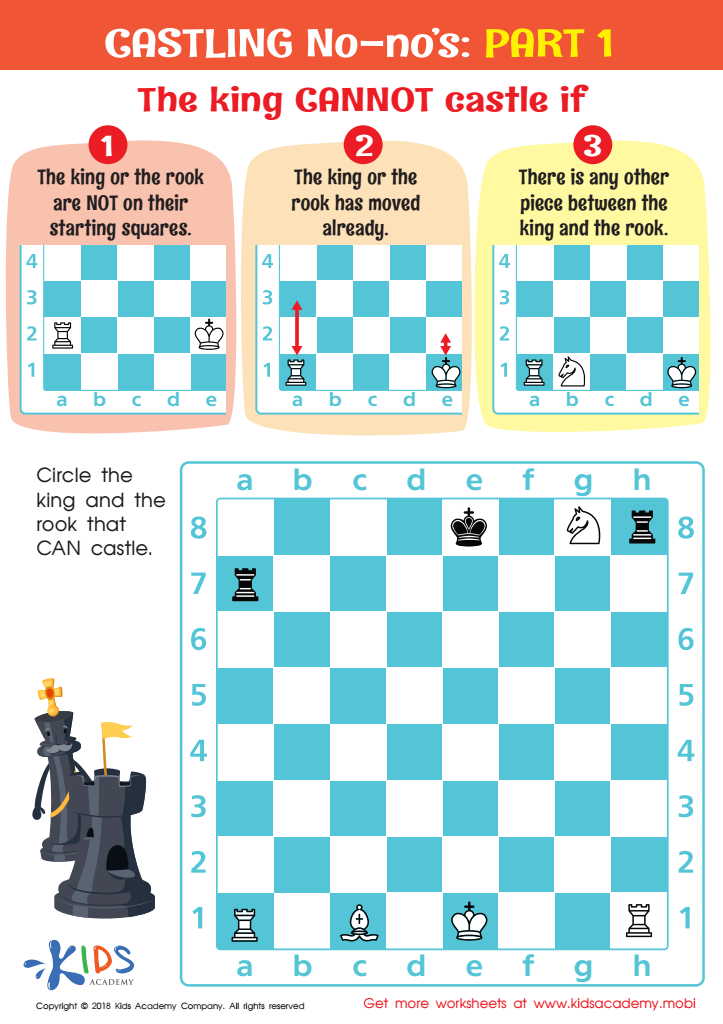
Castling No–no's: Part 1 Worksheet

Castling No–no's: Part 1 Worksheet

Help your child learn how to play chess by using this worksheet. Ask them to circle the king and rook that can castle in the picture. Explain that a king cannot castle if the king or rook has moved, or if there is any other piece between them. Knowing these rules will make playing a lot easier!
Castling No–no's: Part 1 Worksheet
Worksheet
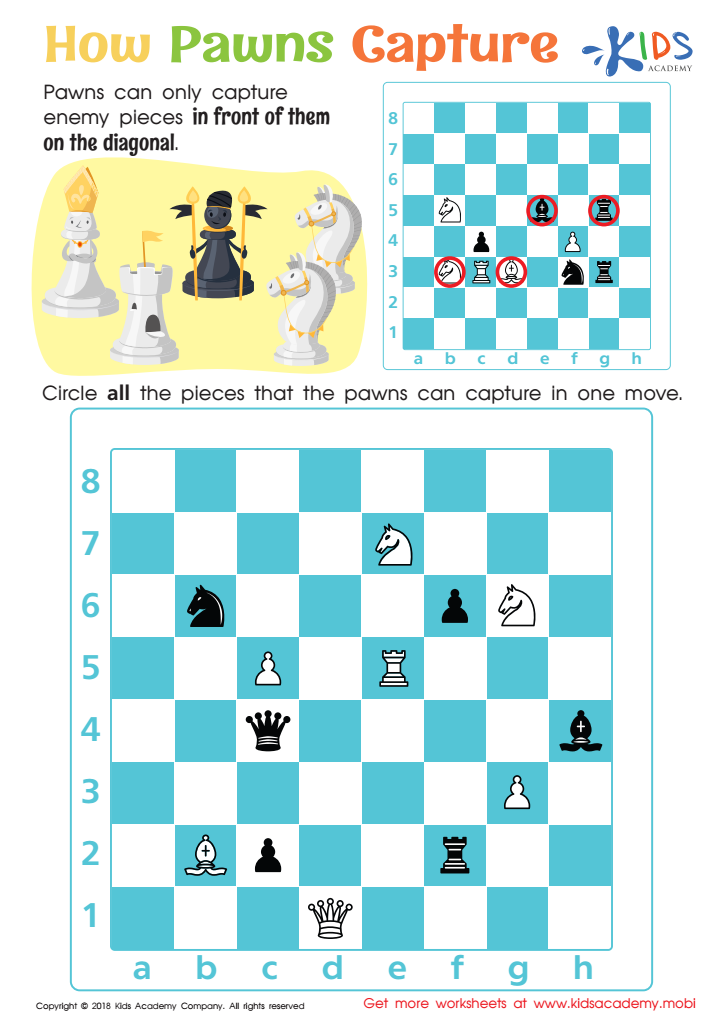
How Pawns Capture Worksheet


How Pawns Capture Worksheet

Ask your child to circle all the places a pawn can capture in one move on the diagonal. Pawns are limited in the moves they can make, but can still capture enemy pieces. This worksheet will help brush up on their knowledge of the rules of chess.
How Pawns Capture Worksheet
Worksheet


Understanding chess rules for children aged 3-6 is essential for several reasons. First, chess introduces young minds to critical thinking and problem-solving skills, laying a foundation for cognitive development. At this age, children are naturally curious, and learning chess rules nurtures their ability to think ahead and plan, skills that are transferable to everyday situations and other academic subjects.

Moreover, chess promotes social interaction. When children learn to play together, they practice taking turns, following rules, and engaging in constructive competition. These interactions enhance their communication skills and emotional intelligence, teaching them how to win graciously and handle losses.

Furthermore, early exposure to chess can enhance coordination, memory, and concentration. The visually stimulating board and pieces capture attention, fostering focus and discipline.

For parents and teachers, understanding these rules means they can guide children effectively, creating a positive learning environment around the game. This not only helps in nurturing a mindset for lifelong learning but also instills a sense of achievement and confidence as children master each rule and strategy.

In essence, chess offers invaluable developmental benefits, making it a worthwhile investment for both parents and educators.