Understanding currency Worksheets for Ages 3-6
5 filtered results
-
From - To
Introduce your little learners to the world of money with our specially designed “Understanding Currency Worksheets for Ages 3-6.” Our engaging and colorful worksheets simplify complex concepts, making learning fun and interactive. Your child will grasp the basics of recognizing coins, understanding valued amounts, and developing essential early math skills. Tailored activities encourage kids to compare, count, and even role-play with money, ensuring they build a solid foundation for financial literacy. Prepare your preschoolers and kindergarteners for a successful future with our expertly crafted worksheets, available now for print and practice.اعد সুন্দর নর্জাতিক উৎসব Start your child’s fun financial journey today!
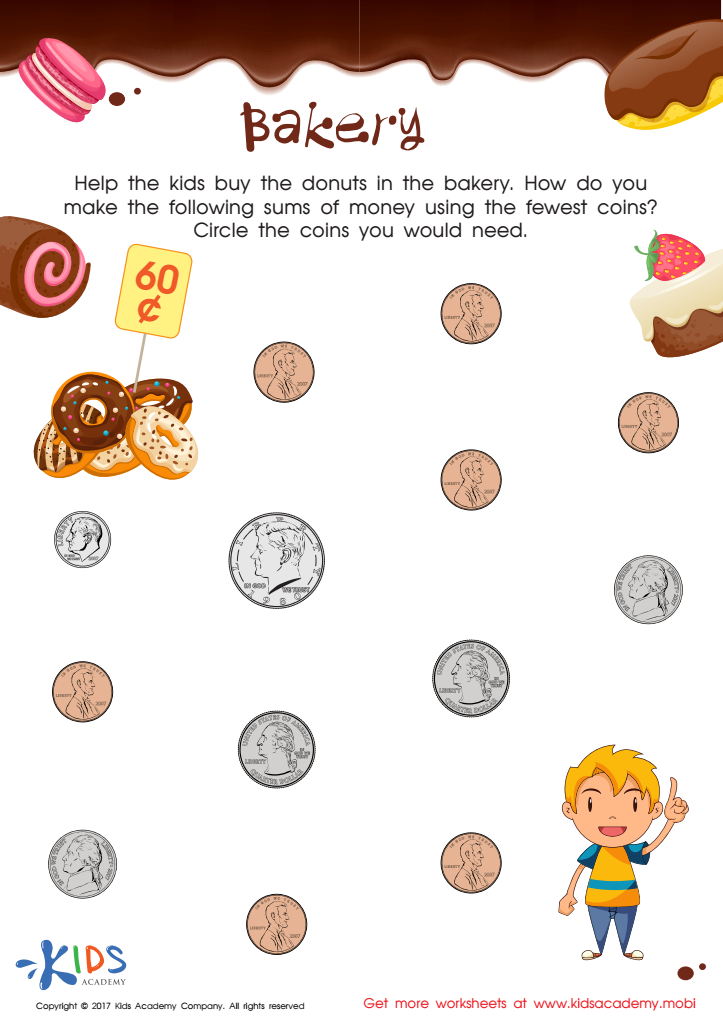
Counting Coins Worksheet
 Assign to My Students
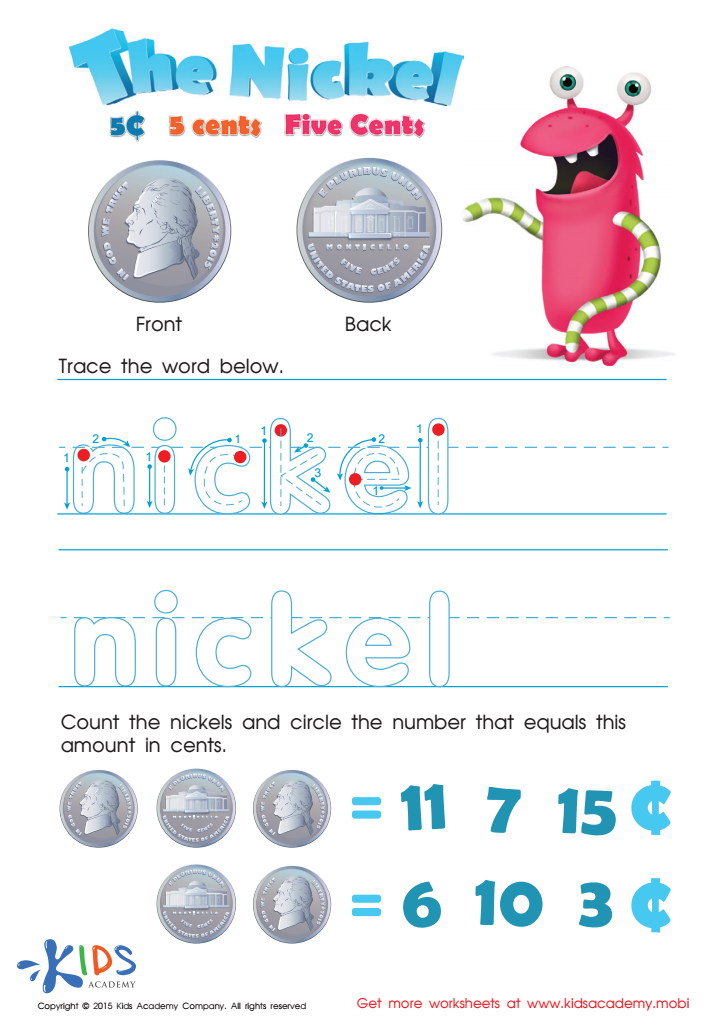
Five Cents or the Nickel Money Worksheet
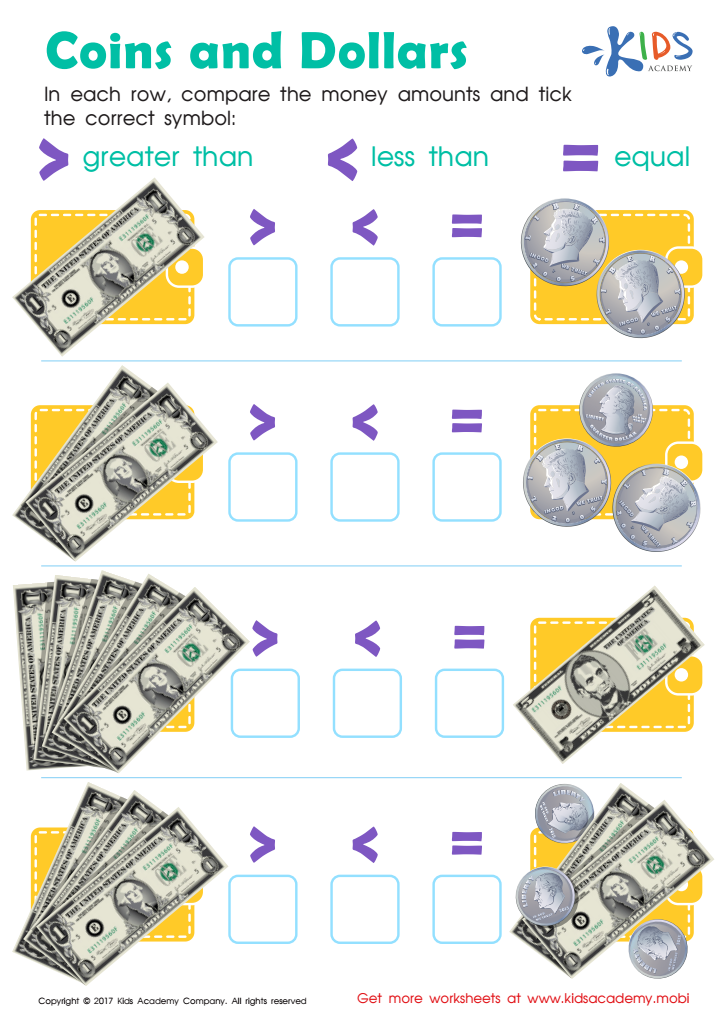
Money: Coins Dollars Printable
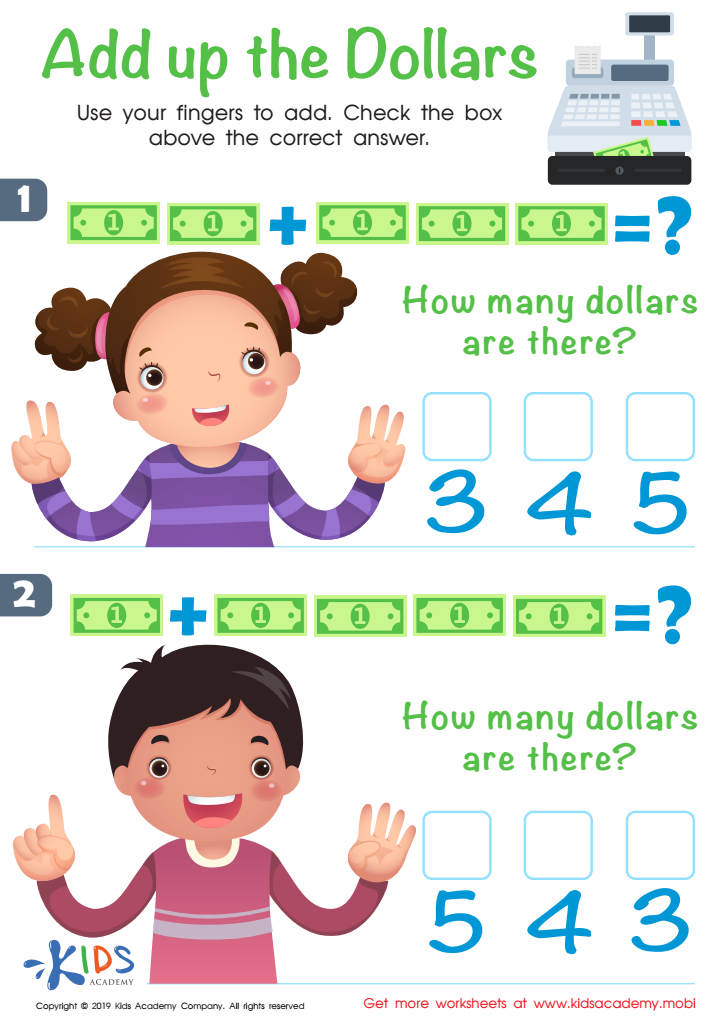
Add up the Dollars Worksheet








Understanding currency at a young age, especially for children aged 3-6, is an essential foundation for their financial literacy and overall development. At this formative stage, children's brains are exceptionally receptive to learning new concepts, including the basics of money.
Introducing currency concepts early instills an appreciation for the value of money, fostering financial responsibility. Simple activities like identifying coins and bills, playing pretend store games, and basic counting help children understand that money is a medium of exchange for goods and services. This early familiarity piques curiosity, laying the groundwork for more complex financial skills in later years.
Moreover, understanding currency integrates seamlessly with other educational goals. It enhances mathematical skills as children count, add, and subtract money amounts. It also improves cognitive and decision-making abilities as they learn to make choices about spending and saving, teaching the importance of budgeting and financial planning from a young age.
Parents and teachers play a paramount role in guiding children through these lessons in an engaging, age-appropriate manner. Doing so empowers children, setting them up for a future where they can navigate everyday transactions confidently and avoid financial pitfalls, fostering responsible, informed citizens. Thus, making an effort to teach currency to young children is an investment in their long-term financial well-being and overall literacy.








