Understanding number sequence Worksheets for Ages 3-6
3 filtered results
-
From - To
Explore our engaging "Understanding Number Sequence Worksheets" designed for children aged 3-6! These interactive resources help young learners grasp essential counting and sequencing skills through fun and colorful activities. Each worksheet encourages kids to identify, complete, and create number patterns, fostering early math comprehension in an enjoyable way. Perfect for educators and parents, our worksheets promote fine motor skills, critical thinking, and number recognition. Tailored to support developmental growth, they're ideal for preschool and kindergarten settings. Dive into the world of numbers with our thoughtfully crafted worksheets and watch your child’s confidence and mathematical skills flourish!
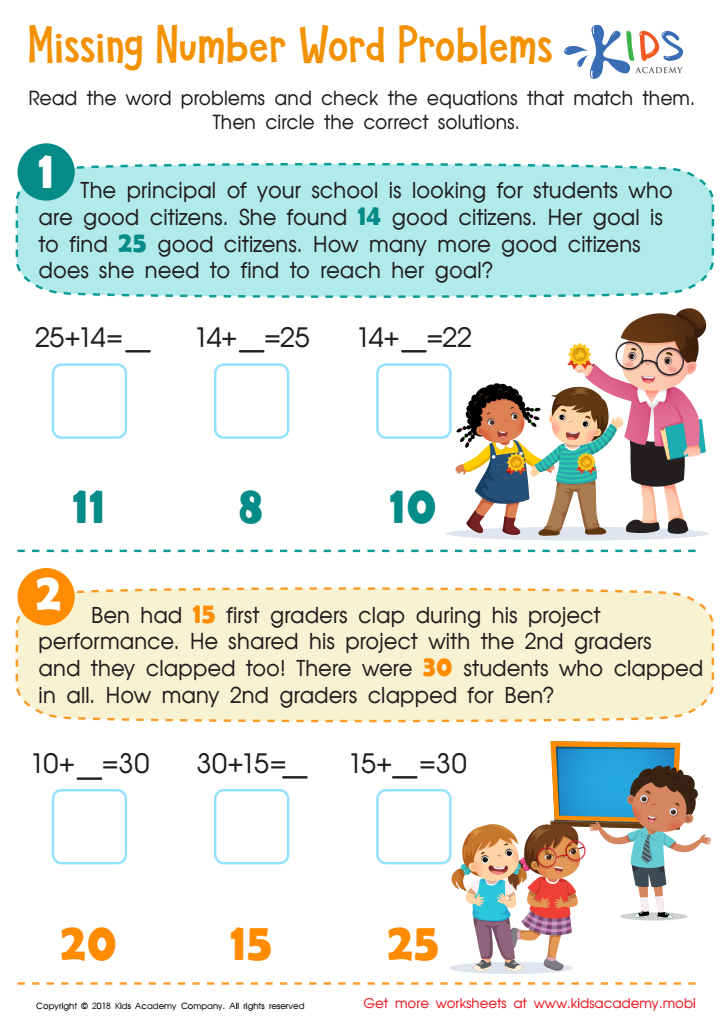
Missing Number Word Problems Worksheet
 Assign to My Students
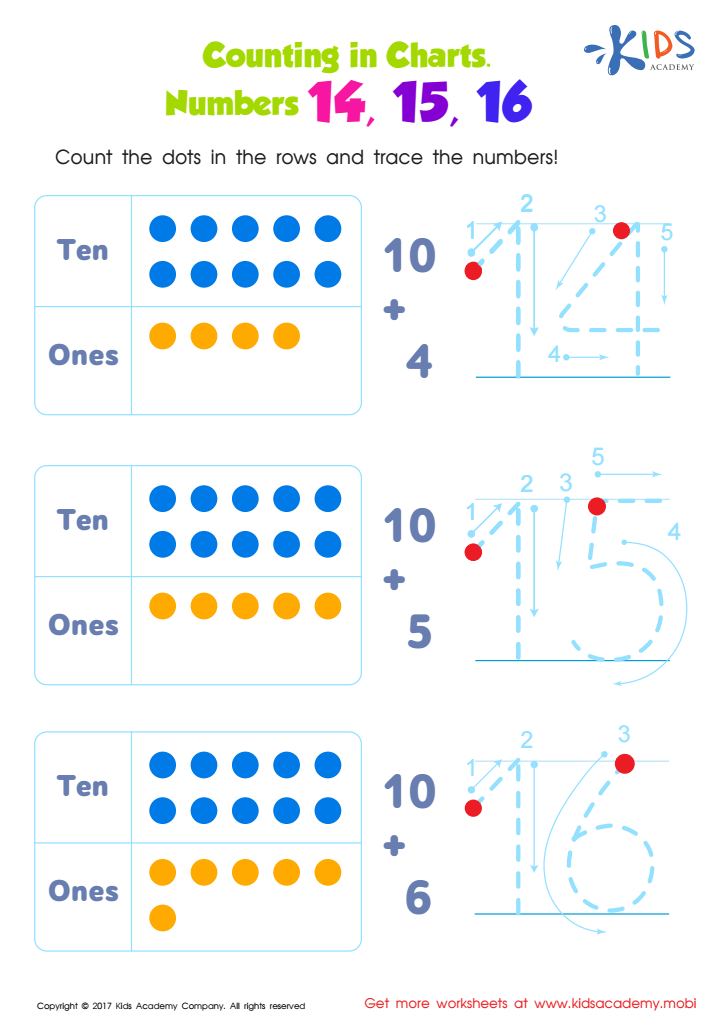
Number Tracing Worksheet







Understanding number sequences is crucial for children ages 3-6 as it lays the foundation for their mathematical development and overall cognitive growth. During these early years, children are naturally curious and engage with numbers through playful exploration. Teaching them to recognize and understand number sequences helps them grasp fundamental concepts such as counting, ordering, and basic arithmetic.
When children understand number sequences, they develop critical problem-solving skills and enhance their ability to think logically. For example, recognizing that three comes after two fosters an understanding of numerical relationships, which is essential for more complex math concepts later on. Furthermore, this knowledge supports their ability to pattern recognition, an essential skill not only in math but across various subjects.
Additionally, an early grasp of number sequences boosts a child's confidence in their mathematical abilities, promoting a positive attitude towards learning. Parents and teachers who focus on this aspect create opportunities for engaging activities, such as counting games and number songs, which reinforce learning in a fun and interactive manner. Ultimately, nurturing this foundational skill paves the way for future academic success, instills a love for learning, and equips children with skills they will use throughout their education.








