Understanding place value Worksheets for Ages 3-6
8 filtered results
-
From - To
Discover engaging and educational "Understanding Place Value Worksheets for Ages 3-6" at Kids Academy. Tailored for young learners, these worksheets introduce essential math concepts through fun activities designed to help children grasp place value. Perfect for preschool and kindergarten students, each worksheet combines colorful visuals with interactive tasks, enhancing kids' number sense and preparing them for future math success. Utilizing age-appropriate language and entertaining exercises, our place value worksheets will captivate your children's interest while building a solid foundation in early mathematics. Visit Kids Academy for top-quality, child-friendly resources that make learning math both easy and enjoyable.
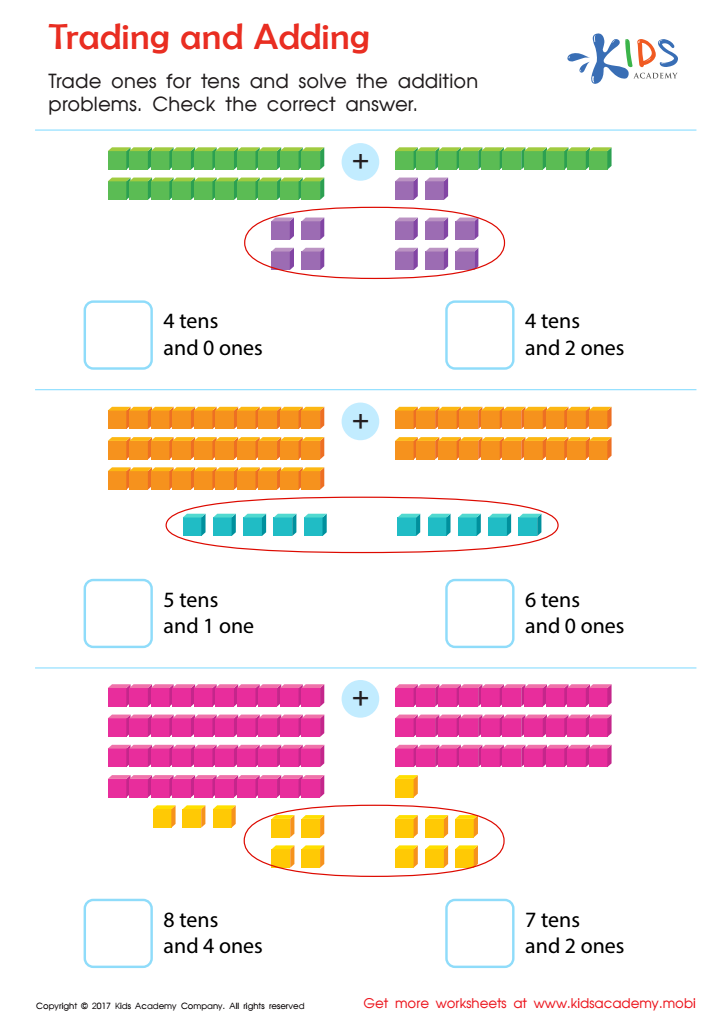
Trading and Adding Worksheet
 Assign to My Students
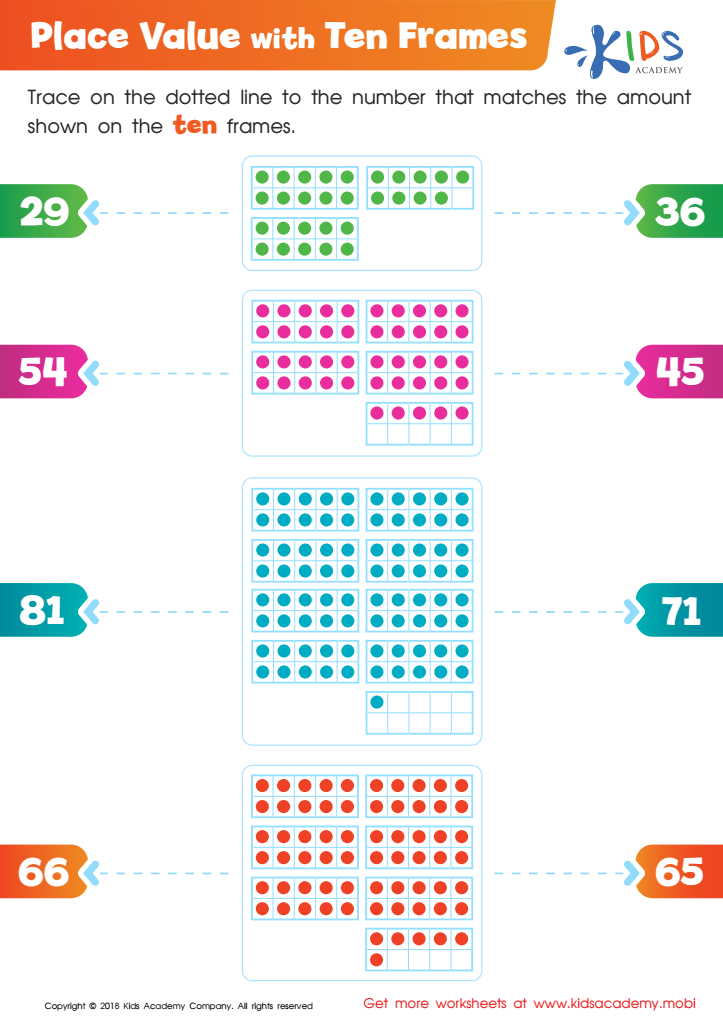
Place Values with Ten Frames Worksheet
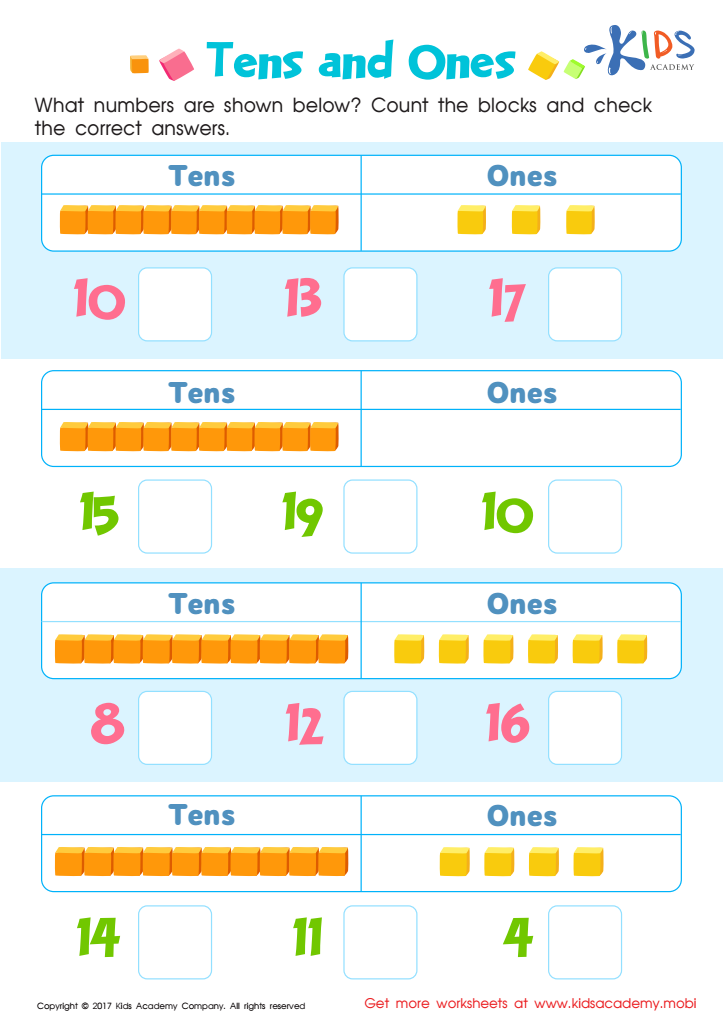
Tens and Ones Worksheet
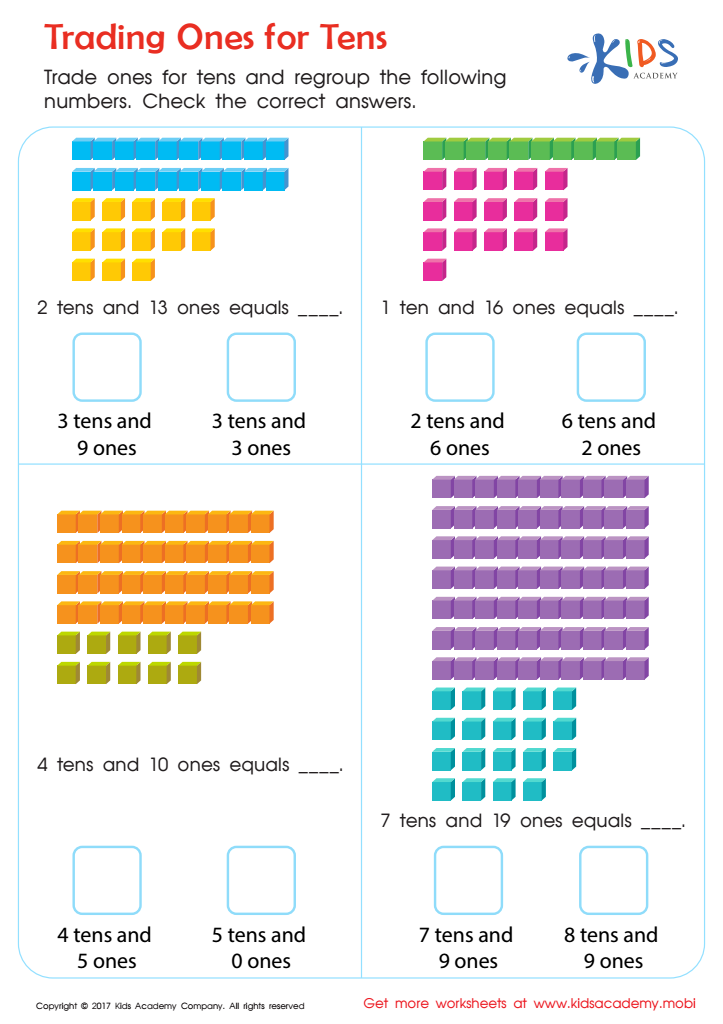
Trading Ones for Tens Worksheet
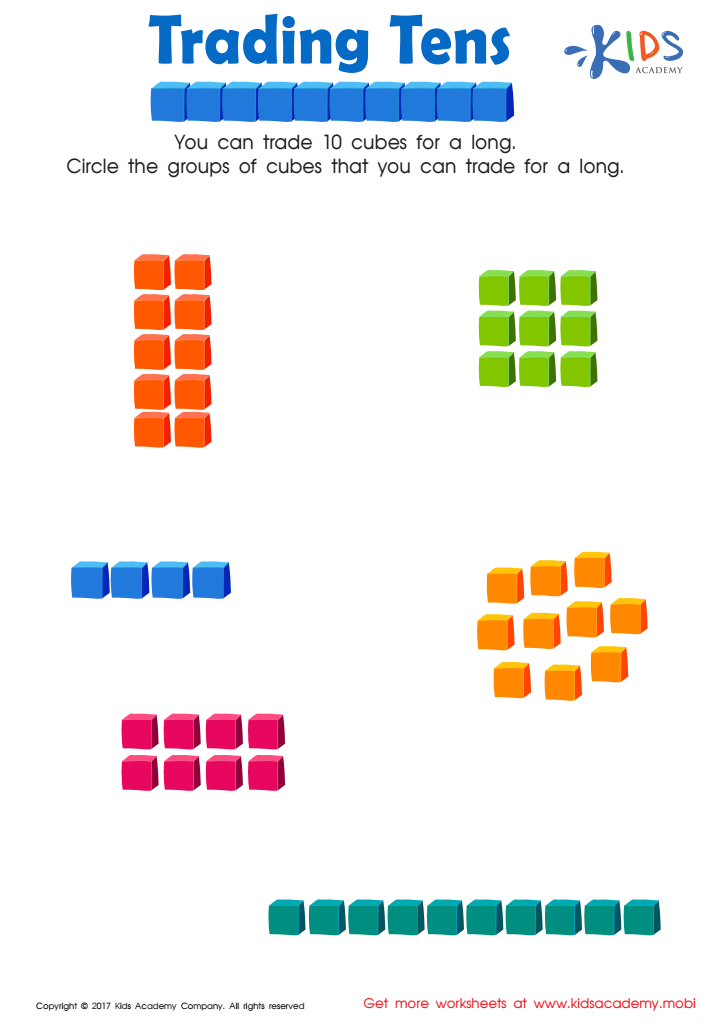
Trading Tens Worksheet
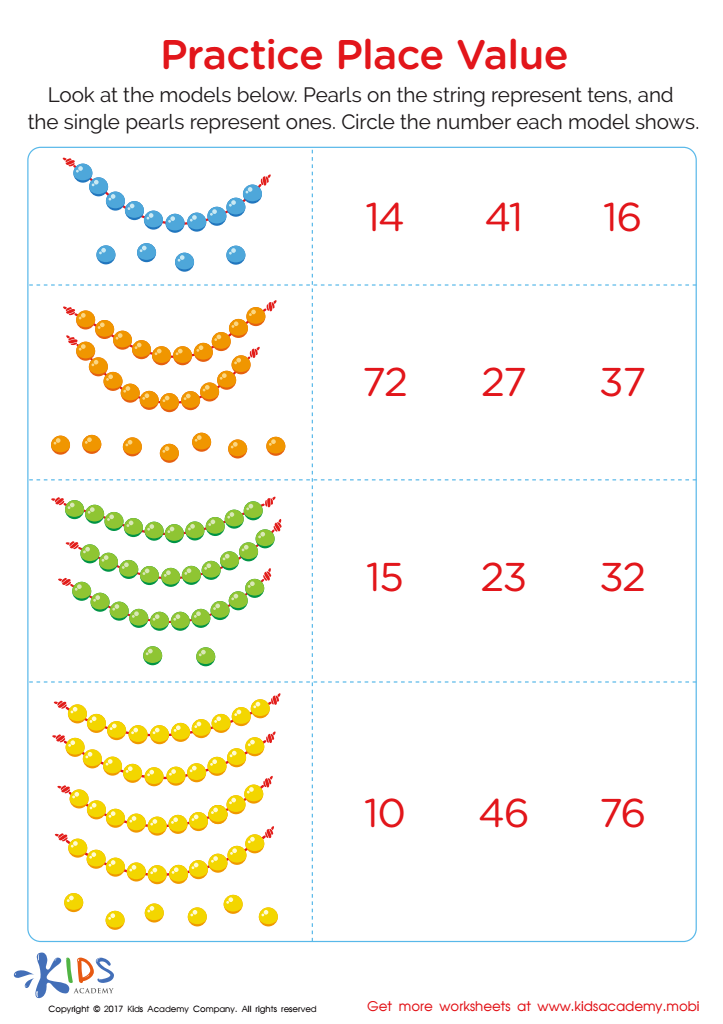
Practice Place Value Printable
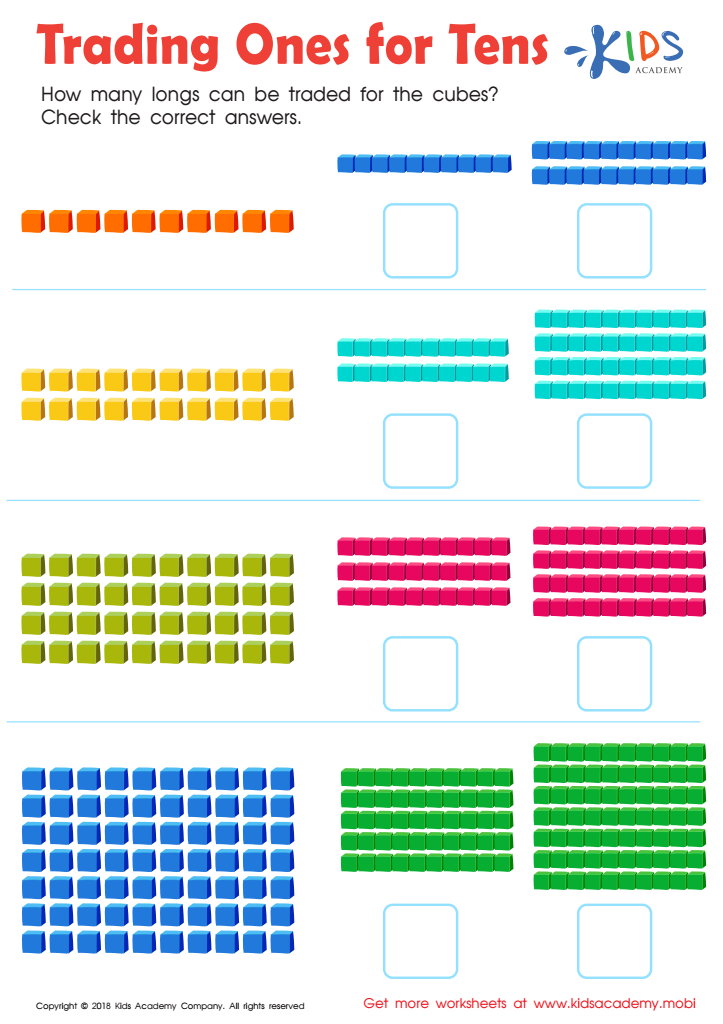
Trading Ones for Tens Worksheet: Part 2
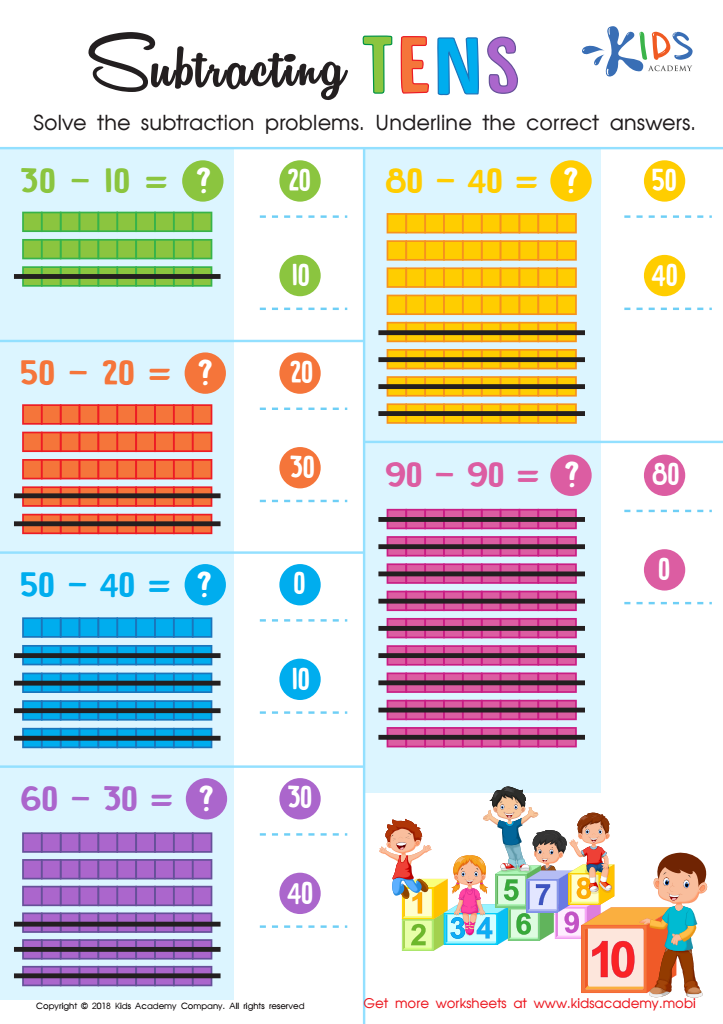
Subtracting Tens Worksheet






Understanding place value is fundamental for young children because it forms the basis of their mathematical learning and comprehension. For ages 3-6, grasping the concept of place value – identifying ones, tens, hundreds, etc. – is crucial as it helps them recognize number patterns and enhances their ability to perform arithmetic operations like addition, subtraction, multiplication, and division.
For children in this age group, learning place value strengthens their number sense, making them more confident and proficient when working with larger numbers. It also enables them to solve problems more efficiently by breaking numbers down into manageable parts. For example, knowing that the number 23 is composed of 2 tens and 3 ones can simplify the process of adding or subtracting.
Moreover, understanding place value is not just about math; it supports logical thinking and problem-solving skills, which are beneficial across all areas of learning. Teachers and parents who emphasize place value help students avoid common pitfalls and frustrations associated with math difficulties later on.
Thanks to place value knowledge, children gain a stronger cognitive foundation, setting them up for academic success and fostering a lifelong appreciation for mathematics. Thus, educators and parents must prioritize teaching this essential concept, incorporating hands-on activities and visual aids to make learning engaging and effective.








