Understanding syllables Worksheets for Ages 3-6
3 filtered results
-
From - To
Discover our engaging "Understanding Syllables Worksheets for Ages 3-6" at Kids Academy! Designed to enhance early literacy skills, these fun, colorful worksheets help young learners grasp the concept of syllables. Ideal for preschool and kindergarten students, each activity focuses on counting and identifying syllables in simple words through interactive exercises featuring charming illustrations and recognizable objects. By mastering syllables, kids build a foundation for reading proficiency and phonemic awareness, setting the stage for future academic success. Visit Kids Academy now to explore and download these essential resources, ensuring your child’s educational journey begins with confidence and joy.
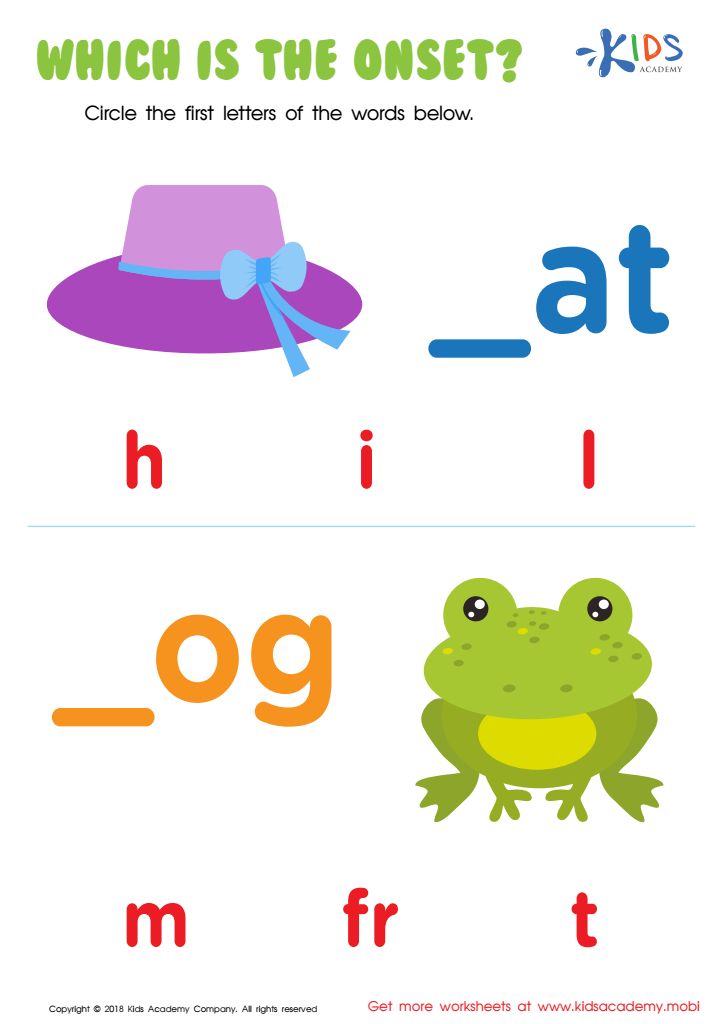
Which Is the Onset? Worksheet
 Assign to My Students
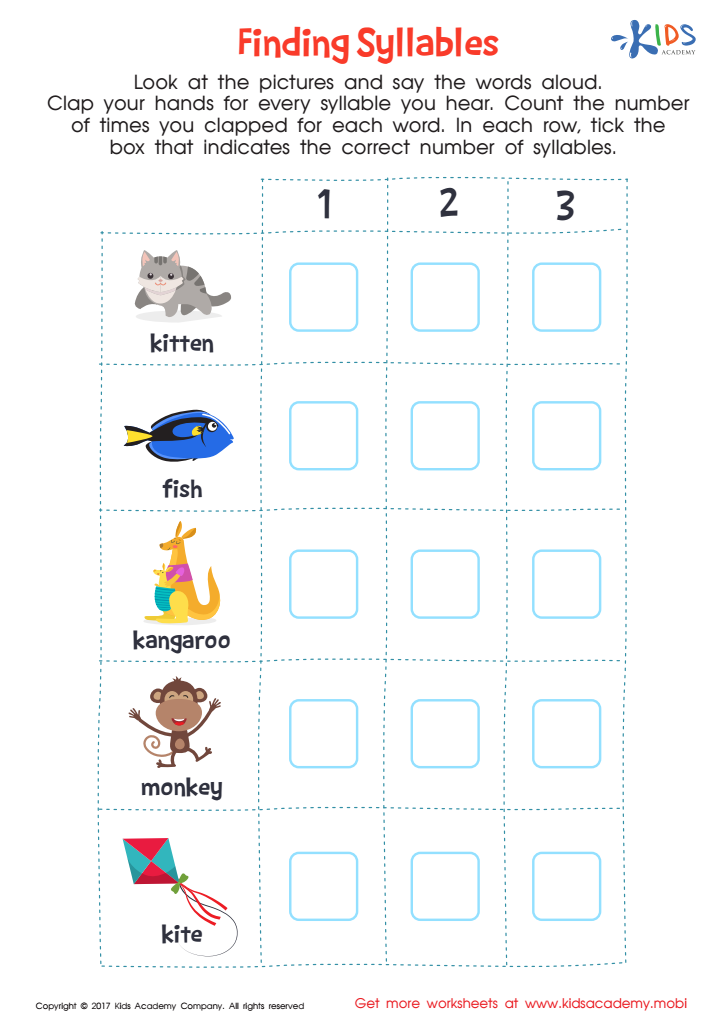
Finding Syllables Word Structure Worksheet
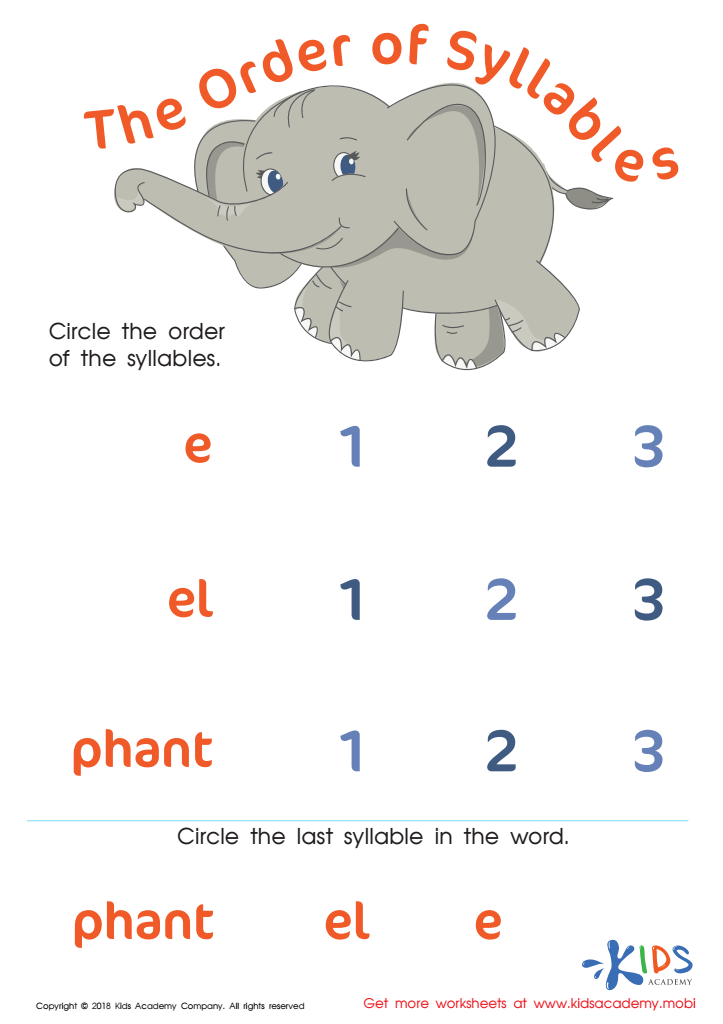
The Order of Syllables Worksheet







.jpg)
Understanding syllables is vital for young children ages 3-6 as it lays the foundation for literacy development. First, it helps in breaking down words into manageable parts, simplifying reading and writing tasks. When children grasp the concept of syllables, they can better recognize word patterns, which enhances their phonemic awareness – a critical skill in learning to read.
Secondly, syllable segmentation aids in the development of pronunciation and improves their ability to spell. By understanding the rhythm and flow of language, children can more easily decode unfamiliar words. This ability to chunk sounds leads to greater fluency, allowing for smoother and more expressive reading.
Furthermore, syllable awareness is crucial for vocabulary building. Comprehending word structure facilitates easier acquisition of new words, thereby expanding a child’s lexical repertoire. This boosts both comprehension and communication skills, essential tools for academic success and social interactions.
Lastly, engaging with syllables fosters cognitive skills such as memory, attention to detail, and auditory processing. These improvements translate beyond literacy, positively impacting overall learning.
Parents and teachers who emphasize syllable understanding are effectively providing children with the building blocks for reading and writing proficiency, resulting in long-term educational benefits.








