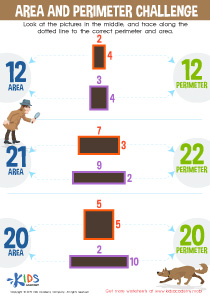
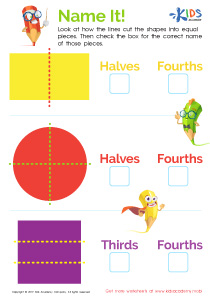
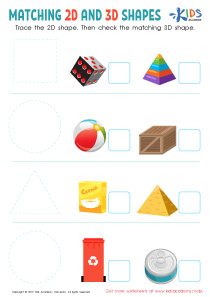
Pattern recognition 2D Shapes Worksheets for Ages 3-6
3 filtered results
-
From - To
Discover engaging and educational Pattern Recognition 2D Shapes Worksheets designed for children ages 3-6. Our interactive worksheets help young learners master essential shape recognition skills while enhancing their cognitive abilities. Kids will enjoy identifying, matching, and sorting various 2D shapes through fun exercises that promote active learning. With colorful illustrations and age-appropriate challenges, these worksheets foster a love for learning and improve critical thinking. Ideal for both classroom use and home study, our activities support early math education, making learning shapes an enjoyable adventure. Start building a strong foundation in geometry with our specially curated resources today!
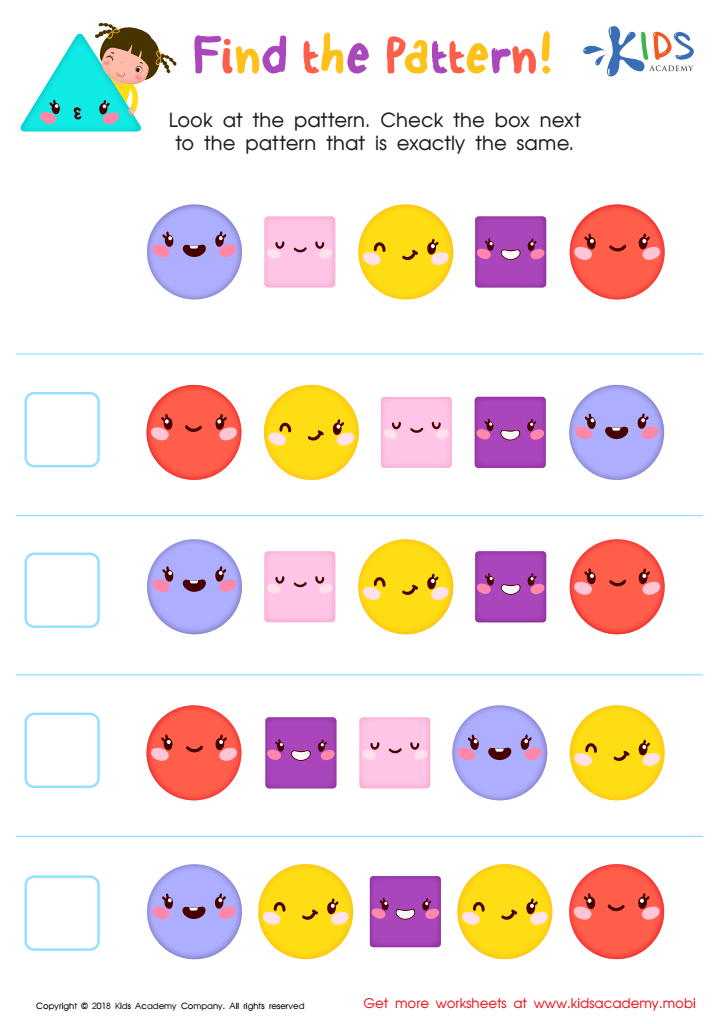
Find the Pattern Worksheet
 Assign to My Students




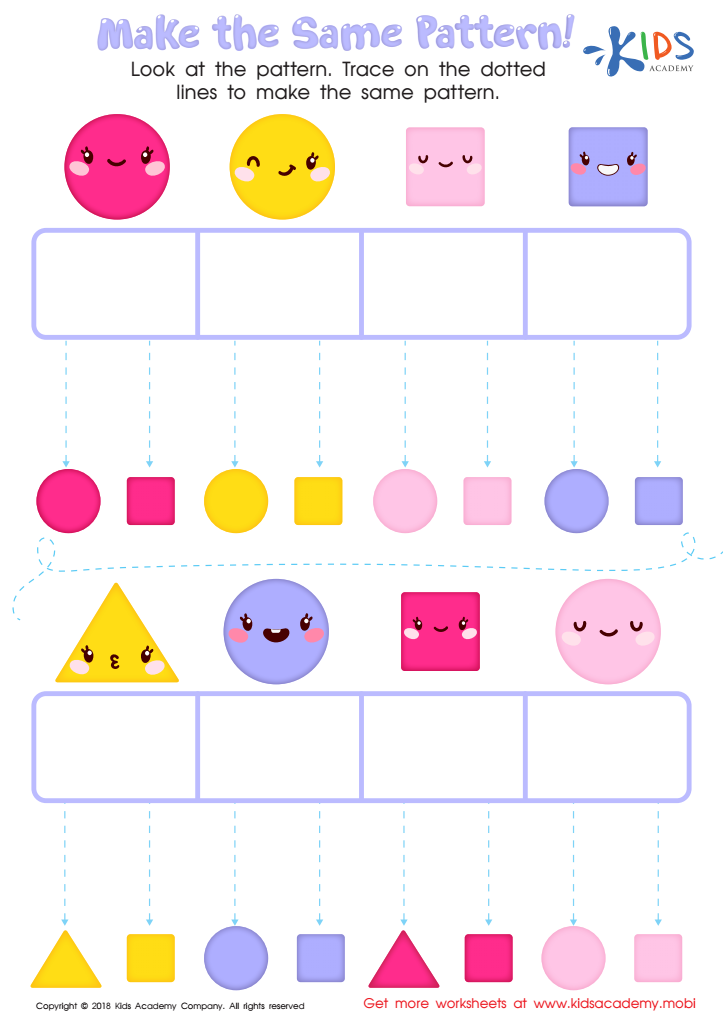
Make the Same Pattern Worksheet
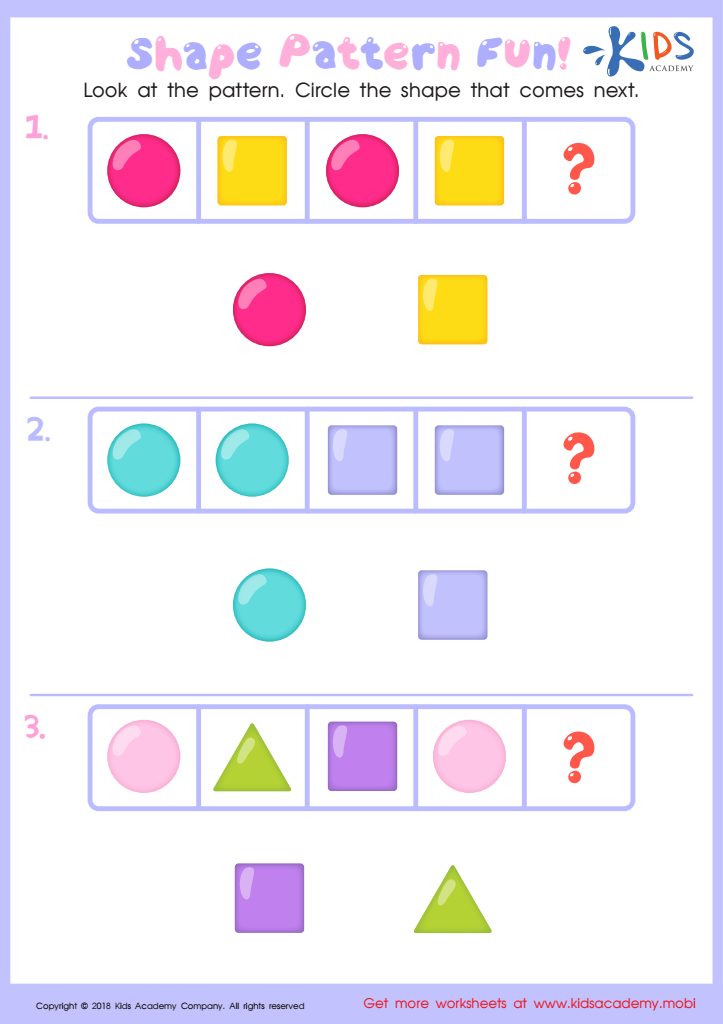
Shape Pattern Fun Worksheet








Pattern recognition and the understanding of 2D shapes are fundamental skills that benefit young children in numerous ways. For parents and teachers, fostering these skills in ages 3-6 is crucial for cognitive development. Recognizing patterns lays the foundation for mathematical reasoning. It helps children identify relationships and sequences, critical for future problem-solving.
Shapes as geometric forms serve as building blocks for spatial awareness. When young learners become familiar with 2D shapes—such as circles, squares, and triangles—they develop the ability to categorize objects, enhancing their critical thinking. This foundational knowledge supports early math skills, essential for tasks like measuring and estimating as they grow.
Engaging in pattern recognition and shape identification makes learning interactive and fun. Through games and hands-on activities, children improve their fine motor skills and concentration, paving the way for a love of learning. Furthermore, these skills bolster language development, as children learn to describe and discuss shapes.
In essence, parents and teachers should prioritize pattern recognition and understanding of 2D shapes to prepare children for academic success, promote critical thinking abilities, and enrich their overall cognitive and social development. Investing time in these areas early on sets a strong foundation for lifelong learning.