Hand-eye Coordination Adding Up to 5 Worksheets for Ages 3-6
15 filtered results
-
From - To
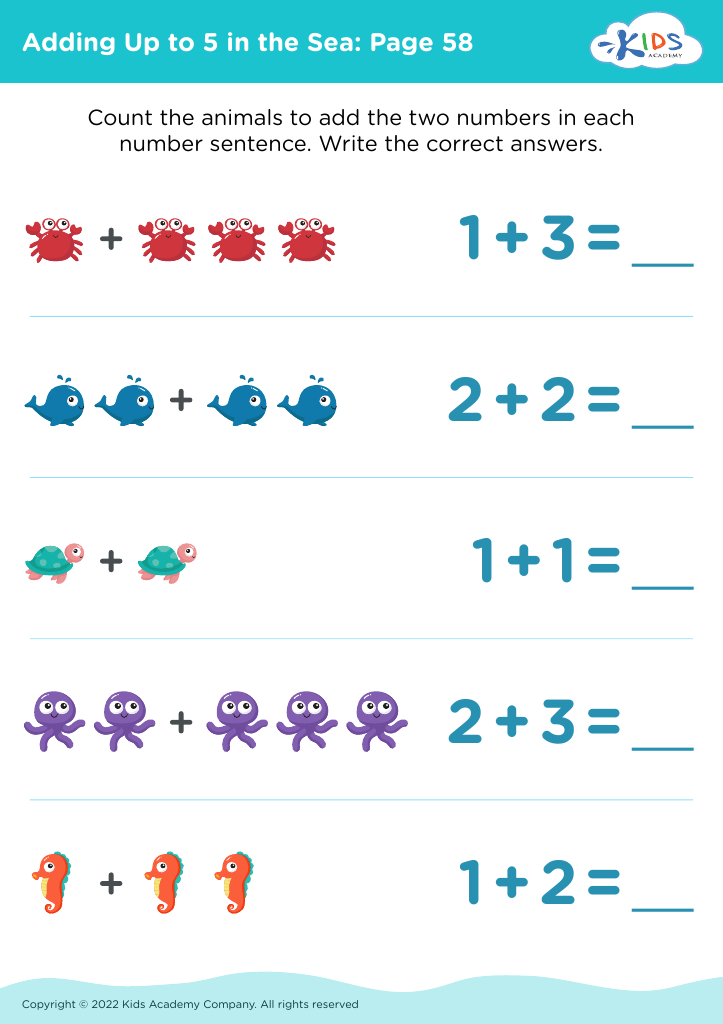
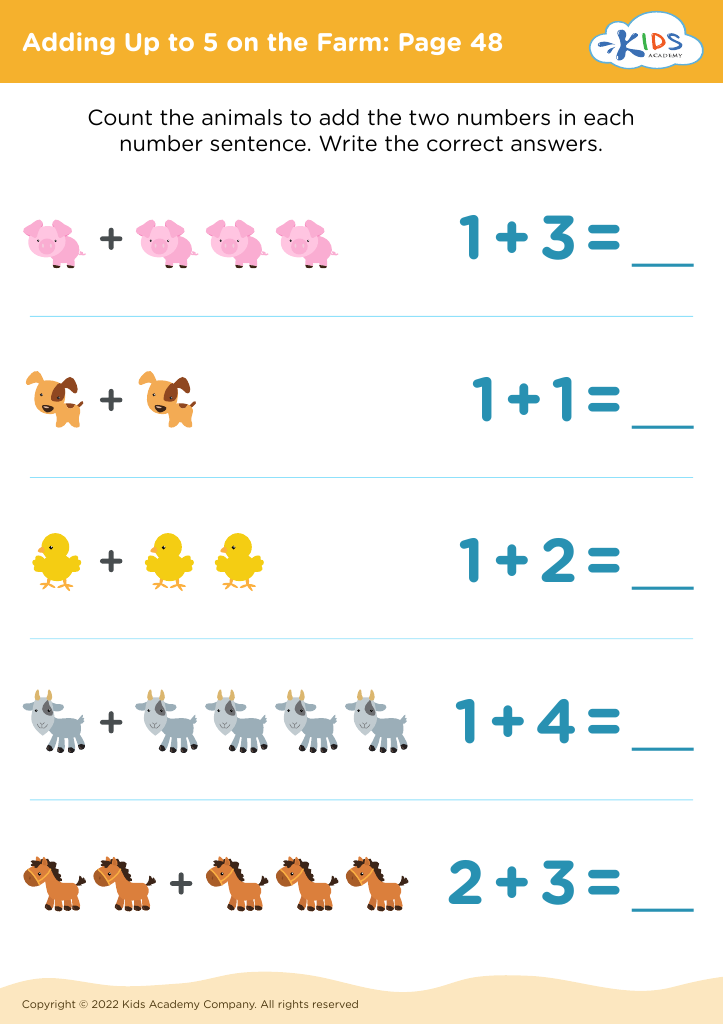
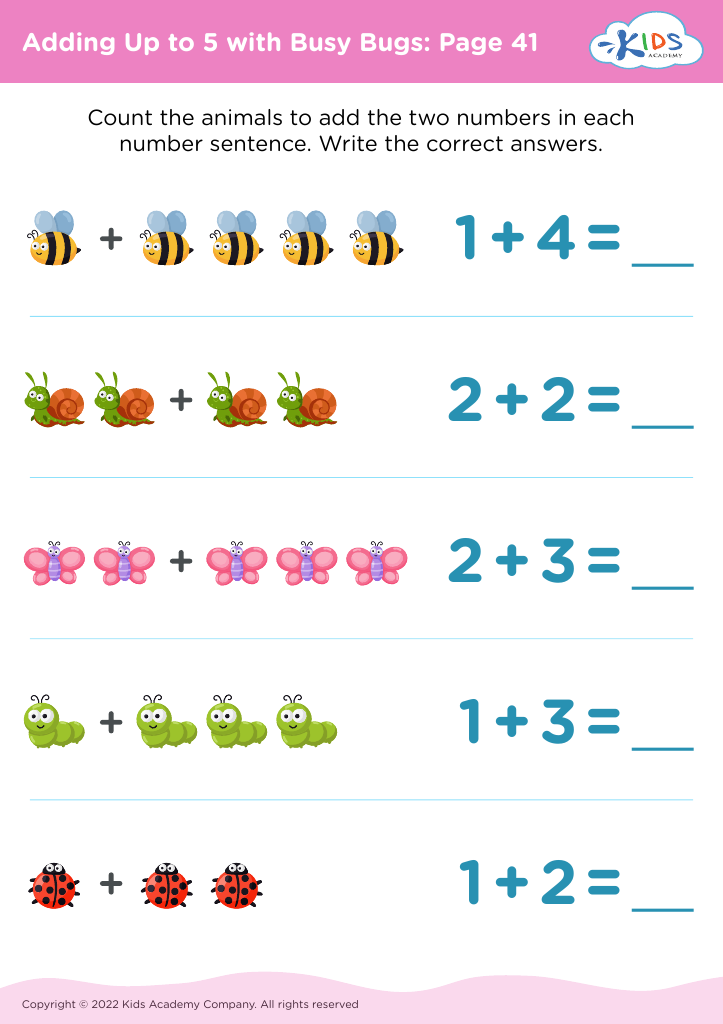
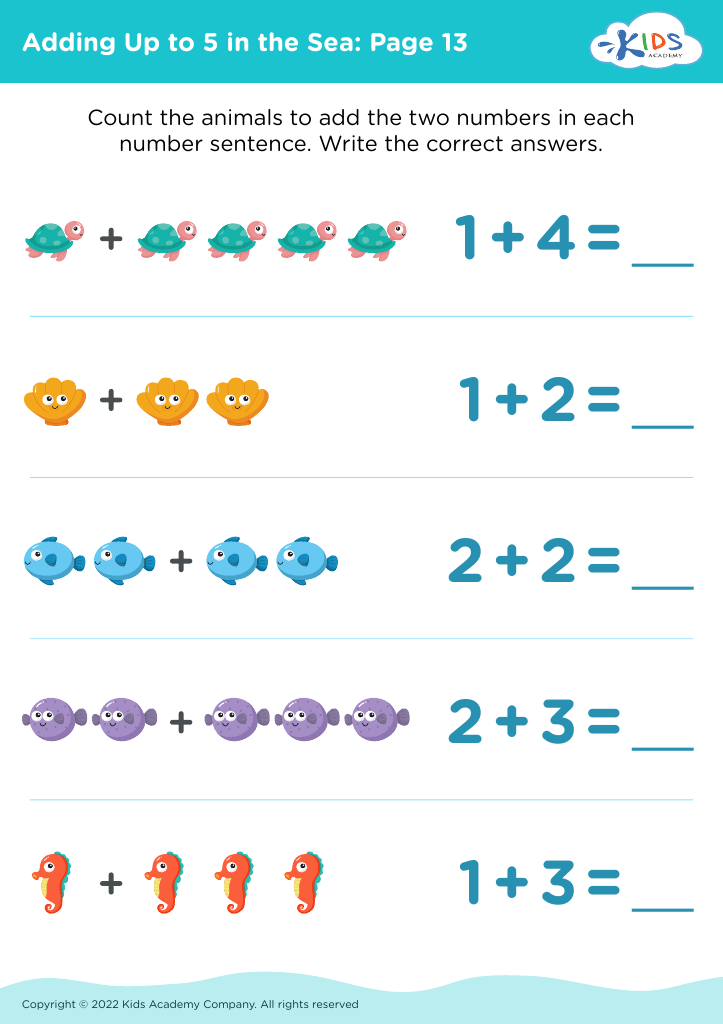
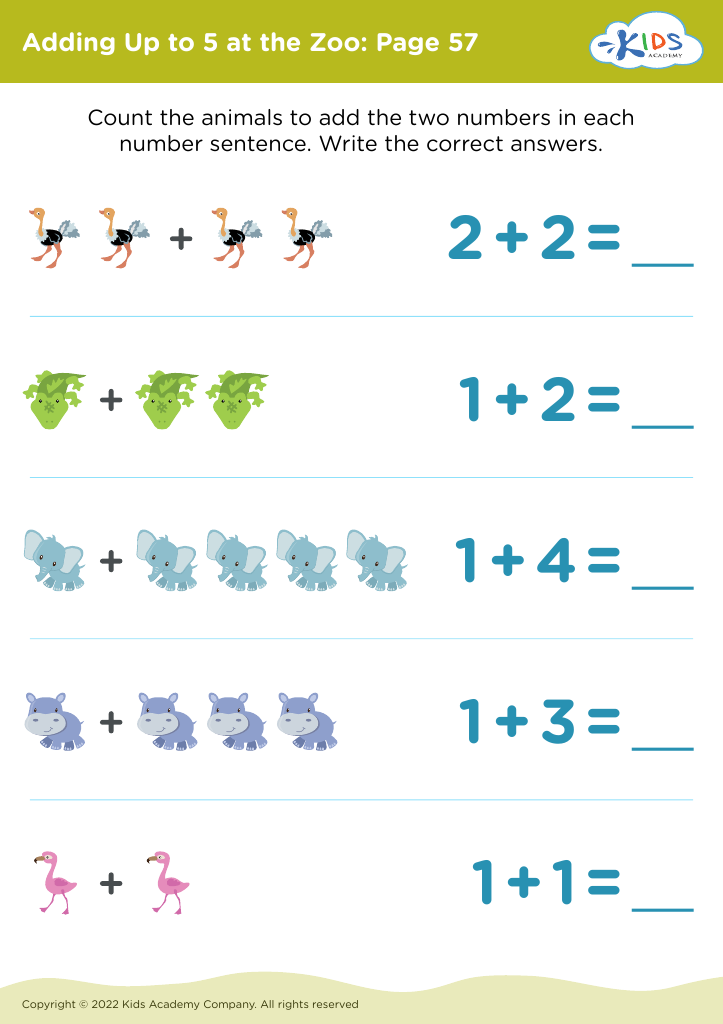
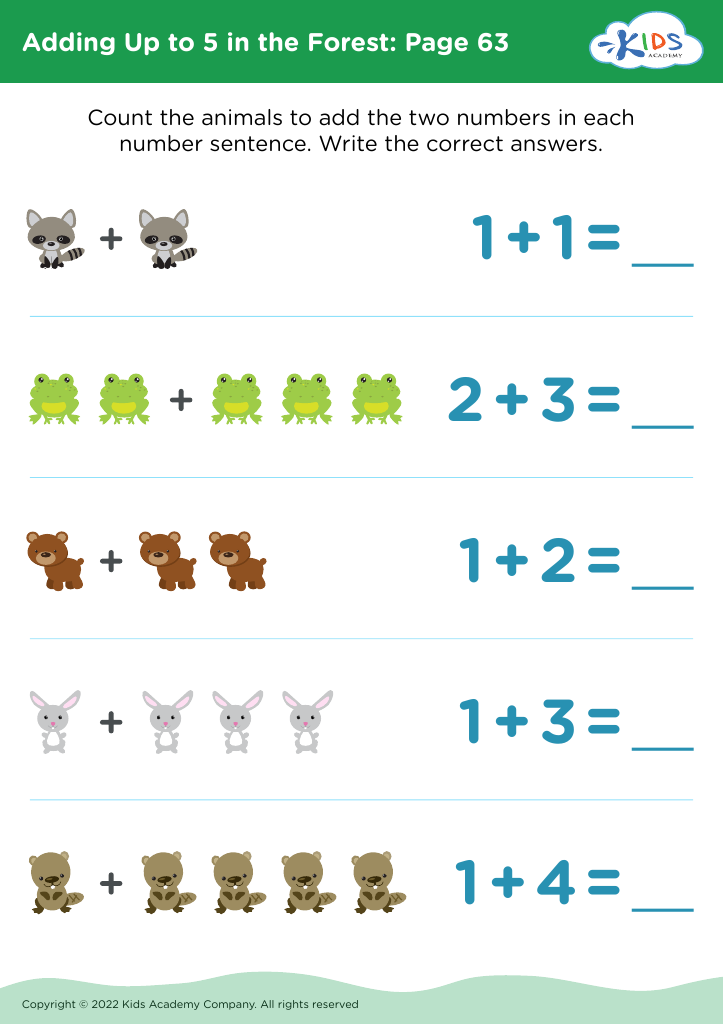
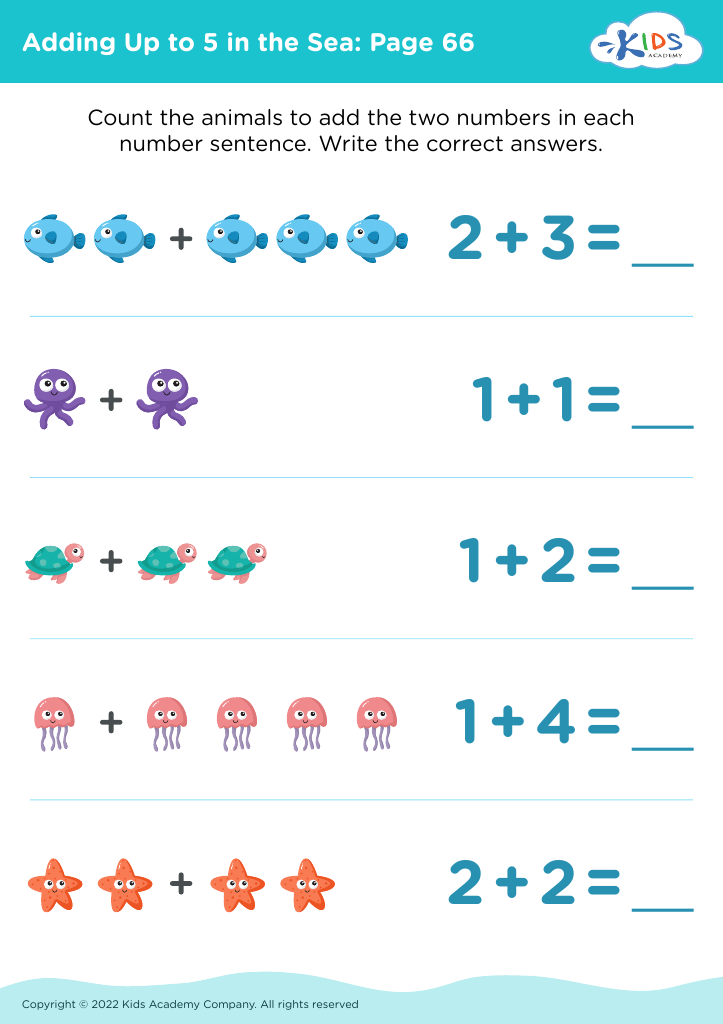
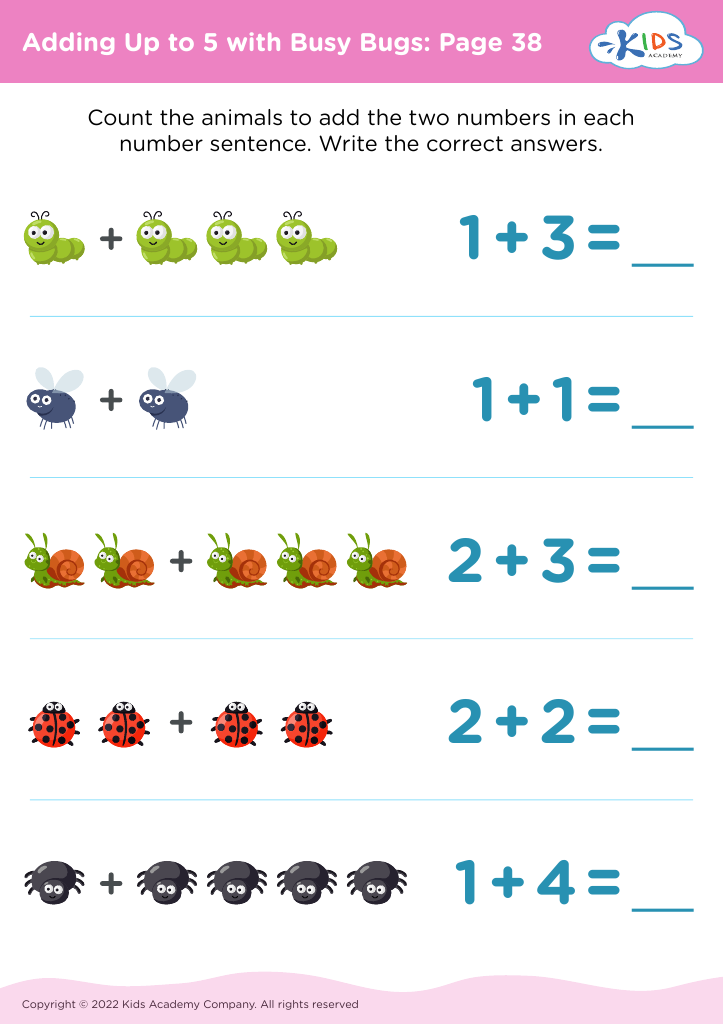
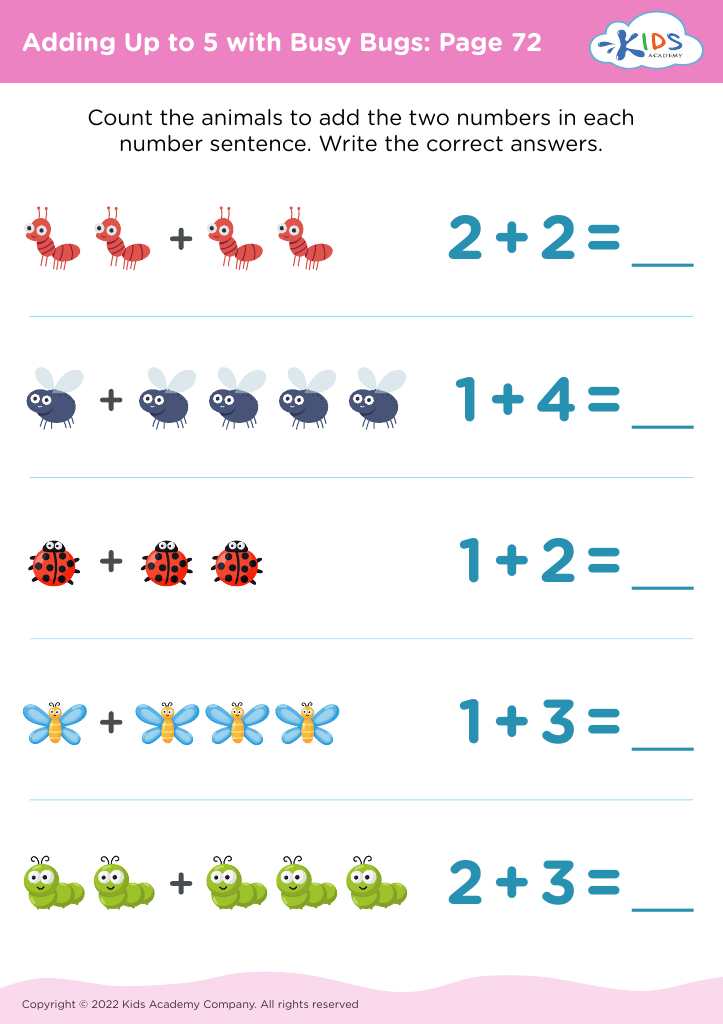
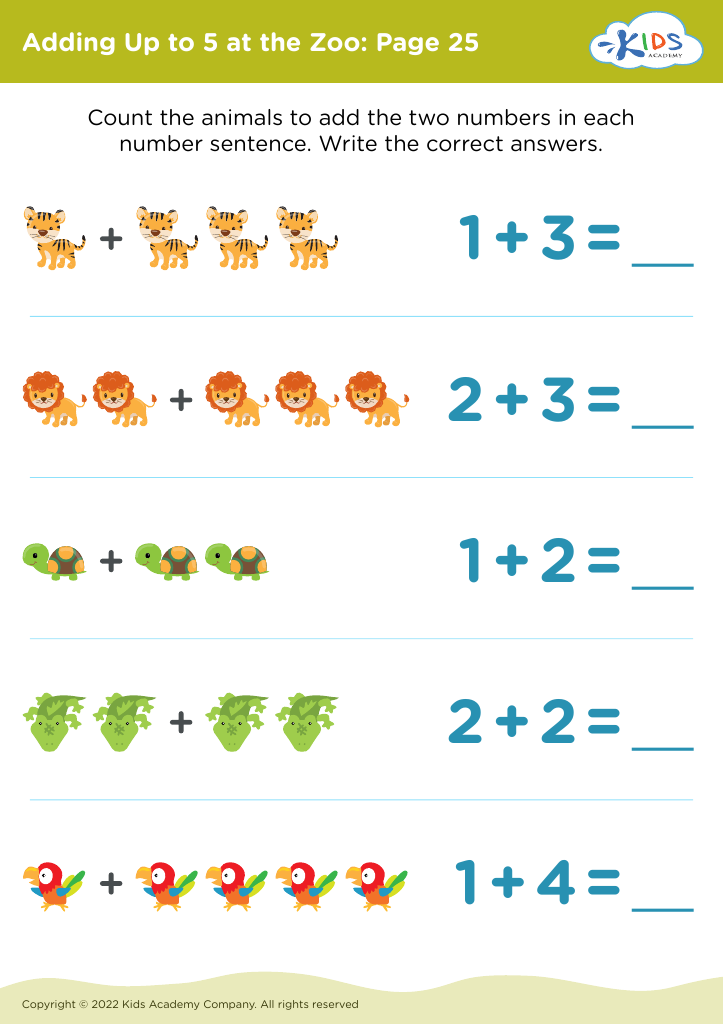
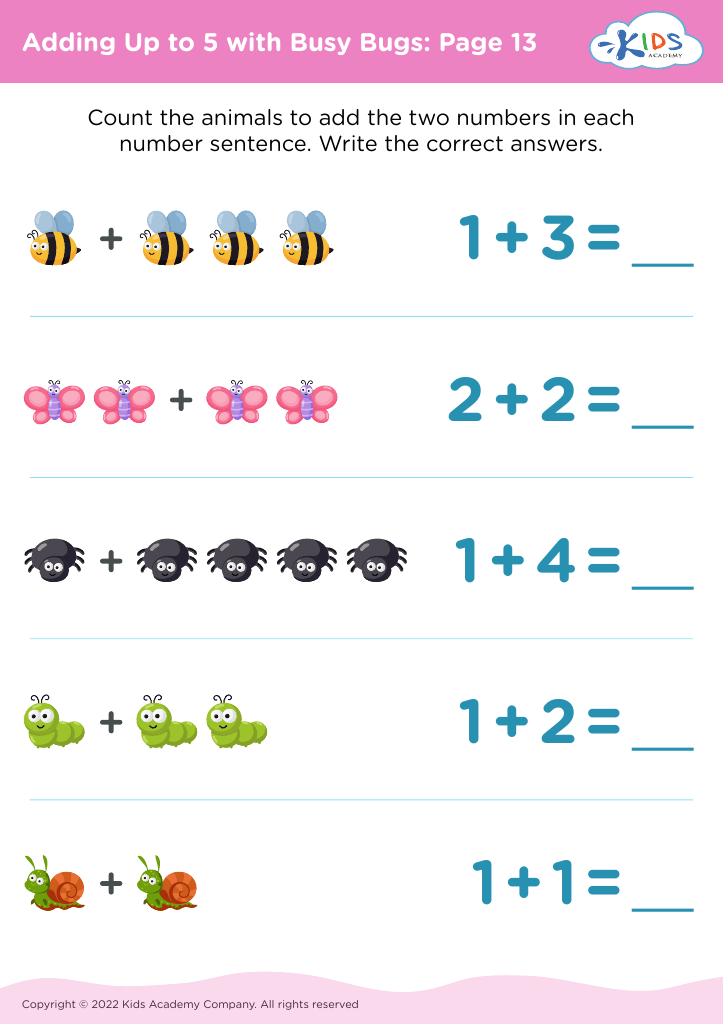
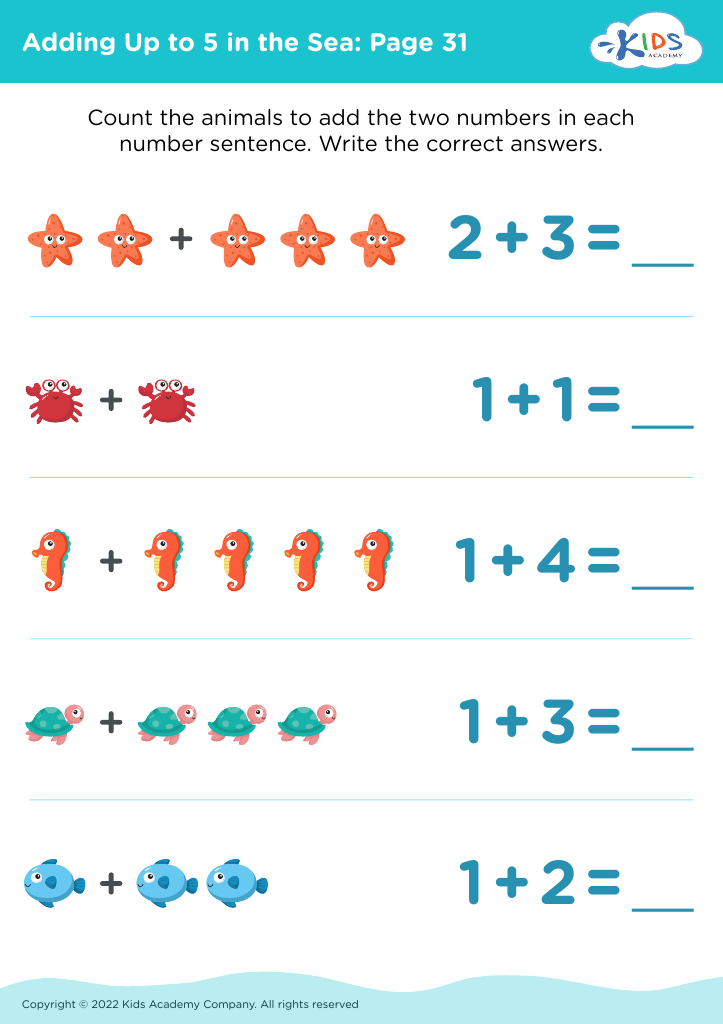
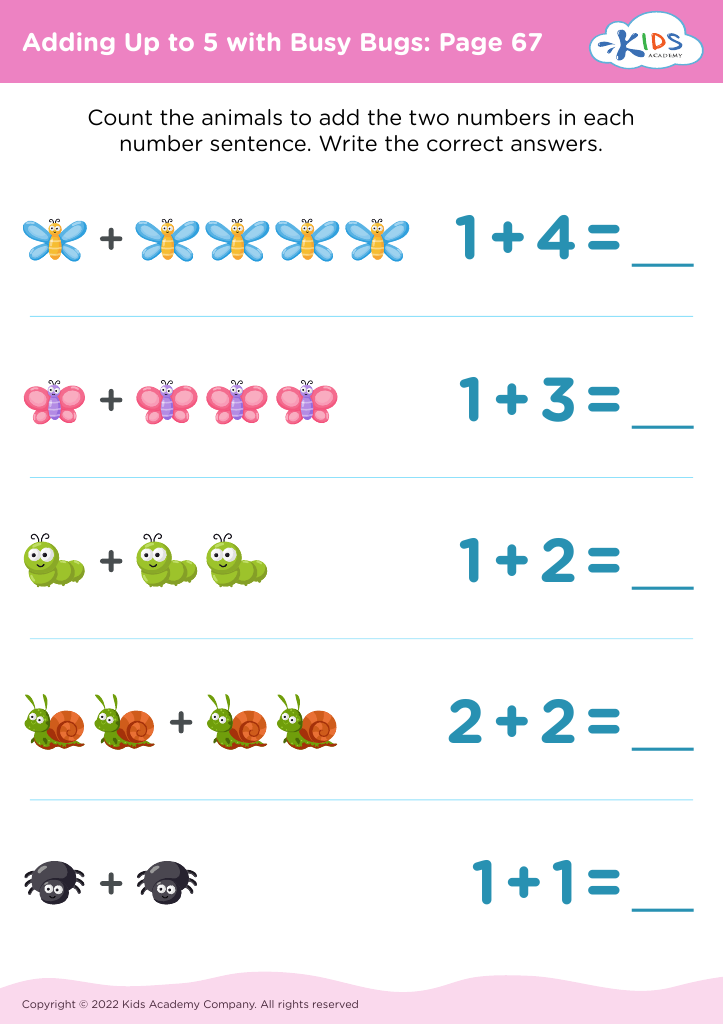
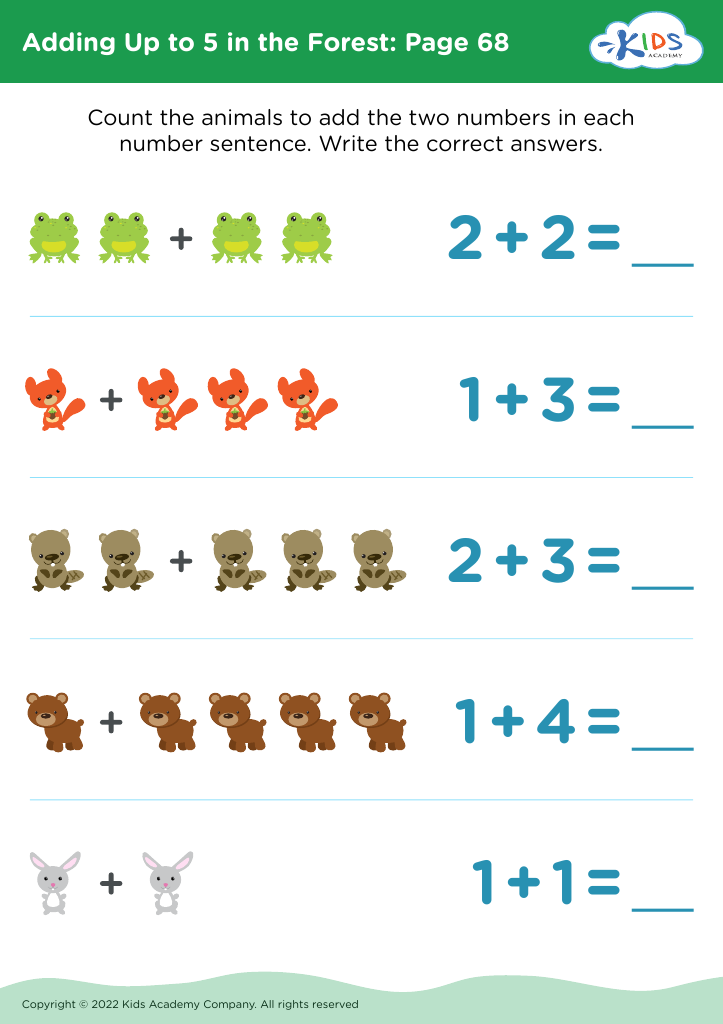
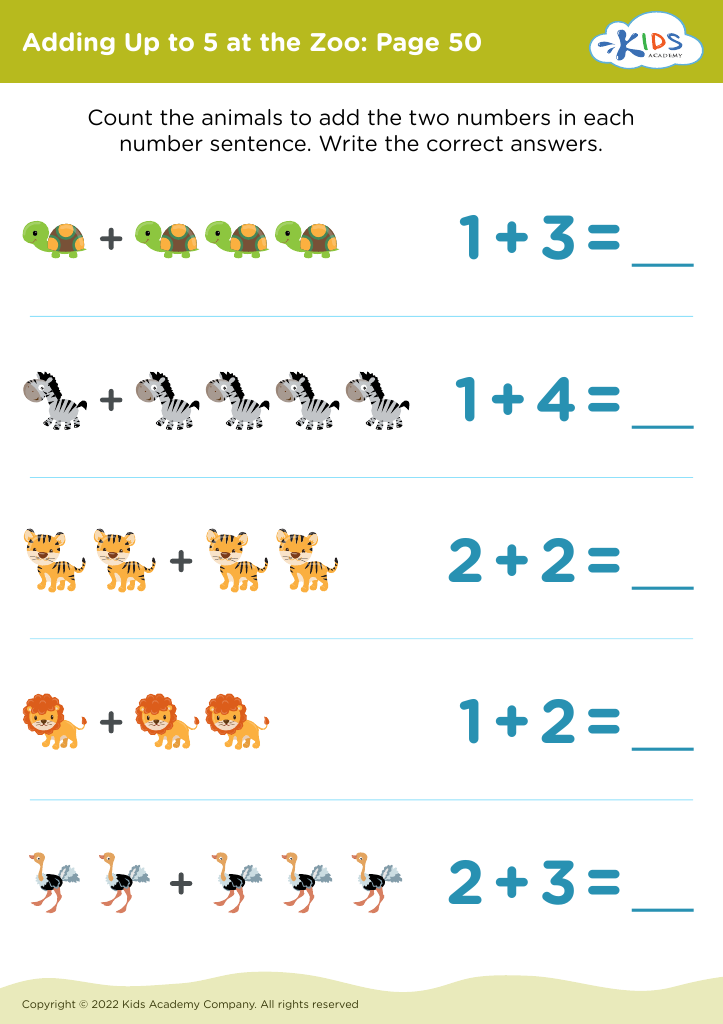
Enhance your child’s learning experience with our “Hand-eye Coordination Adding Up to 5 Worksheets,” designed for ages 3-6. These worksheets not only introduce fundamental addition skills but also focus on developing hand-eye coordination—an essential skill for young learners. Engaging activities encourage children to practice adding numbers up to 5 while using visual aids and hands-on materials that promote fine motor skills. Our resources are perfect for both classroom settings and home learning environments. Make math fun and interactive with exciting worksheets that will keep your little ones engaged and inspired as they explore numbers and improve their coordination!





%20(1).jpg)


Hand-eye coordination is a vital skill for children aged 3-6, influencing their overall development and learning capabilities. This crucial ability allows children to synchronize their visual perceptions with hand movements, aiding activities ranging from simple tasks like picking up objects to more complex ones like writing and drawing.
In the context of adding numbers up to 5, hand-eye coordination plays a significant role in early mathematical understanding. Children often manipulate physical objects, like counting blocks or beads, to visualize addition concepts. Mastering this relationship lays the groundwork for more advanced math skills later on. As children engage with these activities, they enhance their concentration and fine motor skills, which are essential for writing and other school-related tasks.
Parents and teachers should emphasize the importance of hand-eye coordination because it not only promotes mathematics comprehension but also encourages critical thinking and problem-solving. Fun, interactive activities that incorporate both math and physical movement can enhance this skill, making learning enjoyable. By fostering hand-eye coordination in early childhood, we set children on a path to academic success and instill a love for learning that lasts well beyond their formative years.








