Filters

349 filtered results

Clear all filters
Favorites
With answer key
Interactive

349 filtered results

Difficulty Level

Grade


Check out this FREE Trial Lesson on Adding Up to 5 for age 3-6!

H

Favorites
With answer key
Interactive
  • 3-6
  • Number Recognition
  • Adding Up to 5
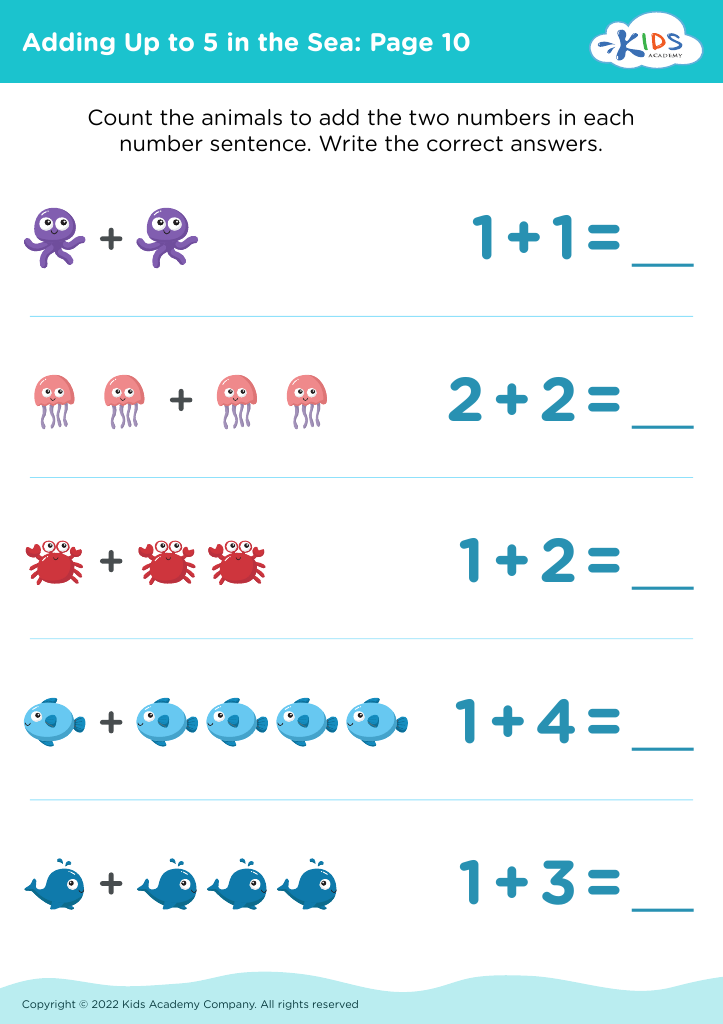
Adding Up to 5 in the Sea: Page 10
Worksheet
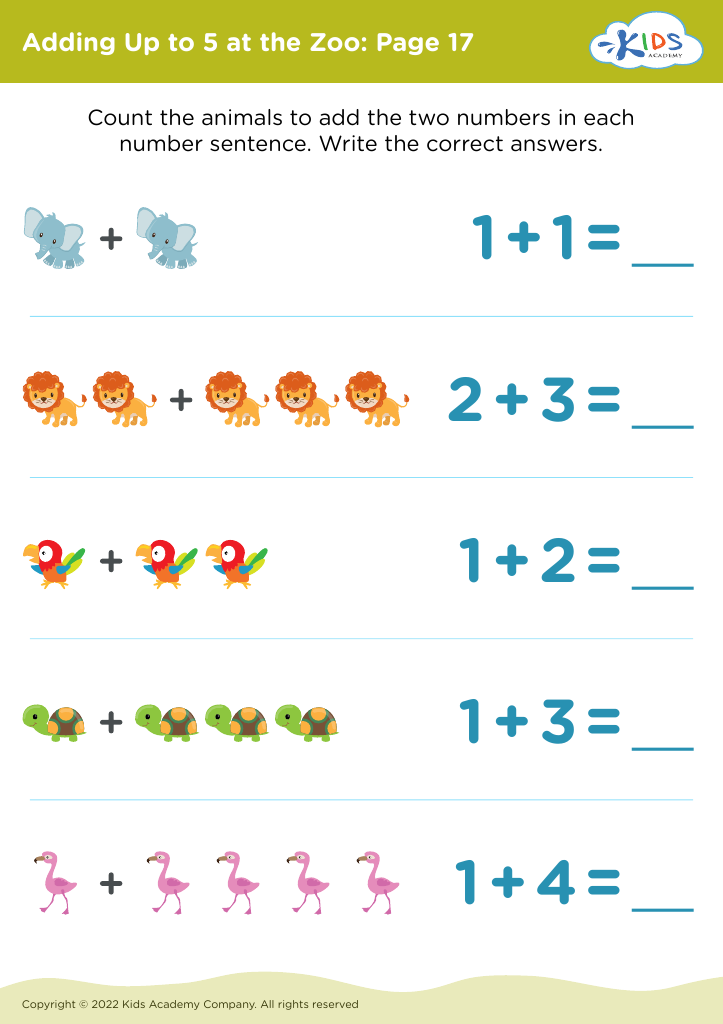
Adding Up to 5 at the Zoo: Page 17
Worksheet
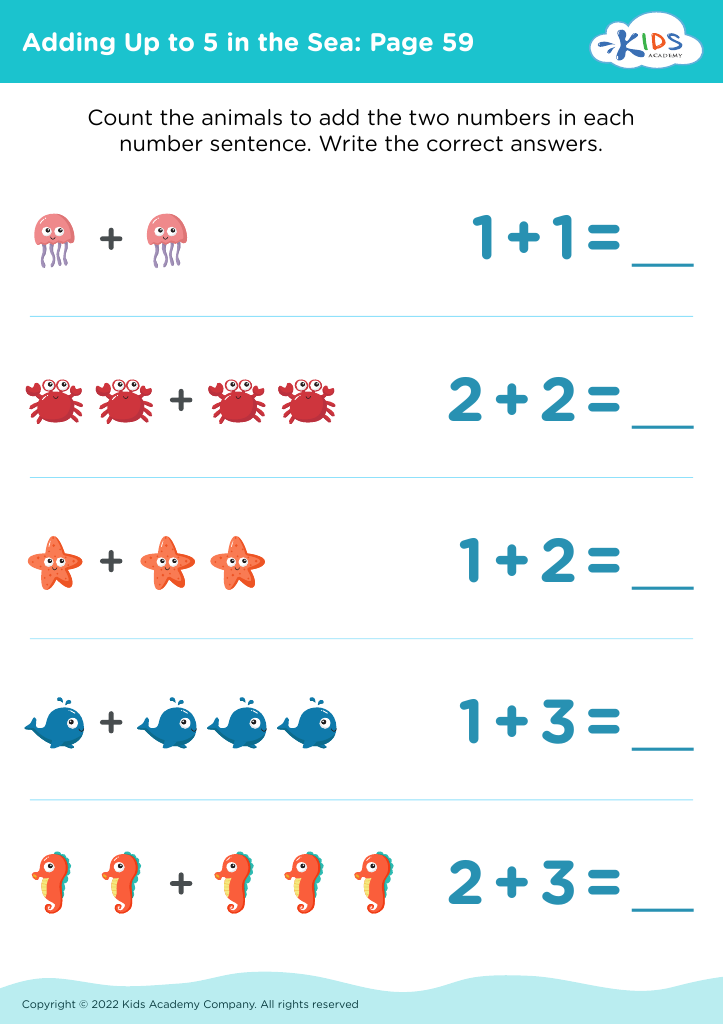
Adding Up to 5 in the Sea: Page 59
Worksheet
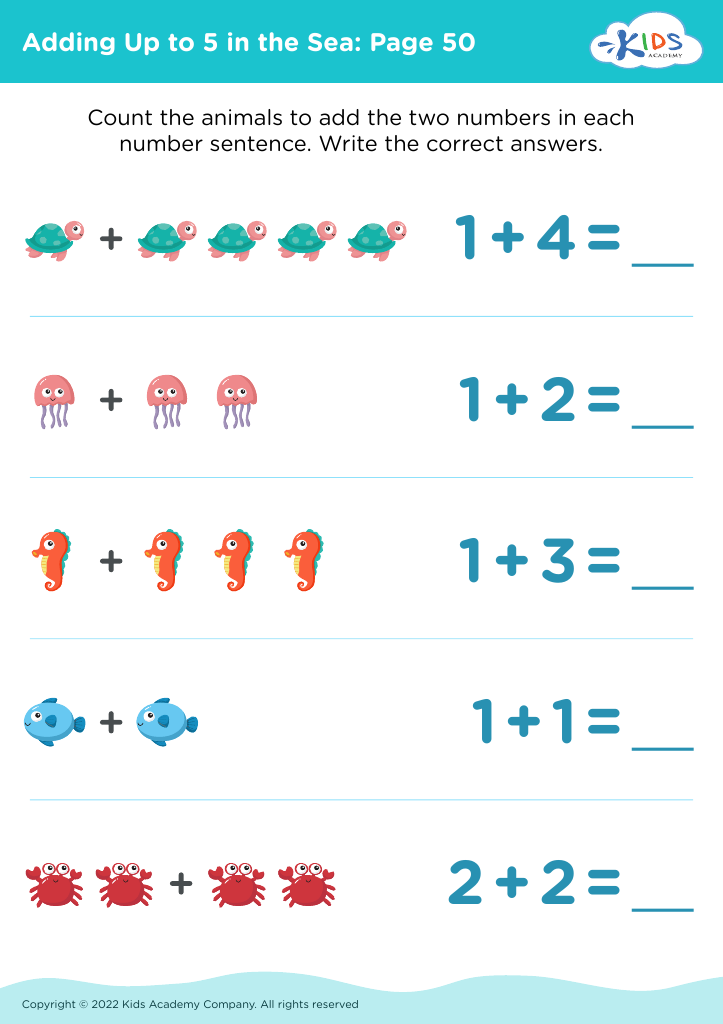
Adding Up to 5 in the Sea: Page 50
Worksheet
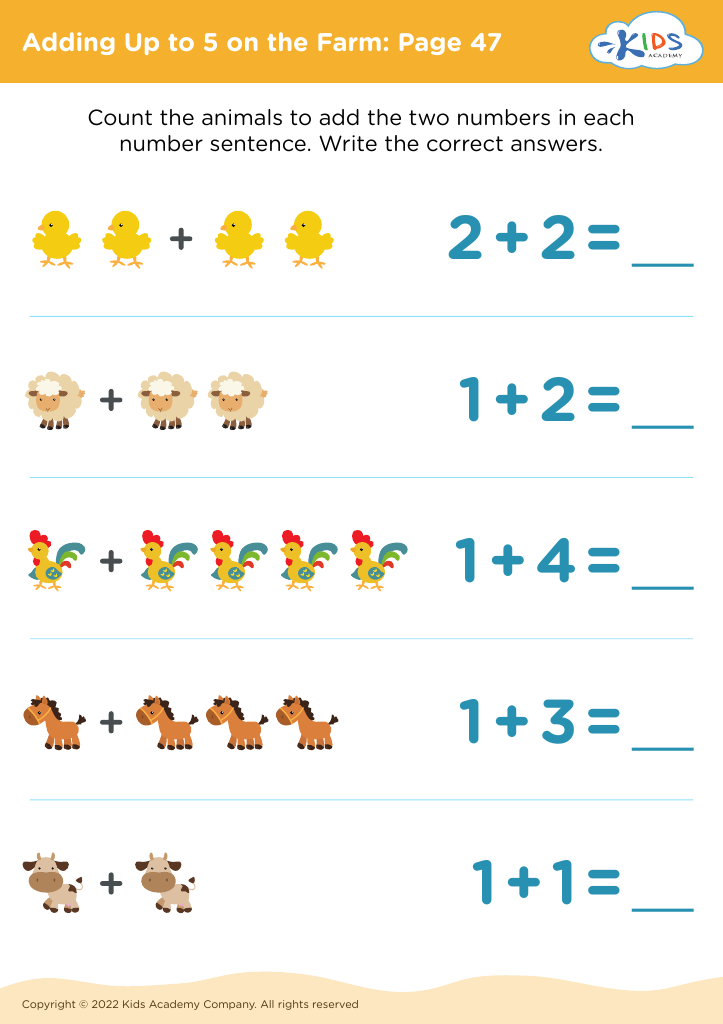
Adding Up to 5 on the Farm: Page 47
Worksheet
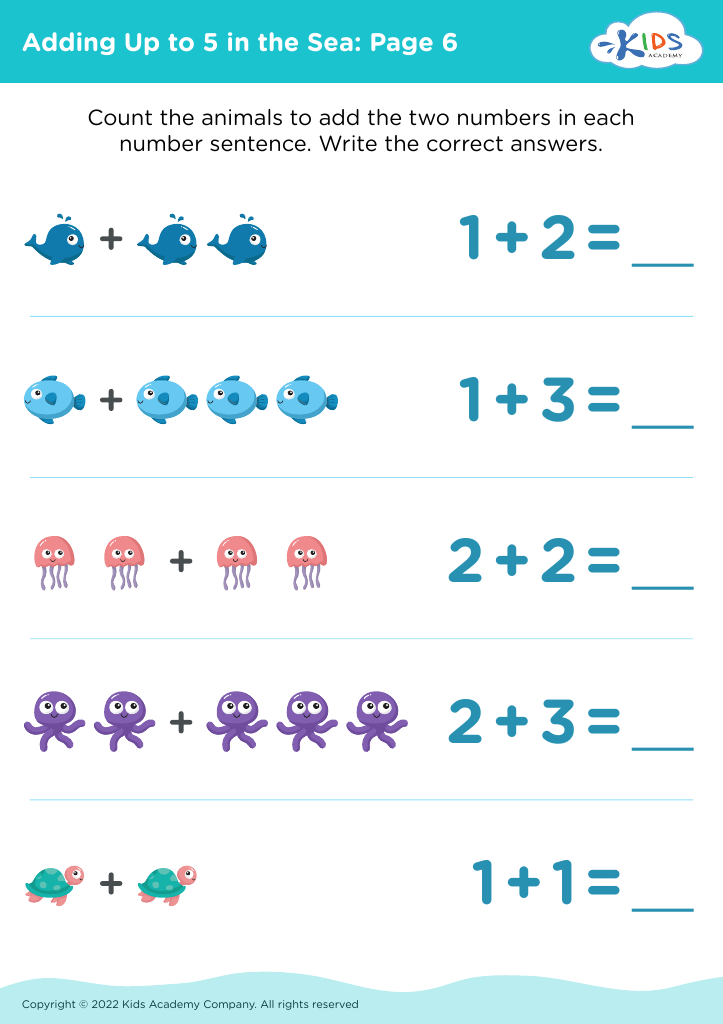
Adding Up to 5 in the Sea: Page 6

Adding Up to 5 in the Sea: Page 6

Adding Up to 5 in the Sea: Page 6
Worksheet
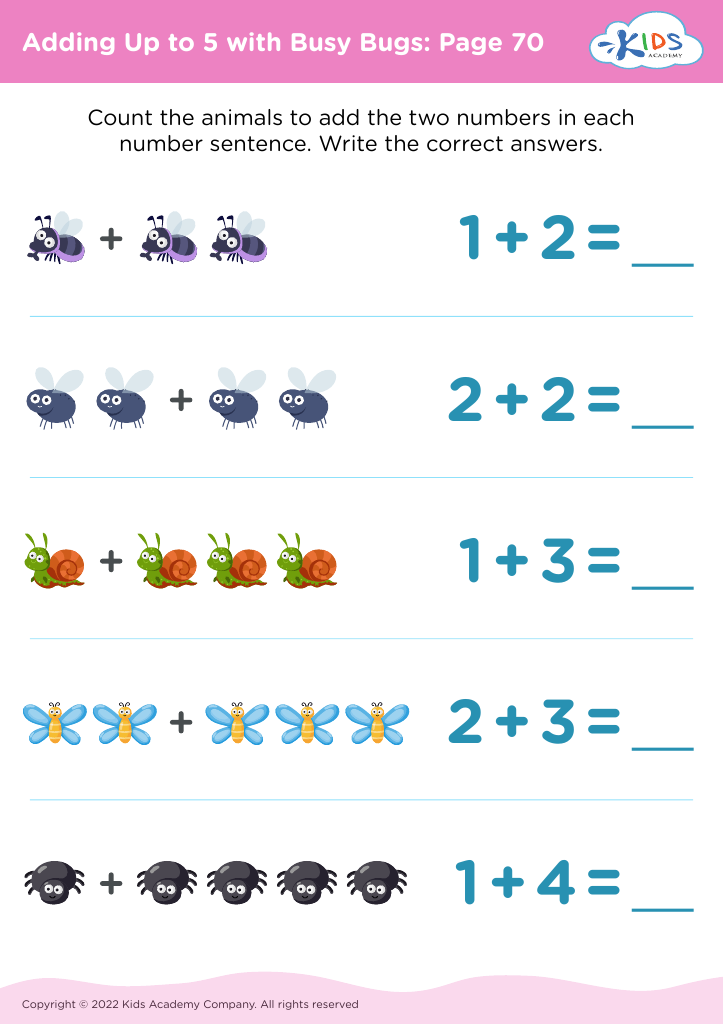
Adding Up to 5 with Busy Bugs: Page 70
Worksheet
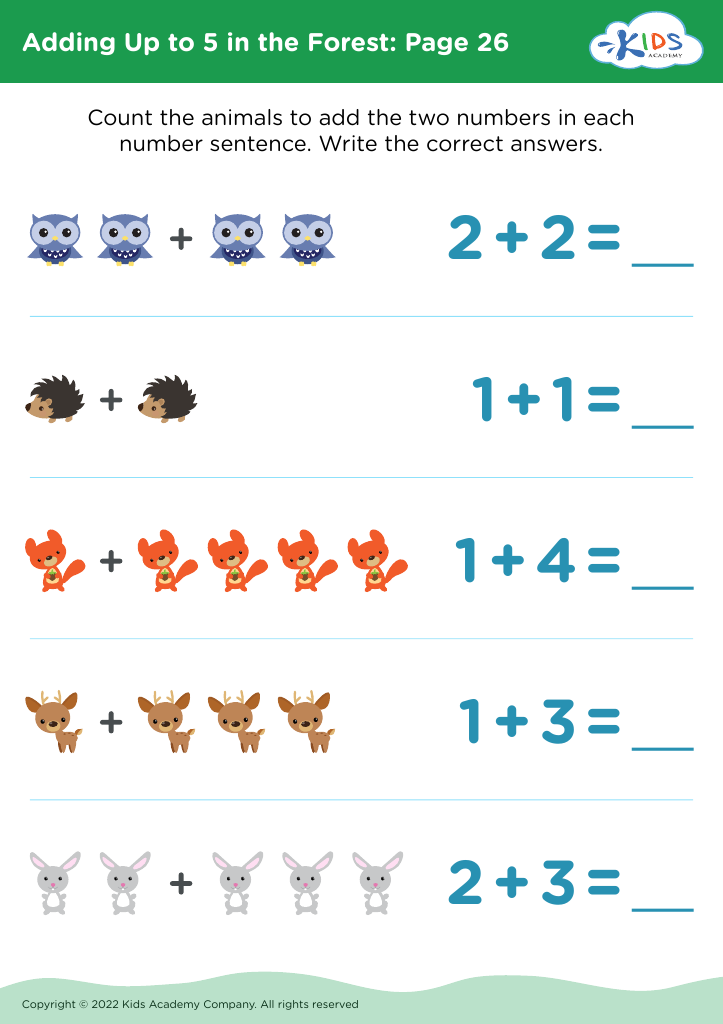
Adding Up to 5 in the Forest: Page 26
Worksheet
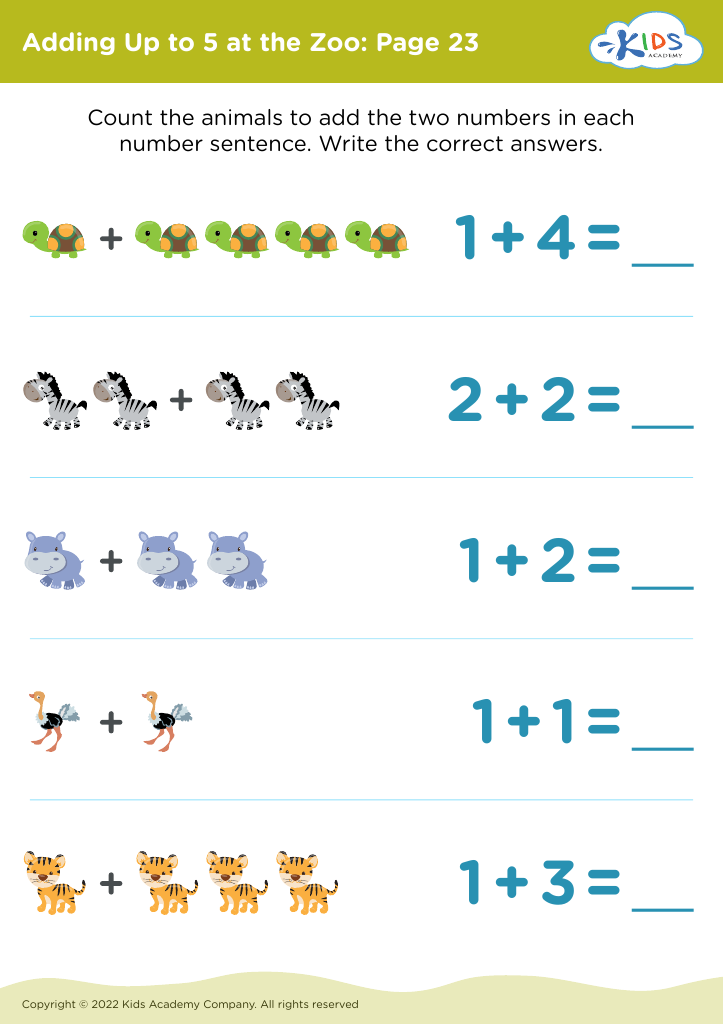
Adding Up to 5 at the Zoo: Page 23
Worksheet
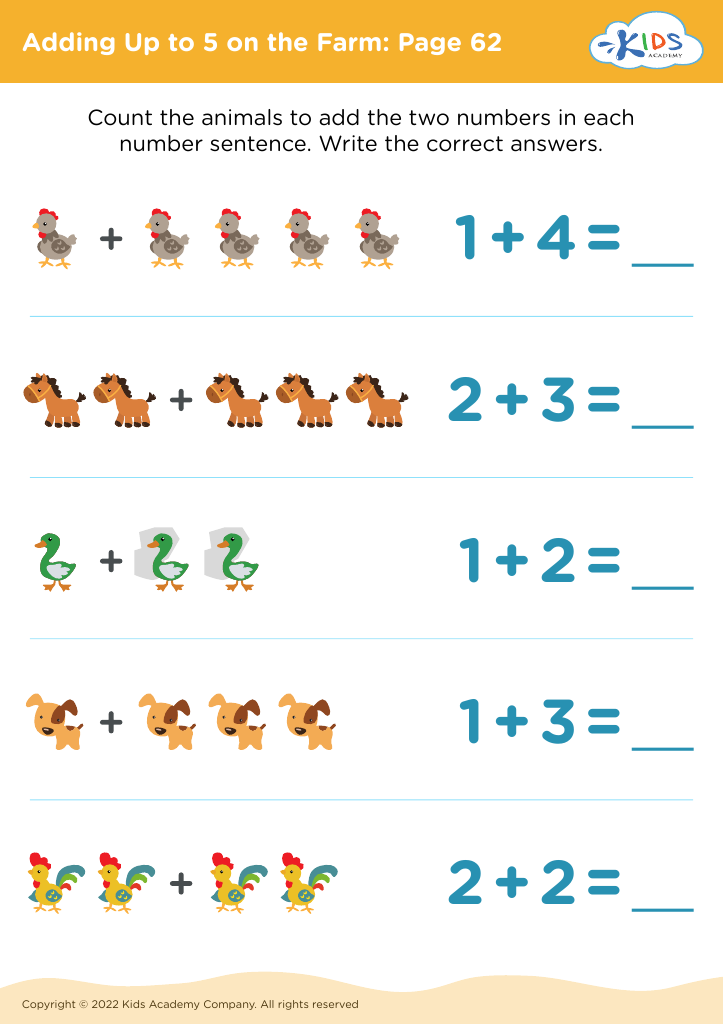
Adding Up to 5 on the Farm: Page 62
Worksheet
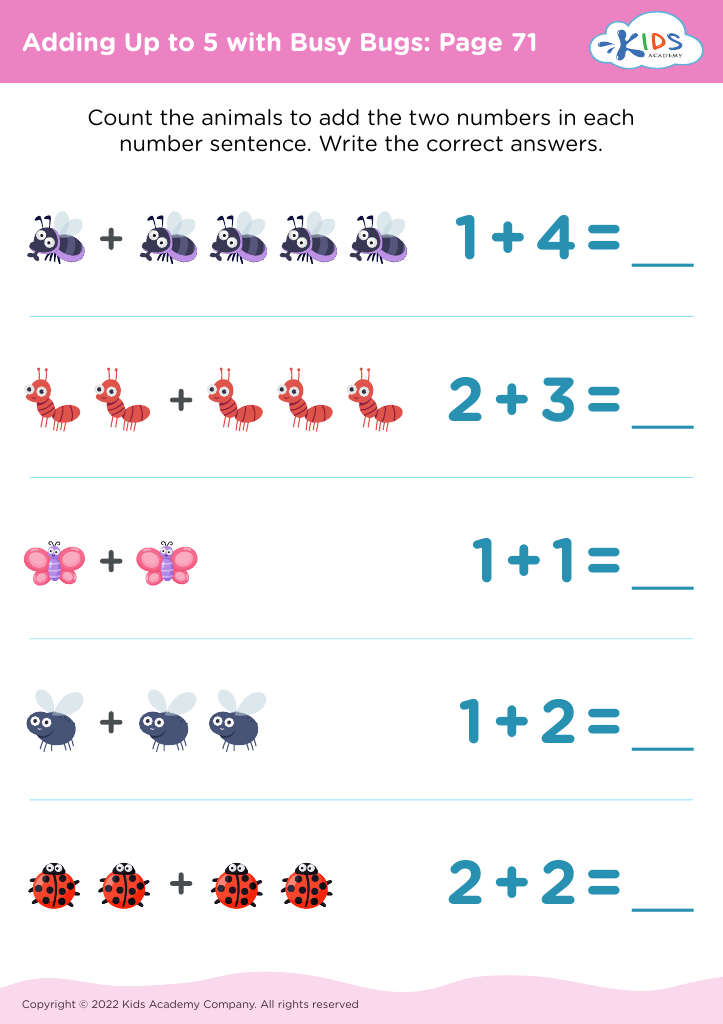
Adding Up to 5 with Busy Bugs: Page 71
Worksheet
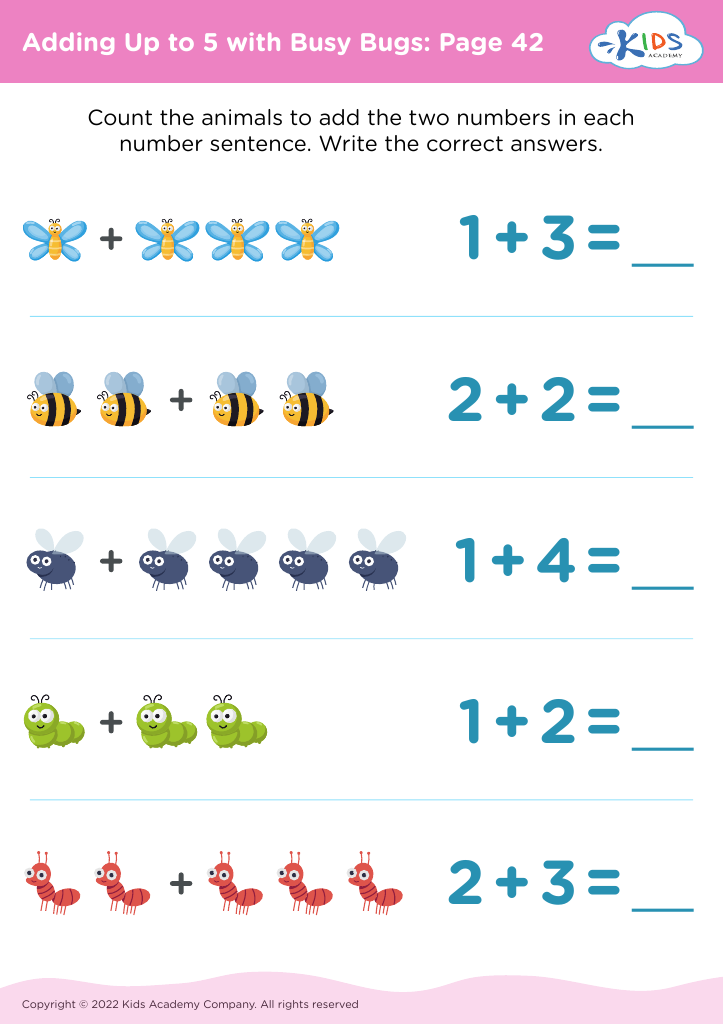
Adding Up to 5 with Busy Bugs: Page 42
Worksheet
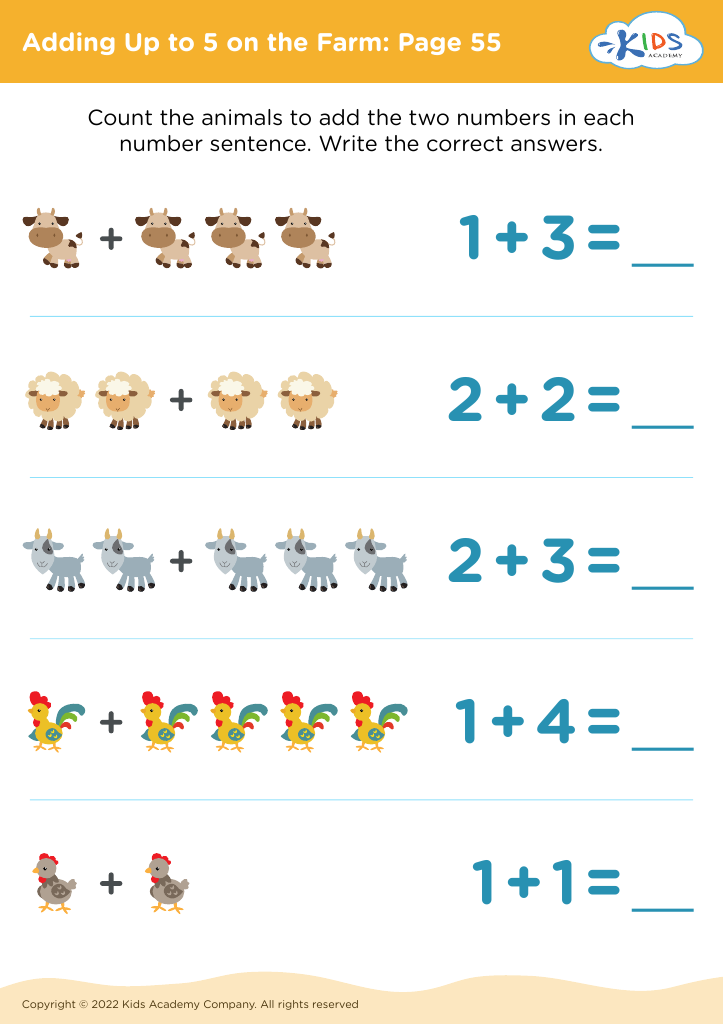
Adding Up to 5 on the Farm: Page 55
Worksheet
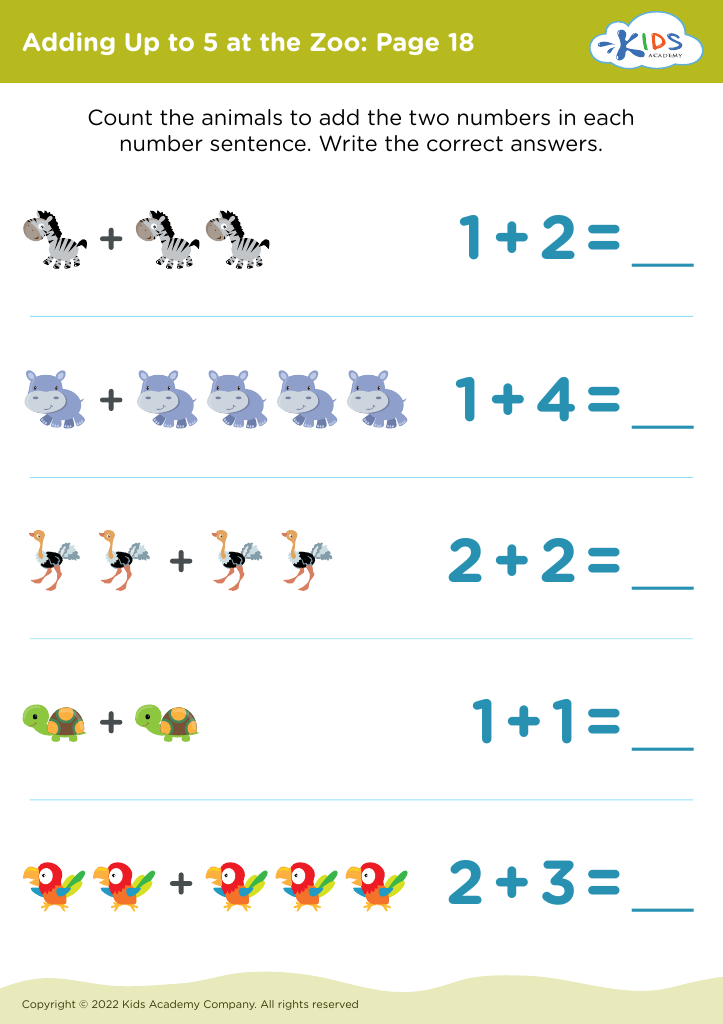
Adding Up to 5 at the Zoo: Page 18
Worksheet
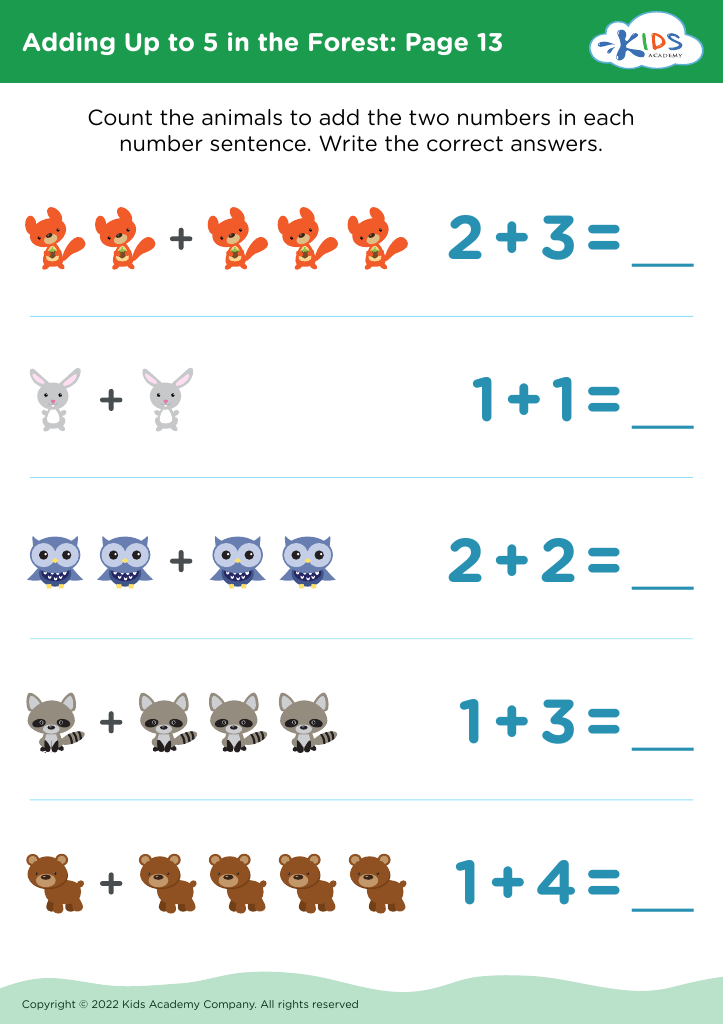
Adding Up to 5 in the Forest: Page 13
Worksheet
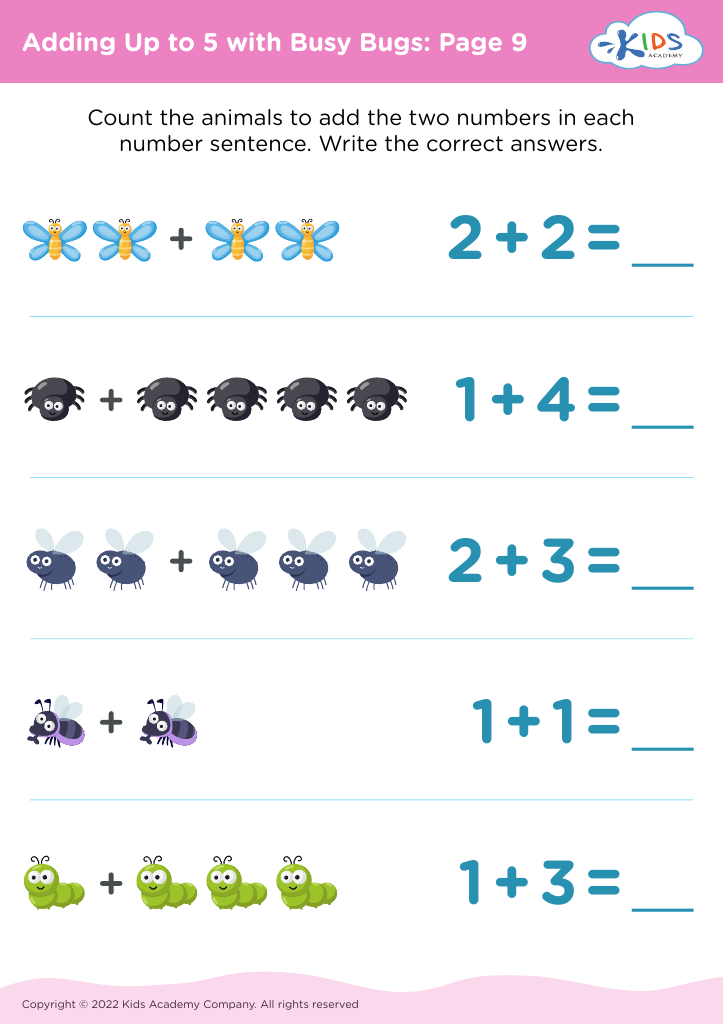
Adding Up to 5 with Busy Bugs: Page 9
Worksheet
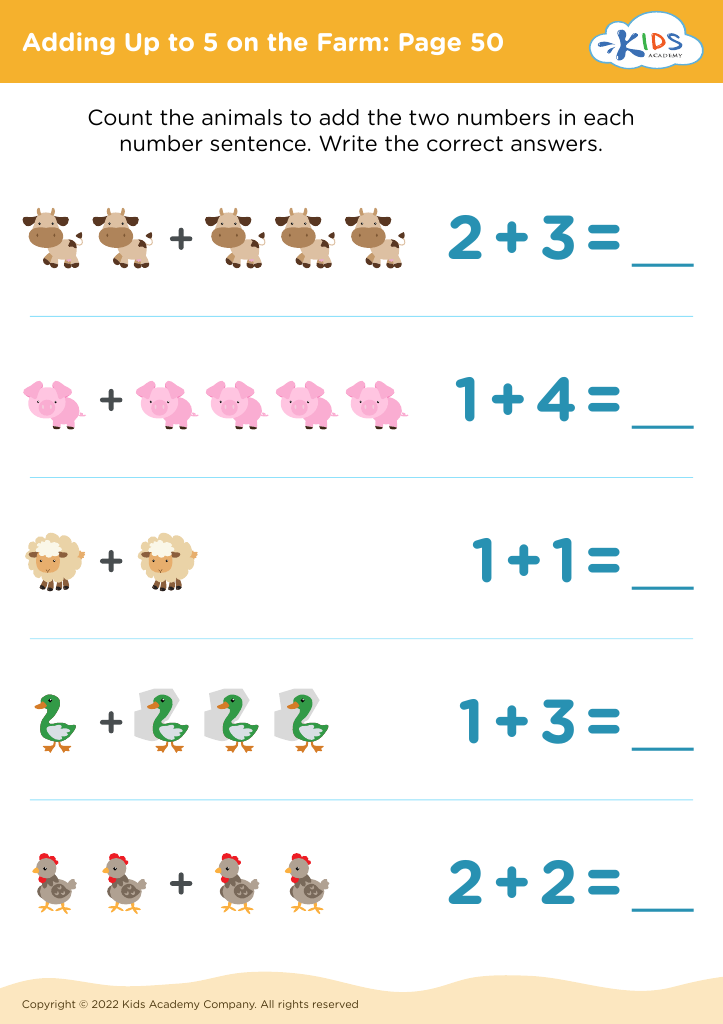
Adding Up to 5 on the Farm: Page 50
Worksheet
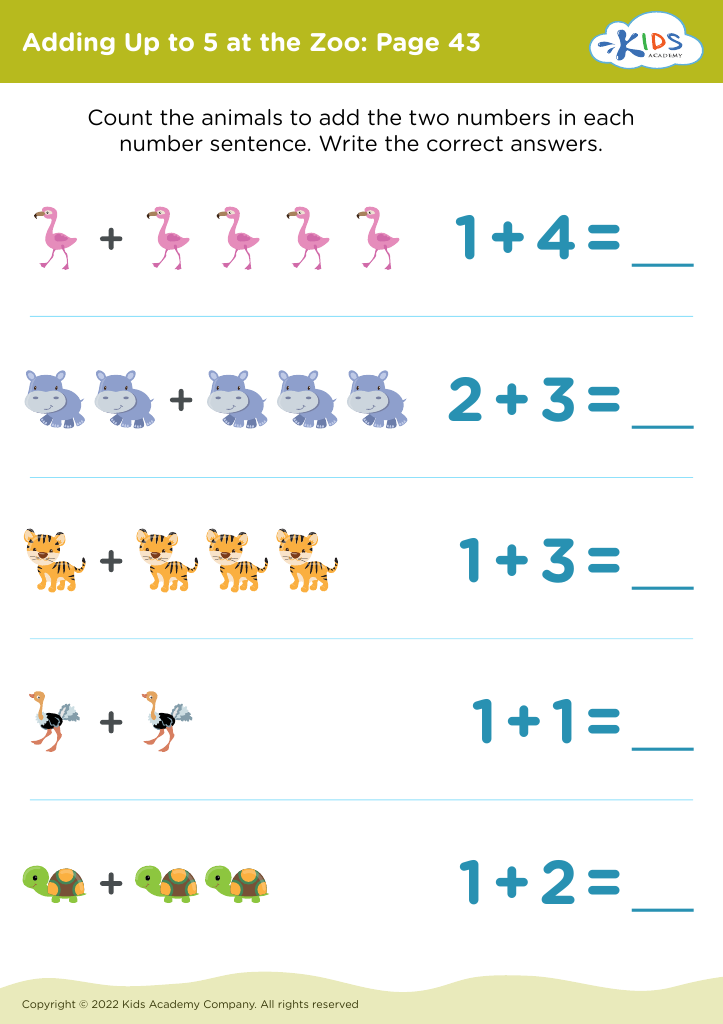
Adding Up to 5 at the Zoo: Page 43
Worksheet
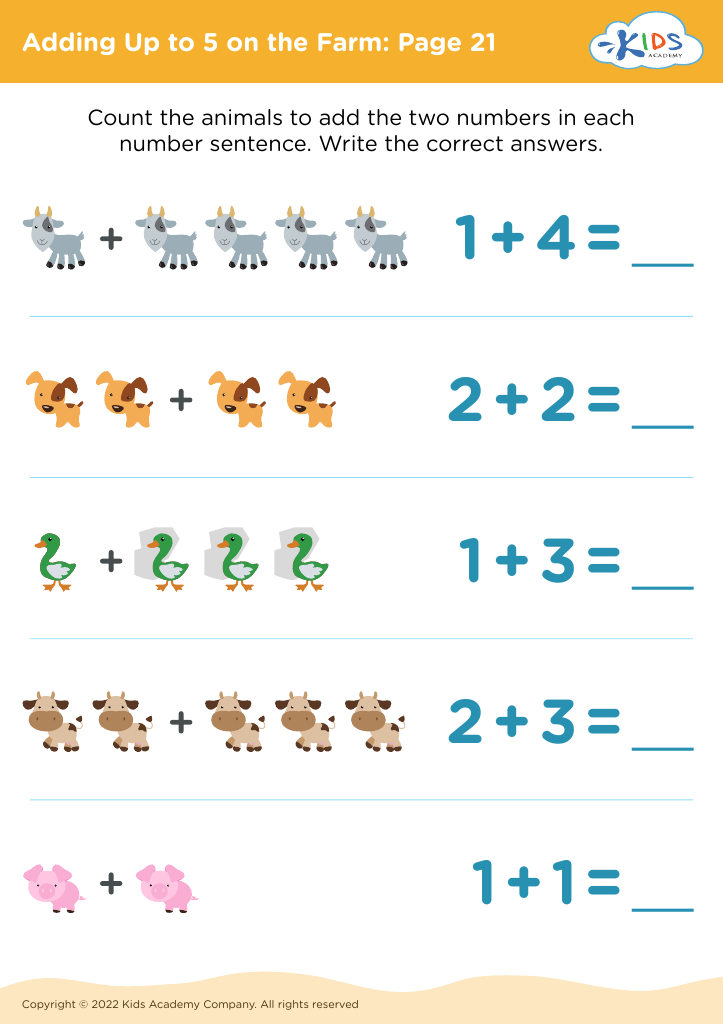
Adding Up to 5 on the Farm: Page 21
Worksheet
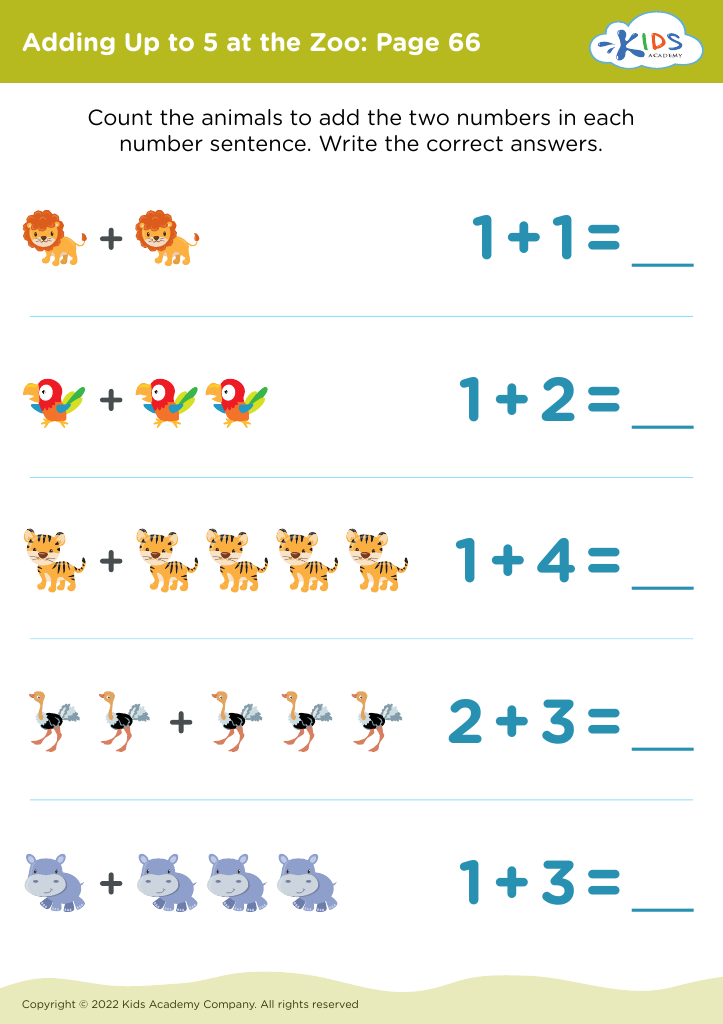
Adding Up to 5 at the Zoo: Page 66
Worksheet
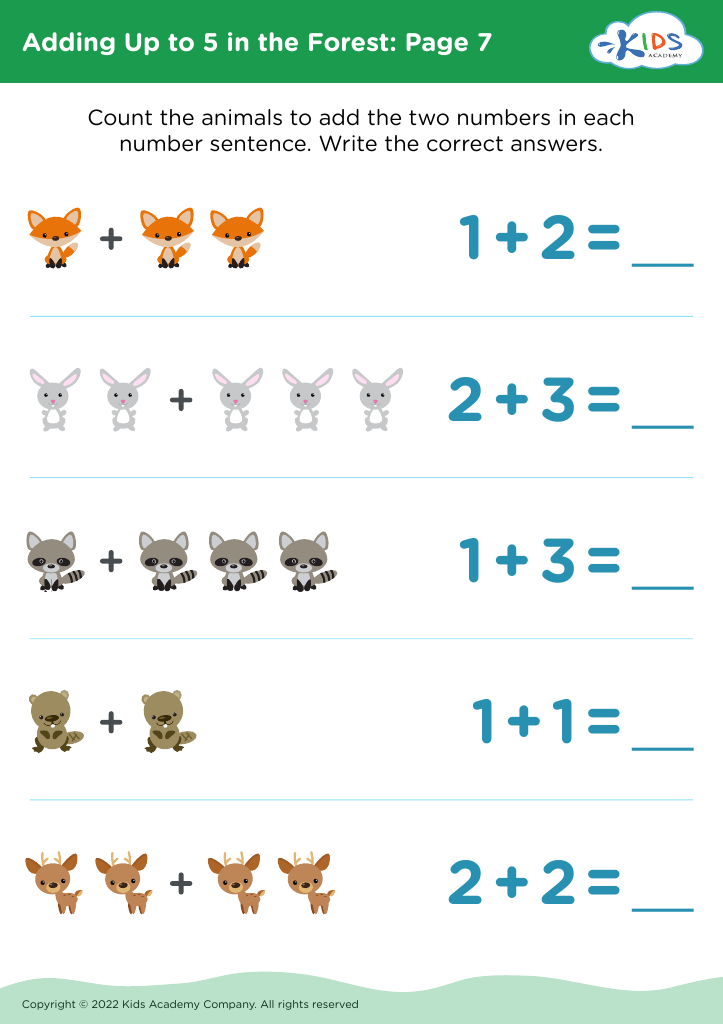
Adding Up to 5 in the Forest: Page 7
Worksheet
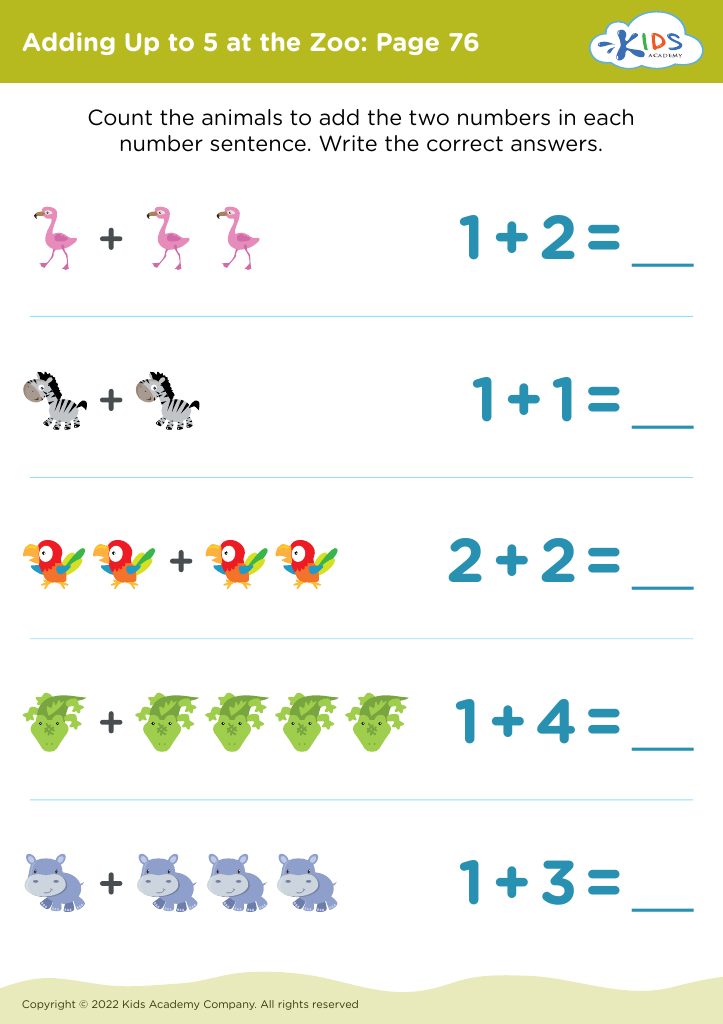
Adding Up to 5 at the Zoo: Page 76
Worksheet
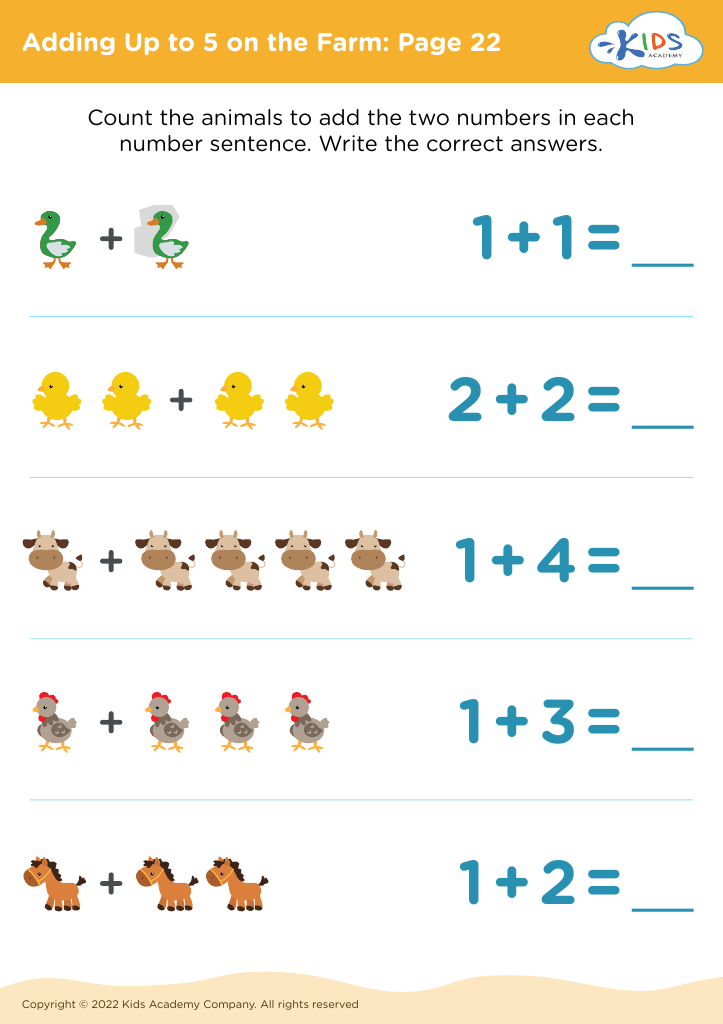
Adding Up to 5 on the Farm: Page 22
Worksheet
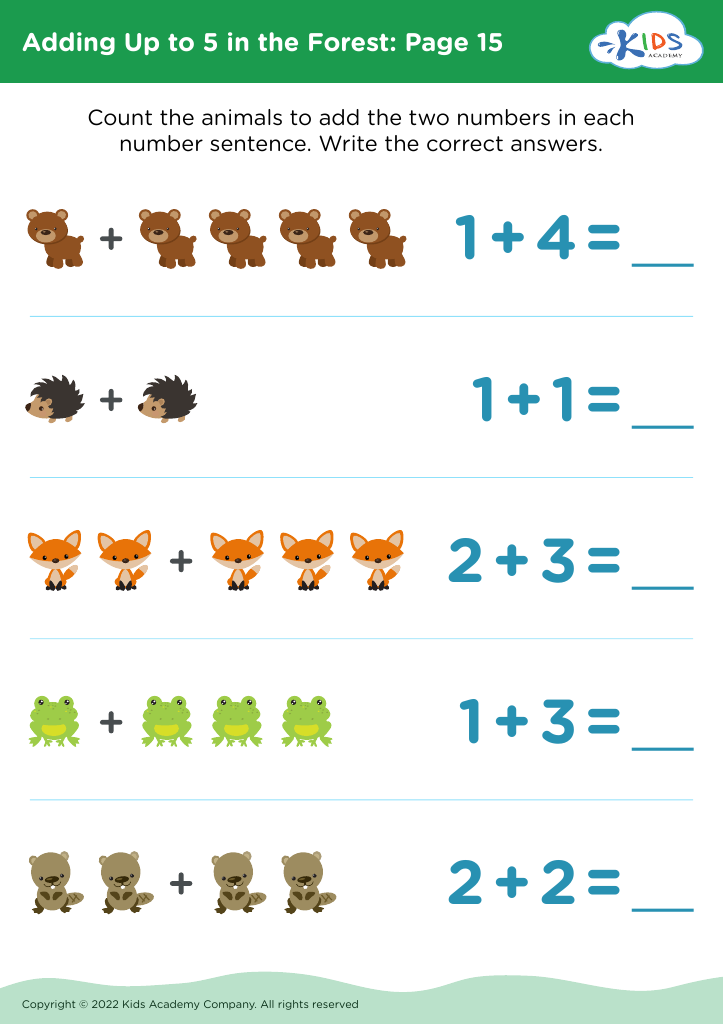
Adding Up to 5 in the Forest: Page 15
Worksheet


Number recognition and the ability to add up to 5 are foundational skills for children aged 3 to 6, forming the bedrock for their future mathematical understanding. Early exposure to these concepts enables children to develop a strong sense of numeracy, which is crucial for academic success and everyday problem-solving.

Parents and teachers should care about number recognition as it helps children gain confidence in their abilities. Recognizing numbers and understanding their values introduces children to the world of counting, patterns, and relationships between quantities. Being able to identify and work with small numbers facilitates cognitive development and lays the groundwork for more complex mathematical concepts they will encounter later, such as addition, subtraction, and even multiplication.

Moreover, engaging in activities that involve adding up to 5 promotes critical thinking and enhances fine motor skills through manipulating objects, such as blocks or counters. These activities encourage social interactions, as children often collaborate and communicate their thought processes when working together.

By nurturing number recognition and basic addition skills, parents and teachers help children develop a positive attitude towards math, fostering a lifelong appreciation for learning and boosting their confidence to tackle more challenging mathematical tasks in the future.