Understanding quantity Adding Up to 5 Worksheets for Ages 3-6
17 filtered results
-
From - To
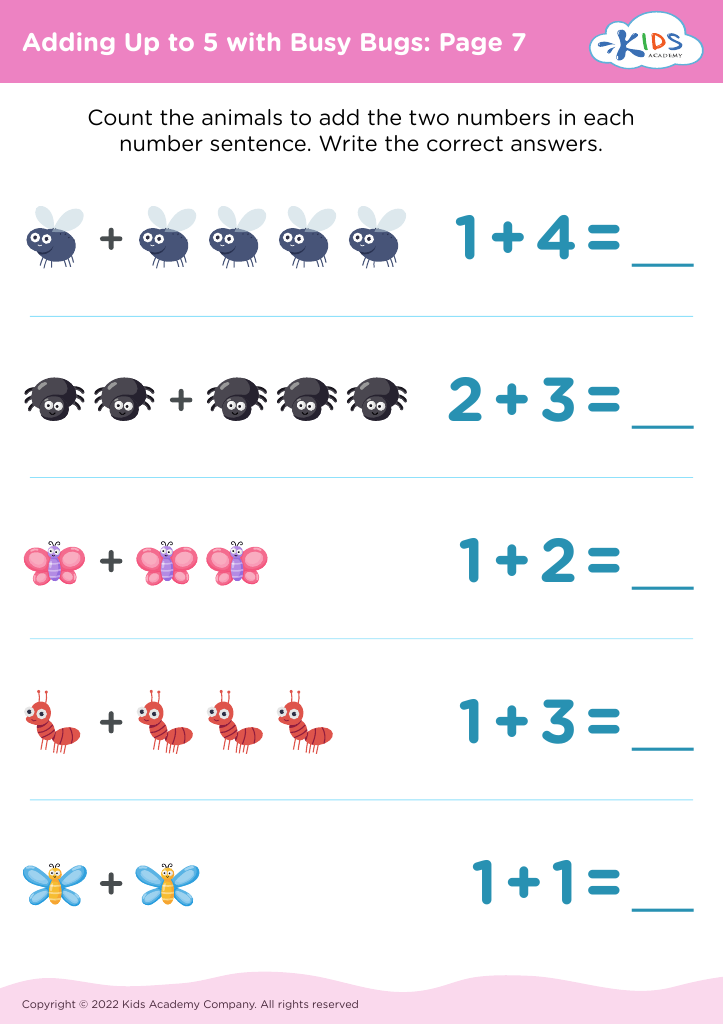
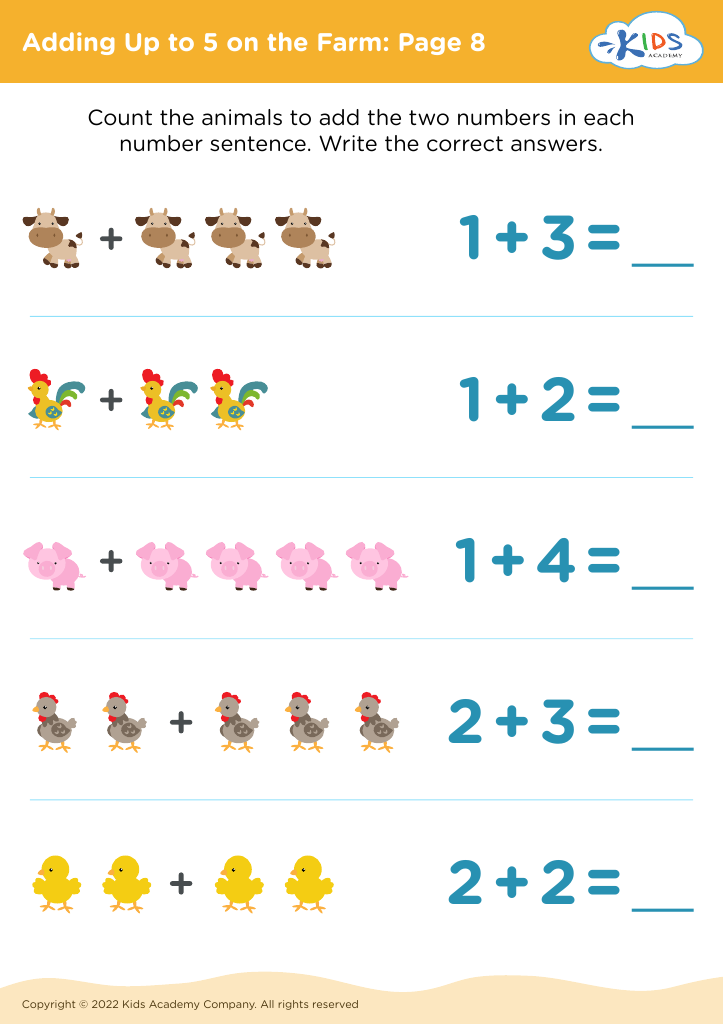
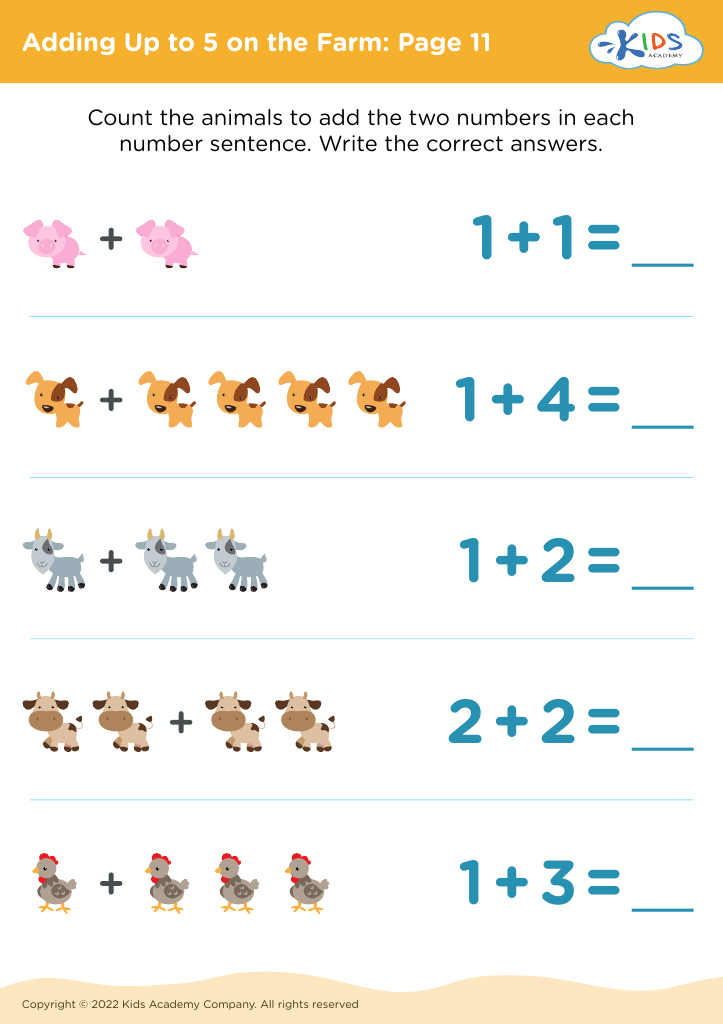
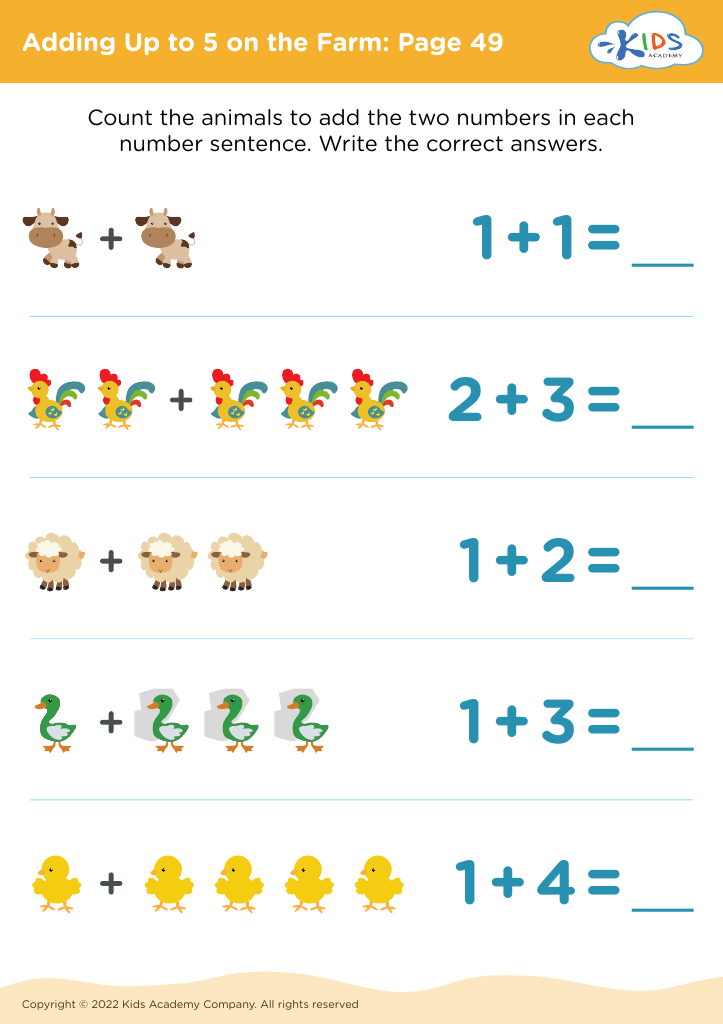
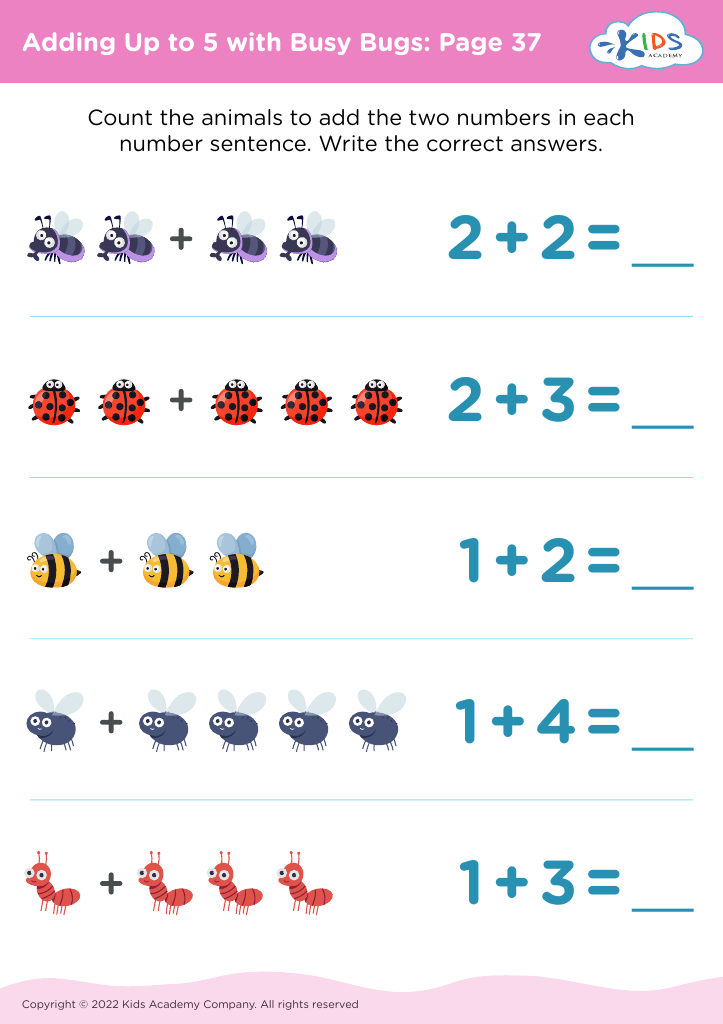
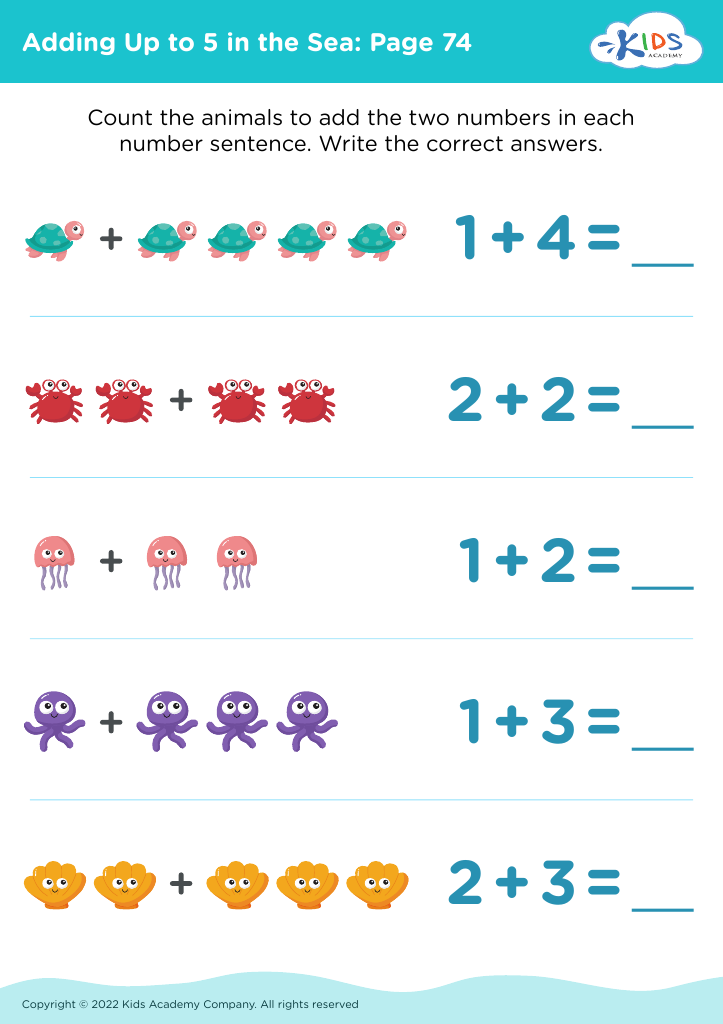
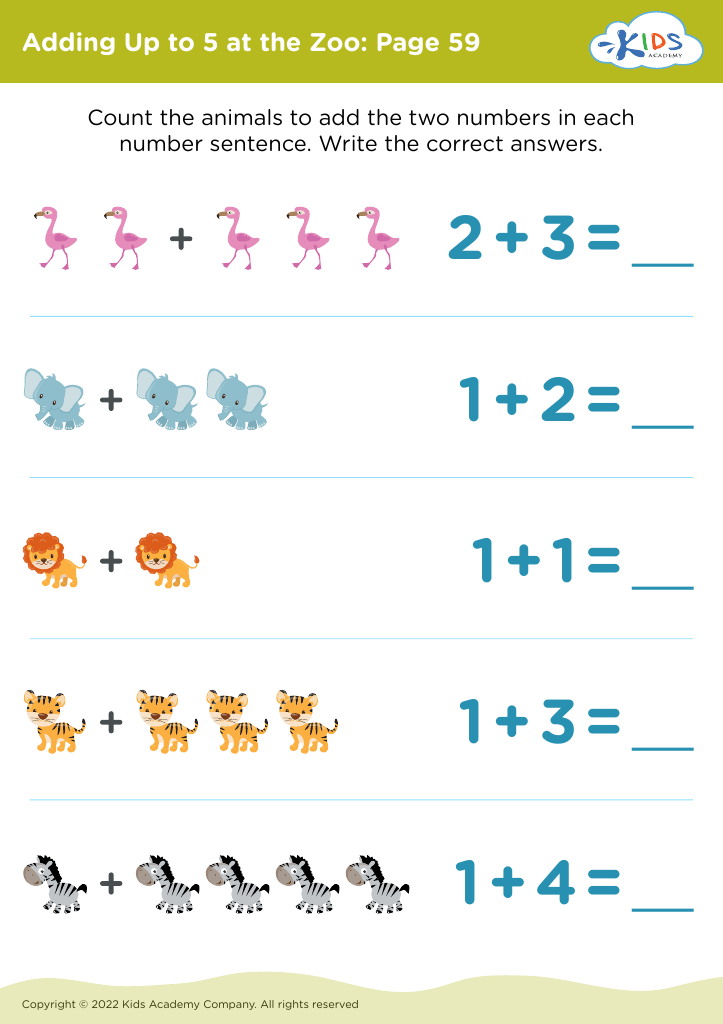
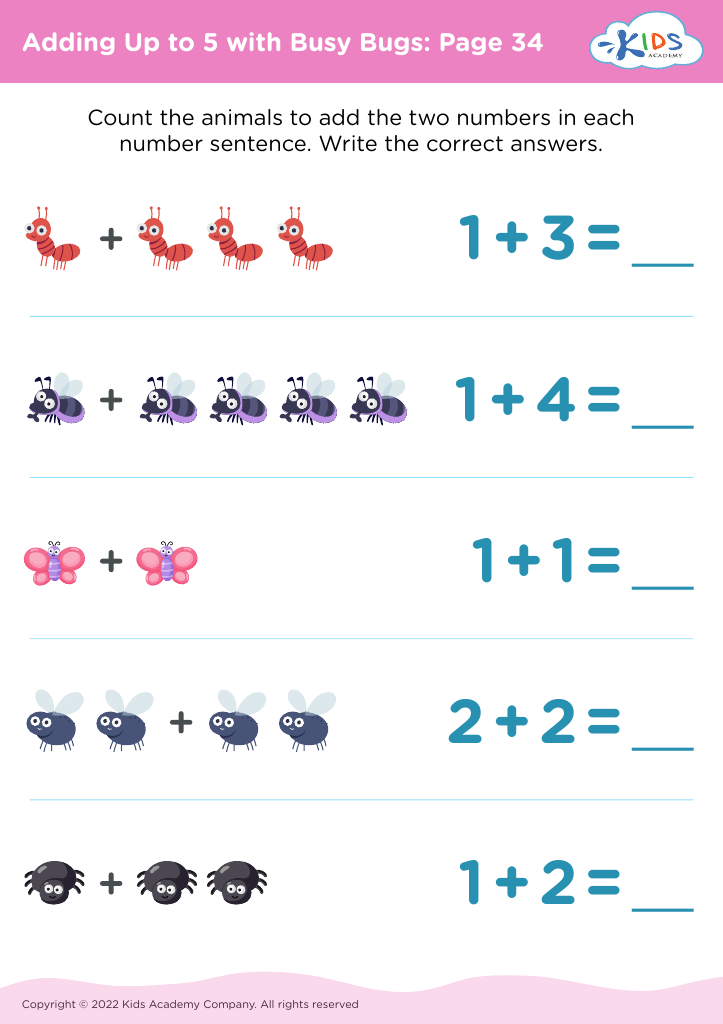
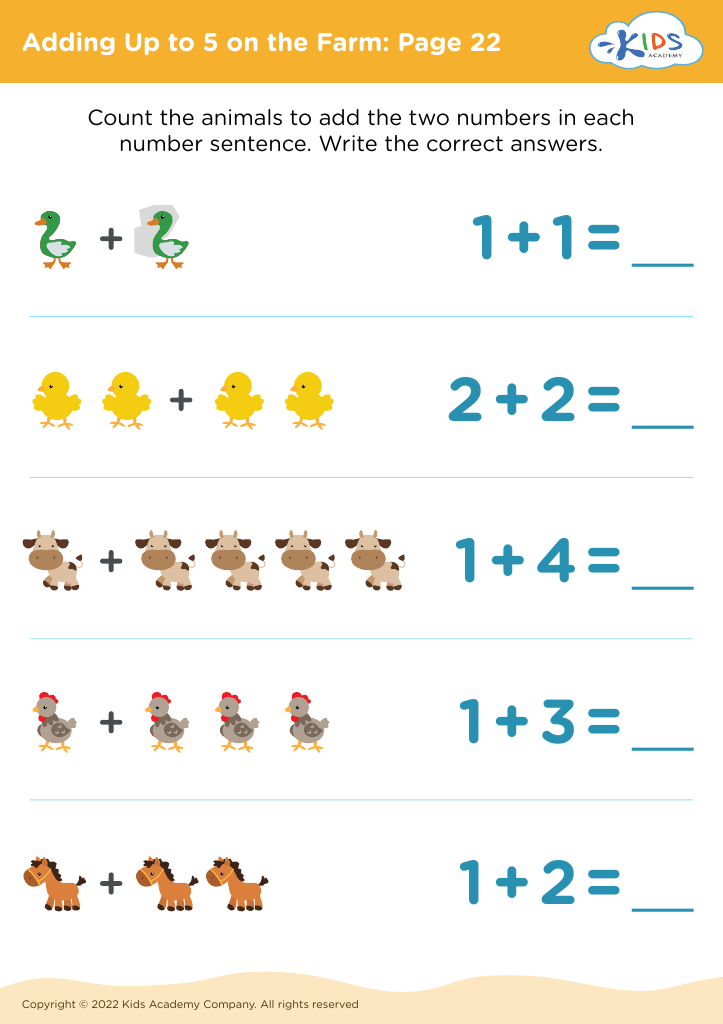
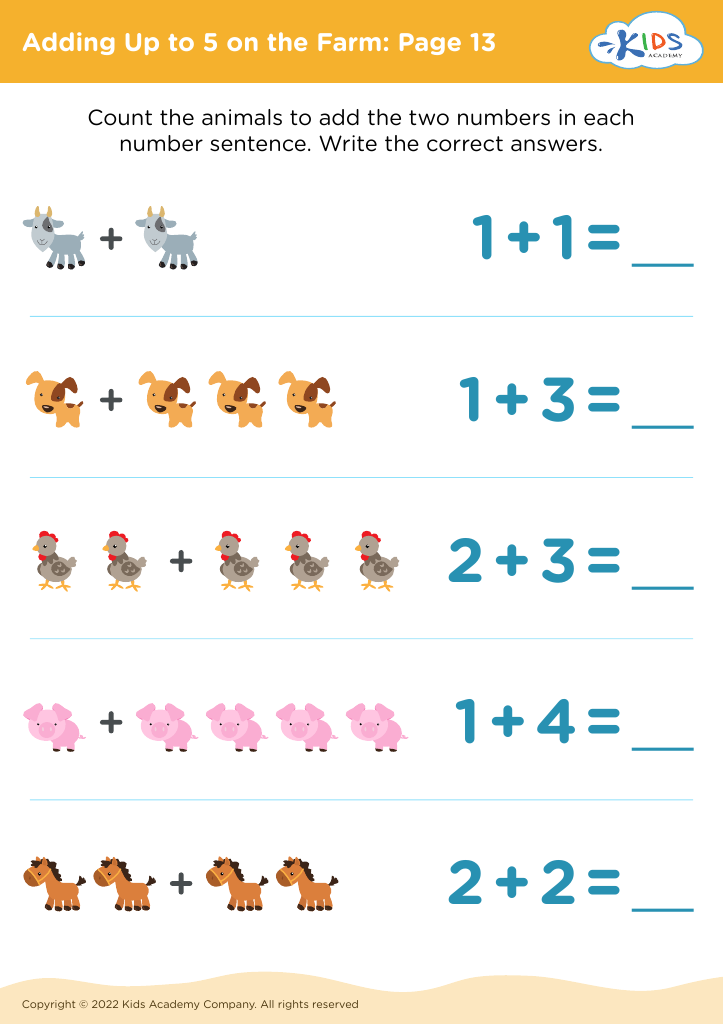
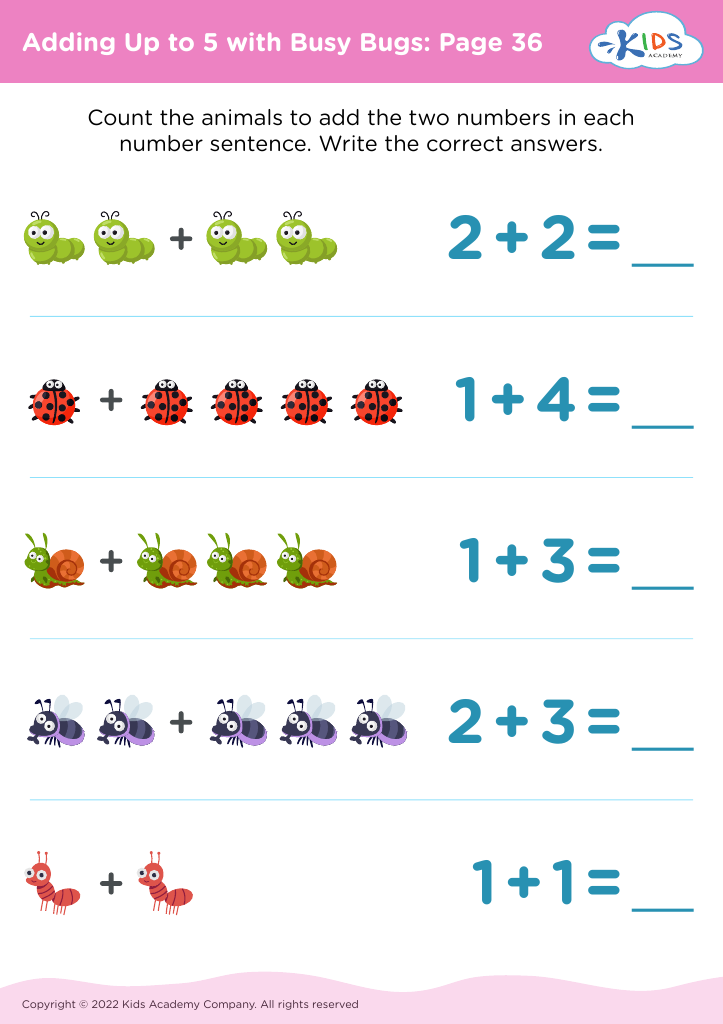
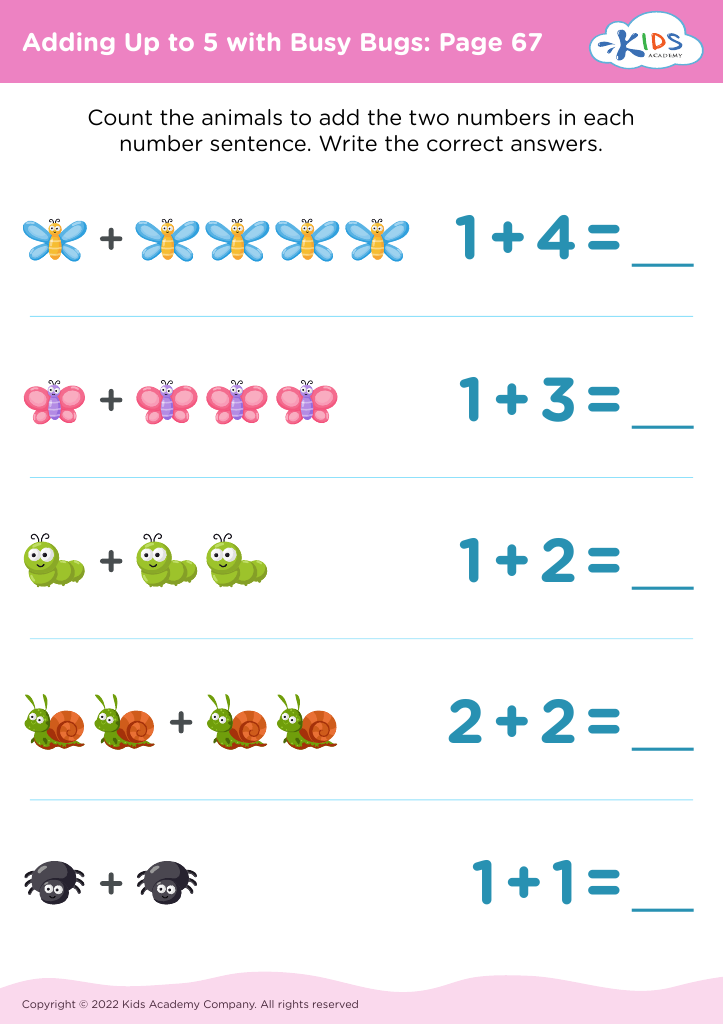
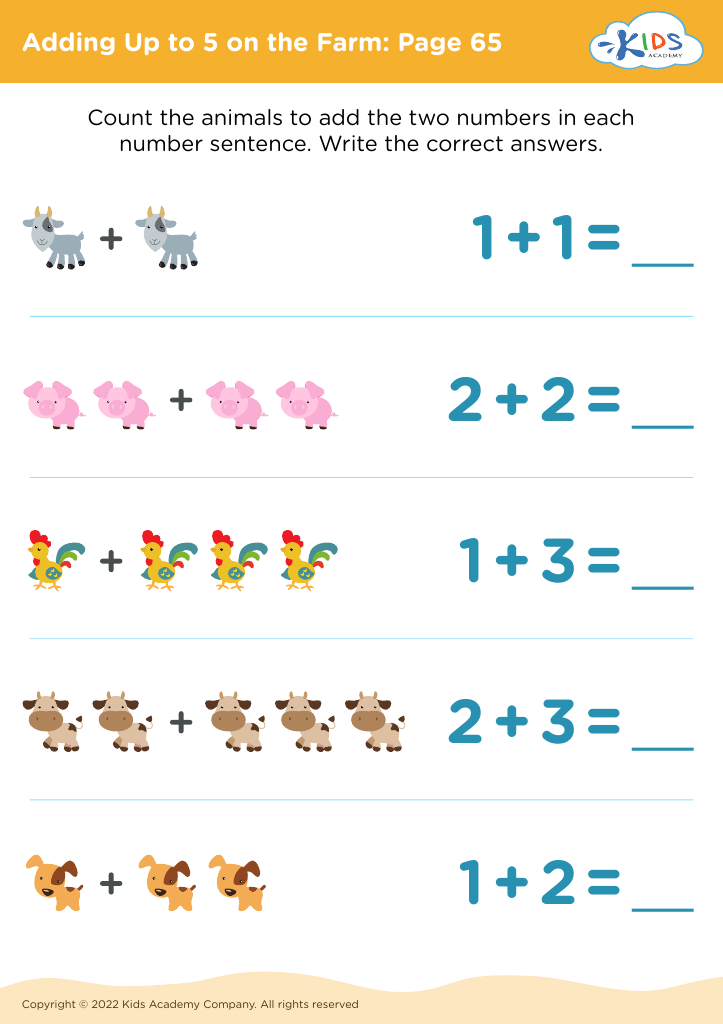
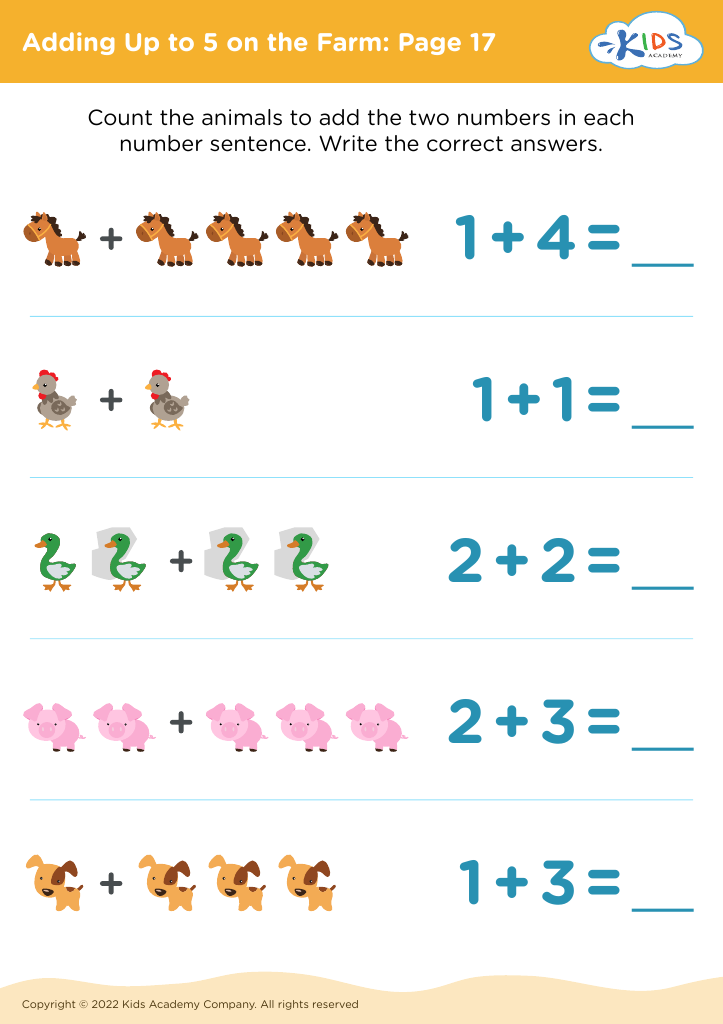
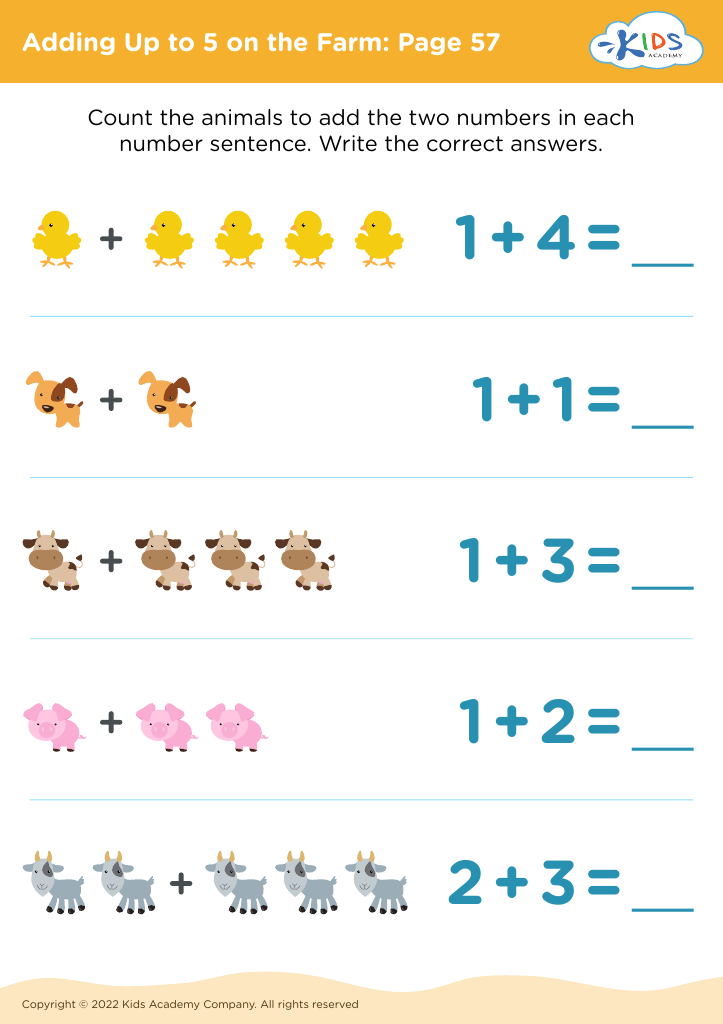
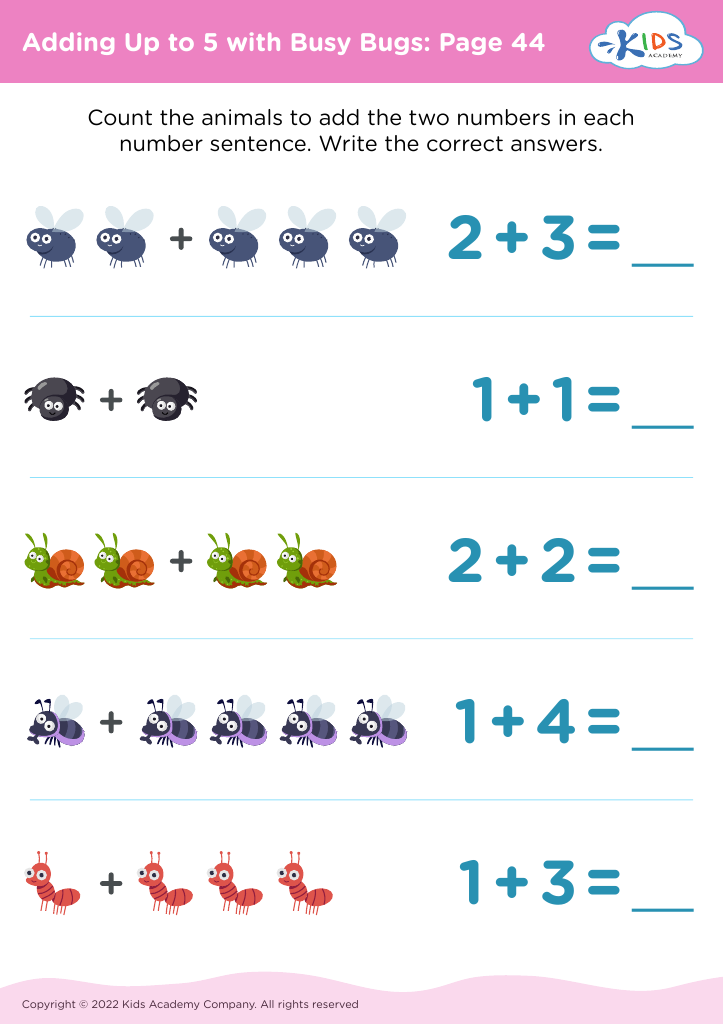
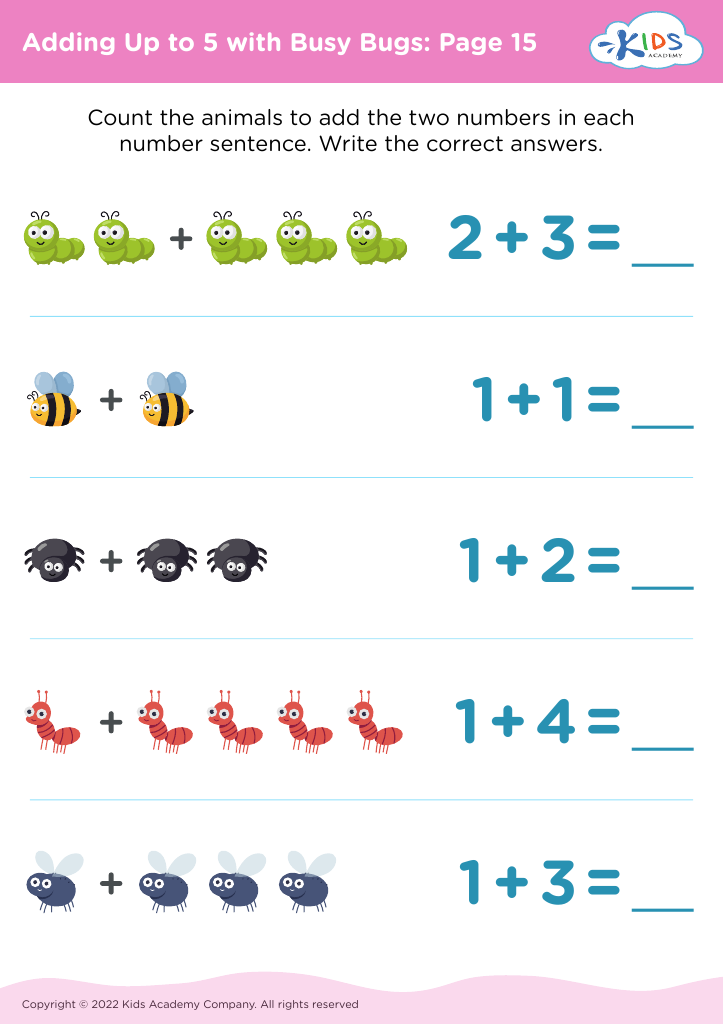
Introduce your young learners to basic math concepts with "Understanding Quantity: Adding Up to 5 Worksheets for Ages 3-6". These engaging and educational worksheets help children grasp the fundamentals of addition by working with numbers up to five. Designed with colorful visuals and interactive elements, these activities promote counting skills, number recognition, and logical thinking. Perfect for early-grade students, these printable worksheets make learning fun and accessible, boosting your child's confidence and foundational math abilities. Ideal for both classroom and home learning, these exercises lay the groundwork for future math success. Start building essential math skills today!





%20(1).jpg)


Understanding quantity and the ability to add up to 5 for children ages 3-6 is critical for several key reasons. Firstly, early math skills form the foundation for later mathematical understanding, and simple addition is one of these fundamental skills. By recognizing quantities and learning to add, children develop number sense, which is their ability to understand, relate, and connect numbers.
At this age, children are naturally curious and begin to notice numbers in their environment. Parents and teachers who foster this interest help children progress from rote counting to actually comprehending what numbers represent. For instance, understanding that the number 5 consists of five individual items means they can start performing basic addition, such as recognizing that adding 2 apples to 3 apples gives a total of 5 apples.
Moreover, such early skills promote problem-solving abilities and critical thinking. These are essential cognitive skills that help in understanding more complex concepts later. Through interactive and play-based learning methods, such as using toys or simple story problems, children can achieve these conceptual milestones in a fun and engaging manner.
Encouraging early mastery of adding up to 5 sets the stage for confidence and success in future, more demanding math classes, while also fostering a positive attitude towards learning in general. This essential skill impacts their overall academic trajectory and everyday problem-solving abilities.








