Visual comprehension Adding Up to 5 Worksheets for Ages 3-6
7 filtered results
-
From - To
Unlock the power of early math skills with our "Visual Comprehension Adding Up to 5" worksheets designed for children ages 3-6. These engaging, colorful worksheets help young learners grasp the basics of addition using visual aids and fun illustrations. With easy-to-follow exercises, kids practice adding up to 5, enhancing their counting abilities and logical thinking. Perfect for preschool and kindergarten learners, these printables make learning math interactive and enjoyable. Start building a strong foundation in math today with our expertly crafted worksheets. Engage, educate, and inspire your child with visual comprehension exercises!
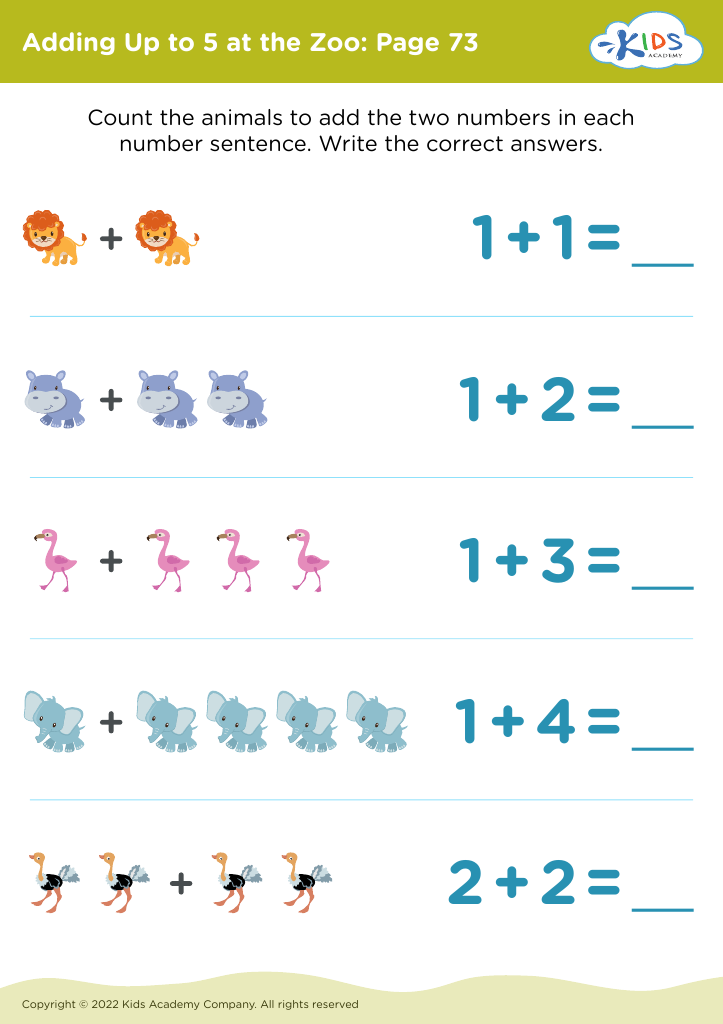
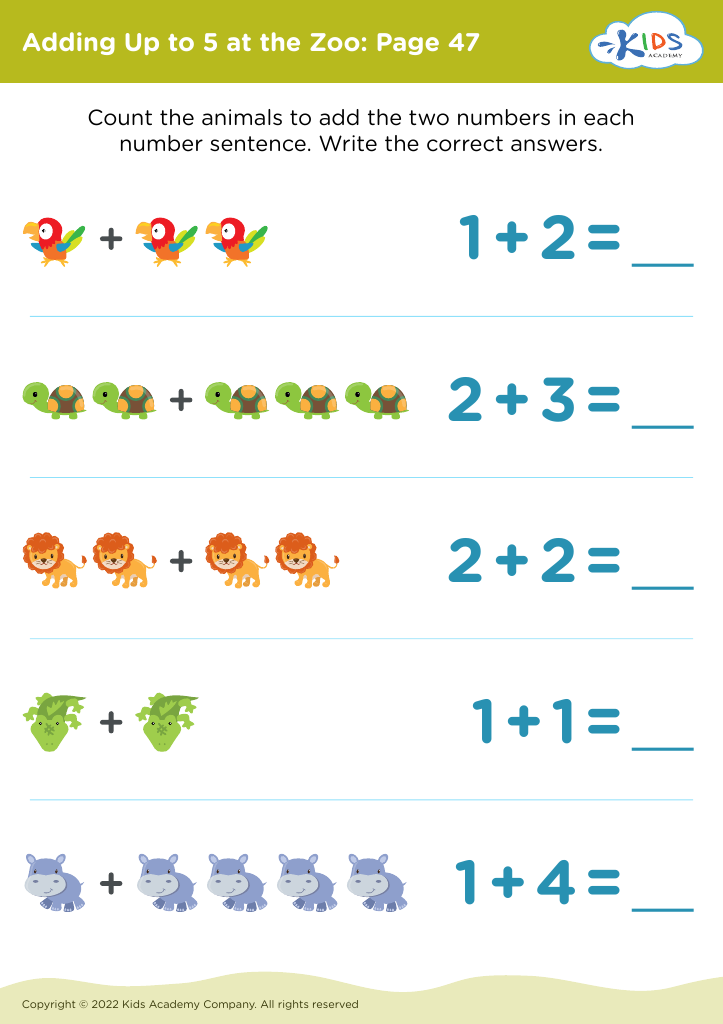
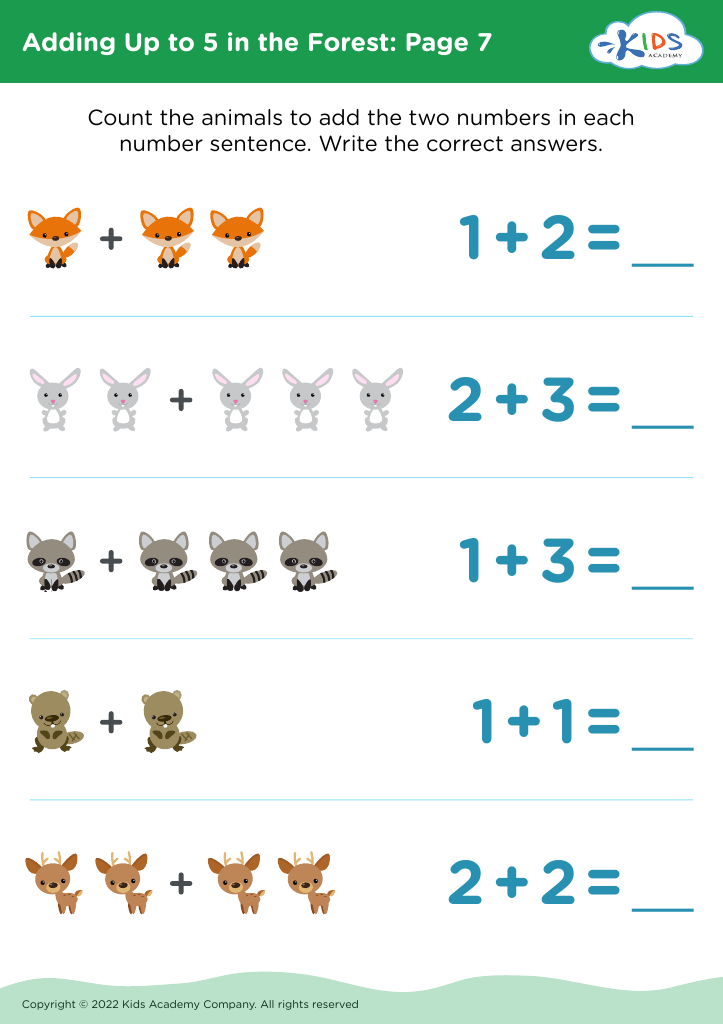
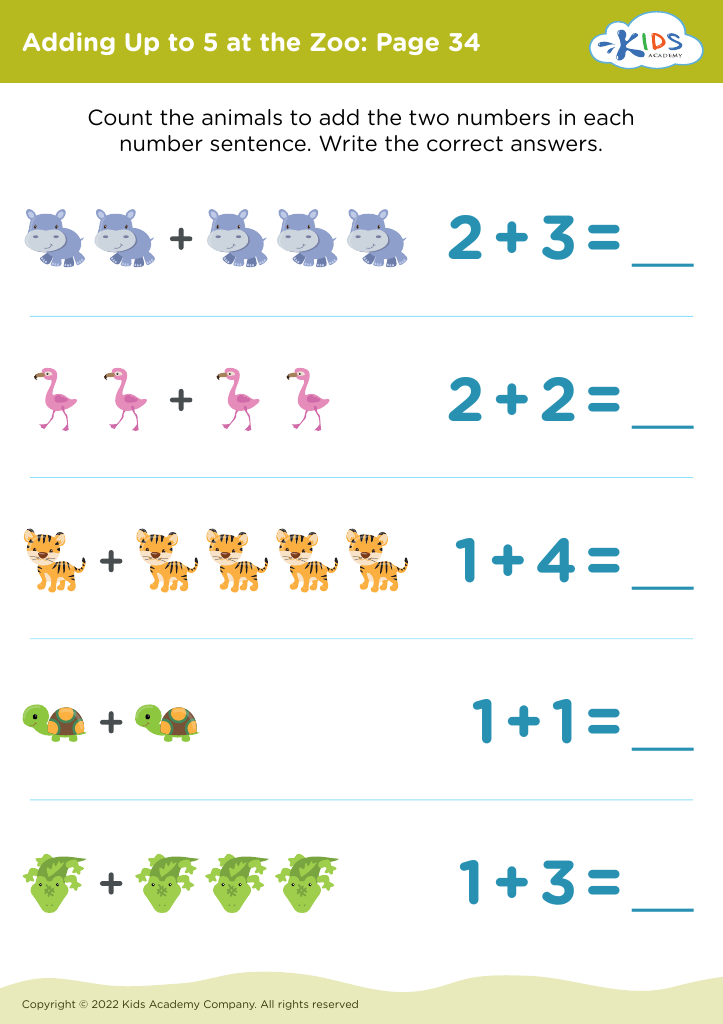
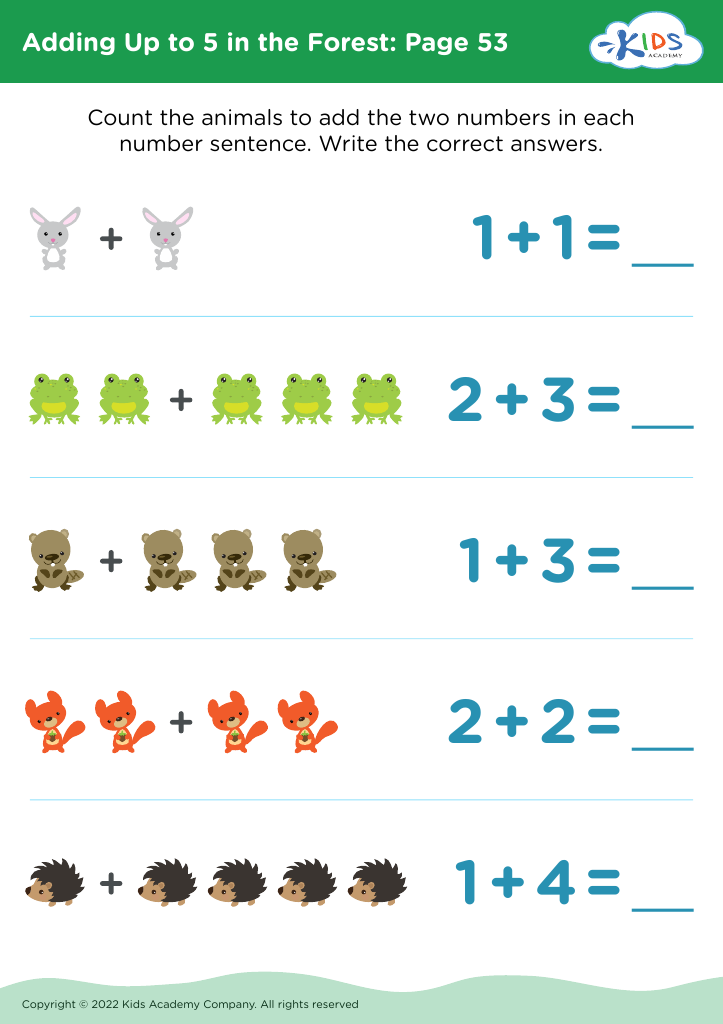
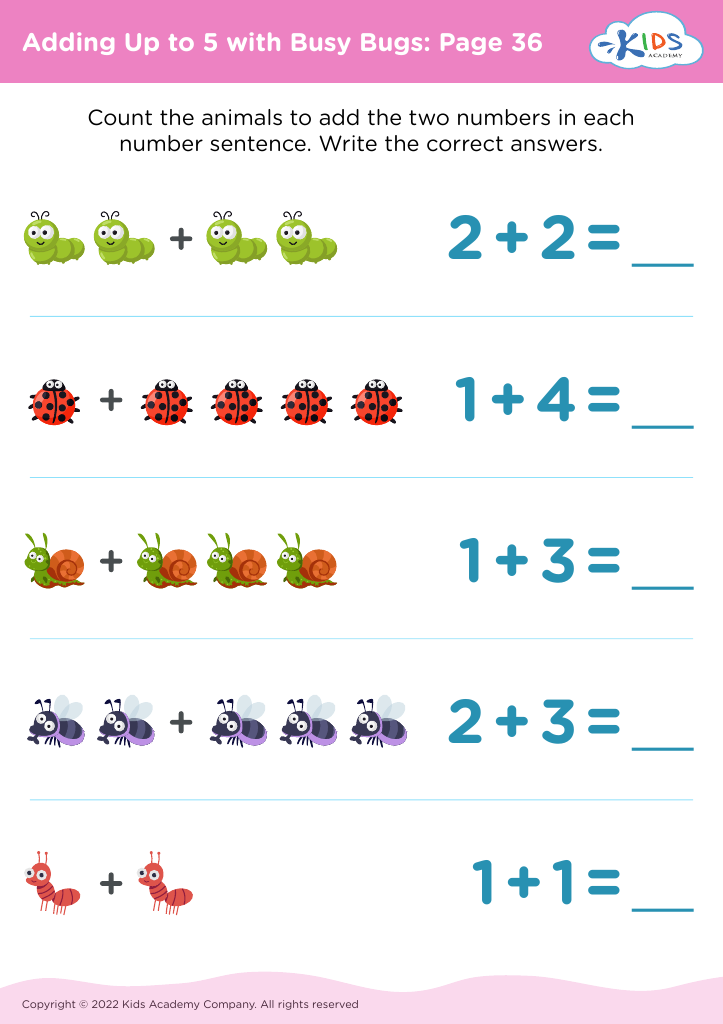
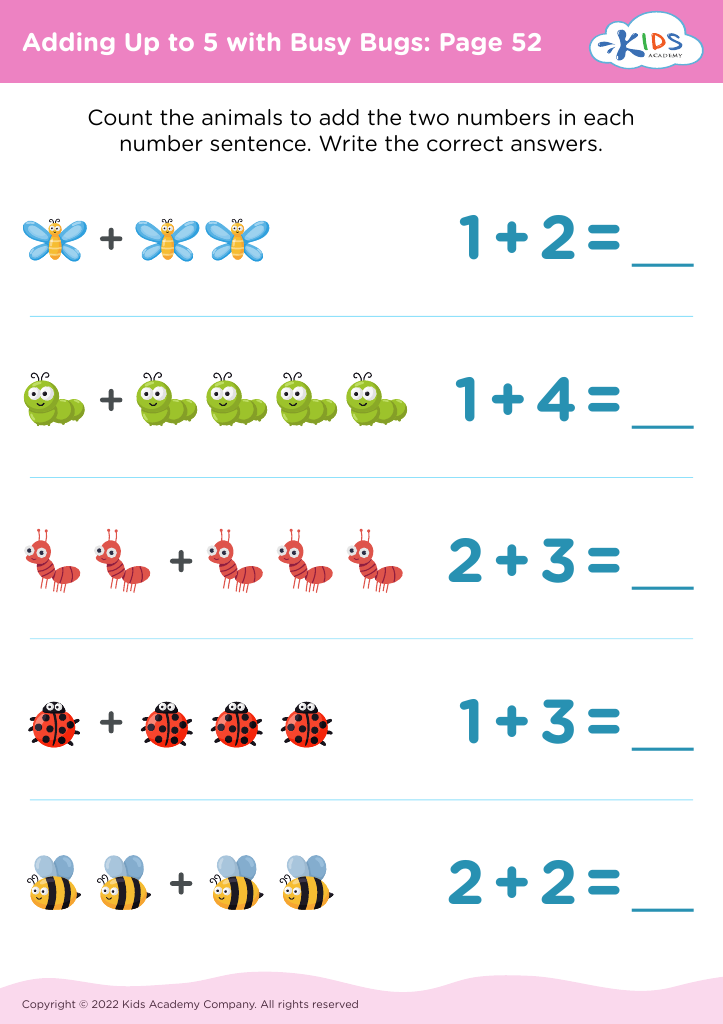








Visual comprehension is a crucial developmental skill for young children, especially within the age range of 3-6 years. At this formative stage, children are rapidly expanding their cognitive abilities, and visual comprehension of basic mathematical concepts like adding up to 5 plays a vital role.
Firstly, visual comprehension helps children make sense of abstract numbers by relating them to concrete objects. For instance, they can visualize counting apples or toys, which aids in grasping the concept of addition. This hands-on understanding lays a solid foundation for future mathematical learning.
Second, strong visual skills enhance focus and attention, critical for overall learning. When children learn to visually comprehend quantities and perform basic addition, they develop better attention to detail, which can improve their general academic performance.
Additionally, visual comprehension supports problem-solving skills. By engaging in activities that involve adding up to 5, children learn to analyze, synthesize, and evaluate simpler problems, gradually building confidence to tackle more complex tasks.
Lastly, mastering basic addition at an early age can boost children's self-esteem. Feeling competent in crucial academic skills like math encourages a positive attitude toward learning and can instill a lifelong love for education.
Thus, parents and teachers should prioritize visual comprehension for simple additions as it fosters critical thinking, academic success, and self-confidence in young learners.








